
Keep Your Family Warm and Safe—No Matter What
Most Colesville homes heat with gas or electric—but a smaller group of homeowners still add a wood stove or insert for backup heat during PEPCO outages or for a real fire in an existing masonry fireplace. Here's how that actually works locally.
Every Project Starts From One of These Five Situations
Wood isn't the default here—and that's fine.
Colesville sits in Montgomery County at just 409 feet elevation, with a winter low averaging 25°F and a moderate overall heating season each year. That's a real winter, but nothing close to what drives wood-heat culture in places like Burlington, VT or Duluth, MN. Most homes in this part of the DC suburbs run on natural gas furnaces or electric heat pumps through Pepco, and there's no tradition here of cutting your own firewood off nearby public land—Montgomery County simply doesn't have the national forest acreage for it.
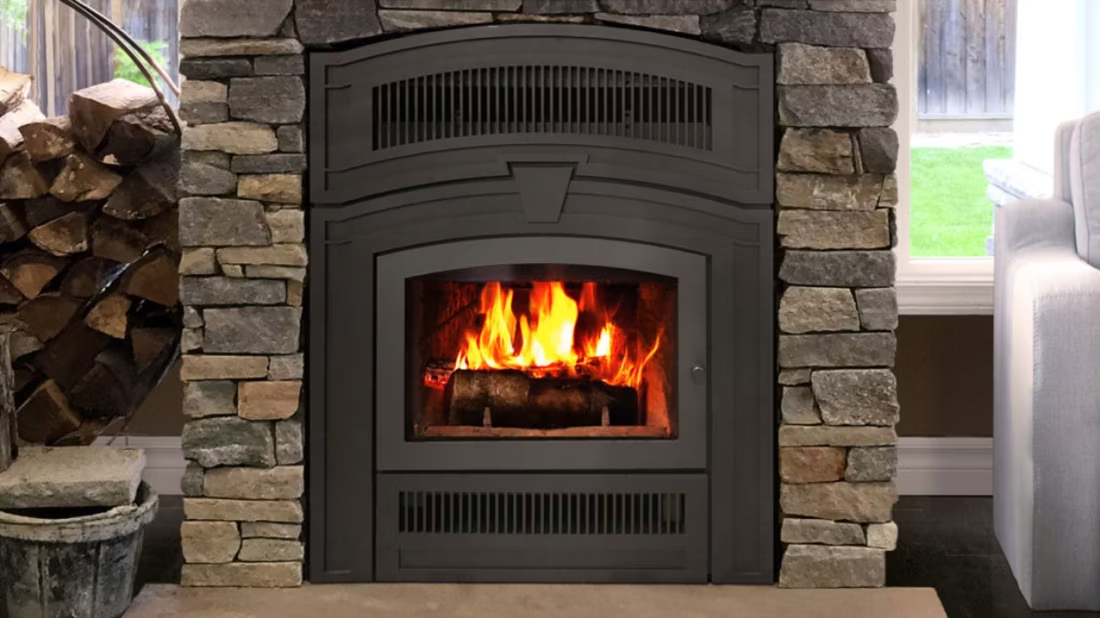
That said, wood-burning appliances still show up in Colesville—usually one of two ways. Many of the colonial-era homes built here in the 1950s through 1970s already have a masonry fireplace, and homeowners sometimes convert that open hearth into a working wood insert for real heat and better efficiency. Others add a stove specifically as non-electric backup heat, since Pepco's lines can go down for days after a bad ice storm or summer derecho, and a wood stove keeps working when the furnace blower doesn't. Local oak, hickory, and maple firewood—sourced from area tree services rather than a Forest Service permit—is the standard fuel either way.
Three steps. No salesperson until you're ready.
Tell us about your project
Your zip code, your situation, and the fuel you're leaning toward—or let the answers point you to one.
See what's actually available
The brands dealers within 100 miles genuinely carry—real options, never a catalog mirage.
Get your dealer & Project Guide
A trusted local dealer, plus the free Project Guide & Parts List that names every component of the job.
Frequently Asked Questions
How much does a wood stove or insert cost to install in Colesville?
Because so few wood-burning installations happen in Colesville in a given year, there isn't a deep local pricing pattern the way there is in a wood-heavy market like Burlington, VT. That said, DC-metro hearth dealers who do this work in Montgomery County typically quote $3,500 to $8,000 to convert an existing masonry fireplace to a wood insert with a stainless liner, and $4,500 to $9,500 for a freestanding stove that needs a full Class A chimney chase built from scratch. Homes with an existing, structurally sound masonry fireplace are almost always the cheaper path.
Is wood heat even a realistic option in Colesville, or should I just look at gas?
It's realistic, just uncommon. With gas and electric service both standard and reliable across Montgomery County, most Colesville homeowners default to a gas insert or electric fireplace for daily use—and that's usually the right call for convenience. Wood makes sense here for two specific reasons: you already have a masonry fireplace you want to bring back to life, or you want a heat source that keeps working when Pepco's lines are down after a storm. If neither applies to you, gas is probably the simpler answer.
Do I need a permit to install a wood stove in Colesville?
Yes. Wood-burning installations in unincorporated Montgomery County, including Colesville, go through the Montgomery County Department of Permitting Services (DPS), and the stove itself needs to meet current EPA 2020 NSPS emissions standards. Because these installs are relatively rare locally, it's worth confirming your installer has actually pulled a wood-appliance permit through DPS before—not every general hearth dealer in the DC area handles this specific permit regularly.
Where do people get firewood in Colesville?
There's no nearby national forest with cutting permits, so self-cut firewood isn't really part of the picture here the way it is out West. Colesville homeowners typically buy seasoned cordwood from local tree services and firewood delivery outfits serving Montgomery County, with oak, hickory, and maple being the three species you'll most commonly find—all dense hardwoods that burn hot and long, which matters if you're only loading the stove occasionally rather than running it as primary heat all winter.
I have an old masonry fireplace—insert or full stove replacement?
If your Colesville home was built in the 1950s through 1970s, there's a good chance it already has a masonry fireplace, and in most cases a wood insert is the better move than tearing it out for a freestanding stove. The insert uses your existing chimney (relined with a stainless liner) and turns a heat-losing open hearth into an actual efficient heat source. A local dealer will need to inspect the firebox and flue condition first—older Montgomery County chimneys sometimes need repair work before an insert can go in safely.
What size or type of wood stove makes sense for Colesville's climate?
With a winter low averaging around 25°F and a moderate overall heating season each year, Colesville doesn't need the extreme 20-plus-hour catalytic burn times that homes in Fargo, ND or Anchorage, AK rely on. A mid-size non-catalytic stove or insert—the kind offered by brands like Pacific Energy or Lopi—is plenty for supplemental heat or backup use here. If you're leaning toward primary heat instead, a local dealer can size it against your actual square footage, but oversizing is the more common mistake in a mild climate like this one.
How often does a wood stove or fireplace need to be inspected in Colesville?
The CSIA recommends an annual inspection regardless of how often you burn, and that matters more, not less, for the occasional-use pattern common in Colesville. A fireplace that only gets lit a handful of times a winter can still build creosote from incomplete, cooler burns, and infrequent use means problems like a cracked flue tile or bird's nest can go unnoticed longer between fires. Schedule the sweep in late summer, before the first cold snap.
Is a wood stove a good backup heat plan for power outages in Colesville?
Yes—this is actually one of the strongest local arguments for installing one. Pepco's lines through this part of Montgomery County can go down for extended periods after ice storms or summer derechos, and unlike a gas furnace (which still needs electricity to run its blower and ignition) or a pellet stove (which needs power for the auger), a properly installed wood stove keeps producing heat with zero electrical dependence. If outage resilience is your main reason for considering wood, say so up front with a local dealer—it changes what size and draft configuration makes sense.
Wood vs. gas vs. electric—what do most people in Colesville actually choose?
Most Colesville homeowners choose gas or electric for daily heat, since both are standard, reliable, and don't require fuel storage or ash cleanup—gas via existing utility lines, electric through Pepco. Wood tends to get chosen for a narrower set of reasons: an existing masonry fireplace worth restoring, a desire for non-electric backup heat, or simply wanting a real fire for ambiance in a family room. If none of those describe your situation, gas or electric will likely serve you better day to day. If one does, wood is still a perfectly good, well-supported option here—just not the default one.
Why is a fireplace insert so efficient?
An insert does two things: it seals the chimney completely, so you stop losing air you already paid to heat, and it radiates warmth into the room through the firebox and glass. Most add a heat-exchange fan that pulls cool room air underneath, wraps it around the hot firebox, and pushes it back out warm. Your home is more efficient before you've even lit the first fire.
What's the difference between an insert and a zero-clearance fireplace?
An insert is a fireplace that slides into a pre-existing wood-burning fireplace—if you don't have one, there's nothing to insert it into. A zero-clearance fireplace is built into a framed wall, which makes it the answer for remodels and new construction. Simple test: existing masonry fireplace means insert; blank or framed wall means zero-clearance.
Can I install a fireplace myself?
If you're putting a fire in your house on purpose, it's best to work with an expert. Unless you're genuinely experienced in framing, gas line, vent pipe, and the national code on clearances to combustibles, have a professional do it—and ideally the same company that sells you the fireplace, so warranty, service, and liability all live under one roof.
What is an in-home preview and do I need one?
It's a visit where a hearth professional measures your space, confirms the model you picked actually works in your home, and walks the specs—framing, gas line, venting, finish work—before anything is ordered. Some details you just can't know until you see the house. Never make a down payment without one; it's the single most-skipped step that burns buyers.
Nearby Dealers
Hearth shops serving Colesville and the surrounding area. Every listing shows whether it is a WhyFire partner, a dealer we have verified as authorized for the brands we recommend, or a local business carrying hearth products. No manufacturer pays for placement. How we verify dealers →
Complete Chimneys Fireplaces & Grills
Chimney.com
Capitol Chimney Service
Cyprus Air
Costello's Hearth & Spa - Rockville
The Fireplace Shop
Chelsea's Chimney
Masters Pellet Stoves
Westlake Ace Hardware
Fireside Hearth & Home - Elkridge
Trinity Chimney Service
Belair Engineering & Service Co, Inc
The Torch Guys
Affordable Outdoor Kitchens
Costello's Hearth & Spa - Glen Burnie
Aspen Green Gasworks
Cyprus Air, Indoor Comfort
Genesis Chimney Services
Lawn & Leisure
Find your wood fireplace in Colesville.
Tell us about your home and your reason for going with wood—backup heat, ambiance, or reviving an existing masonry fireplace—and we'll match you with a trusted local dealer plus a free Project Guide & Parts List for your specific Colesville project.i}(){}
Find Your Fireplace →