
Find your pellet stove in Carroll County.
Consistent, thermostat-controlled heat for Carroll County's rolling farmland and small towns—from Westminster to Manchester. We match you with a trusted local dealer who knows the fuel supply, the permits, and the venting.
Every Project Starts From One of These Five Situations
A practical middle ground for a moderate-cold climate.
Carroll County sits in climate zone 4A with a moderate winter heating load and average winter lows around 27°F—noticeably milder than places like Bismarck or Duluth, but still cold enough for six-plus months of real heating season. That's the sweet spot for pellet appliances: they don't need the multi-day burn capacity that a place with Fargo-style winters demands, but they still deliver enough sustained heat to matter on a January night in Westminster, Sykesville, or out toward Union Bridge.
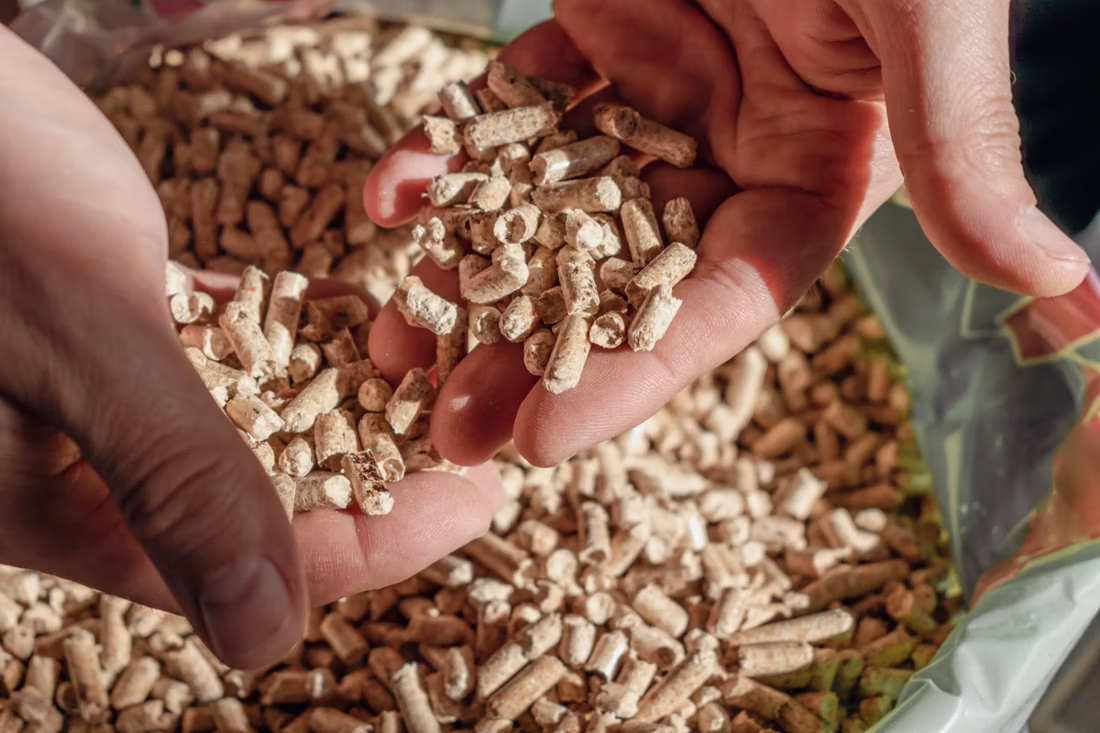
Carroll County's mix of working farms, wooded ridgelines, and suburban development around Eldersburg and Hampstead means homeowners here often want set-it-and-forget-it heat rather than the daily tending that cordwood requires—while still wanting something more efficient than baseboard electric. Regional pellet supply is solid: Energex, Hamer Pellet Fuel, and Greene Team Pellet Fuel are all commonly stocked at hearth shops and farm supply stores in the area, so you're not relying on a single distant source. A local dealer will size the unit to your square footage, confirm the venting path, and make sure you have a reliable pellet supply lined up before the first cold snap.
Three steps. No salesperson until you're ready.
Tell us about your project
Your zip code, your situation, and the fuel you're leaning toward—or let the answers point you to one.
See what's actually available
The brands dealers within 100 miles genuinely carry—real options, never a catalog mirage.
Get your dealer & Project Guide
A trusted local dealer, plus the free Project Guide & Parts List that names every component of the job.
Frequently Asked Questions
How much does a pellet stove installation cost in Carroll County?
Most pellet stove and insert installations in Carroll County run in the $4,500 to $7,500 range, depending on the unit, whether it's a freestanding stove or an insert into an existing fireplace, and the length of venting run required. Inserts going into an existing masonry fireplace with a straightforward vent path tend to land on the lower end. New freestanding installations that require running PVC or stainless vent pipe through an exterior wall, plus a hearth pad for clearance, push toward the upper end. A local dealer will give you a firm number after seeing your home, since venting length and wall type matter more than the stove price itself.
Do I need a permit to install a pellet stove in Carroll County?
Yes—a building permit is typically required for a new pellet stove or insert installation in Carroll County, whether you're in Westminster, Eldersburg, or one of the unincorporated townships. Most reputable local dealers pull the permit and coordinate the inspection as part of the installation, so you're not left navigating the county building office on your own. Because pellet appliances vent through a small-diameter pipe rather than a masonry chimney, the inspection is generally quicker than a wood stove install, but it still needs to happen—skipping it can create problems at resale or with your homeowner's insurance.
Where do I buy pellets locally, and how much should I budget?
Carroll County has decent regional access to bagged pellets—Energex, Hamer Pellet Fuel, and Greene Team Pellet Fuel are all commonly available through local hearth retailers and some farm supply stores. A typical home burning a pellet stove as primary or heavy supplemental heat through Carroll County's roughly six-month season uses somewhere between 2 and 3 tons, so budgeting for that volume ahead of the cold months (rather than buying bag by bag mid-winter, when prices and availability can tighten) is the smarter approach. Buying a full season's supply in the fall, stored dry in a garage or shed, is standard practice here.
What size pellet stove do I need for my home?
Sizing depends on square footage, ceiling height, and insulation quality, but as a general guide for Carroll County's climate: smaller units (under 1,500 sq ft rated) work well for a single large room or an open-concept main floor, while larger units (up to 2,500+ sq ft rated) can serve as primary heat for a well-insulated home. Older farmhouses common in the county's rural areas—with less insulation and more air infiltration—often need to size up a notch compared to a newer build in a subdivision near Sykesville. A local dealer will walk your home and size it properly rather than going off square footage alone, which matters because an undersized unit will run constantly without keeping up, and an oversized one will short-cycle.
Does a pellet stove need electricity to run?
Yes—this is the main tradeoff to understand. Pellet stoves rely on an auger to feed pellets and a blower to circulate heat and exhaust combustion air, both of which need household power. If Carroll County loses power during an ice storm or a summer derecho, a pellet stove without a backup power source will go dark, unlike a wood stove. Some homeowners here pair a pellet stove with a small battery backup or generator specifically for this reason, especially in more rural parts of the county where outages tend to last longer. If uninterrupted backup heat during outages is the priority, a wood stove or a gas unit with battery-backed ignition is worth comparing against pellet.
What's the difference between a pellet stove and a pellet insert?
A pellet stove is a freestanding unit that sits on a hearth pad and vents through an exterior wall or existing chimney—it can go almost anywhere with the right clearances. A pellet insert is built to slide into an existing masonry fireplace opening, converting a drafty old fireplace into an efficient, thermostat-controlled heat source while reusing the existing chimney for venting. For Carroll County's older homes with existing wood-burning fireplaces—common in Westminster's historic neighborhoods and older farmhouses—an insert is often the simpler upgrade. Newer homes without an existing fireplace usually go with a freestanding stove instead.
How often does a pellet stove need to be cleaned and serviced?
Pellet stoves need more frequent attention than a once-a-year wood stove sweep, but the work is lighter. Plan on emptying the ash pan every few days to weekly depending on use, a deeper cleaning of the burn pot and heat exchanger tubes every one to two weeks during heavy winter use, and a full annual service—including the exhaust venting and combustion blower—before the season starts each fall. Neglecting the burn pot cleaning is the most common cause of poor performance and error codes on pellet units. Most local dealers offer an annual service visit, which is worth scheduling in late summer before the first cold snap hits Carroll County.
Can I install a pellet stove myself, or do I need a professional?
While pellet stove venting is simpler than masonry chimney work, professional installation is still strongly recommended and typically required for permit approval in Carroll County. A licensed installer will properly size and route the vent pipe (through-wall or vertical), ensure correct clearances to combustibles, and verify the unit is level and draft-tested before you burn in it for the first time. DIY installs are a common source of failed inspections and, worse, improperly sealed vent connections that can leak combustion byproducts into the home. The upfront cost of professional installation is modest compared to the risk of doing it wrong.
Pellet vs. wood stove—which makes more sense for my Carroll County home?
Wood stoves burn cordwood—plentiful locally given Carroll County's oak, hickory, and maple woodlots—offer authentic flame, and keep working without electricity during outages. Pellet stoves trade that off-grid resilience for real convenience: load the hopper, set the thermostat, and get consistent heat without daily tending or splitting wood. Given Carroll County's moderate winters (27°F average lows, a moderate winter heating load overall) rather than truly severe cold, many homeowners here choose pellet for the lower-maintenance daily heat and keep wood as a backup or supplement for extended outages. If you want the cleanest, most hands-off experience and have reliable power, pellet is usually the better fit.
How often does a pellet stove need cleaning?
A clean pellet stove is a happy pellet stove. Plan on cleaning the burn pot about once a week when you're burning regularly—ash and clinkers gum up the air holes just like a pellet barbecue. Most pellet stove problems trace back to skipped cleaning that nobody explained up front. Some designs make it easy with a trapdoor burn pot: pull a lever and the gunk drops into the ash pan.
Why is my open fireplace making my house colder?
Open fireplaces suck—literally. As the fire burns, it consumes air your furnace already paid to heat and pulls it out through the chimney, so the house is actually colder after the fire goes out than before you lit it. An insert fixes this: it seals the chimney, puts fixed glass across the front, and turns that hole in your house into a real heat source.
What is an in-home preview and do I need one?
It's a visit where a hearth professional measures your space, confirms the model you picked actually works in your home, and walks the specs—framing, gas line, venting, finish work—before anything is ordered. Some details you just can't know until you see the house. Never make a down payment without one; it's the single most-skipped step that burns buyers.
Does a fireplace add value to my home?
On average, a fireplace adds back to the home about the same amount you spent installing it. Add the monthly savings from heating the rooms you actually use instead of the whole house—often hundreds of dollars a year—and the value case is strong before you even count what a fire does for how your family uses the room.
Stove and Fireplace Dealers in Carroll County
Chimney Sweeps Of Sherwood Forest
Pellet Brands Stocked Around Carroll County
Manufacturers will point you to the nearest stocking dealer.
Get your Carroll County pellet stove Project Guide.
Tell us about your home and we'll match you with a trusted local Carroll County dealer and send a free Project Guide & Parts List—sized for your space, with the vent kit and pellet supply sorted out before winter.
Find Your Fireplace →