
Real Ambiance, Zero Hassle, Any Room in Carroll County.
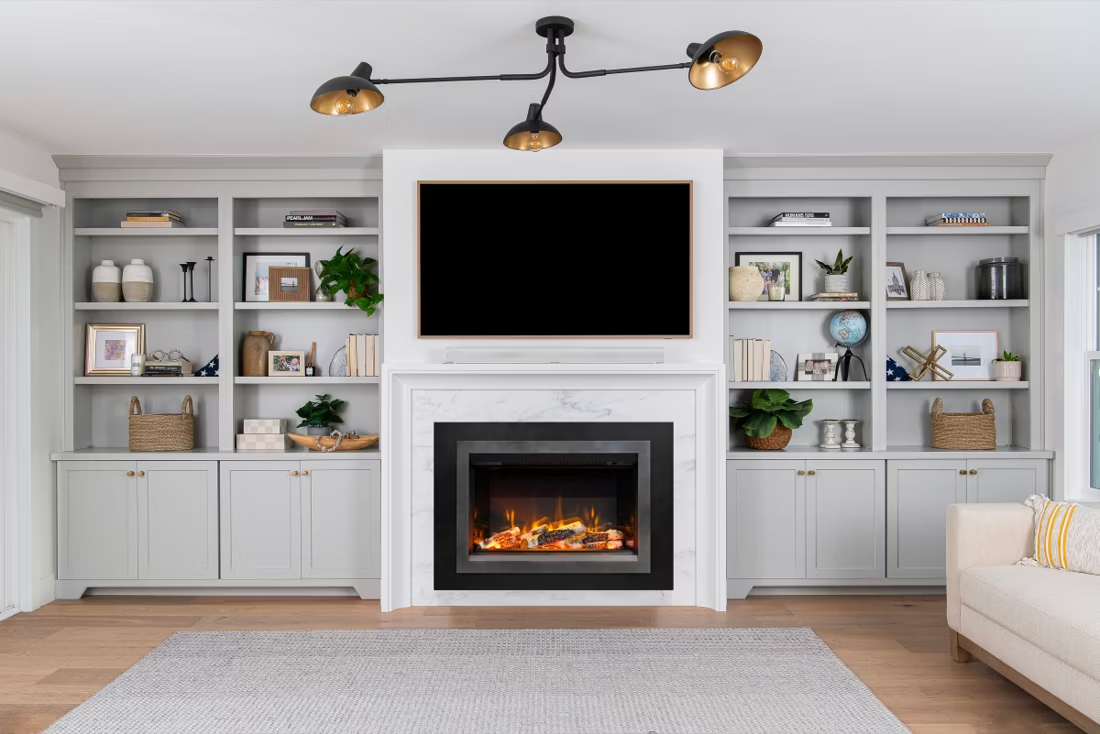
No chimney, no gas line, no venting—just plug in or wire up and go. Find the right electric fireplace or insert for your Carroll County home, and connect with a trusted local dealer.
Every Project Starts From One of These Five Situations
The easiest way to add heat and glow to any room.
Carroll County sits in the rolling farmland between Baltimore and the Pennsylvania line, with Westminster as the county seat and towns like Sykesville, Mount Airy, Hampstead, Manchester, Taneytown, and Eldersburg spread across the rest of the county. At climate zone 4A with a moderate winter heating load and winter lows averaging 27°F, the county sees a real but moderate heating season—nothing like the much longer, harsher winters of a place like Burlington, VT. Central furnaces and heat pumps carry most of the load here, which is exactly why electric fireplaces have become such a common addition: they fill in the gaps a central system doesn't reach, adding a warm focal point to a finished basement, a bonus room over the garage, or a primary bedroom without touching the ductwork.
Because there's no combustion involved, electric units skip the permitting headaches that come with wood or gas—no chimney, no gas line inspection, no clearance-to-combustibles calculations. That makes electric a good fit for Carroll County's historic downtown Westminster properties where venting a masonry chimney gets complicated, for condos and townhomes in newer Eldersburg and Sykesville developments, and for the many finished basements in the county's ramblers and colonials where a wood or gas install just isn't practical. Most plug-in units run on a standard 120-volt outlet and draw about as much power as a hair dryer on high; larger built-in wall units sometimes call for a dedicated circuit, which is where a licensed electrician comes in. Power in the county comes from Potomac Edison across most of the western and central townships, with BGE serving areas along the eastern edge near Eldersburg—either way, electric fireplaces are a light enough draw that most homes don't need a panel upgrade.
Three steps. No salesperson until you're ready.
Tell us about your project
Your zip code, your situation, and the fuel you're leaning toward—or let the answers point you to one.
See what's actually available
The brands dealers within 100 miles genuinely carry—real options, never a catalog mirage.
Get your dealer & Project Guide
A trusted local dealer, plus the free Project Guide & Parts List that names every component of the job.
Frequently Asked Questions
How much does an electric fireplace installation cost in Carroll County?
Plug-in electric inserts and freestanding stoves typically run $300 to $900 for the unit itself, with no installation labor required beyond setting it in place. Wall-mounted or built-in electric fireplaces that need a dedicated 240-volt circuit or custom framing usually land between $1,500 and $4,000 once you include the unit, a mantel or surround, and an electrician's time to run the circuit. Converting an existing masonry fireplace to a plug-in electric insert is one of the least expensive hearth upgrades available in the county precisely because there's no chimney work, no gas line, and no venting to install.
Do I need a permit to install an electric fireplace in Carroll County?
In most cases, no—a plug-in electric insert or freestanding unit that uses an existing standard outlet doesn't require a permit. If your project involves running a new dedicated circuit for a hardwired built-in unit, that electrical work typically does require a permit through Carroll County's Bureau of Permits and Inspections, and it should be pulled by a licensed electrician. Because there's no combustion appliance involved, you skip the mechanical and gas permitting that wood and gas installations require in the county.
Will an electric fireplace actually heat my room, or is it just for looks?
Most electric fireplaces put out somewhere around 4,600 to 5,000 BTUs on their heat setting—enough to comfortably warm a single room of 400 to 600 square feet, which covers most bedrooms, home offices, and finished basement rec rooms common in Carroll County. Given the county's moderate winter heating load and winter lows around 27°F, that's usually plenty to take the chill off a space your central system doesn't reach well, though an electric unit isn't sized to replace whole-home heating. Homes with drafty additions or converted attic spaces may want to size up to a larger insert or add a second unit rather than expect one fireplace to do it all.
Can I convert my existing wood fireplace to electric?
Yes, and it's a common project for older Carroll County homes with existing masonry fireplaces built around local oak, hickory, and maple firewood traditions. An electric insert slides into the existing firebox opening, plugs into a nearby outlet (or a new dedicated circuit for larger models), and gives you flame effect and supplemental heat without the ash, creosote buildup, or annual chimney sweep that come with wood burning. It's the fastest and least expensive fireplace conversion available, and it works in fireplaces where the chimney itself may be in poor repair, since the insert doesn't rely on the flue for anything but looks.
What's the difference between an electric fireplace, insert, and built-in wall unit?
An electric insert is designed to fit into an existing fireplace opening, using the same footprint as the old firebox. A freestanding electric stove or fireplace sits anywhere in a room and plugs into a standard outlet, similar to a portable heater with a flame display. A built-in or wall-mounted unit is designed to be recessed into new framing or mounted flush against a wall, often with a custom mantel and surround, and typically wired directly rather than plugged in. For Carroll County homes with an existing fireplace to update, an insert makes the most sense; for a new build or a basement remodel, a built-in wall unit is usually the better fit.
What does it cost to run an electric fireplace in Carroll County?
Most electric fireplaces draw around 1,500 watts on their highest heat setting. Running one for a full evening—say four or five hours—costs roughly the same as running a space heater for that time, generally landing in the range of 50 cents to a dollar depending on current Potomac Edison or BGE residential rates. Running the unit on flame-only mode with the heater off uses a fraction of that, which is why many homeowners leave the ambiance setting on for hours without much concern about the electric bill.
What's the best electric fireplace for a Carroll County basement?
Finished basements are one of the most common places electric fireplaces go in this county, and for good reason—no venting to route through a foundation wall, no combustion air concerns, and no moisture or mold risk the way a poorly vented gas unit can create below grade. A built-in wall unit set into a media center or framed accent wall works well in a finished basement rec room, while a smaller freestanding stove-style unit is a good fit for a basement office or guest suite. Look for models with adjustable heat output so the unit can run flame-only during humid summer months without adding unwanted warmth to the space.
Does an electric fireplace work during a power outage?
No—and this is worth knowing if you're comparing electric against wood or gas as a backup heat source. An electric fireplace is entirely dependent on grid power from Potomac Edison or BGE, so it shuts off the moment power drops, unlike a wood stove or a battery-backed gas unit. For Carroll County homeowners who want ambiance and convenient supplemental heat day to day, electric is an excellent choice. For homeowners specifically planning around winter storm outages, a wood stove or gas fireplace with battery ignition backup is the better primary option, with electric reserved for secondary rooms.
Electric vs. gas—which is right for my Carroll County home?
Gas fireplaces produce real heat output, run without a nearby outlet once installed, and can include battery-backed ignition for outage use, but they require a gas line and venting work that adds cost and complexity. Electric fireplaces install in an afternoon, cost far less upfront, produce zero emissions, and work in spaces like condos, historic downtown Westminster properties, or finished basements where running gas line or venting isn't practical or allowed. For a primary heat source in a main living area, gas often makes more sense given the county's real winter heating load. For a bedroom, basement, or secondary room where convenience and low cost matter more than raw BTU output, electric is usually the better fit.
Does an electric fireplace need a vent or chimney?
No—that's its superpower. An electric fireplace needs a wall and an outlet, period. No vent pipe, no gas line, no clearances to design around, which is why it works in bedrooms, offices, apartments, and walls where venting a gas or wood unit would be impractical or impossible. Installation is typically the simplest and least expensive of any fireplace type.
Do electric fireplaces actually produce heat?
Yes—most put out around 4,800–5,000 BTUs from a standard outlet, which comfortably warms a bedroom, office, or den as a comfort-zone heater. What they won't do is carry a whole house the way wood, gas, or pellet can. Think of electric as ambiance-first with honest supplemental heat: flames on with no heat in July, flames plus warmth in January.
What is an in-home preview and do I need one?
It's a visit where a hearth professional measures your space, confirms the model you picked actually works in your home, and walks the specs—framing, gas line, venting, finish work—before anything is ordered. Some details you just can't know until you see the house. Never make a down payment without one; it's the single most-skipped step that burns buyers.
Does a fireplace add value to my home?
On average, a fireplace adds back to the home about the same amount you spent installing it. Add the monthly savings from heating the rooms you actually use instead of the whole house—often hundreds of dollars a year—and the value case is strong before you even count what a fire does for how your family uses the room.
Stove and Fireplace Dealers in Carroll County
Chimney Sweeps Of Sherwood Forest
Find your electric fireplace in Carroll County.
Tell us a bit about your home and we'll match you with the right electric fireplace, insert, or built-in unit—and send you a free Project Guide & Parts List with your recommended local dealer.
Find Your Fireplace →