
Keep Your Family Warm and Safe—No Matter What
Most homes in this small Potomac-side community run on gas or electric heat. For the handful who want a wood stove or insert—for ambiance, backup heat, or an older fireplace conversion—we'll connect you with a dealer who actually works in Montgomery County.
Every Project Starts From One of These Five Situations
A tree-lined suburb built for gas and electric heat.
Cabin John is a small, densely wooded community of roughly 2,200 people tucked along the Potomac River just outside Washington, D.C. The climate here (Zone 4A, a moderate winter heating season, average winter lows around 26°F) is genuinely mild by cold-climate standards—nothing like Burlington, VT or Minneapolis, MN, where wood is often a household's primary heat source. Between the moderate winters and the tight suburban lots that define Cabin John and neighboring Glen Echo, most homes here were built around central gas or electric systems, not wood.
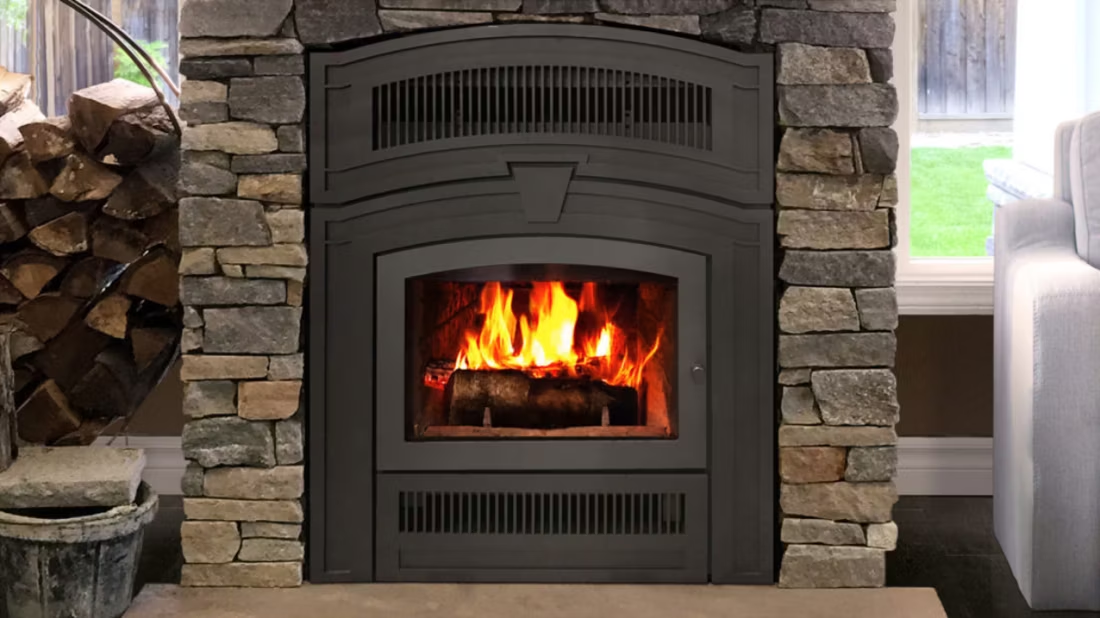
That said, a wood stove or insert isn't off the table. Some of Cabin John's older homes still have working masonry fireplaces, and a handful of owners convert them to wood-burning inserts for supplemental heat or to make an existing chimney useful again. Others want a stove specifically as backup heat: Cabin John's mature tree canopy is beautiful but it also means Pepco outages after ice storms and downline nor'easters aren't rare, and a wood stove keeps running when the grid doesn't. If you go this route, expect to source seasoned oak, hickory, or maple from a local tree service or firewood supplier—there's no national forest cutting permit office nearby, since Cabin John itself sits on developed, not forested, public land.
Three steps. No salesperson until you're ready.
Tell us about your project
Your zip code, your situation, and the fuel you're leaning toward—or let the answers point you to one.
See what's actually available
The brands dealers within 100 miles genuinely carry—real options, never a catalog mirage.
Get your dealer & Project Guide
A trusted local dealer, plus the free Project Guide & Parts List that names every component of the job.
Frequently Asked Questions
Is a wood stove actually practical in Cabin John?
For most households here, no—not as a primary heat source. Winters in Cabin John are mild enough (average lows around 26°F, a moderate winter heating season) that central gas or an electric heat pump comfortably covers the season. Where a wood stove makes sense is as a supplemental or backup system: keeping one room warm during a Pepco outage, adding ambiance to a den or family room, or making use of an existing masonry fireplace that would otherwise sit unused. If your goal is whole-home heat, a wood stove is the wrong tool for this climate. If your goal is backup warmth or atmosphere, it can absolutely work.
How much does a wood stove or insert installation cost near Cabin John?
Because wood-burning installs are uncommon in this part of Montgomery County, fewer local installers quote them regularly, and prices can vary more than they would in a wood-heavy market. Homeowners in the broader D.C. suburbs typically see quotes in the $4,000 to $9,000 range for a stove or insert, with the low end covering a straightforward insert into an existing masonry fireplace and the higher end covering new chimney or hearth work. Get at least two quotes—a dealer who regularly services Montgomery County will know the local permitting process and won't be guessing on venting.
Do I need a permit to install a wood stove in Cabin John?
Yes. Cabin John is unincorporated, so building permits go through the Montgomery County Department of Permitting Services (DPS), not a separate city office. Any new wood-burning appliance install—stove, insert, or new chimney—requires a permit and inspection. Because these installs are relatively rare in this area, it's worth confirming your installer has pulled Montgomery County wood-stove permits before, so you're not the one educating them on the process.
Where does firewood come from if there's no cutting permit land nearby?
Cabin John doesn't sit near a national forest or other public land with firewood cutting permits—it's a developed Potomac-side suburb, not timberland. Most owners who burn wood here buy seasoned cordwood from local tree services or firewood suppliers serving Montgomery County, often oak, hickory, or maple—the same hardwoods that make up the neighborhood's tree canopy. Buying seasoned wood (moisture content under 20%) matters more than usual in a market where wood-burning is uncommon, since fewer local suppliers specialize in it and quality can be inconsistent.
Should I get a wood stove or a wood insert for my Cabin John home?
If your home already has a working masonry fireplace—common in some of Cabin John's older houses—an insert is usually the better fit. It uses the chimney you already have and turns a decorative, heat-losing fireplace into an actual heat source. A freestanding stove makes more sense if you don't have an existing chimney and want a wood-burning appliance in a room like a den or finished basement. Given how few homes in this area are built around wood heat, a local dealer will need to evaluate your specific chimney and clearances rather than working off a standard template.
Will a wood stove keep my house warm during a Pepco outage?
Yes, and this is actually one of the more common reasons Cabin John homeowners install one. Mature trees along the Potomac make this a beautiful place to live, but they also mean downed limbs and lines during ice storms and summer thunderstorms, and Pepco outages that can stretch for hours or longer. A wood stove doesn't need electricity to produce heat, so it keeps a room livable when the furnace and heat pump go dark. Just know that most wood stoves need a stovepipe damper adjustment and manual lighting—they're not a plug-and-play generator replacement, but they work.
Are there wood-burning restrictions or air quality rules in Cabin John?
Cabin John doesn't currently have the kind of winter inversion or non-attainment air quality issues that trigger burn bans in some Western cities—there are no listed air quality concerns for this area. That said, any new installation still needs to meet current EPA emissions standards and pass Montgomery County's permit inspection. Because wood stoves are uncommon here, there's also less community friction around occasional use than you'd find in a place where wood smoke is a daily, widespread issue.
Wood vs. gas vs. electric—what do most Cabin John homes actually use?
Gas and electric are the standard choices here, and for good reason: the climate is mild enough that a heat pump or gas furnace handles the season without strain, and most homes were built with one or both already in place. Pepco's residential electric rate runs close to 18.7 cents per kWh, which is on the higher side nationally, so some owners lean toward gas or a wood stove for supplemental heat rather than running electric resistance heat during cold snaps. Wood remains the outlier—worth considering for ambiance or backup, but not something to plan as your main heat source in this climate.
Where do I find a wood stove dealer that actually serves Cabin John?
With a population of about 2,200, Cabin John doesn't have its own hearth retailers—homeowners here are typically served by dealers based in Rockville, Bethesda, or elsewhere in Montgomery County who cover the whole D.C.-suburb area. That's the main reason to work with someone who knows both the Montgomery County DPS permitting process and how to size a wood-burning appliance for a supplemental-heat role rather than a primary-heat one. We match you with a trusted dealer already doing this work in your part of the county rather than a big-box installer guessing at your chimney.
What's the difference between an insert and a zero-clearance fireplace?
An insert is a fireplace that slides into a pre-existing wood-burning fireplace—if you don't have one, there's nothing to insert it into. A zero-clearance fireplace is built into a framed wall, which makes it the answer for remodels and new construction. Simple test: existing masonry fireplace means insert; blank or framed wall means zero-clearance.
Why won't my new wood stove get going like my old one?
New wood stoves are 70%+ efficient, so far less heat goes up the flue—which also means less draft to get a fire established. The rule: build a genuinely hot fire for about 45 minutes before you choke it down. Skip that and you get smoke in the room, creosote in the chimney, and a fire that never takes off. Most performance complaints trace straight back to this.
What is an in-home preview and do I need one?
It's a visit where a hearth professional measures your space, confirms the model you picked actually works in your home, and walks the specs—framing, gas line, venting, finish work—before anything is ordered. Some details you just can't know until you see the house. Never make a down payment without one; it's the single most-skipped step that burns buyers.
Can a fireplace actually lower my heating bill?
Yes—by creating a comfort zone. A furnace heats every square foot of the house just to warm the one room you're in; a gas fireplace on low burns roughly a sixth of the gas a typical furnace does. Set the furnace around 55–60 degrees as a baseline, then heat the rooms your family actually uses. Families who heat this way commonly save $20–$60 a month.
Nearby Dealers
Hearth shops serving Cabin John and the surrounding area. Every listing shows whether it is a WhyFire partner, a dealer we have verified as authorized for the brands we recommend, or a local business carrying hearth products. No manufacturer pays for placement. How we verify dealers →
Cyprus Air
Costello's Hearth & Spa - Rockville
Aspen Green Gasworks
Capitol Chimney Service
Chimney.com
Genesis Chimney Services
Lawn & Leisure
The Fireplace Shop
Cyprus Air, Indoor Comfort
Homeliving Fireplaces
Chelsea's Chimney
Masters Pellet Stoves
Deckscapes Of Virginia
Nova Fireplace And Stove
Belair Engineering & Service Co, Inc
Find your wood stove option near Cabin John.
Tell us about your home and your reason for wanting wood heat—backup power, ambiance, or an old fireplace you'd like to use again—and we'll send your free Project Guide & Parts List along with a match to a trusted local dealer serving Montgomery County.
Find Your Fireplace →