
Steady heat for Cabin John's Potomac River winters.
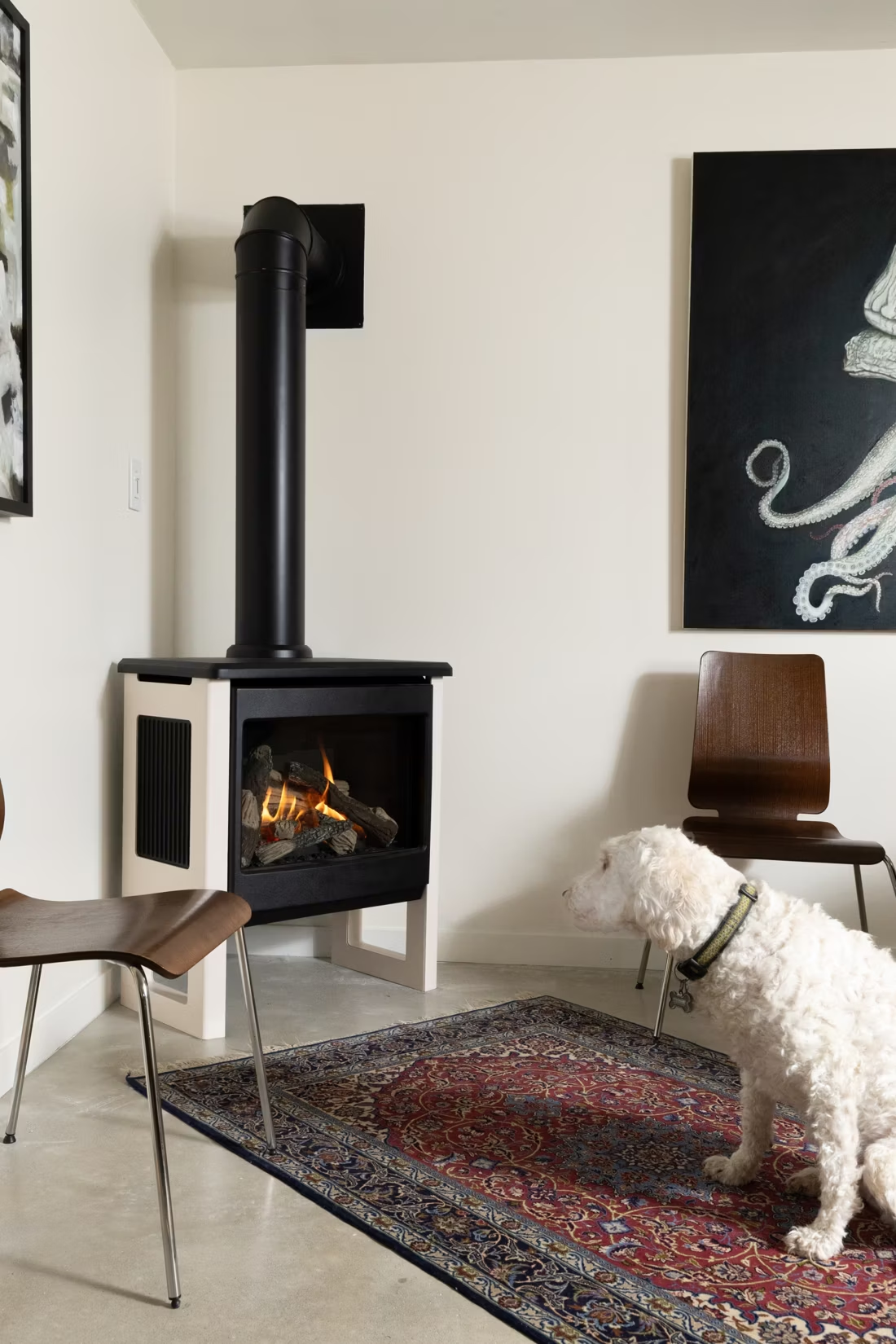
With a heating season that runs from fall through spring and winter lows averaging 26°F, Cabin John doesn't need a wood-burning setup to stay warm—it needs a properly vented gas fireplace. I'll match you with a trusted local dealer who knows Montgomery County permitting and can tell you what's actually installable in your home.
Every Project Starts From One of These Five Situations
A mild but real Mid-Atlantic winter, handled without a woodpile.
Cabin John sits at just 143 feet elevation along the Potomac, and its winters—averaging 26°F on the coldest nights, with a heating season that stretches from October into April—are moderate compared to places like Duluth or Fargo, but still cold enough for six-plus months of regular heating. Unlike a lot of the country, wood and pellet heat never really took hold here: small lots, close-set homes, and an established gas and electric infrastructure mean most Cabin John households never considered stacking cordwood, even though the older homes near the C&O Canal were often originally built around a masonry fireplace meant for oak, hickory, or maple.
That existing infrastructure is exactly why gas makes sense in Cabin John. Washington Gas lines run through most of Montgomery County, including this stretch between River Road and MacArthur Boulevard, so adding a direct-vent gas fireplace or converting an old masonry firebox is usually a matter of tapping an existing service line rather than building new infrastructure from scratch. With no local air-quality restrictions to navigate, the real decision here is less about whether gas is allowed and more about matching the right insert or built-in unit to a specific house—something a local Montgomery County installer, not a big-box store, is equipped to size correctly.
Three steps. No salesperson until you're ready.
Tell us about your project
Your zip code, your situation, and the fuel you're leaning toward—or let the answers point you to one.
See what's actually available
The brands dealers within 100 miles genuinely carry—real options, never a catalog mirage.
Get your dealer & Project Guide
A trusted local dealer, plus the free Project Guide & Parts List that names every component of the job.
Frequently Asked Questions
How much does a gas fireplace installation cost in Cabin John?
Most Cabin John installations run in the $4,000 to $10,500 range. A direct-vent insert dropped into an existing masonry fireplace—common in the older homes near the canal—tends to land on the lower end since the chimney chase is already there. A new built-in unit for a renovation or addition, requiring fresh gas line work and venting through an exterior wall, runs toward the upper end. Homes already on a Washington Gas line for their furnace or water heater usually see lower incremental costs than homes needing a new gas tap.
Can I convert my old wood-burning fireplace to gas?
Yes, and it's one of the more common projects in Cabin John, where a lot of the homes near MacArthur Boulevard and Seven Locks Road were built decades ago around a masonry fireplace originally meant for oak or hickory. Since wood-burning setups are essentially not used here anymore—small lots and close neighbors make stacking and seasoning firewood impractical—a gas insert with a stainless liner run through the existing chimney is the standard upgrade. Expect $4,000 to $8,500 depending on liner length and whether a new gas line needs to reach the firebox.
Is my home on natural gas or would I need propane?
Most of Cabin John, including the 20818 and 20817 zips, falls within Washington Gas's Montgomery County service area, so if your furnace, range, or water heater already runs on gas, adding a fireplace is typically a straightforward tap into an existing line. A handful of properties on the fringes of the community, particularly larger lots closer to the river where lines haven't been extended, may need propane instead. A local installer can confirm which applies to your address before you settle on a unit.
Will a gas fireplace still work if Pepco power goes out?
Many will, which is worth planning for given how often storms along the Potomac corridor knock out Pepco service for hours at a time. Units with IPI (intermittent pilot ignition) run on AA battery backup that kicks in automatically when power drops. Valor fireplaces skip the battery entirely—their pilot's thermocouple generates its own electricity to run the valve. If backup heat during an outage matters to you, ask your dealer which ignition system is on any model you're considering.
What's the difference between a gas fireplace, insert, and stove?
A gas fireplace is a built-in unit framed into a wall, typical in newer construction or a full renovation. A gas insert fits inside an existing masonry firebox, which describes a lot of the older homes in Cabin John that were originally built with a wood-burning hearth. A gas stove is a freestanding cabinet unit on a hearth pad, less common here than the insert route but sometimes used in additions or sunrooms where there's no existing chimney to reuse.
Do I need a permit to install a gas fireplace in Cabin John?
Yes. Cabin John is unincorporated, so permitting runs through the Montgomery County Department of Permitting Services (MCDPS) rather than a separate city office. You'll need a building permit plus a gas permit pulled by a licensed gas fitter, and the installer typically coordinates the final inspection. Established local hearth dealers who regularly work in Montgomery County usually handle this paperwork as part of the install quote.
Should I get a vented or vent-free gas fireplace?
Direct-vent units draw combustion air from outside and exhaust it back outside through sealed pipe, which is the standard most local dealers recommend regardless of location. Cabin John has no air-quality nonattainment issues, so vent-free units are technically permitted under Maryland code within proper room-sizing limits, but they release moisture and combustion byproducts into the living space—a real consideration in the Mid-Atlantic's humid summers and shoulder seasons. For a primary living-room installation, direct-vent is the safer, more common choice among installers working this part of Montgomery County.
How often does a gas fireplace need servicing?
Plan on an annual check, ideally in October or November before you're depending on it through the coldest stretch of a Cabin John winter. A technician inspects the burner, pilot assembly, and venting, and cleans the glass—a lighter job than a chimney sweep, but skipping it is how a pilot assembly fails on the one night it's actually below freezing. Expect to pay in the $150–$250 range for a standard visit from a local service tech.
Gas vs. electric fireplace—which fits a Cabin John home better?
Gas is the better primary heat source for most Cabin John homes with existing Washington Gas service—it produces real, sustained heat that holds up through a full winter without straining the electric bill. Electric fireplaces make more sense as a supplemental or ambiance option, particularly in a condo, a finished basement, or a room without gas access, since Pepco's residential rate of roughly 18.7 cents per kWh makes electric resistance heat pricier to run continuously than gas. A number of Cabin John homeowners install electric units in secondary rooms and keep gas or the existing HVAC system as the main heat source.
Can I put a TV above my fireplace?
Yes—with an asterisk. Fireplaces are hot and TVs don't like heat. Either put a mantel between them to deflect rising warmth, or choose a fireplace with heat-management technology that creates a cool zone on the wall above—the wall stays around 125 degrees, barely warm, while the room still gets full heat. If you like clean lines and don't want a mantel, heat management is the answer.
What's the difference between an insert and a zero-clearance fireplace?
An insert is a fireplace that slides into a pre-existing wood-burning fireplace—if you don't have one, there's nothing to insert it into. A zero-clearance fireplace is built into a framed wall, which makes it the answer for remodels and new construction. Simple test: existing masonry fireplace means insert; blank or framed wall means zero-clearance.
How much should I budget for a fireplace?
For an average home—covering the fireplace, the vent pipe, and basic installation—a budget between $3,900 and $5,500 gives you a lot of options across wood, gas, and pellet. By the time you add finish work, gas line, and electrical, the average complete installation lands between $5,000 and $12,000 all-in. In a remodel or new build, a good rule is to put about 2.5% of the total project cost toward the fireplace.
Can a fireplace actually lower my heating bill?
Yes—by creating a comfort zone. A furnace heats every square foot of the house just to warm the one room you're in; a gas fireplace on low burns roughly a sixth of the gas a typical furnace does. Set the furnace around 55–60 degrees as a baseline, then heat the rooms your family actually uses. Families who heat this way commonly save $20–$60 a month.
Nearby Dealers
Hearth shops serving Cabin John and the surrounding area. Every listing shows whether it is a WhyFire partner, a dealer we have verified as authorized for the brands we recommend, or a local business carrying hearth products. No manufacturer pays for placement. How we verify dealers →
Cyprus Air
Costello's Hearth & Spa - Rockville
Aspen Green Gasworks
Capitol Chimney Service
Chimney.com
Genesis Chimney Services
Lawn & Leisure
The Fireplace Shop
Cyprus Air, Indoor Comfort
Homeliving Fireplaces
Chelsea's Chimney
Masters Pellet Stoves
Deckscapes Of Virginia
Nova Fireplace And Stove
Belair Engineering & Service Co, Inc
Get your free Project Guide & Parts List for a gas fireplace in Cabin John.
Tell me about your home and gas access—Washington Gas or propane—and I'll match you with a trusted local dealer serving Montgomery County, then send a free Project Guide & Parts List with the exact vent kit and parts your project needs.
Find Your Fireplace →