
Automated warmth for the coldest corner of Maine's North Woods.
From Greenville's Moosehead Lake shoreline to the unorganized townships north of Dover-Foxcroft, pellet stoves offer thermostat-like convenience in one of the least populated, coldest counties in Maine. Find the right unit and connect with a trusted local dealer.
Every Project Starts From One of These Five Situations
Automated heat for one of the least populated counties in the Lower 48.
Piscataquis County is the largest county in Maine by land area and one of the least densely populated counties east of the Mississippi—nearly 4,400 square miles of North Woods forest, spruce-fir flats, and lakes anchored by Moosehead Lake and Mount Katahdin, with year-round population concentrated in a handful of towns like Dover-Foxcroft, Milo, and Greenville. Much of the county north of Greenville is unorganized territory, with more moose than people in some townships. Zone 6A winters here are long and severe, with stretches of sub-zero nights that rival Duluth, Minnesota. For homeowners already splitting maple, birch, beech, oak, and spruce for a wood stove, a pellet stove offers something wood can't: a thermostat, an auger, and heat that doesn't require getting up at 2 a.m. to reload.
Because Piscataquis County has no air quality non-attainment issues or wood-burning curtailment periods, pellet stoves here get chosen for convenience rather than compliance. Maine Woods Pellet Co, based just over the county line in Athens, and New England Wood Pellet both supply the region, alongside Lignetics bags carried by hardware stores in Dover-Foxcroft and Greenville. Building permit oversight depends on where you live: incorporated towns like Dover-Foxcroft, Milo, and Greenville handle permitting through their own code enforcement officers, while the county's unorganized townships fall under Maine's Land Use Planning Commission (LUPC), which reviews structures and appliance installations in the North Woods' unincorporated areas.
Three steps. No salesperson until you're ready.
Tell us about your project
Your zip code, your situation, and the fuel you're leaning toward—or let the answers point you to one.
See what's actually available
The brands dealers within 100 miles genuinely carry—real options, never a catalog mirage.
Get your dealer & Project Guide
A trusted local dealer, plus the free Project Guide & Parts List that names every component of the job.
Frequently Asked Questions
How much does a pellet stove installation cost in Piscataquis County?
Expect a range similar to the rest of rural Maine—roughly $3,000 to $6,000 depending on the stove, whether venting runs through an exterior wall or an existing chimney, and hearth pad requirements. Homes in the unorganized townships north of Greenville or out toward Baxter State Park's approach roads may see a modest travel charge added by installers based in Dover-Foxcroft or Milo, since some of these locations are 45 minutes or more from the nearest hearth shop. A local retailer can give you a firm number after an in-home visit.
Where can I buy pellets in Piscataquis County, and how far in advance should I stock up?
Maine Woods Pellet Co mills pellets just south of the county line in Athens, and New England Wood Pellet and Lignetics bags are both carried by hardware and feed stores in Dover-Foxcroft and Greenville. Because winter storms can close roads for a day or two at a time—especially around Moosehead Lake and the approaches to Baxter State Park—most local dealers recommend buying your season's supply (typically 2 to 3 tons for a primary-heat home) in September or October, before the first hard freeze, rather than restocking bag by bag through the winter.
What size pellet stove do I need for a Piscataquis County home?
Zone 6A winters here mean sizing on the higher end of manufacturer recommendations. A small hopper stove (around 40 lb capacity) suits a camp or seasonal cabin used on weekends; a mid-size unit with a 60 to 80 lb hopper is the more common choice for year-round homes in Dover-Foxcroft, Milo, or Greenville, since it can run overnight without a refill during the coldest stretches. Larger, older farmhouses common throughout the county often do better with a second heat source—wood stove or oil furnace—as backup rather than oversizing the pellet unit.
Do I need a permit to install a pellet stove in Piscataquis County?
It depends on where you live. In incorporated towns—Dover-Foxcroft, Milo, Guilford, Greenville—a building permit for the installation goes through the town's code enforcement officer. If you're in one of the county's unorganized townships, which make up a large share of Piscataquis County's land area, permitting falls under Maine's Land Use Planning Commission (LUPC) rather than a town office. Either way, most local installers handle the paperwork as part of the job, so you're not tracking down the right office yourself.
Will my pellet stove work if the power goes out?
Not without a backup power source. Pellet stoves rely on an electric auger to feed fuel and a blower to distribute heat, so a power outage stops the stove even with a full hopper. This matters in Piscataquis County, where ice storms and heavy nor'easters can knock out Central Maine Power lines in the more remote parts of the county for a day or more. Many local homeowners pair a pellet stove with a small generator or battery backup sized to run the auger and blower, or keep a wood stove as a true off-grid backup. Ask your dealer about UPS options sized for your specific stove.
Pellet stove vs. wood stove—which makes more sense out here?
With maple, birch, beech, oak, and spruce covering most of the county, cutting your own firewood is a real option for a lot of Piscataquis County households, and a wood stove keeps working through a power outage—a genuine advantage in the North Woods. A pellet stove trades that off-grid resilience for convenience: no splitting, stacking, or hauling, more even heat output, and a hopper that can run 24 to 60 hours between refills depending on the model. Households already committed to processing their own wood tend to stick with wood stoves; households buying fuel either way—pellets by the ton or cordwood by the truckload—often find pellet stoves less physically demanding as a primary heat source in a smaller year-round home.
How often does a pellet stove need to be cleaned and serviced?
Plan on a full cleaning of the burn pot, ash pan, and exhaust venting every one to two weeks during heavy winter use, and a full annual service—including the auger motor, blower, and venting—before each burning season starts. Piscataquis County's long heating season, often running from late September into May, means more total burn hours than a lot of the country, so sticking to that maintenance schedule matters for keeping the stove running efficiently through the coldest months rather than troubleshooting a clog in January.
What's the best pellet stove for Piscataquis County's climate?
Look for a stove with a larger hopper (60 lb or more) so it can run through the night without a refill during sub-zero stretches, and a reliable auger system rated for continuous cold-weather operation. Because the county's power grid can be less reliable in its more remote reaches, some homeowners also prioritize models with simple mechanical controls over units that depend heavily on circuit boards, since simpler electronics are easier to service locally if something goes wrong far from a repair shop. A local dealer familiar with the county's rural power situation can point you toward models that hold up best here.
Pellet stove vs. oil furnace—is pellet worth it as a primary heat source?
Oil heat has long been the default for rural Maine homes, including much of Piscataquis County, but oil prices swing more than pellet prices, and a pellet stove lets you heat the rooms you actually live in rather than the whole house through ductwork. Most homeowners here don't fully replace an oil furnace—they add a pellet stove in the main living area to cut oil consumption and provide zone heat, keeping the furnace as backup for the rest of the house and for extended trips away from home. That combination tends to work well for the mix of older farmhouses and camps common throughout the county.
How often does a pellet stove need cleaning?
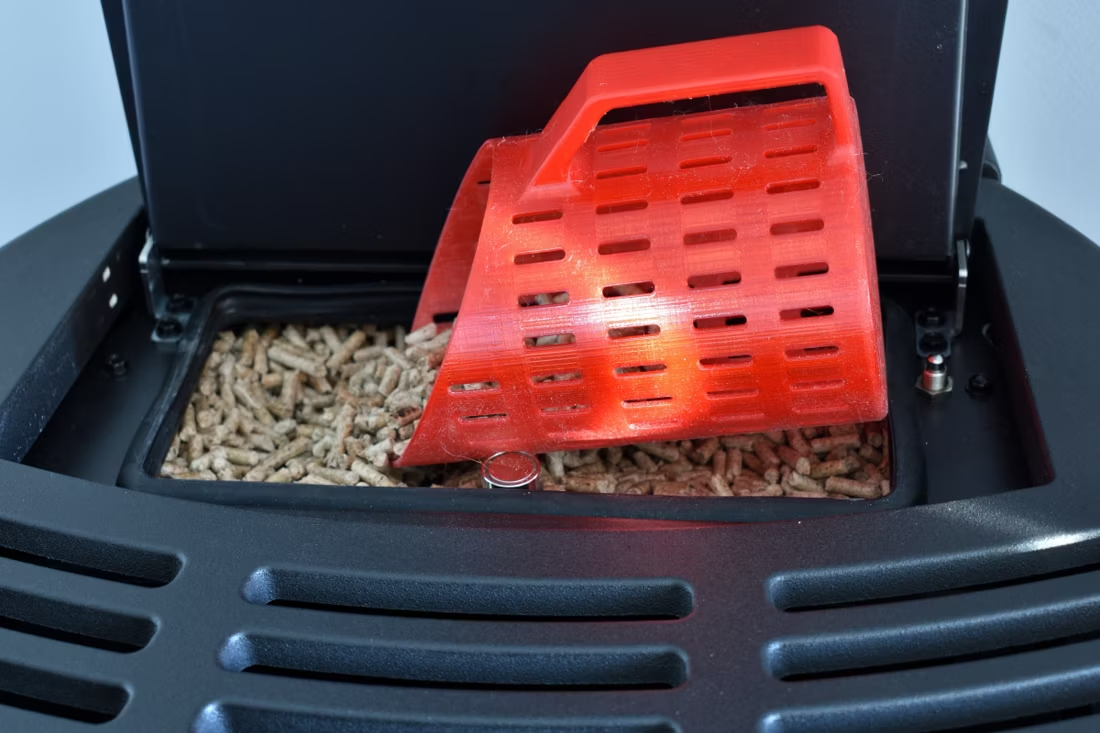
A clean pellet stove is a happy pellet stove. Plan on cleaning the burn pot about once a week when you're burning regularly—ash and clinkers gum up the air holes just like a pellet barbecue. Most pellet stove problems trace back to skipped cleaning that nobody explained up front. Some designs make it easy with a trapdoor burn pot: pull a lever and the gunk drops into the ash pan.
Why is my open fireplace making my house colder?
Open fireplaces suck—literally. As the fire burns, it consumes air your furnace already paid to heat and pulls it out through the chimney, so the house is actually colder after the fire goes out than before you lit it. An insert fixes this: it seals the chimney, puts fixed glass across the front, and turns that hole in your house into a real heat source.
Can a fireplace actually lower my heating bill?
Yes—by creating a comfort zone. A furnace heats every square foot of the house just to warm the one room you're in; a gas fireplace on low burns roughly a sixth of the gas a typical furnace does. Set the furnace around 55–60 degrees as a baseline, then heat the rooms your family actually uses. Families who heat this way commonly save $20–$60 a month.
Does a fireplace add value to my home?
On average, a fireplace adds back to the home about the same amount you spent installing it. Add the monthly savings from heating the rooms you actually use instead of the whole house—often hundreds of dollars a year—and the value case is strong before you even count what a fire does for how your family uses the room.
Pellet Brands Stocked Around Piscataquis County
Manufacturers will point you to the nearest stocking dealer.
Find your pellet stove in Piscataquis County.
Tell us a bit about your home and we'll match you with the right pellet stove or insert, plus a free Project Guide & Parts List—including the vent kit—and a trusted local dealer to install it.
Find Your Fireplace →