
Heating solutions built for Maine's deepest north woods.
Wood, gas, pellet, and electric fireplace resources for Dover-Foxcroft, Greenville, Milo, and the unorganized townships that cover most of Piscataquis County. Find the right unit for a Zone 6A winter and connect with a trusted local hearth retailer.
Every Project Starts From One of These Five Situations
Cold, remote, and forested—heating the way this county always has.
Piscataquis County is Maine's largest county by land area and one of its least populated—roughly 476 residents scattered across vast forested townships north of Moosehead Lake and the Hundred-Mile Wilderness. Zone 6A winters here run long and hard, closer in feel to Caribou than to coastal Maine, with sustained cold stretches and heavy snow load through the season. The county sits inside a working forest—maple, birch, beech, oak, and spruce are all cut locally, and wood heat has never really lost ground here the way it has in more suburban parts of the state.
What you'll find on this hub: hearth retailers, service technicians, and fuel suppliers serving the whole county—from Dover-Foxcroft's small commercial core out through Greenville, Milo, Brownville, and the unorganized territories where the nearest dealer may be an hour's drive. Pick your fuel below to see local dealers, typical installation costs, and unit recommendations. Whether you're heating a year-round home in Dover-Foxcroft or a camp near Moosehead Lake, this is the starting point.
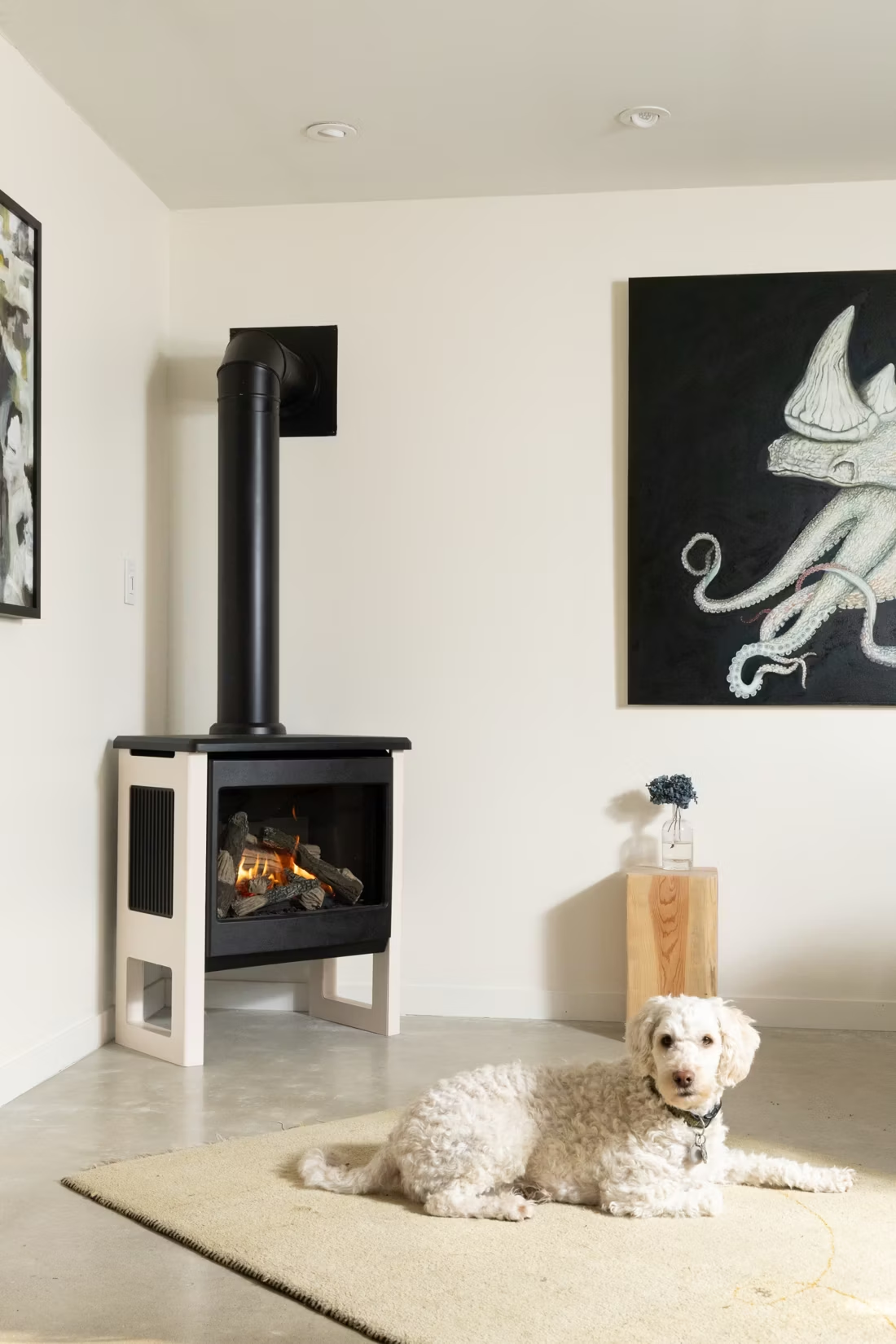
Four fuels. One honest answer for Piscataquis County.
Wood
See what's available near Piscataquis County.
Find your wood stove →Gas
See what's available near Piscataquis County.
Find your gas fireplace →Pellet
See what's available near Piscataquis County.
Find your pellet stove →Electric
See what's available near Piscataquis County.
Find your electric fireplace →Three steps. No salesperson until you're ready.
Tell us about your project
Your zip code, your situation, and the fuel you're leaning toward—or let the answers point you to one.
See what's actually available
The brands dealers within 100 miles genuinely carry—real options, never a catalog mirage.
Get your dealer & Project Guide
A trusted local dealer, plus the free Project Guide & Parts List that names every component of the job.
Frequently Asked Questions
Which fuel works best in Piscataquis County?
Wood is the default here, and for good reason—this is a working-forest county with maple, birch, beech, oak, and spruce readily available, and a Zone 6A heating season long enough that a properly sized catalytic or non-catalytic wood stove earns its cost quickly. Many households already have a woodlot or a neighbor who does. Gas is a real option in Dover-Foxcroft and Milo, mostly on propane since there's no natural gas utility in the county—it's the choice for households that want set-it-and-forget-it heat or a backup during long stretches away from the house. Pellet is a solid middle path—brands like Maine Woods Pellet Co. and New England Wood Pellet are made and sold regionally, so supply isn't the issue that it can be in fuel-scarce parts of the country. Electric fireplaces are common for supplemental warmth and ambiance in living rooms and bedrooms, but given the length and severity of the heating season, almost nobody here treats electric resistance heat as a primary source. Most year-round homes run wood or pellet as primary heat with propane or electric as backup or supplement.
Do I need a permit to install a fireplace in Piscataquis County?
In the towns of Dover-Foxcroft, Greenville, Milo, and Brownville, yes—building permits are required for new wood stoves, wood inserts, gas appliances, and pellet stoves, generally handled through each town's code enforcement officer. In the county's large unorganized territories, permitting runs through the State Fire Marshal's Office and Maine's Unorganized Territory permitting process rather than a town office, which can mean a longer lead time than homeowners in incorporated towns expect. Gas installations need a licensed propane technician for the tank and line work regardless of jurisdiction. Most local hearth retailers who install in this county are used to navigating both the town and unorganized-territory paths, and they'll typically pull the permit as part of the installation rather than leaving it to the homeowner.
Are there air quality restrictions on wood burning in Piscataquis County?
No—Piscataquis County has no air quality non-attainment designation and no wood-burning curtailment program. The population density here is low enough, and the terrain open enough, that the inversion and smoke-buildup issues that trigger burn bans in western basin towns simply don't apply. That said, a newer EPA-certified stove still makes practical sense for a county this cold: it means fewer cords burned per winter and less time spent reloading during a January cold snap, even without a regulatory reason to upgrade.
Can one local hearth retailer handle all four fuel types?
Given how few retailers actually operate in a county this sparsely populated, most that do carry multiple fuels out of necessity—a single dealer serving Dover-Foxcroft and the surrounding towns typically stocks wood stoves, pellet stoves, and propane gas units, with electric fireplaces available as a smaller side category. There generally isn't the retailer density to support fuel-specialist shops the way you'd see in a denser county, so the dealers that do serve this territory tend to be generalists who can walk you through wood, pellet, and gas side by side and tell you honestly which one fits your specific home and woodlot situation.
How does service work in the unorganized townships?
Service technicians covering Piscataquis County are based in the towns—Dover-Foxcroft, Milo, Greenville—and travel out from there, sometimes considerable distances into the unorganized territories near Moosehead Lake or the Hundred-Mile Wilderness. Expect a travel charge on top of standard service rates for camps and remote year-round homes, and expect to book chimney sweeps and gas inspections well before the season starts (August–October) rather than waiting for a mid-winter breakdown, since a technician may not be able to reach a remote property quickly once snow closes secondary roads. If you're heating a seasonal camp, an annual pre-season sweep and inspection is the single most useful thing you can schedule.
What's the typical cost range for fireplace installation across all fuel types in Piscataquis County?
Wood stove or insert installation runs roughly $4,000–$8,500 for a typical install, more if new chimney work is required for a camp or older farmhouse. Propane gas fireplace, insert, or stove installation runs about $4,000–$10,000 depending on whether a new propane tank and line are needed. Pellet stove or insert installation is generally $4,000–$7,000. Electric fireplace costs range from $200–$2,500 for the unit itself, plus $300–$1,000 in labor for anything beyond a plug-and-play wall unit. Given the smaller number of dealers serving this county, it's worth asking upfront about travel charges for installs outside the immediate town centers—those can meaningfully shift the total for a camp or rural property.
Can a fireplace actually lower my heating bill?
Yes—by creating a comfort zone. A furnace heats every square foot of the house just to warm the one room you're in; a gas fireplace on low burns roughly a sixth of the gas a typical furnace does. Set the furnace around 55–60 degrees as a baseline, then heat the rooms your family actually uses. Families who heat this way commonly save $20–$60 a month.
Does a fireplace add value to my home?
On average, a fireplace adds back to the home about the same amount you spent installing it. Add the monthly savings from heating the rooms you actually use instead of the whole house—often hundreds of dollars a year—and the value case is strong before you even count what a fire does for how your family uses the room.
How much should I budget for a fireplace?
For an average home—covering the fireplace, the vent pipe, and basic installation—a budget between $3,900 and $5,500 gives you a lot of options across wood, gas, and pellet. By the time you add finish work, gas line, and electrical, the average complete installation lands between $5,000 and $12,000 all-in. In a remodel or new build, a good rule is to put about 2.5% of the total project cost toward the fireplace.
Wood, gas, pellet, or electric—how do I choose?
Match the fuel to your life, not the other way around. Wood: lowest fuel cost and total power-outage independence, but you're hauling and stacking. Gas: press a button, set a thermostat, no maintenance to speak of. Pellet: wood economics with automatic feeding, in exchange for weekly cleaning and a need for electricity. Electric: plugs in anywhere with honest supplemental heat. Nobody regrets the fuel that fits how they actually live.
Stove and Fireplace Dealers in Piscataquis County
Listings include WhyFire partner dealers, dealers we have verified as authorized for the brands we recommend, and established local businesses that carry hearth products. Every listing shows which one it is. The ones marked Preferred run on WhyFire's software, so they can show you real pricing and book your appointment right here. No manufacturer pays for placement. How we verify dealers →
Nicatou Stoves
Nicatou Stove Shop
Ashlee Stove & Coal Shop
Moosehead Trail Home & Hearth
Find your fireplace in Piscataquis County.
Tell us your fuel and location and we'll match you with a trusted local dealer and send you a free Project Guide & Parts List—the exact parts, including the vent kit, for your project.
Find Your Fireplace →