
Real heat, zero venting, for Penobscot County winters.
No chimney, no gas line, no permit hassle—just plug in or wire up and add warmth to a room, from a Bangor apartment to a Brewer sunroom to a farmhouse bedroom out toward Milford. Find the right unit and get matched with a trusted local dealer.
Every Project Starts From One of These Five Situations
The easiest way to add warmth to a cold Penobscot County room.
Penobscot County runs from the Bangor-Brewer-Old Town corridor along the river up through Milford, Lincoln, and the gateway towns near Millinocket, and winters here are long—a heating season on par with Caribou or across the border in Burlington, VT, with average lows around 9°F. Most homes in the county lean on wood, oil, or propane as primary heat, often burning maple, birch, beech, oak, or spruce cut from the county's own forestland. Electric fireplaces don't try to replace any of that. Instead, they solve a different problem: adding real, controllable warmth to a specific room—a bedroom addition in Hampden, a finished basement in Old Town, a second-floor apartment above a Main Street storefront in Bangor where there's no chimney and never will be.
Versant Power (the old Bangor Hydro District) serves most of the county's electric load, and running an electric fireplace as zone heat is straightforward math against that rate—it's not going to carry a whole house through a Penobscot County January, but it will take the edge off a cold room without touching your existing heating system. There's no clearance table, no chimney sweep, and in most cases no building permit at all for a simple plug-in insert. Built-in wall units that need a new dedicated circuit are a different story—that's electrician work, and depending on your town, it may mean a call to your local Code Enforcement Officer (Bangor, Old Town, and most Penobscot County towns handle permitting at the municipal level, not the county). Either way, the appeal is the same: real flame-look ambiance and supplemental heat with none of the venting or fuel-storage tradeoffs of wood, gas, or pellet.
Three steps. No salesperson until you're ready.
Tell us about your project
Your zip code, your situation, and the fuel you're leaning toward—or let the answers point you to one.
See what's actually available
The brands dealers within 100 miles genuinely carry—real options, never a catalog mirage.
Get your dealer & Project Guide
A trusted local dealer, plus the free Project Guide & Parts List that names every component of the job.
Frequently Asked Questions
How much does an electric fireplace installation cost in Penobscot County?
A basic plug-in electric insert or mantel unit typically runs $300 to $900 installed—often just setting the unit into an existing opening or against a wall, since most run on a standard 120V outlet. Built-in wall units or recessed inserts that require a licensed electrician to run a new dedicated 20-amp circuit—common in older Bangor and Old Town homes with older panels—run higher, typically $1,200 to $2,200 once labor, any wall framing, and finish trim are included. Homes with a panel that's already at capacity may need panel work first, which local electricians can quote separately.
Do I need a permit to install an electric fireplace in Penobscot County?
Usually not for a plug-in unit—it's an appliance, not a fixed installation, and doesn't typically trigger a permit. If you're installing a built-in wall unit that requires new wiring or a dedicated circuit, that electrical work generally does need a permit through your municipality's Code Enforcement Officer—Bangor, Old Town, Brewer, and most other Penobscot County towns each handle this locally rather than through the county. A licensed electrician working on your project will usually know exactly what your specific town requires and can pull the permit as part of the job.
What size electric fireplace do I need for my room?
Electric fireplaces are rated for the specific room they're heating, not the whole house—a standard 1,500-watt unit is built to supplement heat in roughly 150 to 400 square feet, depending on ceiling height and how drafty the room is. Penobscot County has a lot of older farmhouse construction with high ceilings and single-pane windows in the older housing stock, especially outside the Bangor-Brewer core, so a unit that's rated for a room on paper may still fall short in a leaky old house. If you're heating a finished basement, sunroom addition, or a single bedroom, most local dealers will ask about your square footage, insulation, and window count before recommending wattage.
What's the difference between an electric insert, wall-mount, and mantel unit?
An electric insert is built to slide into an existing fireplace opening—masonry or zero-clearance—and is the natural choice if you already have a fireplace you want to convert away from wood or gas. A wall-mount (or built-in recessed) unit sits flush in a wall like a flat-screen TV and usually needs an electrician for the dedicated circuit and, sometimes, minor framing. A mantel or freestanding unit is furniture-style—plug it in and place it anywhere, no installation required beyond finding an outlet. For a Penobscot County home with an existing hearth opening, an insert is usually the cleanest upgrade; for a room with no fireplace at all, wall-mount or freestanding units are more common.
Will my electric fireplace still work during a power outage?
No—and this is the honest tradeoff worth knowing before you buy. Electric fireplaces need power to run, full stop, and Penobscot County sees real winter outages during ice storms and nor'easters, sometimes lasting a day or more in rural stretches near Milford or Lincoln. If backup heat during an outage matters to you, a wood stove or a battery-backed gas unit is the better fit for that specific job. Electric fireplaces are best understood as supplemental comfort and ambiance for when the power is on—which, for most rooms most of the time, is exactly what people are looking for.
How much does it cost to run an electric fireplace in Penobscot County?
At typical Versant Power residential rates, a standard 1,500-watt unit running on high costs roughly 24 to 30 cents an hour to operate—call it $2 to $3 for a full evening of use. That's inexpensive for zone heating a single room, but it's not designed to be your primary heat source across a long, Caribou-caliber winter; used that way instead of your furnace or wood stove, the electric bill adds up fast. Most Penobscot County homeowners use electric units to take the chill off a specific room rather than to replace their main heat source.
Where does an electric fireplace make the most sense in my home?
The best fits are rooms without a chimney or gas line and no easy path to add one—bedrooms, home offices, finished basements, sunroom additions, and apartments above storefronts in places like downtown Bangor or Old Town where landlords often won't allow venting modifications. They're also popular in rental units generally, since a freestanding or mantel-style unit can move with you. For a primary living room in a single-family home with an existing chimney, wood or gas usually delivers more heat for the investment—electric shines as the low-hassle, no-permit option for a secondary space.
Electric vs. wood—which is right for my Penobscot County home?
Wood—burning local maple, birch, beech, oak, or spruce—remains the backbone of home heating for a lot of Penobscot County households, especially outside the Bangor-Brewer core, and it keeps working when the power doesn't. Electric fireplaces can't compete with that as backup heat, but they don't need a chimney, don't produce ash, and don't require any wood handling—which matters in an apartment, a townhouse, or a room where adding a flue simply isn't possible. Many households end up with both: wood or a wood insert for primary or backup heat in the main living space, and an electric unit for a bedroom or basement where running venting doesn't make sense.
Electric vs. pellet—which is right for my Penobscot County home?
Pellet stoves burn compressed hardwood pellets—regional brands like Lignetics, New England Wood Pellet, and Maine Woods Pellet Co are all sold locally—and produce real, substantial heat output, but like electric units they need power to run the auger and blower, so neither is a true outage backup on its own. The difference is heat output: a pellet stove can genuinely heat a room or a home zone through a Penobscot County winter, while most electric fireplaces are built for supplemental warmth and ambiance rather than carrying a room's full heating load. If you want a no-permit, plug-and-play option for a secondary room, electric wins on simplicity. If you want a serious secondary heat source that can meaningfully offset your oil or wood use, pellet is worth the extra installation step.
Do electric fireplaces actually produce heat?
Yes—most put out around 4,800–5,000 BTUs from a standard outlet, which comfortably warms a bedroom, office, or den as a comfort-zone heater. What they won't do is carry a whole house the way wood, gas, or pellet can. Think of electric as ambiance-first with honest supplemental heat: flames on with no heat in July, flames plus warmth in January.
Does an electric fireplace need a vent or chimney?
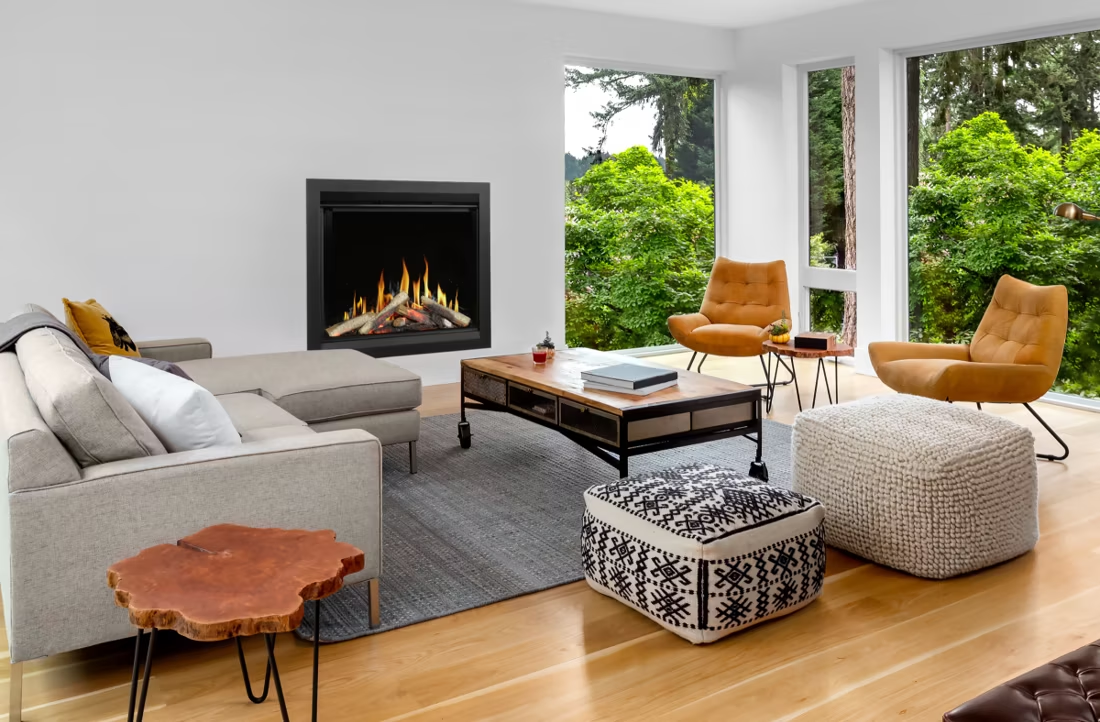
No—that's its superpower. An electric fireplace needs a wall and an outlet, period. No vent pipe, no gas line, no clearances to design around, which is why it works in bedrooms, offices, apartments, and walls where venting a gas or wood unit would be impractical or impossible. Installation is typically the simplest and least expensive of any fireplace type.
Can I install a fireplace myself?
If you're putting a fire in your house on purpose, it's best to work with an expert. Unless you're genuinely experienced in framing, gas line, vent pipe, and the national code on clearances to combustibles, have a professional do it—and ideally the same company that sells you the fireplace, so warranty, service, and liability all live under one roof.
Can a fireplace actually lower my heating bill?
Yes—by creating a comfort zone. A furnace heats every square foot of the house just to warm the one room you're in; a gas fireplace on low burns roughly a sixth of the gas a typical furnace does. Set the furnace around 55–60 degrees as a baseline, then heat the rooms your family actually uses. Families who heat this way commonly save $20–$60 a month.
Stove and Fireplace Dealers in Penobscot County
Listings include WhyFire partner dealers, dealers we have verified as authorized for the brands we recommend, and established local businesses that carry hearth products. Every listing shows which one it is. The ones marked Preferred run on WhyFire's software, so they can show you real pricing and book your appointment right here. No manufacturer pays for placement. How we verify dealers →
Ashlee Stove & Coal Shop
Moosehead Trail Home & Hearth
Nicatou Stoves
Nicatou Stove Shop
Find your electric fireplace in Penobscot County.
Tell us a bit about your room and how you plan to use it, and we'll put together a free Project Guide & Parts List—the right unit, the wiring or circuit needs, and a trusted local dealer to install it, whether you're in Bangor, Old Town, Brewer, or out toward Milford and Lincoln.
Find Your Fireplace →