
Electric fireplaces built for Bangor's long heating season.
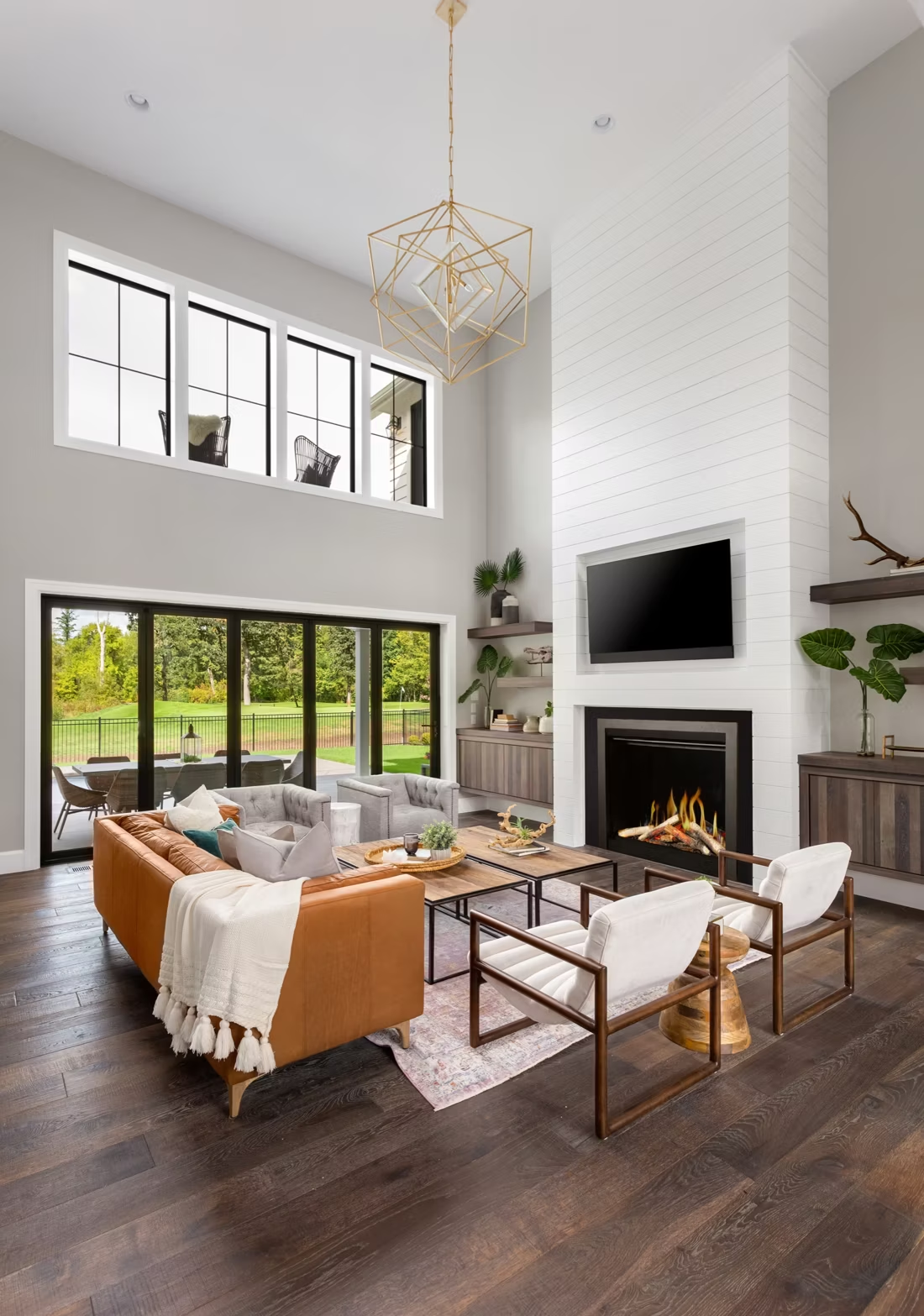
With a long, demanding winter and lows averaging 9°F, Bangor's heating season stretches on and on. An electric fireplace won't carry the whole house, but for zone heat and real ambiance in a room without a flue, I'll match you with a trusted local dealer who knows what Versant Power households actually need.
Every Project Starts From One of These Five Situations
A zone-heat tool, not a whole-house furnace replacement.
Bangor sits in climate zone 6A along the Penobscot River at just 162 feet in elevation, but elevation isn't what makes winter here demanding—the length and depth of the cold season is. With a long, hard winter and an average winter low of 9°F, Bangor runs a heating season closer to Burlington, Vermont or Duluth, Minnesota than to most of coastal New England. That's a serious heating load, and it's exactly the kind of climate where an electric fireplace makes the most sense as a supplemental, zone-heating, or ambiance choice—not as the primary system carrying a Bangor house through January.
Versant Power serves Bangor at a residential rate of roughly 27.5 cents per kWh—notably higher than the national average—which matters because electric resistance heat is the least efficient way to spend a kilowatt-hour. Most Bangor homes lean on oil, natural gas, or wood (maple, birch, beech, oak, and spruce are all split and burned locally, with pellet options from Lignetics, New England Wood Pellet, and Maine Woods Pellet Co as well) to carry the bulk of a long, demanding winter season. Where an electric fireplace earns its place is in rooms without a flue—a finished basement, a converted sunporch, a condo where venting isn't an option—where you want real flame-look ambiance and a few thousand BTU of instant heat without touching a chimney or a gas line.
Three steps. No salesperson until you're ready.
Tell us about your project
Your zip code, your situation, and the fuel you're leaning toward—or let the answers point you to one.
See what's actually available
The brands dealers within 100 miles genuinely carry—real options, never a catalog mirage.
Get your dealer & Project Guide
A trusted local dealer, plus the free Project Guide & Parts List that names every component of the job.
Frequently Asked Questions
How much does it cost to install an electric fireplace in Bangor?
Electric fireplaces are the simplest hearth product to install because there's no venting, no chimney, and usually no gas line. A plug-in insert or mantel unit that runs on a standard 120-volt outlet can often go in for the cost of the unit itself plus a few hours of carpentry if it's being built into existing cabinetry. A larger built-in electric fireplace that needs its own dedicated 20-amp circuit calls for a licensed electrician, which adds labor but still keeps the total well under what a vented gas or wood project runs. If you're wiring a dedicated circuit, the City of Bangor's Code Enforcement Office is where the electrical permit gets pulled.
What does it actually cost to run an electric fireplace at Versant Power's rates?
Versant Power's residential rate runs around 27.5 cents per kWh, which is on the high side nationally. A typical 1,500-watt electric fireplace draws about 1.5 kWh per hour, so running it for a few hours in the evening for ambiance and supplemental warmth costs roughly $1 to $1.25 a night. Running one all day as a primary heat source would run closer to $8 to $10 a day, which is why almost nobody in Bangor uses an electric fireplace that way—it's a zone-heat and ambiance tool, not a replacement for the oil, gas, or wood system carrying the house through Bangor's long, demanding winter.
Can an electric fireplace actually heat a room here in the winter?
Within limits, yes. Most electric fireplaces top out around 5,000-9,000 BTU (roughly 1,500 watts), which is enough to noticeably warm a single well-insulated room in the 300-400 square foot range even with Bangor's 9°F average winter low. What it won't do is offset heat loss in an older, drafty home—plenty of Bangor's housing stock near State Street and Broadway predates modern insulation standards—or replace whole-house heat when temperatures drop into single digits or below. Think supplemental warmth for the room you're sitting in, not a substitute for your furnace.
Do I need a permit for an electric fireplace in Bangor?
A plug-in electric fireplace or insert that runs off an existing outlet typically doesn't require a permit. If you're installing a built-in unit that needs a new dedicated circuit, that electrical work needs a permit through the City of Bangor Code Enforcement Office, and it should be done by a licensed electrician—both for code compliance and because homeowner insurance policies often ask about permitted electrical work if there's ever a claim.
What's the difference between an electric fireplace, insert, and stove?
An electric fireplace is usually a built-in unit framed into a wall or a media-console-style piece of furniture, and it's the most common choice for new builds or remodels. An electric insert is sized to slide into an existing masonry firebox—a good option if you have an old wood-burning fireplace in a Bangor house you no longer want to feed and clean but still want to fill visually. An electric stove is a freestanding cabinet-style unit that sits on the floor like a wood stove but plugs in instead. All three run on standard household power and need no venting, which is the main advantage electric has over every other fuel type here.
With so much local firewood available, why would anyone choose electric over wood in Bangor?
Plenty of Bangor homeowners split their own maple, birch, beech, oak, or spruce and heat primarily with wood—it's cheap and doesn't depend on the grid. But wood requires a chimney, storage, and physical upkeep, which doesn't work in a condo, a rental, or a room with no flue access. Electric fireplaces fill that gap: instant ambiance and a few thousand BTU of zone heat with zero smoke, zero creosote, and no wood to stack. Most people running electric in Bangor are supplementing a wood, oil, or gas system elsewhere in the house, not replacing it.
How does electric compare to pellet heat for Bangor homes?
Pellet stoves burning regional brands like Lignetics, New England Wood Pellet, or Maine Woods Pellet Co produce far more heat per dollar than electric resistance heat does at Versant Power's 27.5-cent rate, and they're a legitimate primary heat source through a Bangor winter. But pellet stoves need a vent through an exterior wall or roof, a hopper to load, and periodic ash cleanout. Electric fireplaces need none of that—you trade heating efficiency for install simplicity, which is the right trade in a room where running vent pipe isn't practical.
Are there rebates available for electric fireplaces in Maine?
Not typically for the fireplace itself—Efficiency Maine's rebate programs are built around heat pumps and weatherization, since those actually reduce whole-house heating costs in a climate with winters as long and demanding as Bangor's. An electric fireplace is generally treated as a comfort and ambiance purchase rather than an efficiency upgrade, so budget for it as you would any hearth product. If lowering your overall heating bill is the goal alongside the fireplace, it's worth asking a local dealer about current Efficiency Maine heat pump incentives at the same time.
How do I pick the right size electric fireplace for my Bangor home?
Sizing comes down to wattage and the room it's heating, not whole-house square footage. A 1,500-watt unit—the standard output for most models—comfortably takes the edge off a bedroom, den, or bonus room in the 300-400 square foot range. Larger, open-concept spaces or older, less-insulated homes near downtown Bangor may want a wider unit for more visual presence, but most electric fireplaces cap out at that same 1,500-watt output regardless of size—the difference is flame display and mantel footprint, not heat output. A local dealer can walk you through which units actually add real BTU versus which are ambiance-only.
Can I put a TV above my fireplace?
Yes—with an asterisk. Fireplaces are hot and TVs don't like heat. Either put a mantel between them to deflect rising warmth, or choose a fireplace with heat-management technology that creates a cool zone on the wall above—the wall stays around 125 degrees, barely warm, while the room still gets full heat. If you like clean lines and don't want a mantel, heat management is the answer.
Does an electric fireplace need a vent or chimney?
No—that's its superpower. An electric fireplace needs a wall and an outlet, period. No vent pipe, no gas line, no clearances to design around, which is why it works in bedrooms, offices, apartments, and walls where venting a gas or wood unit would be impractical or impossible. Installation is typically the simplest and least expensive of any fireplace type.
Does a fireplace add value to my home?
On average, a fireplace adds back to the home about the same amount you spent installing it. Add the monthly savings from heating the rooms you actually use instead of the whole house—often hundreds of dollars a year—and the value case is strong before you even count what a fire does for how your family uses the room.
Can a fireplace actually lower my heating bill?
Yes—by creating a comfort zone. A furnace heats every square foot of the house just to warm the one room you're in; a gas fireplace on low burns roughly a sixth of the gas a typical furnace does. Set the furnace around 55–60 degrees as a baseline, then heat the rooms your family actually uses. Families who heat this way commonly save $20–$60 a month.
Nearby Dealers
Hearth shops serving Bangor and the surrounding area. Every listing shows whether it is a WhyFire partner, a dealer we have verified as authorized for the brands we recommend, or a local business carrying hearth products. No manufacturer pays for placement. How we verify dealers →
Ashlee Stove & Coal Shop
Moosehead Trail Home & Hearth
Nicatou Stoves
Nicatou Stove Shop
Electric Service in Bangor
An electric fireplace's heater draws about 1,500 watts—pennies per hour at local rates.
Versant Power
Get your free Project Guide & Parts List for an electric fireplace in Bangor.
Tell me about your room, your circuit, and what you're hoping to heat, and I'll match you with a trusted local dealer serving the Bangor area and send a free Project Guide & Parts List—sized right for a Versant Power household, with the exact unit and any electrical work spelled out.
Find Your Fireplace →