
Heat that holds through a Maine winter.
Wood, gas, pellet, and electric fireplace resources for every city and township in Penobscot County—from Bangor to Millinocket. Find the right unit and connect with a trusted local hearth retailer.
Every Project Starts From One of These Five Situations
Big-woods heating across Penobscot County, Maine.
Penobscot County stretches from the Bangor metro area north through mile after mile of working forest toward Millinocket and the edge of the North Woods. At 7,626 heating degree days and average winter lows near 9°F, this county runs colder and longer than Burlington, Vermont most years—the heating season here typically starts in September and doesn't let go until May. Maple, birch, beech, oak, and spruce all grow locally, and a lot of households still burn wood cut from their own land or a neighbor's woodlot, a habit that goes back generations in a county this rural.
What you'll find on this hub: hearth retailers, service technicians, and fuel suppliers serving every community in the county—from Bangor and Old Town down through Orono and Hampden, north to Lincoln and Millinocket, and out into the smaller plantations and unorganized territories that make up much of Penobscot County's land area. Pick your fuel below to drill into specifics—local dealers, installation costs, recommended units, and the resources that match your project. Whether you're heating a farmhouse outside Corinth or a camp near Baxter State Park, this is the starting point.
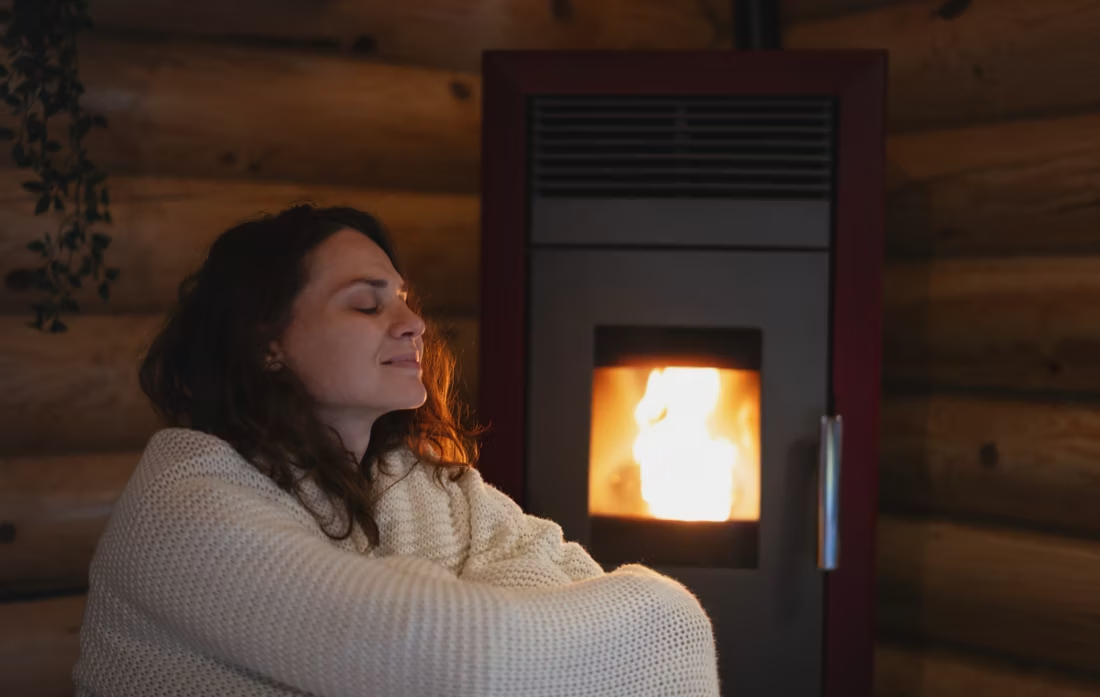
Four fuels. One honest answer for Penobscot County.
Three steps. No salesperson until you're ready.
Tell us about your project
Your zip code, your situation, and the fuel you're leaning toward—or let the answers point you to one.
See what's actually available
The brands dealers within 100 miles genuinely carry—real options, never a catalog mirage.
Get your dealer & Project Guide
A trusted local dealer, plus the free Project Guide & Parts List that names every component of the job.
Frequently Asked Questions
Which fuel works best in Penobscot County?
It depends on the home and how it's used. Wood remains the backbone fuel in rural Penobscot County—maple, birch, beech, oak, and spruce are all cut locally, and a modern EPA-certified catalytic or non-cat stove can hold a fire through a single-digit overnight with far less wood than an old smoke-dragon. Gas is the convenience pick for Bangor-area homes with natural gas service or for anyone running propane out in Lincoln or Millinocket—no wood handling, instant heat, works during a power outage if it's a standing-pilot unit. Pellet sits in between—you get wood-style heat without splitting and stacking, and with New England Wood Pellet and Maine Woods Pellet Co. both producing regionally, supply stays local and reasonably priced. Electric is supplemental almost everywhere in this county—useful in a bedroom or a camp you only visit occasionally, but not something to lean on as primary heat through a Penobscot County winter. Most homes here end up running two fuels: wood or pellet as the workhorse, gas or electric for secondary rooms or backup.
Do I need a permit to install a fireplace in Penobscot County?
In most towns, yes. New wood stoves, wood inserts, gas fireplaces, gas inserts, gas stoves, and pellet stoves generally require a local building permit, and gas work also needs a separate fuel-gas permit pulled by a licensed installer. Because Penobscot County includes both incorporated towns (Bangor, Old Town, Millinocket, Lincoln) with their own code enforcement offices and a large area of unorganized territory, where you land matters—incorporated towns issue permits through their local code enforcement officer, while unorganized townships fall under the Maine Land Use Planning Commission (LUPC). Electric fireplaces usually skip the permit unless it's a built-in install with new wiring. Most local retailers handle the paperwork as part of the installation, so it's rarely something the homeowner has to sort out alone.
Are there air quality restrictions on wood burning in Penobscot County?
No—Penobscot County doesn't have the winter inversion problems that trigger burn bans or advisory days in some western basins. There's no local non-attainment designation here. That said, any new wood stove sold and installed still has to meet the federal EPA 2020 NSPS emissions standard, which is a national requirement, not a Penobscot-specific one. Practically, that means an old pre-2020 stove already installed in a farmhouse outside Corinth or Charleston can keep running, but a new install has to be a certified unit. Given the amount of wood burned here through a 7,626-HDD winter, a certified stove also just uses less wood for the same heat—a real advantage when you're bucking up your own maple and birch.
Can one local hearth retailer handle all four fuel types?
Many of the larger Bangor-area retailers carry three or four fuel types under one roof, which makes cross-shopping easier if you're not sure yet whether wood, gas, or pellet fits your house best. Smaller shops farther north, closer to Lincoln or Millinocket, tend to specialize—often wood and pellet, since that's what most of their customer base actually burns, with less floor space given to gas or electric display units. If you're comparing fuels side by side, a multi-fuel Bangor dealer with working showroom units is usually worth the drive; if you already know you want wood or pellet, a smaller local specialist may know the specific stovepipe and clearance quirks of older Maine farmhouses better than a big-box operation would.
How does service work in the rural parts of Penobscot County?
Most chimney sweeps and stove technicians are based around Bangor and drive out to the rest of the county—north to Millinocket and the Katahdin region, west toward Corinth and Charleston, and into the smaller plantations and unorganized townships. Expect a travel charge for the farther calls, and expect August through October to book up fast since that's when everyone tries to get swept before the first cold snap. If you're heating a camp or a rural home that isn't easy to reach mid-winter, it's worth scheduling your annual service early and keeping a backup heat source on hand—a lot of households here pair wood with pellet or propane specifically so a mid-January outage doesn't leave the house cold.
What's the typical cost range for fireplace installation across all fuel types in Penobscot County?
Costs vary by fuel and how much venting or chimney work is involved. Wood stove or insert: roughly $4,000–$8,500 for a typical install, more if a masonry chimney needs relining or a new Class A chimney has to go in from scratch. Gas fireplace, insert, or stove: about $4,000–$10,000, with cost driven mostly by how far the gas line has to run and whether direct-vent piping is straightforward. Pellet stove or insert: generally $4,000–$7,000 installed. Electric fireplace: $200–$3,000 for the unit itself, plus $300–$1,000 in labor for anything beyond a plug-and-play placement, such as a built-in or wall-mount with new wiring. For details tied to specific local retailer pricing, see the county + fuel pages above.
Does a fireplace add value to my home?
On average, a fireplace adds back to the home about the same amount you spent installing it. Add the monthly savings from heating the rooms you actually use instead of the whole house—often hundreds of dollars a year—and the value case is strong before you even count what a fire does for how your family uses the room.
Can a fireplace actually lower my heating bill?
Yes—by creating a comfort zone. A furnace heats every square foot of the house just to warm the one room you're in; a gas fireplace on low burns roughly a sixth of the gas a typical furnace does. Set the furnace around 55–60 degrees as a baseline, then heat the rooms your family actually uses. Families who heat this way commonly save $20–$60 a month.
Can I install a fireplace myself?
If you're putting a fire in your house on purpose, it's best to work with an expert. Unless you're genuinely experienced in framing, gas line, vent pipe, and the national code on clearances to combustibles, have a professional do it—and ideally the same company that sells you the fireplace, so warranty, service, and liability all live under one roof.
What is an in-home preview and do I need one?
It's a visit where a hearth professional measures your space, confirms the model you picked actually works in your home, and walks the specs—framing, gas line, venting, finish work—before anything is ordered. Some details you just can't know until you see the house. Never make a down payment without one; it's the single most-skipped step that burns buyers.
Stove and Fireplace Dealers in Penobscot County
Listings include WhyFire partner dealers, dealers we have verified as authorized for the brands we recommend, and established local businesses that carry hearth products. Every listing shows which one it is. The ones marked Preferred run on WhyFire's software, so they can show you real pricing and book your appointment right here. No manufacturer pays for placement. How we verify dealers →
Ashlee Stove & Coal Shop
Moosehead Trail Home & Hearth
Nicatou Stoves
Nicatou Stove Shop
Find your fireplace in Penobscot County.
Pick your fuel below and we'll match you with a trusted local dealer and send you a free Project Guide & Parts List—the exact parts, vent kit included, and the dealer we recommend for your home.
Find Your Fireplace →