
Steady heat for Oxford County's long, cold winters.
With a heating season on par with Burlington, Vermont, and average winter lows around 12°F, Oxford County homes—from Norway and Paris to Bethel and Rumford—need heat that keeps running without daily tending. Find the right pellet stove or insert and connect with a trusted local dealer.
Every Project Starts From One of These Five Situations
Convenience that keeps up with a Maine winter.
Oxford County stretches from the Lewiston-Auburn foothills up to the White Mountain National Forest along the New Hampshire border, and winters here are long and legitimately cold—a heating season on par with Burlington, Vermont, puts the county in the same range, with average lows around 12°F and plenty of nights well below zero. This is hardwood country: maple, birch, beech, and oak dominate the ridges, with spruce mixed in at higher elevations, and wood heat has deep roots in towns like Bethel, Rumford, and Fryeburg. Pellet stoves have caught on across the county because they deliver that same dense-hardwood heat output without the cutting, splitting, and stacking.
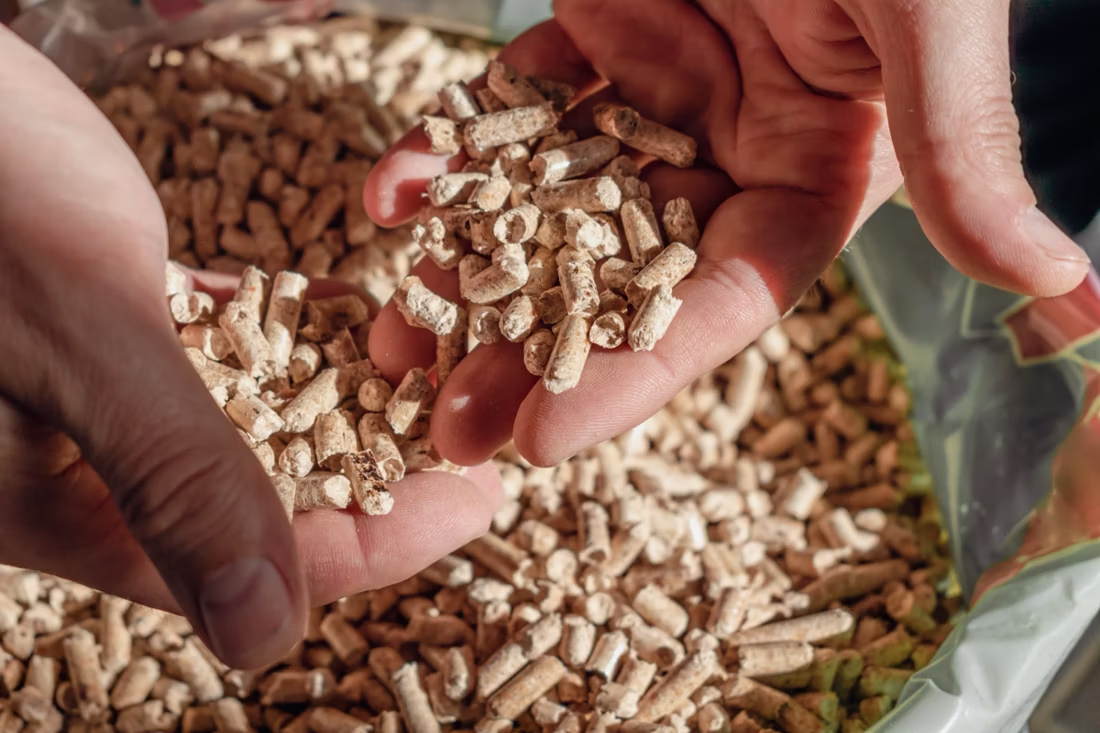
A pellet stove burns compressed hardwood and softwood pellets fed automatically from a hopper, and several regional producers supply the county directly—Maine Woods Pellet Co. makes pellets in-state, New England Wood Pellet mills just over the New Hampshire line in Jaffrey, and Lignetics distributes widely through hardware and hearth retailers here. There are no air quality non-attainment issues or burn curtailment periods in Oxford County, so pellet appliances run without the seasonal restrictions some western states impose. The trade-off worth knowing: pellet stoves need household electricity to run the auger and combustion blower, which matters in a county that sees its share of winter ice storms and multi-hour outages. A local dealer can walk you through battery backup options if that's a concern for your home.
Three steps. No salesperson until you're ready.
Tell us about your project
Your zip code, your situation, and the fuel you're leaning toward—or let the answers point you to one.
See what's actually available
The brands dealers within 100 miles genuinely carry—real options, never a catalog mirage.
Get your dealer & Project Guide
A trusted local dealer, plus the free Project Guide & Parts List that names every component of the job.
Frequently Asked Questions
How much does a pellet stove installation cost in Oxford County?
Most pellet stove installations in Oxford County run in the $3,500 to $7,000 range, depending on the unit, hopper size, and whether the install is a freestanding stove or an insert into an existing fireplace. Venting is simpler and cheaper than wood—pellet stoves use a smaller-diameter vent pipe that can typically go straight through a sidewall rather than requiring a full masonry chimney, which keeps costs down for homes in Norway, Paris, and other towns without existing chimneys. Installers will also confirm you have a dedicated electrical outlet near the unit, since the auger and blower motor need continuous power.
What size pellet stove do I need for my Oxford County home?
Sizing depends on square footage, insulation, and whether the stove is your primary or supplemental heat source. In a Climate Zone 6A county with lows regularly hitting the single digits, older farmhouses in Rumford or Bethel with less insulation typically need a larger-hopper unit than a newer, tightly built home of the same square footage in Norway or Paris. As a rough guide, smaller units suit a single room or camp, while larger units with 60- to 80-pound hoppers can carry a whole-house load through an extended cold stretch without a midnight refill. A local dealer will size this properly during an in-home visit.
Pellet stove vs. wood stove—which makes more sense in Oxford County?
Wood is deeply rooted here—the White Mountain National Forest issues cutting permits for $20 per cord during the May-to-October season, and hardwood species like maple, oak, and beech are abundant locally. A wood stove also keeps working with the power out, which matters during Maine ice storms. Pellet stoves trade that off for real convenience: no cutting, splitting, or stacking, more even heat output, and a cleaner burn—but they need electricity for the auger and blower, so a battery backup or small generator is worth planning for if outages worry you. Many Oxford County households end up with wood as backup heat and pellet as their day-to-day system.
Where can I buy pellet fuel in Oxford County?
Maine Woods Pellet Co. produces pellets in-state, and New England Wood Pellet mills just across the New Hampshire border in Jaffrey—both are common finds at hardware stores and hearth retailers serving Oxford County. Lignetics is also widely distributed through regional dealers. Pellets are typically sold in 40-pound bags by the ton, and buying early in the fall—before the first hard cold snap—is the best way to avoid the supply crunches that can hit rural Maine counties in peak winter.
Do I need a permit to install a pellet stove in Oxford County?
Yes, in most cases—a building permit is typically required for a new pellet stove installation, but since Oxford County is made up of many small towns rather than one unified county building department, the permit is usually pulled through your town's code enforcement officer, whether that's Norway, Paris, Bethel, Rumford, or another local town office. Requirements are generally less involved than a wood stove install since pellet units don't need a full masonry chimney, but your installer should still confirm clearances and venting termination points meet code before work begins.
What should I look for in a pellet stove for a cold Oxford County winter?
With average lows around 12°F and a heating season that runs well into spring at higher elevations near Bethel, hopper capacity matters more here than in milder climates. Look for units with 60- to 80-pound hoppers that can run 24 hours or longer on a single load, so an overnight cold snap doesn't mean a 2 a.m. refill. A reliable thermostat control and an auto-ignition feature also help during multi-day cold stretches when you want the stove running consistently without constant adjustment. A local dealer can match hopper size and BTU output to your specific square footage and insulation level.
How often does a pellet stove need to be cleaned and serviced?
Plan on emptying and brushing out the ash pot every few days during heavy winter use, a deeper cleaning of the burn pot and heat exchanger tubes every few weeks, and a full annual service—including the exhaust venting and combustion blower—before each heating season starts. Oxford County's long burn season (often October through April at higher elevations) means more cumulative run hours than milder parts of the state, so staying ahead of ash buildup keeps efficiency up and prevents feed jams.
Will my pellet stove work during a power outage?
Not without a backup power source. Pellet stoves rely on an electric auger to feed fuel and a blower to distribute heat and exhaust combustion air, so a standard unit stops working the moment the power goes out. This is a real consideration in Oxford County, where winter ice storms can knock out power for hours or, in bad years, days. Homeowners who want pellet convenience but also outage resilience typically pair the stove with a small battery backup unit or a portable generator sized to run the auger and blower. Ask your local dealer about backup-compatible models if this matters for your home.
What's the difference between a pellet stove and a pellet insert?
A pellet stove is a freestanding unit that sits on a hearth pad and vents through a sidewall or existing chimney chase—it can go almost anywhere with the right clearances. A pellet insert is built to slide into an existing masonry fireplace opening, which is common in Oxford County's older homes in towns like Norway and Paris, converting a drafty open hearth into a sealed, efficient heat source while reusing the existing chimney as a vent chase. For homes with an existing wood fireplace they don't use often, an insert is usually the simpler, less invasive upgrade.
What's the difference between an insert and a zero-clearance fireplace?
An insert is a fireplace that slides into a pre-existing wood-burning fireplace—if you don't have one, there's nothing to insert it into. A zero-clearance fireplace is built into a framed wall, which makes it the answer for remodels and new construction. Simple test: existing masonry fireplace means insert; blank or framed wall means zero-clearance.
Why is a fireplace insert so efficient?
An insert does two things: it seals the chimney completely, so you stop losing air you already paid to heat, and it radiates warmth into the room through the firebox and glass. Most add a heat-exchange fan that pulls cool room air underneath, wraps it around the hot firebox, and pushes it back out warm. Your home is more efficient before you've even lit the first fire.
What is an in-home preview and do I need one?
It's a visit where a hearth professional measures your space, confirms the model you picked actually works in your home, and walks the specs—framing, gas line, venting, finish work—before anything is ordered. Some details you just can't know until you see the house. Never make a down payment without one; it's the single most-skipped step that burns buyers.
Can I install a fireplace myself?
If you're putting a fire in your house on purpose, it's best to work with an expert. Unless you're genuinely experienced in framing, gas line, vent pipe, and the national code on clearances to combustibles, have a professional do it—and ideally the same company that sells you the fireplace, so warranty, service, and liability all live under one roof.
Stove and Fireplace Dealers in Oxford County
Dirty Bristles Chimney Sweep Inc.
Northern Lights Maine, Inc.
Pellet Brands Stocked Around Oxford County
Manufacturers will point you to the nearest stocking dealer.
Find your pellet stove in Oxford County.
Tell us a bit about your home and heating goals, and we'll match you with a trusted local dealer and send over a free Project Guide & Parts List—the exact equipment, venting, and hopper size for your Oxford County pellet project, plus who to call to get it installed.
Find Your Fireplace →