
Find the Right Heat for an Oxford County Winter.
Wood, gas, pellet, and electric fireplace resources for towns across Oxford County—from Rumford and Bethel to Norway and Fryeburg. Get matched with a trusted local hearth retailer who can actually install what your house needs.
Every Project Starts From One of These Five Situations
Cold, wooded, and self-reliant: heating in Oxford County, Maine.
Oxford County occupies the western edge of Maine, climbing from river-valley towns like Rumford and Bethel into the foothills of the White Mountains, with the White Mountain National Forest itself reaching into the county's southwestern corner. Winters run long and genuinely cold—average lows near 12°F, and just over 7,200 heating degree days a year, putting Oxford County in roughly the same climate tier as Burlington, Vermont. Zone 6A construction is the baseline, and the heating season typically stretches from October into April. The county's hardwood forests—maple, birch, beech, oak, and spruce—have supplied home heating for generations, and Forest Service permits through White Mountain National Forest still let residents cut their own firewood.
What you'll find on this hub: hearth retailers, service technicians, and fuel suppliers reaching towns across the county—Norway and South Paris in the east, Rumford and Dixfield along the Androscoggin, Bethel near the New Hampshire line, and Fryeburg to the south. Unlike wood-burning regions out West, Oxford County has no winter inversion or non-attainment concerns, so there are no seasonal burn curtailment days to plan around—just the practical question of which fuel and which dealer fit your house. Pick a fuel below to see local dealers, install costs, and recommended units for your project.
Four fuels. One honest answer for Oxford County.
Three steps. No salesperson until you're ready.
Tell us about your project
Your zip code, your situation, and the fuel you're leaning toward—or let the answers point you to one.
See what's actually available
The brands dealers within 100 miles genuinely carry—real options, never a catalog mirage.
Get your dealer & Project Guide
A trusted local dealer, plus the free Project Guide & Parts List that names every component of the job.
Frequently Asked Questions
Which fuel works best in Oxford County?
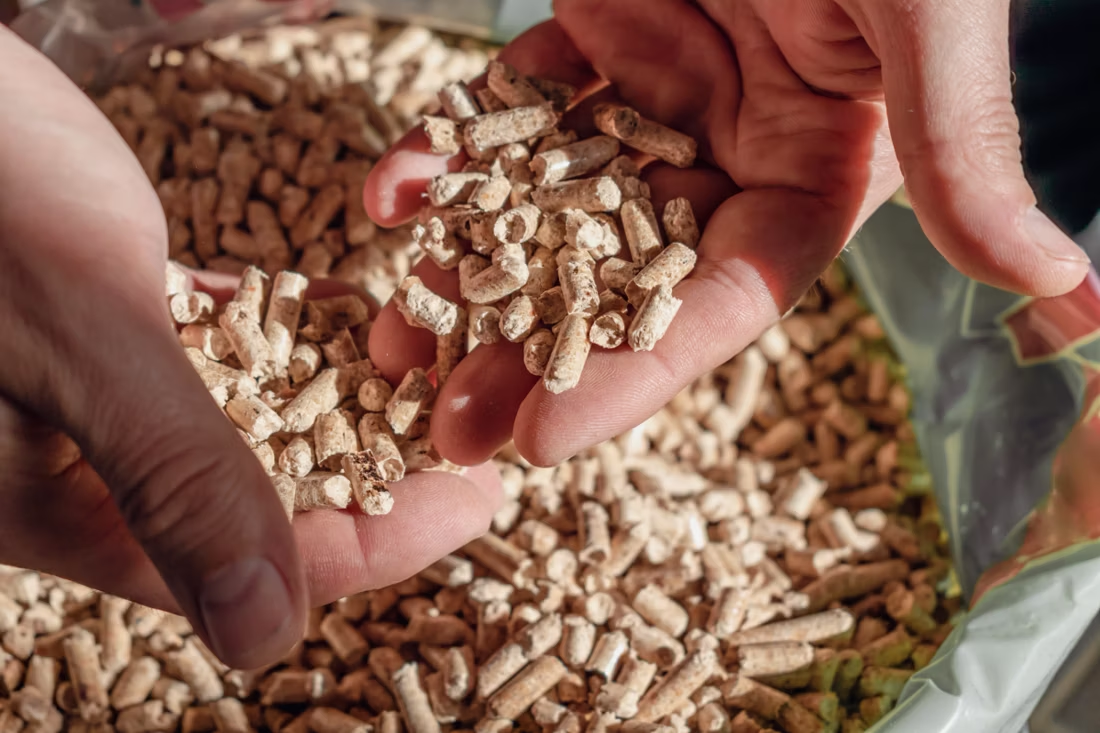
It depends on the house and the budget, but wood remains the backbone fuel in Oxford County—maple, birch, beech, and oak are all abundant locally, and White Mountain National Forest issues personal-use cutting permits that keep fuel costs near zero for residents willing to do the work. A modern EPA-certified wood stove or insert can hold a steady burn through a 12°F overnight low without much trouble. Gas is the low-maintenance option, though it almost always means propane here rather than piped natural gas—most of the county has no gas main. Pellet is a strong middle path: Maine Woods Pellet Co. mills locally, and pellet stoves need less daily tending than cordwood. Electric fireplaces are common as supplemental or ambiance heat in bedrooms and finished basements, but they're not a realistic primary heat source through an Oxford County winter. Most homes here end up running two fuels—wood or pellet as the workhorse, propane or electric for backup and convenience.
Do I need a permit to install a fireplace in Oxford County?
Almost certainly, but who issues it depends on your town. Maine doesn't run building permits through the county—each Oxford County municipality has its own Code Enforcement Officer, and whether Rumford, Norway, Bethel, or Fryeburg has adopted the full building code varies by town. In practice, that means a new wood stove, insert, gas appliance, or pellet stove typically needs a permit from your town office, plus a chimney or vent inspection before final sign-off. Propane installations also require work by a licensed propane technician for the tank and line connection. Electric fireplaces usually skip the permit process unless you're hardwiring a built-in unit into a new circuit. Most local hearth retailers know their town's Code Enforcement Officer and handle the paperwork as part of the installation.
Are there air quality restrictions on wood burning in Oxford County?
No—Oxford County doesn't sit in an air quality non-attainment area, and there are no winter inversion or curtailment days to track like you'd see in a mountain-basin climate out West. That said, new wood stove and insert installations still need to meet EPA 2020 NSPS emissions standards, which every current-production stove from a reputable dealer will meet. If you're replacing an old pre-1990s stove, it's worth doing anyway—newer catalytic and non-catalytic designs burn Oxford County hardwood more completely and use less wood per BTU, which matters when you're cutting and splitting it yourself.
Can one local hearth retailer handle all four fuel types?
Many can, at least for three of the four. In a county this rural, most full-line hearth shops based in towns like Norway, Rumford, or Bethel carry wood, gas (propane), and pellet units, since those are the three fuels that actually heat homes here. Electric fireplace lines are usually a smaller side offering rather than a dedicated showroom—worth asking about directly if that's your primary interest. If you're cross-shopping fuels, a multi-fuel dealer can walk you through working displays and talk through what actually performs well against a 12°F overnight low, rather than just what's cheapest to install.
How does service work in rural areas of Oxford County?
Expect some travel time built into scheduling. Technicians based in the county's larger towns cover a lot of ground—out to the lake communities around Fryeburg, the ski-country homes near Bethel, and the more remote stretches toward the New Hampshire line. A small trip fee for outlying calls is common, and pre-season appointments in September and October book up faster than mid-winter emergency calls once the snow starts. For anyone off a maintained road in winter, it's worth scheduling chimney sweeps and gas inspections early and keeping a backup heat source—a wood stove as backup to pellet, or vice versa—in case a service call has to wait for a storm to clear.
What's the typical cost range for fireplace installation across all fuel types in Oxford County?
Costs run in line with the rest of rural New England. Wood stove or insert installation: roughly $4,000–$8,500 for a typical retrofit, more if new chimney chase construction is involved. Propane fireplace, insert, or stove: about $4,000–$10,000 depending on whether a new propane tank and line are needed. Pellet stove or insert: typically $4,000–$7,000 installed. Electric fireplace: $200–$3,000 for the unit itself, plus $400–$1,200 in labor for anything beyond a plug-in install. The county + fuel pages above break these down further with local retailer pricing.
Can I install a fireplace myself?
If you're putting a fire in your house on purpose, it's best to work with an expert. Unless you're genuinely experienced in framing, gas line, vent pipe, and the national code on clearances to combustibles, have a professional do it—and ideally the same company that sells you the fireplace, so warranty, service, and liability all live under one roof.
Does a fireplace add value to my home?
On average, a fireplace adds back to the home about the same amount you spent installing it. Add the monthly savings from heating the rooms you actually use instead of the whole house—often hundreds of dollars a year—and the value case is strong before you even count what a fire does for how your family uses the room.
Can a fireplace actually lower my heating bill?
Yes—by creating a comfort zone. A furnace heats every square foot of the house just to warm the one room you're in; a gas fireplace on low burns roughly a sixth of the gas a typical furnace does. Set the furnace around 55–60 degrees as a baseline, then heat the rooms your family actually uses. Families who heat this way commonly save $20–$60 a month.
What is an in-home preview and do I need one?
It's a visit where a hearth professional measures your space, confirms the model you picked actually works in your home, and walks the specs—framing, gas line, venting, finish work—before anything is ordered. Some details you just can't know until you see the house. Never make a down payment without one; it's the single most-skipped step that burns buyers.
Stove and Fireplace Dealers in Oxford County
Listings include WhyFire partner dealers, dealers we have verified as authorized for the brands we recommend, and established local businesses that carry hearth products. Every listing shows which one it is. The ones marked Preferred run on WhyFire's software, so they can show you real pricing and book your appointment right here. No manufacturer pays for placement. How we verify dealers →
Buy The Fire
Dirty Bristles Chimney Sweep Inc.
Alternative Heat Source Inc.
Wood Pellet Warehouse
Northern Lights Maine, Inc.
Start your Oxford County heating project today.
Tell us about your home and we'll match you with a trusted Oxford County hearth dealer and send a free Project Guide & Parts List—the exact parts, vent kit included, and the local pro who can install it before winter.
Find Your Fireplace →