
Steady Heat for Downeast Maine's Long Winters.
With roughly 7,650 heating degree days a year and winter lows averaging 11°F, Hancock County—from Ellsworth to Bar Harbor to the islands off the Blue Hill peninsula—asks a lot of any heating system. Find the right pellet stove or insert and get matched with a trusted local dealer.
Every Project Starts From One of These Five Situations
A hedge against Maine's high heating-oil costs.
Hancock County runs from the working waterfront in Bucksport and Ellsworth out to Acadia National Park, the Blue Hill peninsula, and island communities like Deer Isle and Swan's Island. It's a cold-climate county—7,650 heating degree days puts it in the same range as Duluth, MN—and a lot of the housing stock here is older, drafty, and heated primarily with delivered fuel oil. Most homes have a woodlot within reach and a long tradition of burning maple, birch, beech, oak, and spruce, but a growing number of Hancock County households are turning to pellet stoves as either a primary heat source or a way to take pressure off an oil furnace during the coldest stretches of January and February.
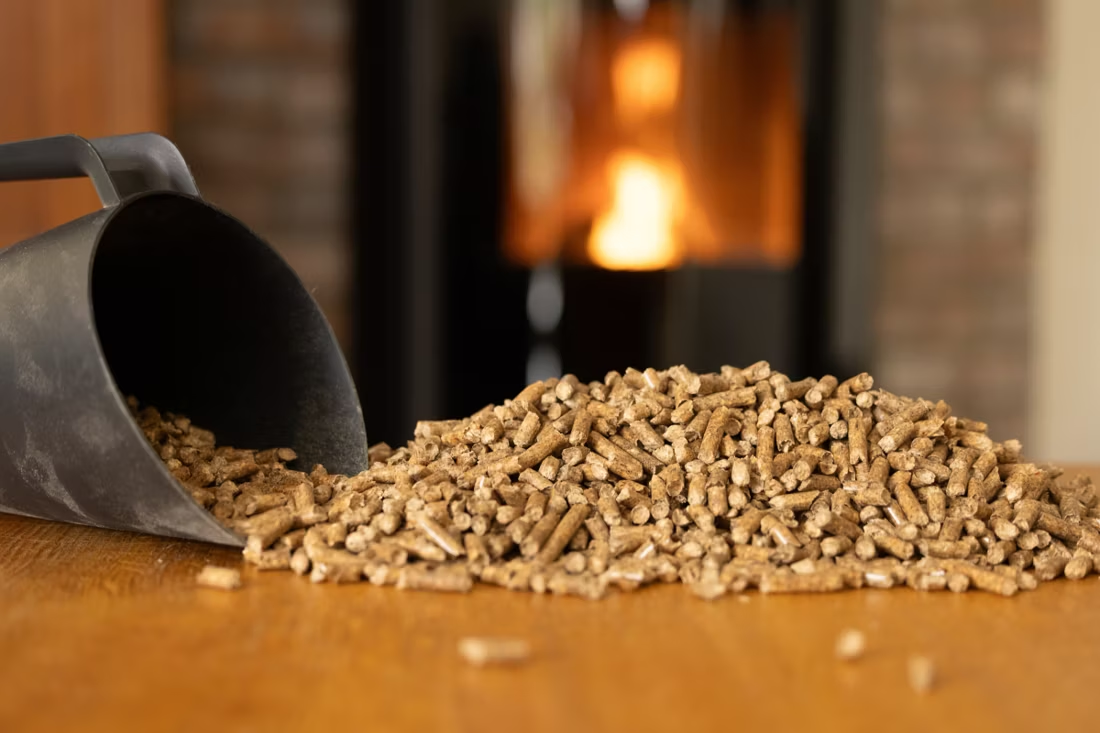
Unlike parts of the country where wood smoke rules drive the shift to pellets, Hancock County has no air quality non-attainment issues pushing the decision—this is purely about cost stability and convenience. A ton of pellets stores easily in a garage or mudroom (unlike a season's worth of cordwood), which matters a lot for the county's seasonal camps and island properties that sit empty for stretches at a time. Maine Woods Pellet Co. mills pellets right in-state, and New England Wood Pellet and Lignetics both distribute regionally, which keeps freight costs down compared with pellets trucked in from the Midwest. For a household burning several tons of oil a winter, a pellet stove in the main living area can meaningfully cut the fuel bill without asking anyone to buck and split wood.
Three steps. No salesperson until you're ready.
Tell us about your project
Your zip code, your situation, and the fuel you're leaning toward—or let the answers point you to one.
See what's actually available
The brands dealers within 100 miles genuinely carry—real options, never a catalog mirage.
Get your dealer & Project Guide
A trusted local dealer, plus the free Project Guide & Parts List that names every component of the job.
Frequently Asked Questions
How much does a pellet stove installation cost in Hancock County?
A freestanding pellet stove installation in Hancock County typically runs in the $3,000 to $6,000 range, depending on the unit, whether you're venting through an existing chimney or need a new through-wall pellet vent kit, and whether electrical work is needed for the stove's blower and auger. A pellet insert going into an existing masonry fireplace is often on the lower end since it reuses the chimney chase. Homes on the islands or outer peninsulas (Deer Isle, Swan's Island, the Schoodic side of Winter Harbor) may see a modest travel charge added by installers coming from Ellsworth or Bar Harbor-area shops.
What size pellet stove do I need for my Hancock County home?
With winter lows averaging 11°F and 7,650 heating degree days a season, sizing matters more here than in milder parts of New England. A small pellet stove (rated for 1,000–1,300 sq ft) suits a camp, a single-story cottage, or supplemental heat in one wing of a larger house. A medium unit (1,300–2,000 sq ft) handles most year-round homes in Ellsworth, Blue Hill, or Bucksport. Older farmhouses with drafty envelopes—common throughout the county's inland towns—often need to size up a notch from what square footage alone would suggest. A local dealer will walk your home and factor in insulation, ceiling height, and whether the stove needs to be primary or backup heat before recommending a model.
Where can I find certified pellet stove installers near me?
Look for installers with NFI (National Fireplace Institute) pellet-specialist certification, which covers proper venting, clearances, and electrical hookup for pellet appliances specifically—the requirements differ from wood stove installs since pellet units need a dedicated outlet and a horizontal or vertical vent kit rather than a full masonry chimney. Dealers serving Hancock County generally cover the Ellsworth-to-Bar Harbor corridor as their core territory, with trips out to Blue Hill, Bucksport, and the Deer Isle causeway available for an additional travel fee. Installing through the same dealer who sells you the stove keeps warranty coverage and code sign-off in one hand rather than several.
Pellet stove vs. wood stove—which makes more sense in Hancock County?
Wood is deeply rooted here—maple, birch, beech, oak, and spruce are all locally available, and a lot of Hancock County households already have a woodlot or a cordwood supplier. Wood stoves also keep working during a power outage, which matters on a peninsula or island where nor'easters can knock out electricity for days. Pellet stoves trade that off-grid resilience for convenience: no splitting, stacking, or hauling, more consistent heat output, and much less ash and creosote. The catch is that pellet stoves need electricity to run the auger and combustion blower, so without a battery backup or generator, they go dark along with the power. For a primary residence in an area prone to winter outages, many Hancock County homeowners keep a wood stove for resilience and add a pellet stove or insert for everyday convenience in the main living space.
Do I need a permit to install a pellet stove in Hancock County?
Yes, in most cases. In Hancock County's organized towns—Ellsworth, Bar Harbor, Bucksport, Blue Hill, and similar—a building permit for the pellet stove installation goes through that town's local Code Enforcement Officer (CEO). In the county's unorganized territories, which cover a meaningful share of inland Hancock County, permitting instead falls under the state's Maine Land Use Planning Commission (LUPC) rather than a town office. Most dealers who sell and install the stove will tell you exactly which office your address falls under and handle the paperwork as part of the job.
What's the best pellet stove for Hancock County's climate?
Look for a stove with a large hopper capacity—40 to 80 pounds—so it can run through a cold overnight without needing a refill, since Hancock County regularly sees stretches at or below the 11°F average winter low. Because pellet stoves depend on electricity for the auger and blower, and coastal storms here can take power out for extended periods, it's worth asking your dealer about models with battery-backup options or confirming your unit is compatible with a small standby generator. For a home relying on pellet heat as a primary source rather than supplemental, a larger-BTU unit sized generously for the square footage is usually the safer call given how many degree-days the county racks up each winter.
How often does a pellet stove need to be serviced?
Plan on a full professional cleaning and inspection once a year, ideally in late summer or early fall before the heating season starts—this covers the exhaust venting, combustion blower, auger mechanism, and gaskets. Ash pan and burn pot should be cleaned by the homeowner on a weekly basis during regular use, more often for a stove running as primary heat through a long Hancock County winter. Skipping the annual service is the most common reason pellet stoves start jamming or losing efficiency by their second or third season.
Where can I buy pellets in Hancock County?
Maine Woods Pellet Co. mills its pellets in-state, which helps keep delivered pricing competitive compared with pellets shipped in from out of state, and both New England Wood Pellet and Lignetics distribute through hardware stores and fuel dealers across Downeast Maine. Premium hardwood pellets in this region typically run in the $250 to $320 per ton range, though pricing can shift with winter demand—buying early in the fall before the first cold snap is the usual local advice. Island and peninsula households should factor in delivery logistics, since a pallet or two of pellets is easier to plan around than a mid-winter emergency order.
Pellet stove vs. electric heater—which is right for my home?
Electric heaters and electric fireplaces are simple—no venting, no fuel storage, and just a matter of plugging in—but at 7,650 heating degree days and winter lows averaging 11°F, electric resistance heat is expensive to run as anything more than supplemental warmth in one room, and heat pump efficiency drops off as temperatures fall into the teens and single digits. Pellet stoves burn a much cheaper fuel per BTU and can genuinely carry a large room or an open floor plan through a Hancock County winter, but they do need a vent kit and an electrical outlet, and they still go down in a power outage without a battery backup. For year-round homes looking to cut oil or electric heating costs, pellet is usually the better long-term fit; for a seasonal camp used only occasionally, a simple electric heater may be all that's needed.
What's the difference between an insert and a zero-clearance fireplace?
An insert is a fireplace that slides into a pre-existing wood-burning fireplace—if you don't have one, there's nothing to insert it into. A zero-clearance fireplace is built into a framed wall, which makes it the answer for remodels and new construction. Simple test: existing masonry fireplace means insert; blank or framed wall means zero-clearance.
What does it take to replace an existing fireplace?
Fireplaces are like icebergs—bigger behind the wall than in front of it. Replacement means removing the surrounding tile or stone (the finish material laps onto the fireplace face), pulling the old unit, setting the new one in the same enclosure, and re-finishing the wall. A hearth professional can determine what's behind your wall without demolition during an in-home preview.
Can I install a fireplace myself?
If you're putting a fire in your house on purpose, it's best to work with an expert. Unless you're genuinely experienced in framing, gas line, vent pipe, and the national code on clearances to combustibles, have a professional do it—and ideally the same company that sells you the fireplace, so warranty, service, and liability all live under one roof.
How much should I budget for a fireplace?
For an average home—covering the fireplace, the vent pipe, and basic installation—a budget between $3,900 and $5,500 gives you a lot of options across wood, gas, and pellet. By the time you add finish work, gas line, and electrical, the average complete installation lands between $5,000 and $12,000 all-in. In a remodel or new build, a good rule is to put about 2.5% of the total project cost toward the fireplace.
Stove and Fireplace Dealers in Hancock County
Pellet Brands Stocked Around Hancock County
Manufacturers will point you to the nearest stocking dealer.
Find your pellet stove in Hancock County.
Tell us about your home—whether it's a year-round house in Ellsworth or a camp out on the peninsula—and we'll put together a free Project Guide & Parts List: the right pellet stove or insert, the vent kit your install needs, and a trusted local dealer to do the work.
Find Your Fireplace →