
Add heat to any room in Hancock County—no chimney required.
From Ellsworth to Bar Harbor, Blue Hill to Deer Isle, electric fireplaces bring zone heat and real ambiance to camps, additions, and older capes without opening a wall for venting. Find the right unit and connect with a trusted local dealer.
Every Project Starts From One of These Five Situations
Real warmth, zero venting, for Hancock County's older housing stock.
Hancock County stretches from the working waterfronts of Bucksport and Blue Hill out to Mount Desert Island and the island communities of Deer Isle and Stonington—roughly 8,900 year-round residents spread across a coastline that swells with seasonal residents every summer. Winters here run long: climate zone 6A, an average winter low around 11°F, and a heating season about as demanding as Duluth, Minnesota or Burlington, Vermont, putting Hancock County in the same cold-climate territory as those towns. A lot of the housing stock is old—19th-century capes, farmhouses, and seasonal camps that were never built with central heat reaching every room, and many still run on original or partially upgraded knob-and-tube or limited-amperage wiring.
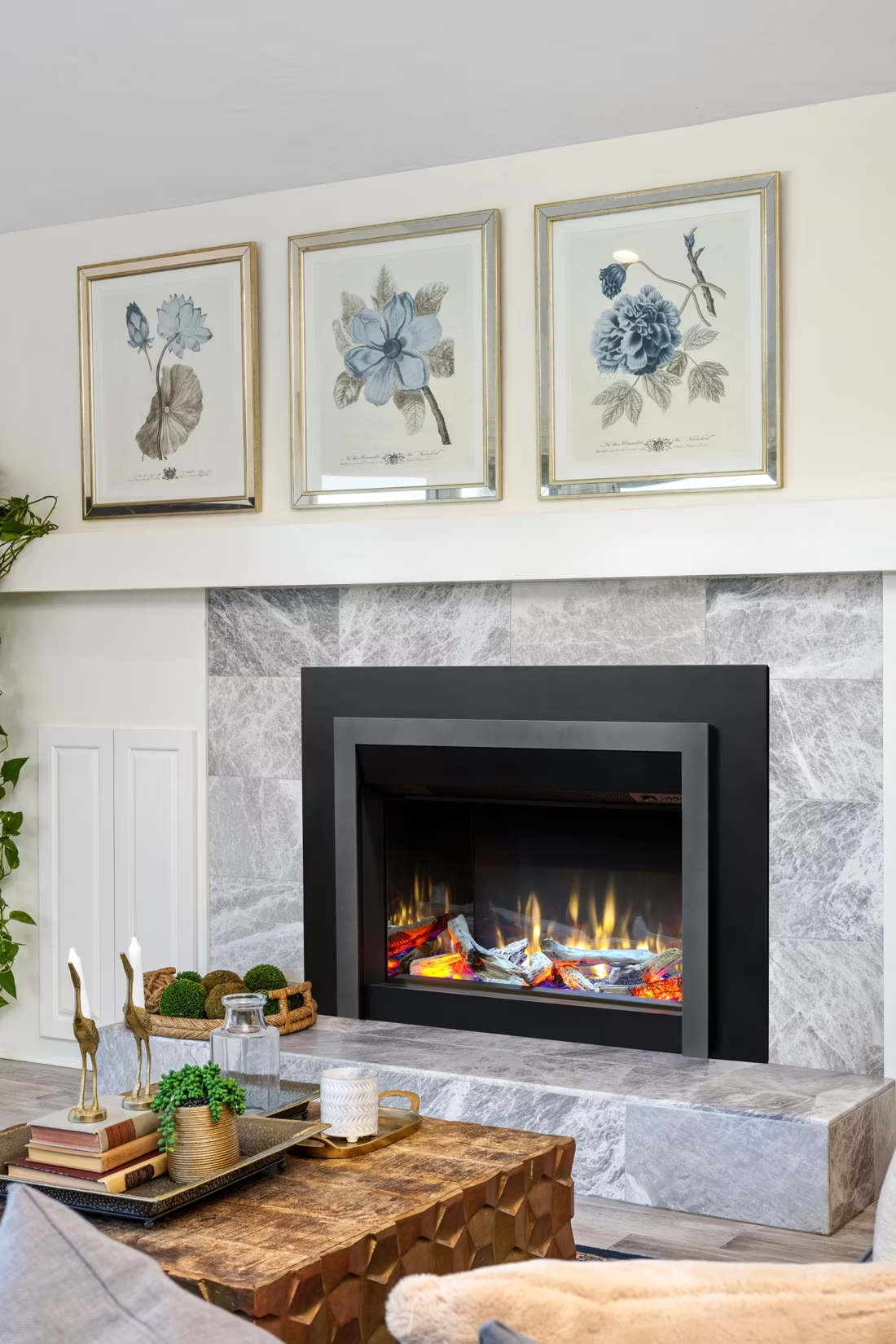
That combination is exactly where electric fireplaces earn their place. A plug-in insert or a hardwired built-in adds real, immediate heat to a sunroom, bedroom, or camp addition without a chimney, gas line, or Class A venting—which matters on islands and peninsulas where running new venting through old stone or granite foundations gets expensive fast. Electric units are also popular with the vacation-rental market on MDI and Deer Isle, where owners want fireplace ambiance without the smoke, carbon monoxide risk, or insurance headaches of an open flame for renters who don't know the property. One honest caveat: most of Hancock County is served by Versant Power, and nor'easters and ice storms do knock out grid power here—an electric fireplace goes dark right along with everything else, so it works best as zone heat or ambiance alongside a wood stove or generator, not as your only cold-night plan.
Three steps. No salesperson until you're ready.
Tell us about your project
Your zip code, your situation, and the fuel you're leaning toward—or let the answers point you to one.
See what's actually available
The brands dealers within 100 miles genuinely carry—real options, never a catalog mirage.
Get your dealer & Project Guide
A trusted local dealer, plus the free Project Guide & Parts List that names every component of the job.
Frequently Asked Questions
How much does an electric fireplace installation cost in Hancock County?
A plug-in electric insert or freestanding stove that runs off a standard household outlet typically runs $200 to $700 for the unit itself, with no real installation cost beyond hanging or placing it. A built-in wall unit or mantel-surround fireplace runs higher—often $1,500 to $3,500 including a dedicated circuit—because Maine's older housing stock in towns like Ellsworth, Blue Hill, and Bucksport frequently needs an electrician to run new wiring rather than relying on existing knob-and-tube or undersized panels. Island properties on MDI or Deer Isle can run slightly higher due to travel time for the electrician and any marine-grade considerations for coastal exposure.
Do I need a permit to install an electric fireplace in Hancock County?
Usually not for a plug-in unit—it's treated like any other appliance. Hardwired built-ins that require a new dedicated circuit typically need an electrical permit, and in Hancock County that permit is issued by the individual town's code enforcement officer rather than a county building department—Ellsworth, Bar Harbor, Bucksport, and Blue Hill each run their own permitting. A licensed electrician pulling the permit as part of the job is standard practice and keeps the work compliant with the National Electrical Code.
Will an electric fireplace still work during a power outage?
No—and this matters in Hancock County, where Versant Power's coastal and island lines regularly see outages during nor'easters, ice storms, and high-wind events. An electric fireplace is only as reliable as the grid (or a generator) feeding it. Many homeowners here pair an electric unit for daily zone heat and ambiance with a wood stove burning local maple, birch, or oak as genuine backup heat—the wood stove keeps working when the power doesn't.
What size electric fireplace do I need for my room?
Most electric fireplaces are sized by heater wattage rather than whole-home BTU output, since they're built for zone heating rather than replacing a furnace. A 1,500-watt unit will comfortably heat a single room of 300–400 square feet in a reasonably insulated Hancock County home; older, drafty capes or uninsulated camp additions may need a larger unit or supplemental heat to keep up on the coldest nights. Insert-style units going into an existing fireplace opening are sized to fit the firebox first, then matched to heater output second.
Is an electric fireplace a good fit for a seasonal camp or cottage?
Often, yes—especially for camps on Deer Isle, Blue Hill Peninsula, or the shoulder-season cottages around Mount Desert Island that don't run a full heating system year-round. A plug-in or built-in electric unit gives you instant heat and fireplace ambiance the moment you arrive without the maintenance a wood stove needs between visits (chimney sweeps, creosote checks, stored firewood) or the propane tank upkeep a gas unit requires. For camps used only a handful of weekends a year, that convenience is the whole appeal.
What electrical circuit does an electric fireplace need?
Most electric fireplaces under 1,500 watts run on a standard 120-volt, 15- or 20-amp household circuit—no special wiring needed if the outlet is already there and not overloaded with other appliances. Larger built-in units, or installations in older Hancock County homes where the existing circuit is already carrying other loads, often call for a new dedicated 120V circuit run by a licensed electrician. True 240V electric fireplaces exist but are less common in residential installs; your local dealer or electrician can tell you which the specific unit requires.
Electric fireplace vs. pellet stove—which is right for my Hancock County home?
A pellet stove burning bagged pellets from regional suppliers like New England Wood Pellet or Maine Woods Pellet Co delivers real heat output—enough to serve as primary heat in a well-sized room—and a warmer, more authentic flame, but it needs venting, an annual sweep, and electricity to run its auger and blower, so it still goes down in a power outage without a battery backup. An electric fireplace needs no venting at all, installs almost anywhere with an outlet, and costs less up front, but tops out at supplemental zone heat rather than whole-room heavy-duty warmth. For a drafty Blue Hill farmhouse relying on real heat, pellet often wins; for a den, bedroom, or rental unit where ambiance and simplicity matter more, electric is the easier call.
Are electric fireplaces a good choice for rental and vacation properties?
Yes, and it's one of the more common uses in Hancock County's vacation-rental-heavy areas like Bar Harbor and Deer Isle. Electric units eliminate the carbon monoxide, open-flame, and creosote risks that come with wood or gas—which matters for insurance and for guests unfamiliar with operating a real fireplace. Most models include a timer and a remote or app control, letting an owner or property manager confirm the unit is off remotely after checkout, something no wood stove or gas fireplace can do.
What's the difference between an electric insert, a built-in, and a freestanding electric stove?
An electric insert is sized to slide into an existing masonry or zero-clearance fireplace opening, converting an old wood-burning firebox into a clean electric heat source without touching the chimney. A built-in electric fireplace is designed to be framed into a wall—common in new additions or renovations around Ellsworth and Bucksport. A freestanding electric stove sits on the floor like a traditional wood stove and just needs an outlet, making it the simplest option for camps or rooms with no existing fireplace at all. A local dealer can tell you which fits your specific opening or room.
Can I put a TV above my fireplace?
Yes—with an asterisk. Fireplaces are hot and TVs don't like heat. Either put a mantel between them to deflect rising warmth, or choose a fireplace with heat-management technology that creates a cool zone on the wall above—the wall stays around 125 degrees, barely warm, while the room still gets full heat. If you like clean lines and don't want a mantel, heat management is the answer.
Does an electric fireplace need a vent or chimney?
No—that's its superpower. An electric fireplace needs a wall and an outlet, period. No vent pipe, no gas line, no clearances to design around, which is why it works in bedrooms, offices, apartments, and walls where venting a gas or wood unit would be impractical or impossible. Installation is typically the simplest and least expensive of any fireplace type.
Can I install a fireplace myself?
If you're putting a fire in your house on purpose, it's best to work with an expert. Unless you're genuinely experienced in framing, gas line, vent pipe, and the national code on clearances to combustibles, have a professional do it—and ideally the same company that sells you the fireplace, so warranty, service, and liability all live under one roof.
What is an in-home preview and do I need one?
It's a visit where a hearth professional measures your space, confirms the model you picked actually works in your home, and walks the specs—framing, gas line, venting, finish work—before anything is ordered. Some details you just can't know until you see the house. Never make a down payment without one; it's the single most-skipped step that burns buyers.
Stove and Fireplace Dealers in Hancock County
Find your electric fireplace in Hancock County.
Tell us about your home or camp and we'll put together a free Project Guide & Parts List—the right electric fireplace or insert for your space, matched with a trusted local Hancock County dealer who can install it correctly.
Find Your Fireplace →