
Instant heat for Falmouth Foreside's coldest nights.
Zone heat for waterfront cottages, additions, and historic homes without a flue—matched to a trusted local dealer who understands Central Maine Power's rates and your home's wiring.
Every Project Starts From One of These Five Situations
Real warmth, no chimney required.
Falmouth Foreside sits right on Casco Bay, and its housing stock reflects that—shingle-style cottages, colonial-era homes along Foreside Road, and newer waterfront builds packed onto small lots with tight setbacks. With winters comparable to Burlington, VT and lows averaging 16°F, this is genuinely cold New England country. But many of these homes were never built with a masonry chimney, and historic preservation considerations plus limited lot space make adding new venting difficult or impossible for a lot of owners.
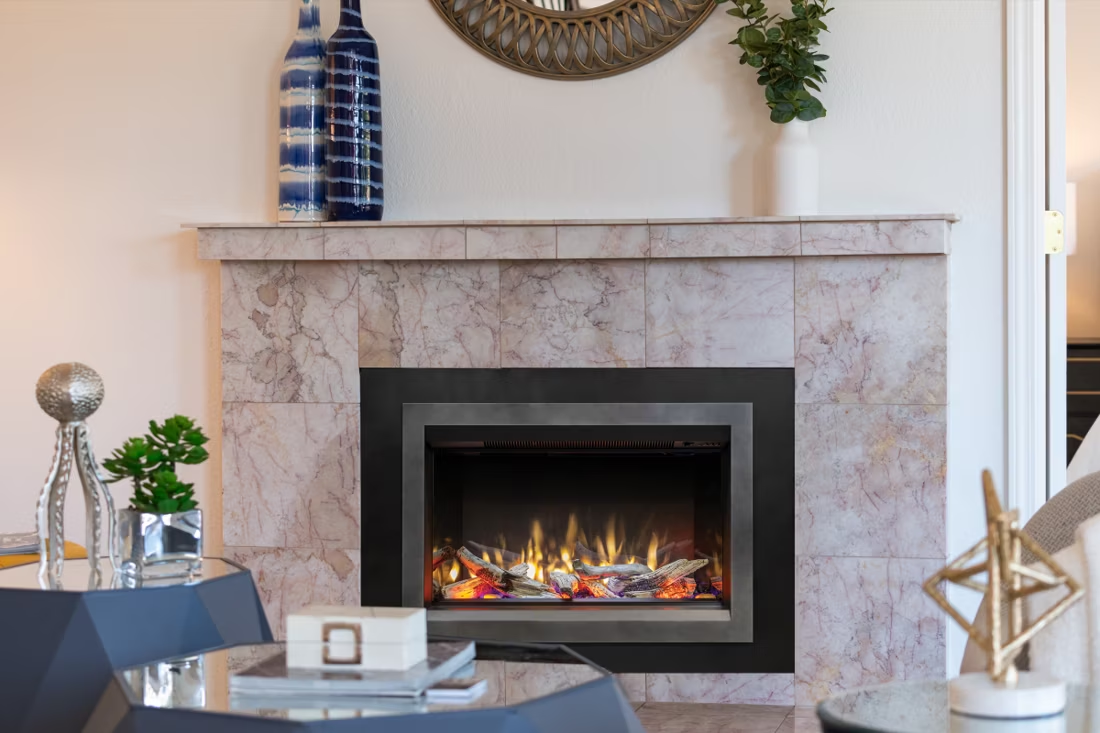
That's where electric fireplaces earn their keep. Central Maine Power serves the area at a residential rate of roughly 22.37 cents per kWh—notably higher than the national average—which makes electric fireplaces a better fit for zone heating a sunroom, primary bedroom, or bay-facing addition than for whole-home heat. A plug-in unit needs no permit at all; a built-in linear fireplace on its own dedicated circuit typically means a quick electrical permit through the Town of Falmouth Code Enforcement Office. Either way, you get real supplemental warmth and the look of a fire without touching your roofline.
Three steps. No salesperson until you're ready.
Tell us about your project
Your zip code, your situation, and the fuel you're leaning toward—or let the answers point you to one.
See what's actually available
The brands dealers within 100 miles genuinely carry—real options, never a catalog mirage.
Get your dealer & Project Guide
A trusted local dealer, plus the free Project Guide & Parts List that names every component of the job.
Frequently Asked Questions
How much does an electric fireplace installation cost in Falmouth Foreside?
Costs vary widely because electric covers such a range of products. A freestanding plug-in unit or a basic insert into an existing mantel can run as little as $400 to $900 installed, since it plugs into a standard outlet and needs no new wiring. A built-in linear electric fireplace set into a wall or custom surround, which usually requires a dedicated 20-amp circuit run by a licensed electrician, typically runs $1,500 to $3,500 depending on the wall framing, drywall, and finish work involved. That's meaningfully less than a comparable wood or gas installation in this area, which is part of why electric appeals to owners of smaller Foreside cottages and condos.
What's the difference between a plug-in electric fireplace and a built-in electric insert?
A plug-in unit is a self-contained appliance—a freestanding stove, a mantel package, or an insert that slides into an existing fireplace opening—that runs off a standard 120-volt outlet with no electrical work required. A built-in electric fireplace, usually a linear wall unit, gets recessed into framing and wired to a dedicated circuit, which delivers a cleaner, more custom look but adds electrician labor and typically a permit through the Town of Falmouth. For a lot of the older homes and condos around the Foreside, a plug-in insert into an existing masonry opening is the fastest, least invasive option.
How much does it cost to run an electric fireplace on Central Maine Power's rates?
Most electric fireplaces draw about 1,500 watts on the high heat setting, or 1.5 kWh per hour. At Central Maine Power's residential rate of roughly 22.37 cents per kWh, that works out to about 34 cents an hour to run on heat, or a bit over $2 for a typical evening of use with the flame effect and heater both on. Running the flame effect alone without heat draws far less power, often under 100 watts, which is why many Falmouth Foreside owners use these units for ambiance on shoulder-season evenings and only kick on the heater during the coldest stretches.
Will an electric fireplace actually heat a room in a Maine winter?
A typical 1,500-watt unit puts out around 5,000 BTUs, enough to noticeably warm a single room—a sunroom, den, or primary bedroom—but not enough to replace central heat in a home dealing with 16°F winter lows and a long, demanding heating season like Burlington, VT's. Think of it as zone heat: it lets you turn down the thermostat in the room you're actually using and get instant, even warmth there instead. For whole-home heat during a real Falmouth Foreside cold snap, an electric fireplace works best alongside your existing furnace, heat pump, or boiler rather than in place of it.
Do I need a permit to install an electric fireplace in Falmouth Foreside?
A plug-in unit that uses an existing outlet needs no permit at all. If you're installing a built-in linear fireplace that requires a new dedicated circuit, that electrical work needs a permit through the Town of Falmouth Code Enforcement Office and has to be done by a licensed electrician. Most local dealers coordinate this as part of the installation, so you're not left tracking down the paperwork yourself.
Why don't more homes in Falmouth Foreside use wood or pellet stoves?
Plenty of Cumberland County does burn wood—maple, birch, beech, and oak are all common species inland—but the Foreside itself is a different situation. Many of the waterfront cottages and colonial-era homes here don't have a masonry chimney to work with, lot sizes are tight, and a fair number of properties are seasonal or association-governed condos where adding new venting isn't practical or permitted. Pellet stoves face the same venting hurdle. Electric sidesteps all of it: no flue, no clearances, no combustion air requirements, which is why it's become the practical choice for supplemental heat in this particular village.
Electric vs. gas fireplace—which is right for my home?
Gas delivers more heat output and can double as a real backup heat source, but it requires venting and either a natural gas line or a propane tank—and out here on the Foreside, natural gas mains don't reach every street, so propane is often the fallback fuel, adding tank and delivery logistics. Electric needs none of that: it plugs in or wires into a circuit you likely already have capacity for, installs in an afternoon, and produces zero combustion byproducts, which matters in a tightly built older home. If you want serious heat output and don't mind coordinating a gas line or propane tank, gas is the stronger performer. If you want a fast, low-cost, no-venting install for a sunroom or bedroom, electric is usually the better fit.
What happens if the power goes out—will my electric fireplace still work?
No—electric fireplaces need power to run the heater, blower, and flame effect, so a Central Maine Power outage means the unit goes dark along with everything else. Coastal storms and Nor'easters do knock out power along the Foreside some winters, so if backup heat during outages is a real concern for your household, it's worth pairing an electric fireplace with either a home generator or a separate wood or gas appliance elsewhere in the house that can operate independently of the grid.
Where do electric fireplaces typically get installed in Falmouth Foreside homes?
The most common spots are additions and sunrooms facing Casco Bay, primary bedrooms in the older colonial-style homes, and condo units where any kind of venting is off the table under the association rules. It's also popular as an insert into an existing but unused masonry fireplace opening—you keep the mantel and the look of the original hearth, but swap in a clean, maintenance-free electric unit behind the screen. A local dealer can walk your specific room and tell you whether a plug-in insert or a built-in linear unit makes more sense for the space.
Can I put a TV above my fireplace?
Yes—with an asterisk. Fireplaces are hot and TVs don't like heat. Either put a mantel between them to deflect rising warmth, or choose a fireplace with heat-management technology that creates a cool zone on the wall above—the wall stays around 125 degrees, barely warm, while the room still gets full heat. If you like clean lines and don't want a mantel, heat management is the answer.
Does an electric fireplace need a vent or chimney?
No—that's its superpower. An electric fireplace needs a wall and an outlet, period. No vent pipe, no gas line, no clearances to design around, which is why it works in bedrooms, offices, apartments, and walls where venting a gas or wood unit would be impractical or impossible. Installation is typically the simplest and least expensive of any fireplace type.
What is an in-home preview and do I need one?
It's a visit where a hearth professional measures your space, confirms the model you picked actually works in your home, and walks the specs—framing, gas line, venting, finish work—before anything is ordered. Some details you just can't know until you see the house. Never make a down payment without one; it's the single most-skipped step that burns buyers.
Can a fireplace actually lower my heating bill?
Yes—by creating a comfort zone. A furnace heats every square foot of the house just to warm the one room you're in; a gas fireplace on low burns roughly a sixth of the gas a typical furnace does. Set the furnace around 55–60 degrees as a baseline, then heat the rooms your family actually uses. Families who heat this way commonly save $20–$60 a month.
Nearby Dealers
Hearth shops serving Falmouth Foreside and the surrounding area. Every listing shows whether it is a WhyFire partner, a dealer we have verified as authorized for the brands we recommend, or a local business carrying hearth products. No manufacturer pays for placement. How we verify dealers →
Performance Building Supply
Frost N Flame
Frost & Flame
Waltz & Sons Propane
Sagadahoc Stove Co.
Alternative Heat Source Inc.
Electric Service in Falmouth Foreside
An electric fireplace's heater draws about 1,500 watts—pennies per hour at local rates.
Central Maine Power Co
Find your electric fireplace in Falmouth Foreside.
Tell us about your home and we'll match you with a trusted local dealer and send over your free Project Guide & Parts List—the exact unit, mounting or insert hardware, and electrical specs for your Falmouth Foreside project.
Find Your Fireplace →