
Reliable heat for Casco Bay's long winters.
With a long heating season that stretches from early fall into late spring and winter lows averaging 16°F, Falmouth Foreside homes lean on gas for instant, dependable zone heat. Find the right unit and get matched with a trusted local dealer.
Every Project Starts From One of These Five Situations
Instant warmth without the wood pile.
Falmouth Foreside sits on a quiet peninsula of Casco Bay in Cumberland County, a climate zone 6A pocket where winter lows average 16°F and the heating season runs long—stretching from early fall into late spring. Unlike a lot of inland Maine towns, wood heat hasn't taken hold here in a meaningful way: village lots are tight, there's no local wood lot to speak of, and the nearest public cutting permits are through the White Mountain National Forest, well over an hour inland. For most homeowners here, a real flame with none of the logistics means gas.
Natural gas mains from Unitil's Northern Utilities network reach parts of Greater Portland, but coverage thins out on the Foreside peninsula, so a lot of homes here run on propane instead—typically a buried or above-ground tank serviced by a regional delivery company. Either way, gas makes economic sense against the alternative: Central Maine Power's residential rate runs around 22.4 cents per kWh, among the higher electric rates in New England, which makes electric resistance heat expensive to lean on for anything beyond supplemental warmth. A direct-vent gas fireplace or insert gives Falmouth Foreside homeowners real heat output, instant on-off control, and—with the right ignition system—warmth that keeps running through the Nor'easter-driven outages Casco Bay sees most winters.
Three steps. No salesperson until you're ready.
Tell us about your project
Your zip code, your situation, and the fuel you're leaning toward—or let the answers point you to one.
See what's actually available
The brands dealers within 100 miles genuinely carry—real options, never a catalog mirage.
Get your dealer & Project Guide
A trusted local dealer, plus the free Project Guide & Parts List that names every component of the job.
Frequently Asked Questions
How much does a gas fireplace installation cost in Falmouth Foreside?
Expect somewhere in the $4,500 to $11,000 range, with the biggest swing factor being fuel source. If your home is already on a natural gas line through Unitil's network, a direct-vent insert or fireplace on the lower end of that range is realistic. If you're on propane—the more common setup on the Foreside peninsula—and need a new tank installed along with a fresh gas line run to the hearth, you're looking at the higher end. Venting path (straight-through an exterior wall versus routing through an existing masonry chimney) also moves the number meaningfully.
Can I convert an existing fireplace to gas?
Yes, and it's a common project in this part of Falmouth given how many capes and colonials along the Foreside have original masonry fireplaces. A gas insert drops into the existing firebox and vents up through a stainless liner run inside your current chimney, so you keep the look of the original hearth while gaining real heat output and losing the smoke and ash. Because most of these homes run on propane rather than a gas main, budget for either an existing tank hookup or new tank placement as part of the project—your local dealer will factor that into the quote during an in-home visit.
Is natural gas available in Falmouth Foreside, or do I need propane?
It depends on exactly where your house sits. Unitil's Northern Utilities natural gas network extends into parts of Falmouth from the Portland side, but the Foreside peninsula is spottier, and plenty of homes here are outside the main entirely. Propane is the fallback and, in practice, the more common choice for gas fireplace installs in this village—a regional propane supplier sets a tank and your installer runs the line from there. The good news is nearly every gas fireplace and insert sold today can be configured for either fuel, so your fuel source doesn't limit which units you can consider.
Will my gas fireplace still work if the power goes out?
Most will, with the right ignition setup. Casco Bay sees its share of winter Nor'easters that knock out Central Maine Power service for hours or occasionally days, so this matters more here than in a lot of places. Units with IPI (intermittent pilot ignition) run on a small battery backup that kicks in automatically when the power drops—just remember to swap those batteries periodically. Valor's gas fireplaces take a different approach: the pilot's thermocouple generates its own electricity, so there's no battery to forget at all. If reliable outage heat is a priority, ask your local dealer which ignition system a given model uses before you commit.
What's the difference between a gas fireplace, insert, and stove?
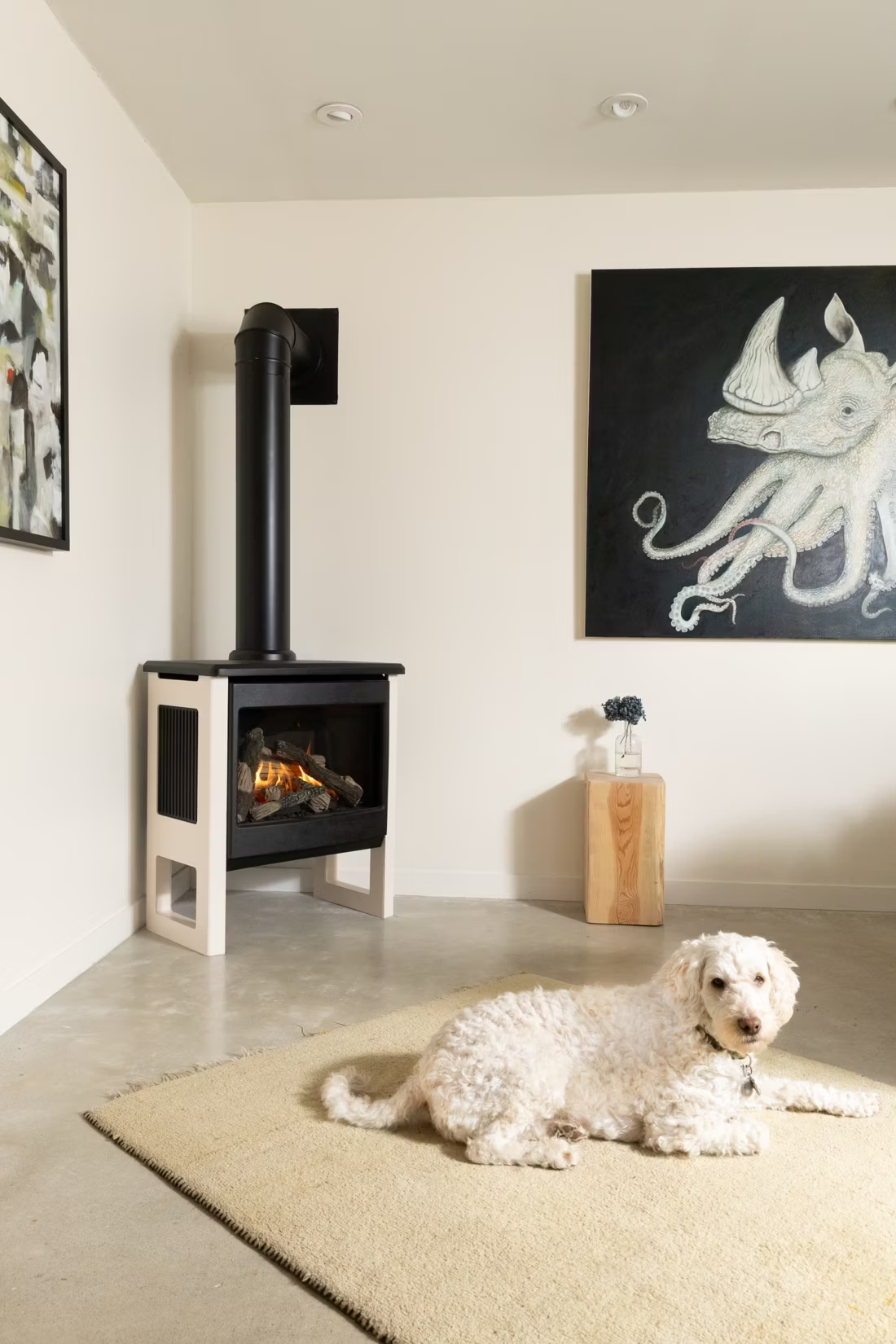
A gas fireplace is a fully built-in unit framed into a wall—the right call for new construction or a remodel without an existing hearth. A gas insert slides into an existing masonry firebox and uses your current chimney as the vent path, which fits a lot of the older homes around the Foreside. A gas stove is freestanding, sitting on the floor like a wood stove but running on gas—a good option if you want supplemental heat in a room without tearing into walls or an existing fireplace. Most homeowners here with an existing hearth go with an insert; those building or renovating tend toward a built-in fireplace.
Do I need a permit to install a gas fireplace in Falmouth Foreside?
Yes. The Town of Falmouth Code Enforcement Office requires a building permit for the installation, and any new gas line or propane tank placement needs to be handled by a licensed gas-fitter and typically inspected separately. If you're adding a propane tank, there are also setback requirements from the house and property lines that your propane supplier and installer will coordinate on. Most reputable hearth dealers handle the permitting and inspection scheduling as part of the install, so you're not chasing down separate trades yourself.
Should I get a vented or vent-free gas fireplace?
For a climate zone 6A location like Falmouth Foreside, vented direct-vent units are the clear recommendation. They draw combustion air from outside and exhaust it back outside through a sealed system, so they don't affect indoor air quality—important in tightly built coastal homes that are often sealed up well against the wind. Vent-free units are technically legal in Maine but come with strict room-sizing and ventilation rules, and they release combustion byproducts into the living space. Given how long the heating season runs here, most local dealers steer homeowners toward vented units for both comfort and safety.
How often does a gas fireplace need to be serviced here?
Plan on an annual inspection, and don't skip it near the water. The salt air along Casco Bay accelerates corrosion on venting components and burner assemblies faster than it would inland, so a yearly check by a certified technician—covering the pilot, burner, gas connections, and vent termination—matters more here than in a drier climate. Most service providers in the Portland area charge somewhere in the $150 to $250 range for a standard annual visit.
Why gas instead of wood or electric in Falmouth Foreside?
Wood never really took hold here—there's no practical local wood lot, and the nearest Forest Service cutting permits (around $20 per cord, May through October) are through the White Mountain National Forest, too far to be a realistic supply for most households. Electric heat is available everywhere through Central Maine Power, but at roughly 22.4 cents per kWh it's expensive to run as anything more than a small supplemental unit. Gas splits the difference: real flame, real heat output, no wood handling, and—whether you're on propane or reach Unitil's gas main—lower running costs than leaning on electric resistance heat through a long Maine winter.
Can I put a TV above my fireplace?
Yes—with an asterisk. Fireplaces are hot and TVs don't like heat. Either put a mantel between them to deflect rising warmth, or choose a fireplace with heat-management technology that creates a cool zone on the wall above—the wall stays around 125 degrees, barely warm, while the room still gets full heat. If you like clean lines and don't want a mantel, heat management is the answer.
Why is my open fireplace making my house colder?
Open fireplaces suck—literally. As the fire burns, it consumes air your furnace already paid to heat and pulls it out through the chimney, so the house is actually colder after the fire goes out than before you lit it. An insert fixes this: it seals the chimney, puts fixed glass across the front, and turns that hole in your house into a real heat source.
Can a fireplace actually lower my heating bill?
Yes—by creating a comfort zone. A furnace heats every square foot of the house just to warm the one room you're in; a gas fireplace on low burns roughly a sixth of the gas a typical furnace does. Set the furnace around 55–60 degrees as a baseline, then heat the rooms your family actually uses. Families who heat this way commonly save $20–$60 a month.
Does a fireplace add value to my home?
On average, a fireplace adds back to the home about the same amount you spent installing it. Add the monthly savings from heating the rooms you actually use instead of the whole house—often hundreds of dollars a year—and the value case is strong before you even count what a fire does for how your family uses the room.
Nearby Dealers
Hearth shops serving Falmouth Foreside and the surrounding area. Every listing shows whether it is a WhyFire partner, a dealer we have verified as authorized for the brands we recommend, or a local business carrying hearth products. No manufacturer pays for placement. How we verify dealers →
Performance Building Supply
Frost N Flame
Frost & Flame
Waltz & Sons Propane
Sagadahoc Stove Co.
Alternative Heat Source Inc.
Find your gas fireplace in Falmouth Foreside.
Tell us about your home and your fuel situation—natural gas or propane—and we'll put together a free Project Guide & Parts List with the right unit, vent kit, and a trusted local dealer matched to your project in Falmouth Foreside.
Find Your Fireplace →