
Find your electric fireplace in Cumberland County.
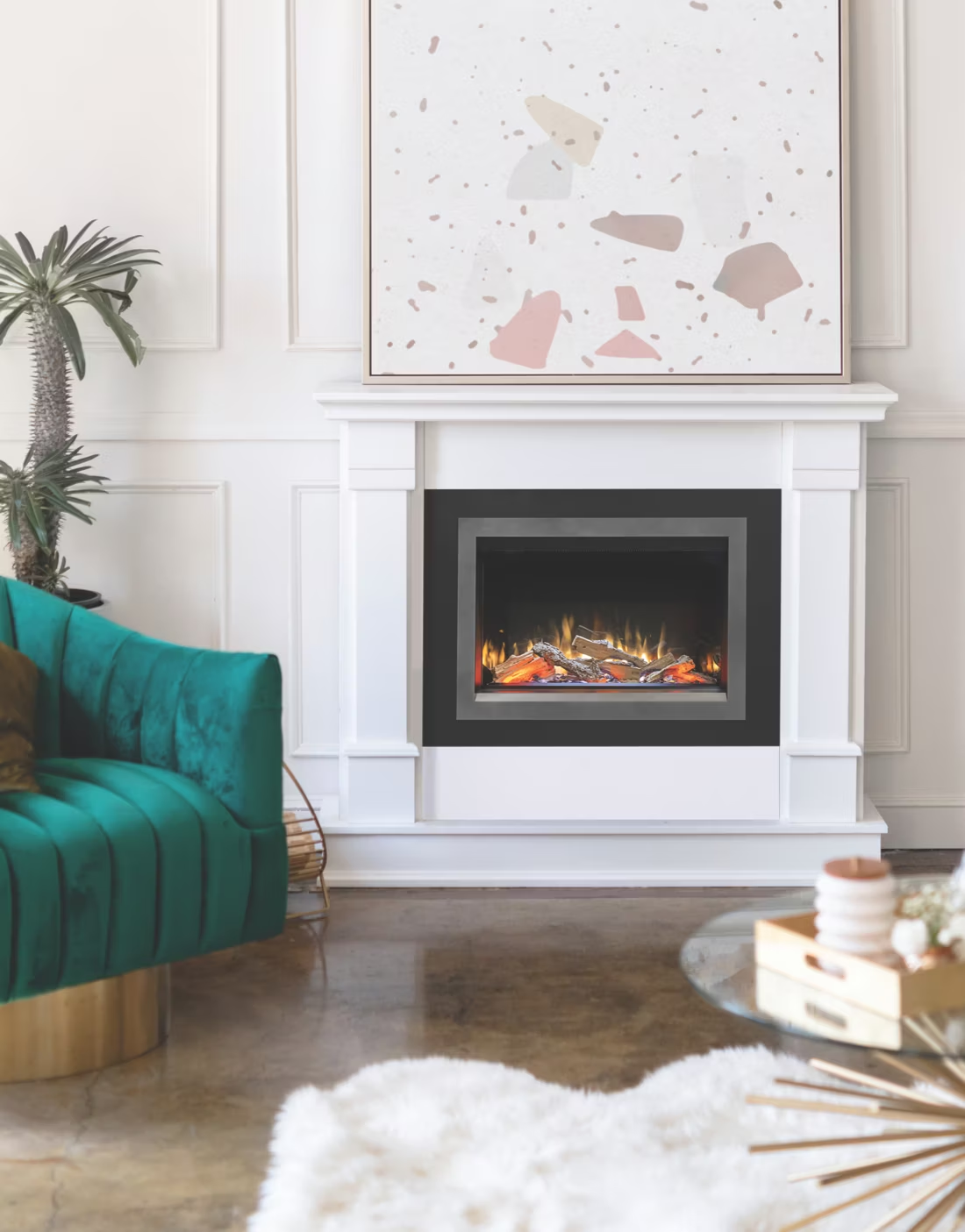
From the brick rowhouses of Portland's West End to condos in Falmouth and Yarmouth, electric fireplaces bring instant zone heat and real flame ambiance without a chimney, a gas line, or a permit headache. Find the right unit and connect with a trusted local dealer.
Every Project Starts From One of These Five Situations
No chimney, no venting, no permit hassle.
Cumberland County runs cold—Portland and the surrounding coastal towns face a long, demanding heating season, with winter lows averaging around 16°F, numbers that put the county in the same climate zone (6A) as Burlington, Vermont. That's serious heating season, and it's why most Cumberland County homes lean on oil, natural gas, or heat pumps for whole-house heat. Electric fireplaces fill a different role here: zone heat for a single room, ambiance in a condo or apartment that can't support a flue, and a fast retrofit for the brick rowhouses on Munjoy Hill and in the West End where cutting a new chimney chase isn't realistic.
Because electric units produce no combustion byproducts, they don't need venting, a chimney, or the fresh-air intake that wood and gas installations require—which also means no building or mechanical permit in most Cumberland County towns for a plug-in unit, though a hardwired built-in typically needs an electrical permit through the local code enforcement office (Portland, South Portland, Brunswick, and most surrounding towns each handle this separately). For homeowners in Falmouth, Cape Elizabeth, Yarmouth, and Freeport who want fireplace ambiance in a sunroom or finished basement without touching the roofline, electric is often the simplest path—even if it's rarely the primary heat source in a climate this cold.
Three steps. No salesperson until you're ready.
Tell us about your project
Your zip code, your situation, and the fuel you're leaning toward—or let the answers point you to one.
See what's actually available
The brands dealers within 100 miles genuinely carry—real options, never a catalog mirage.
Get your dealer & Project Guide
A trusted local dealer, plus the free Project Guide & Parts List that names every component of the job.
Frequently Asked Questions
How much does an electric fireplace installation cost in Cumberland County?
Plug-in electric inserts and freestanding units run $300 to $1,500 installed—most simply plug into a standard 120V outlet, so there's little labor beyond mounting. Built-in wall units or full mantel packages that require a dedicated circuit and professional hardwiring by a licensed electrician typically run $1,500 to $4,000, depending on whether new wiring has to be run through plaster walls (common in Portland's older housing stock) or framed-in new construction. Recessed units set into an existing masonry fireplace opening—a popular retrofit in the West End and Munjoy Hill's brick rowhouses—usually land in the middle of that range.
Do I need a permit to install an electric fireplace in Cumberland County?
Generally, no—a plug-in electric fireplace or insert doesn't require a building permit since there's no venting, combustion, or structural change involved. If you're installing a hardwired built-in unit on its own dedicated circuit, most Cumberland County code enforcement offices (Portland, South Portland, and Brunswick among them) require an electrical permit pulled by a licensed electrician, separate from any building permit. It's a much lighter lift than a wood or gas installation, which is part of why electric is popular for condo and apartment retrofits where residents can't modify shared chimneys or exterior walls.
Will an electric fireplace actually heat a Cumberland County room, or is it just for looks?
Most electric fireplaces include a built-in heater rated around 1,500 watts, which is enough to noticeably warm a single room—typically 300 to 400 square feet—on its own. In a county with winters as long and cold as Cumberland's, that's realistic as supplemental zone heat for a bedroom, sunroom, or den, but it's not sized to replace a furnace or heat pump system for whole-house heating through a Maine winter. Most Cumberland County homeowners run the flame year-round for ambiance and switch on the heater only during shoulder-season months or as a supplement to central heat on the coldest nights.
What happens to my electric fireplace during a power outage?
It won't run—electric fireplaces need household power for both the flame effect and the heater, so during an ice storm or nor'easter outage, which happens most winters somewhere in Cumberland County, an electric unit goes dark along with everything else on the circuit. That's the tradeoff against wood: homes that want backup heat during outages typically pair an electric fireplace for daily convenience with a wood stove or pellet stove elsewhere in the house for the nights the power actually goes down.
What's the difference between an electric insert, a wall-mount unit, and a mantel package?
An electric insert is sized to slide into an existing masonry fireplace opening, which is common in Portland's older brick homes where the original wood-burning fireplace hasn't been used in years. A wall-mount unit hangs on any interior wall like a large flat-screen TV and doesn't require an existing fireplace at all. A mantel package combines a built-in or freestanding unit with a surrounding cabinet or mantel shelf, giving it the look of a traditional fireplace in a room that never had one. For Cumberland County retrofits into an existing fireplace, the insert is almost always the right call; for condos or new construction with no chimney, wall-mount or mantel units are more common.
What electric fireplace brands are commonly installed in Cumberland County?
Dimplex, Napoleon, and Touchstone are the brands most local hearth retailers carry and service in the Portland area, ranging from compact wall-mount units to full mantel packages with realistic flame technology. Since electric units have no combustion components to maintain, brand selection comes down more to flame realism, heater output, and fit for your space than the climate-driven considerations that matter for wood or gas. A local retailer can show you flame effects in person, which matters—the difference between a convincing fire and an obvious light show is easier to judge in a showroom than online.
How much does it cost to run an electric fireplace in Maine?
Running the heater element on a typical 1,500-watt unit costs roughly 20 to 30 cents per hour at current Central Maine Power residential rates, or about $1.50 to $2.50 for a full evening of heat. Running just the flame effect without the heater costs pennies per hour since LED lighting draws very little power. For Cumberland County homeowners weighing electric against a wood or pellet stove for supplemental heat, electric wins on convenience and upfront cost but typically costs more per BTU than burning your own cut firewood—maple, birch, and oak are all common and available locally through cutting permits on the White Mountain National Forest.
Electric vs. gas fireplace—which is right for my Cumberland County home?
Gas fireplaces produce real, substantial heat (often 20,000+ BTUs) and can serve as genuine supplemental or zone heat through a Maine winter, but they require venting or careful vent-free placement, a gas line or propane tank, and a larger installation budget. Electric fireplaces produce far less heat, a fraction of the cost to install, and work anywhere there's an outlet—no venting, no gas line, no chimney. For a condo in Portland's Old Port or a finished basement in South Portland where running gas line isn't practical, electric is often the only realistic option. For a primary living space where you want the fireplace to meaningfully offset heating costs, gas is the better performer.
Electric vs. wood stove—which makes more sense for Cumberland County's winters?
Wood offers real heat output, works during power outages, and taps into abundant local hardwood—maple, birch, beech, oak, and spruce are all common in Cumberland County, and cutting permits through the White Mountain National Forest run about $20 per cord during the May-to-October season. Electric offers none of that heat resilience but wins on simplicity: no chimney, no ash, no wood storage, and a plug-in install that takes an afternoon instead of a full renovation. For a primary heat source backing up an oil or heat-pump system, wood is the stronger choice in a climate with winters as long and cold as Cumberland County's. For ambiance and easy zone heat in a room where a chimney isn't an option, electric fits better.
Can I put a TV above my fireplace?
Yes—with an asterisk. Fireplaces are hot and TVs don't like heat. Either put a mantel between them to deflect rising warmth, or choose a fireplace with heat-management technology that creates a cool zone on the wall above—the wall stays around 125 degrees, barely warm, while the room still gets full heat. If you like clean lines and don't want a mantel, heat management is the answer.
Does an electric fireplace need a vent or chimney?
No—that's its superpower. An electric fireplace needs a wall and an outlet, period. No vent pipe, no gas line, no clearances to design around, which is why it works in bedrooms, offices, apartments, and walls where venting a gas or wood unit would be impractical or impossible. Installation is typically the simplest and least expensive of any fireplace type.
Does a fireplace add value to my home?
On average, a fireplace adds back to the home about the same amount you spent installing it. Add the monthly savings from heating the rooms you actually use instead of the whole house—often hundreds of dollars a year—and the value case is strong before you even count what a fire does for how your family uses the room.
Can I install a fireplace myself?
If you're putting a fire in your house on purpose, it's best to work with an expert. Unless you're genuinely experienced in framing, gas line, vent pipe, and the national code on clearances to combustibles, have a professional do it—and ideally the same company that sells you the fireplace, so warranty, service, and liability all live under one roof.
Stove and Fireplace Dealers in Cumberland County
Listings include WhyFire partner dealers, dealers we have verified as authorized for the brands we recommend, and established local businesses that carry hearth products. Every listing shows which one it is. The ones marked Preferred run on WhyFire's software, so they can show you real pricing and book your appointment right here. No manufacturer pays for placement. How we verify dealers →
Frost N Flame
Performance Building Supply
Waltz & Sons Propane
Frost & Flame
Sagadahoc Stove Co.
Alternative Heat Source Inc.
Find your electric fireplace in Cumberland County.
Tell us a bit about your home and we'll match you with the right electric fireplace, insert, or wall unit—plus a free Project Guide & Parts List with the exact parts list and a trusted local dealer recommendation for your Cumberland County installation.
Find Your Fireplace →