
Keep Your Family Warm and Safe—No Matter What
With only about 2,238 heating degree days a year, Winn Parish doesn't need wood heat to survive winter—but when an ice storm knocks the power out for days, a good stove is the difference between a cold house and a warm one. Find the right unit and connect with a trusted local dealer.
Every Project Starts From One of These Five Situations
Abundant timber, mild winters, real backup value.
Winn Parish sits in north-central Louisiana's climate zone 3A, where the average winter low hovers around 36°F and the heating season is short and mild—a fraction of the roughly 8,000+ heating degree days a place like Duluth, MN, racks up in the same stretch. This is timber country: sawmills and papermills have anchored the local economy for generations, and the Winn Ranger District of Kisatchie National Forest covers a substantial share of the parish's roughly 5,700 residents' backyard. Oak, pecan, and cypress are the species you'll find split and stacked behind most rural homes here, and there's no shortage of it.
With winters this mild, wood heat in Winn Parish is rarely a home's primary heat source—it's supplemental warmth for the handful of genuinely cold nights, plus something more urgent: backup heat when an ice storm takes down power lines, which happens with some regularity in this part of Louisiana. A wood stove or insert doesn't care whether the grid is up. It also throws real ambiance into the kind of older farmhouses and camp houses common throughout the parish, many of which still have a masonry fireplace that's never been upgraded past an open hearth.
Three steps. No salesperson until you're ready.
Tell us about your project
Your zip code, your situation, and the fuel you're leaning toward—or let the answers point you to one.
See what's actually available
The brands dealers within 100 miles genuinely carry—real options, never a catalog mirage.
Get your dealer & Project Guide
A trusted local dealer, plus the free Project Guide & Parts List that names every component of the job.
Frequently Asked Questions
How much does a wood stove installation cost in Winn Parish?
A typical wood stove or insert installation in Winn Parish runs roughly $3,000 to $7,000, depending on the unit, whether you're converting an existing masonry fireplace or starting from scratch, and how much chimney or hearth work is involved. Because Winn Parish is rural and dealer density is thin, expect a modest travel charge if your installer is coming from Alexandria, Natchitoches, or Ruston—factor that into quotes rather than being surprised by it. New Class A chimney runs and hearth pad upgrades push jobs toward the higher end of that range.
What size wood stove do I need for my home in Winn Parish?
Because Winn Parish's winters are mild—average lows around 36°F and a heating season that's short compared to most of the country—most homes here don't need a large, primary-heat stove sized for round-the-clock burning. A small to mid-size stove (rated for 1,000-1,800 sq ft) is usually plenty for supplemental heat in a main living area or den, with the added benefit of running without power during an ice storm outage. Larger stoves make sense mainly for camp houses, drafty older farmhouses without central heat, or homeowners who genuinely want wood as their primary source. A local retailer can size your specific home during an in-home consultation.
Where can I find certified wood stove installers near Winn Parish?
Look for NFI (National Fireplace Institute) or CSIA (Chimney Safety Institute of America) certified installers—both indicate real training in wood-burning appliance venting and clearances, not just general contracting experience. Given Winn Parish's small population and rural footprint, certified installers are more likely based out of Alexandria, Ruston, or Monroe and will travel into the parish for installs, often with a small trip charge added. It's worth the extra cost: improper venting on a wood stove is the leading cause of chimney fires, and that risk doesn't go down just because winters here are mild.
What's the difference between a wood stove and a wood insert?
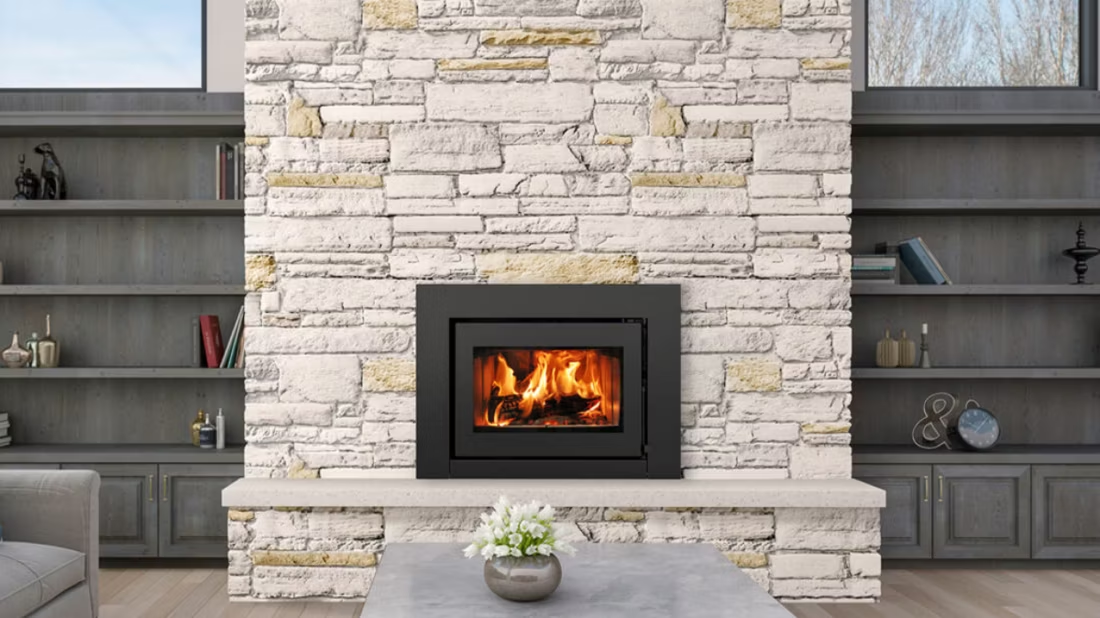
A wood stove is a freestanding unit on its own hearth pad, vented through a chimney, and can go almost anywhere in a home with the right clearances. A wood insert slides into an existing masonry fireplace opening and uses that chimney (typically with a stainless liner) to vent—a common upgrade for Winn Parish's older farmhouses and camp houses that already have a fireplace but rarely use it because open hearths lose most of their heat up the flue. If you've got an existing fireplace that's mostly decorative right now, an insert is usually the better dollar-for-dollar upgrade for real heat output.
Do I need a permit to install a wood stove in Winn Parish?
Within the town limits of Winnfield, new wood stove installations typically go through the Winnfield building department. In unincorporated areas of the parish, permitting falls under the Winn Parish Police Jury. Most local installers handle this paperwork as part of the install so it's not something homeowners usually have to chase down themselves. There are no air quality non-attainment concerns or burn curtailment periods in this part of Louisiana, so once your stove is installed and permitted, there's no seasonal restriction on when you can burn.
What's the best wood stove for Winn Parish's climate?
Because Winn Parish winters rarely see the kind of sustained sub-zero stretches that demand a 20-hour catalytic burn, a solid mid-size non-catalytic stove from a brand like Englander or Pacific Energy is usually plenty—reliable, easier to maintain, and priced sensibly for a supplemental or backup-heat role. What matters more locally is dependability during a power outage: since most of these units need no electricity to run, they'll heat the house through an ice storm when the furnace's blower motor and fan can't. If you're leaning toward long overnight burns for a camp house with less frequent tending, a catalytic model from Blaze King is worth a look—but for most Winn Parish homes, it's more stove than the climate calls for.
How often should my chimney be inspected and cleaned in Winn Parish?
The CSIA recommends an annual inspection for any wood-burning appliance, and that holds even in a mild climate like Winn Parish's—supplemental-use stoves that only burn a cord or two a winter still build up creosote, just more slowly than a primary-heat stove running daily in a colder state. Plan on a sweep and inspection once a year, ideally before the first cold front rolls through in late fall. If you're mainly using the stove as ice-storm backup and it sits unused most winters, don't skip the inspection just because burn hours are low—a chimney that's gone unchecked for years is still a fire risk when you finally need it.
Where can I get firewood in Winn Parish?
Firewood is not hard to come by here—oak, pecan, and cypress are the common local species, and with the Winn Ranger District of Kisatchie National Forest covering a large share of the parish, personal-use cutting permits are typically available for a modest per-cord fee. Many Winn Parish residents also self-cut on private timber land or trade wood informally given how much of the local economy runs on forestry. For homeowners who'd rather not cut their own, small local sellers around Winnfield and Atlanta often sell by the cord, especially in the fall as ice storm season approaches and demand for backup wood picks up.
Wood stove vs. pellet stove—which is right for me in Winn Parish?
Wood stoves need no electricity to operate, which matters in Winn Parish given how ice storms here can knock out power for days at a time—a wood stove will keep heating the house through an outage that leaves a furnace, and a pellet stove, dead in the water. Pellet stoves, with regional brands like Lignetics, Hamer Pellet Fuel, and Greenway Renewable Energy available, offer more convenience: load the hopper, set a thermostat, less ash, no splitting or stacking. But because they rely on an electric auger and blower, they're not a reliable backup source during the exact outages Winn Parish homeowners are usually trying to plan around. For most homes here weighing backup heat as a priority, wood is the more dependable choice.
Why won't my new wood stove get going like my old one?
New wood stoves are 70%+ efficient, so far less heat goes up the flue—which also means less draft to get a fire established. The rule: build a genuinely hot fire for about 45 minutes before you choke it down. Skip that and you get smoke in the room, creosote in the chimney, and a fire that never takes off. Most performance complaints trace straight back to this.
Why is a fireplace insert so efficient?
An insert does two things: it seals the chimney completely, so you stop losing air you already paid to heat, and it radiates warmth into the room through the firebox and glass. Most add a heat-exchange fan that pulls cool room air underneath, wraps it around the hot firebox, and pushes it back out warm. Your home is more efficient before you've even lit the first fire.
Does a fireplace add value to my home?
On average, a fireplace adds back to the home about the same amount you spent installing it. Add the monthly savings from heating the rooms you actually use instead of the whole house—often hundreds of dollars a year—and the value case is strong before you even count what a fire does for how your family uses the room.
What is an in-home preview and do I need one?
It's a visit where a hearth professional measures your space, confirms the model you picked actually works in your home, and walks the specs—framing, gas line, venting, finish work—before anything is ordered. Some details you just can't know until you see the house. Never make a down payment without one; it's the single most-skipped step that burns buyers.
Find your wood stove in Winn Parish.
Tell us a bit about your home and we'll match you with the right wood stove or insert for Winn Parish's mild winters and ice storm risk—plus a free Project Guide & Parts List with the exact parts, including the vent kit, and a recommended local dealer.
Find Your Fireplace →