
Mild winters, real heat needs—find your fit in Winn Parish.
Wood, gas, pellet, and electric fireplace resources for every town in Winn Parish—from Winnfield to Atlanta to Dodson. Find the right unit and connect with a trusted local hearth retailer.
Every Project Starts From One of These Five Situations
Piney-woods heating for a mild but real winter, across Winn Parish, Louisiana.
Winn Parish sits in the longleaf pine belt of north-central Louisiana, with a mild winter heating load and winter lows averaging in the mid-30s. That's a far cry from a place like Duluth MN or Fargo ND, where the heating season runs eight months—here, most homes only need supplemental heat for a handful of cold snaps between December and February. Even so, a well-placed fireplace matters: nights can still dip into the 20s during a hard freeze, and a lot of Winn Parish housing stock—older farmhouses, mobile homes, cabins near Kisatchie National Forest—relies on wood or gas heat to take the edge off rather than run a full HVAC system all night. Oak, pecan, and cypress are the wood species most commonly split and burned locally, all of which are abundant on parish land and easy to source through neighbors or small local sawmills.
What you'll find on this hub: hearth retailers, service technicians, and fuel suppliers serving every community in the parish—from Winnfield, the parish seat, out to Atlanta, Dodson, Sikes, and Calvin. Pick your fuel below to drill into specifics—local dealers, installation costs, recommended units, and the resources that match your project. Whether you're heating a farmhouse outside Dodson or adding ambiance to a home near Winnfield's town square, this is the starting point.
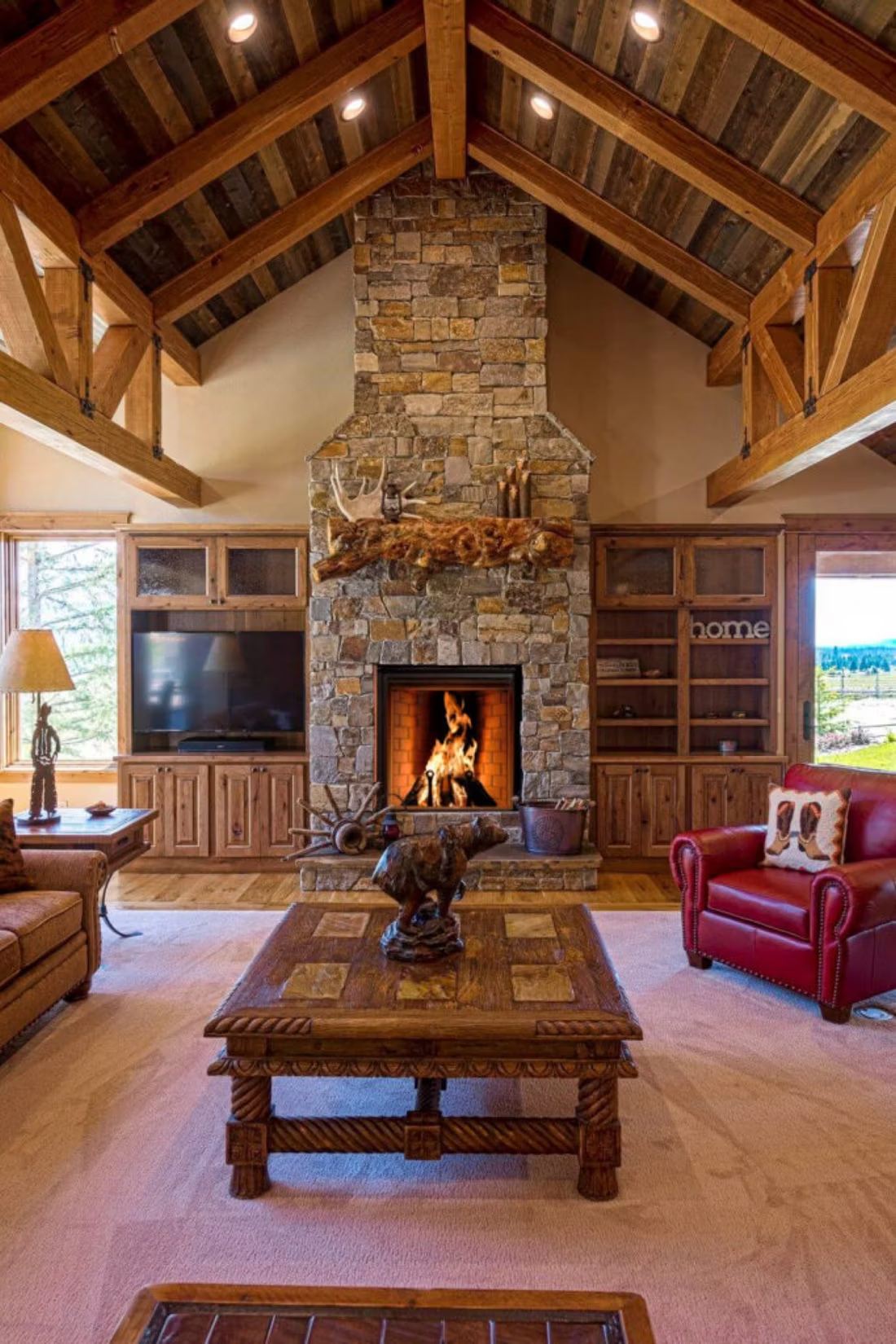
Four fuels. One honest answer for Winn County.
Three steps. No salesperson until you're ready.
Tell us about your project
Your zip code, your situation, and the fuel you're leaning toward—or let the answers point you to one.
See what's actually available
The brands dealers within 100 miles genuinely carry—real options, never a catalog mirage.
Get your dealer & Project Guide
A trusted local dealer, plus the free Project Guide & Parts List that names every component of the job.
Frequently Asked Questions
Which fuel works best in Winn Parish?
It depends on how much heat you actually need. With a mild winter heating load and winter lows averaging in the mid-30s, Winn Parish doesn't need the all-night, single-digit-burn setup you'd see in a place like Bozeman MT—most homes just need something to take the chill off during cold snaps. Wood is popular and practical here given how much oak, pecan, and cypress is locally available; a lot of parish residents split their own or get it from a neighbor. Gas is the low-hassle choice for folks who want instant heat without tending a fire—propane is common outside Winnfield's limited natural gas service area. Pellet works well if you want wood-look heat without splitting logs, and regional supply (Lignetics, Hamer Pellet Fuel, Greenway Renewable Energy) keeps it accessible. Electric is a fine supplemental option for a bedroom or den, especially in newer or manufactured homes. Many Winn Parish households end up with a wood or gas unit as the main hearth feature and lean on central heat for the rest.
Do I need a permit to install a fireplace in Winn Parish?
In most cases, yes, though enforcement and process vary by whether you're inside Winnfield city limits or in the unincorporated parish. Wood stoves, wood inserts, gas fireplaces, gas inserts, gas stoves, and pellet stoves generally require a building permit and, for gas units, a separate gas-line permit handled by a licensed installer. Electric fireplaces are usually exempt unless you're hardwiring a built-in unit that requires new circuitry. Within Winnfield, permits run through the city; outside city limits, check with the Winn Parish Police Jury or your local building official, since rural parishes in Louisiana often have lighter permitting requirements than incorporated towns. Most local hearth retailers handle this paperwork as part of the installation, so it's rarely something homeowners have to navigate alone.
Are there air quality restrictions on wood burning in Winn Parish?
No. Winn Parish doesn't have the winter inversion or non-attainment issues you'd find in a basin-shaped area out West—there are no burn bans or curtailment periods tied to wood-smoke advisories here. That said, any new wood stove installation should still meet current EPA emissions standards, both for efficiency (you'll burn less wood for the same heat) and because most manufacturers and installers won't warranty a non-certified unit. Outdoor burning of yard debris and agricultural waste is regulated separately by the state fire marshal's office, but that's distinct from indoor wood-burning appliances.
Can one local hearth retailer handle all four fuel types?
In a parish this size—just over 5,700 residents—you're less likely to find one big-box showroom with every fuel type on display than you would in a larger metro area. Most Winn Parish hearth retailers and the dealers who service the parish from nearby towns like Alexandria or Ruston carry two or three fuel types, often wood and gas, or wood and pellet, rather than the full lineup. If you want to compare fuel types side by side, it's worth checking dealers a bit further out along US-167 or LA-4, since a broader selection is more common in the larger regional hubs than in Winnfield itself. Ask up front which fuels a dealer stocks and services before you drive out for a showroom visit.
How does service work in rural areas of Winn Parish?
Most technicians who cover Winn Parish are based out of Winnfield or nearby regional hubs and travel to outlying communities like Atlanta, Dodson, Sikes, and Calvin as part of their normal route. Given the parish's rural, spread-out geography—much of it wooded land near Kisatchie National Forest—expect a modest travel charge for service calls outside Winnfield, and expect to book a few weeks ahead during the fall rush when everyone's getting their wood stove or gas unit inspected before the first cold front. Because winters here are short, the service window is more flexible than in a heavy-heating climate—but don't wait until a cold snap is already forecast to call, since that's when everyone else calls too.
What's the typical cost range for fireplace installation across all fuel types in Winn Parish?
Costs in Winn Parish tend to run at or below regional averages, partly because the milder climate means simpler venting and less structural work in many cases. Wood stove or insert installation: roughly $3,500–$7,500 for a typical setup, more if new chimney construction is involved. Gas fireplace, insert, or stove: roughly $3,500–$8,500, with propane conversions often on the lower end if a tank and line are already in place. Pellet stove or insert: roughly $3,500–$6,000 for most installs. Electric fireplace: $200–$2,500 for the unit itself, plus $300–$900 in labor for anything beyond a plug-and-play wall unit. For parish-specific pricing detail, see the fuel-specific pages above.
Wood, gas, pellet, or electric—how do I choose?
Match the fuel to your life, not the other way around. Wood: lowest fuel cost and total power-outage independence, but you're hauling and stacking. Gas: press a button, set a thermostat, no maintenance to speak of. Pellet: wood economics with automatic feeding, in exchange for weekly cleaning and a need for electricity. Electric: plugs in anywhere with honest supplemental heat. Nobody regrets the fuel that fits how they actually live.
Does a fireplace add value to my home?
On average, a fireplace adds back to the home about the same amount you spent installing it. Add the monthly savings from heating the rooms you actually use instead of the whole house—often hundreds of dollars a year—and the value case is strong before you even count what a fire does for how your family uses the room.
Can I install a fireplace myself?
If you're putting a fire in your house on purpose, it's best to work with an expert. Unless you're genuinely experienced in framing, gas line, vent pipe, and the national code on clearances to combustibles, have a professional do it—and ideally the same company that sells you the fireplace, so warranty, service, and liability all live under one roof.
How much should I budget for a fireplace?
For an average home—covering the fireplace, the vent pipe, and basic installation—a budget between $3,900 and $5,500 gives you a lot of options across wood, gas, and pellet. By the time you add finish work, gas line, and electrical, the average complete installation lands between $5,000 and $12,000 all-in. In a remodel or new build, a good rule is to put about 2.5% of the total project cost toward the fireplace.
Stove and Fireplace Dealers in Winn County
Listings include WhyFire partner dealers, dealers we have verified as authorized for the brands we recommend, and established local businesses that carry hearth products. Every listing shows which one it is. The ones marked Preferred run on WhyFire's software, so they can show you real pricing and book your appointment right here. No manufacturer pays for placement. How we verify dealers →
Southern Lp Gas
The Wood Stove
Freeman Lumber Company
O'Neal Gas Inc.
Martin Building Materials
Bradley Brick LLC
Golsons Gas Logs Lights & Grills
Acme Brick
Louisiana Stone
O'Neal Gas Inc.
O'Neal Gas
Hol-Mont Sales
O'Neal Gas
Find your fireplace in Winn Parish.
Pick your fuel below and we'll match you with a trusted local dealer and send over a free Project Guide & Parts List—the exact parts, vent kit included, and the dealer we recommend for your project in Winn Parish.rows.trimmed()
Find Your Fireplace →