
Keep Your Family Warm and Safe—No Matter What
With winter lows averaging around 40°F and only a light winter heating load overall, wood heat isn't a survival tool here the way it is up north. It's an ambiance choice—for historic homes along the river, the occasional hard freeze, and families who just want a real fire on a January evening.
Every Project Starts From One of These Five Situations
A fireplace here is about ambiance, not warmth.
West Baton Rouge Parish sits in climate zone 2A along the Mississippi River, directly across from Baton Rouge—hot, humid, and mild in winter by almost any national measure. With just a small fraction of the winter heating load of a place like Duluth, Minnesota, which racks up nearly nine times as much, the parish sees very little need for heavy heating. Winter lows average around 40°F, and the deep cold snaps that make a wood stove essential elsewhere in the country show up here maybe once or twice a season, if that. Central heat pumps and gas do the real work of keeping homes warm in Port Allen, Brusly, Addis, and Erwinville.
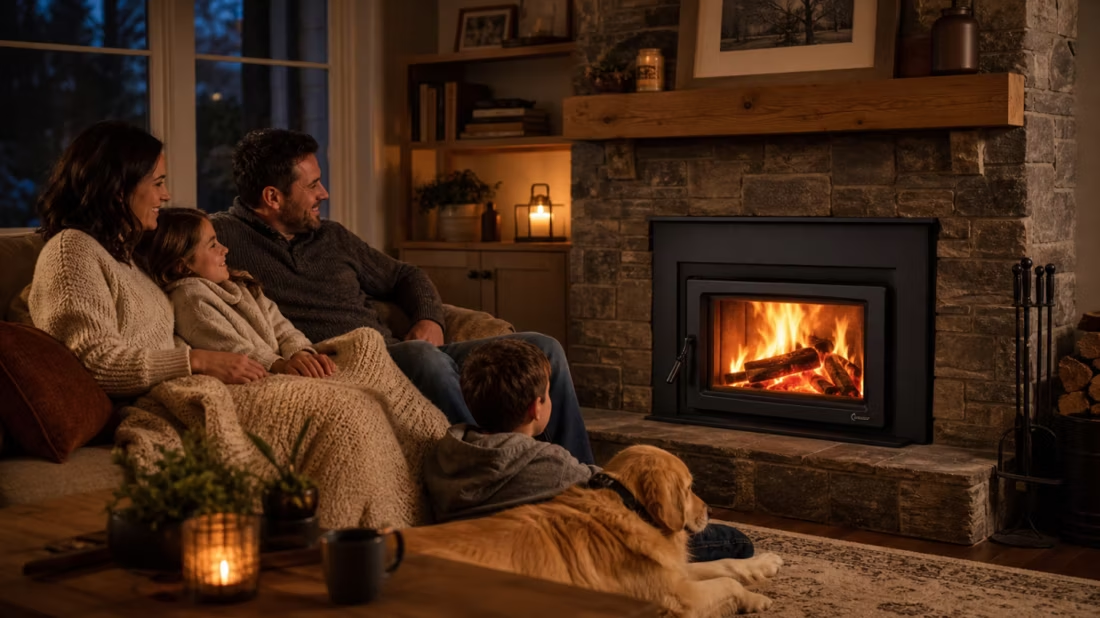
That said, wood-burning fireplaces haven't disappeared from the parish—they've just changed jobs. Many of the older homes near the river, including some tied to the parish's plantation-era history, still have original masonry fireplaces that homeowners want to bring back into use, not for daily heat but for the look, the smell, and the ritual of a fire on the handful of genuinely cold nights each winter. Locally abundant hardwoods like oak and pecan burn well when the occasion calls for it, and cypress—as much a symbol of the parish's bayou landscape as anything else—shows up in smaller supply. There's no air quality regulation or burn-ban concern here to complicate things, which is one less hurdle compared to drier, smoke-sensitive parts of the country.
Three steps. No salesperson until you're ready.
Tell us about your project
Your zip code, your situation, and the fuel you're leaning toward—or let the answers point you to one.
See what's actually available
The brands dealers within 100 miles genuinely carry—real options, never a catalog mirage.
Get your dealer & Project Guide
A trusted local dealer, plus the free Project Guide & Parts List that names every component of the job.
Frequently Asked Questions
Does anyone actually use wood heat in West Baton Rouge Parish?
Not for primary heating—with winter lows averaging around 40°F and only a light winter heating load overall, the parish just doesn't have the sustained cold that makes wood a practical heat source. Most homes rely on central gas or heat-pump systems. Where wood fireplaces do show up, it's almost always for ambiance: historic homes near Port Allen and Brusly with original brick hearths, holiday gatherings, or the occasional true cold front—like the winter storms that have pushed the region below freezing for a few days at a time. If you're weighing wood purely as a heating strategy for this climate, it's worth talking through the practical case with a local dealer before committing.
What does it cost to install a wood-burning fireplace or insert here?
Cost depends heavily on your starting point. Reactivating an existing masonry fireplace in an older parish home typically means a chimney inspection, possible relining, a new cap, and damper work before any wood ever burns. Installing a new freestanding stove or zero-clearance fireplace where none existed involves framing, hearth clearance, and venting from scratch—a bigger project. Because wood heat is uncommon locally, fewer dealers in the immediate parish specialize in it, and installers may come from the broader Baton Rouge metro area. The most reliable way to get real numbers for your home is a local in-person consultation—that's exactly what the free Project Guide & Parts List we put together is for.
I have an old fireplace in my historic home—can I still burn wood in it?
Often, yes, but don't assume a long-dormant flue is ready to go. A number of homes in Port Allen, Brusly, and along the river corridor have original brick fireplaces that haven't seen regular use in years. Before the first fire, get a Level 1 or Level 2 chimney inspection—mortar deterioration, cracked flue tiles, and animal nests (birds and squirrels are common culprits in unused Louisiana chimneys) are the issues that turn up most often. A CSIA-certified sweep can tell you whether the existing masonry is safe as-is or needs a stainless liner before you light anything.
Do I need a permit to install a wood stove in West Baton Rouge Parish?
New wood-burning installations—a freestanding stove, a new hearth pad, or structural venting work—typically require a building permit through the parish's permitting office, since the work touches both structure and life-safety systems. If you're simply reactivating an existing masonry fireplace without altering the structure, permitting requirements may be lighter, but it's worth confirming before work starts. A local installer who's pulled permits in the parish before can usually walk you through exactly what's needed for your specific project.
What wood species are available locally for burning?
Oak and pecan are the two workhorses in this part of Louisiana—both are dense hardwoods that season well and put out solid, steady heat, and pecan is widely available locally thanks to the region's orchards (much of it also gets sold for smoking meat rather than home heating). Cypress is iconic to the parish's bayou landscape, but it's a softer wood that burns faster and cooler, so it's a better fit for atmosphere than for actual heat output. For the occasional fire most West Baton Rouge Parish households build, well-seasoned oak is the safest default.
Is wood smoke an air quality concern in West Baton Rouge Parish?
No—the parish has no listed air quality non-attainment status, winter inversion issues, or wildfire smoke concerns, which puts it in a very different position than smoke-sensitive regions out West. There are no burn-ban restrictions tied to regional air quality here. That said, basic courtesy still applies in closer-set neighborhoods around Port Allen and Addis—well-seasoned wood burns cleaner and produces less nuisance smoke for neighbors than green or wet wood.
Wood vs. gas—which makes more sense for my home here?
For most West Baton Rouge Parish homes, gas is the more practical choice—it lights instantly, needs no fuel storage, and matches a climate where sustained cold is rare. Wood earns its place for a different reason: the authentic look and smell of a real fire, and the ability to burn without power during the occasional ice storm or outage. If you're deciding between the two, think about what you actually want from the fireplace—ambiance and tradition point toward wood, convenience and low-maintenance heat point toward gas. A local dealer can walk through both options for your specific home.
How often should my chimney be inspected if I rarely burn?
Even a fireplace that only gets used a handful of nights a year should be inspected before the season's first fire—this matters even more in West Baton Rouge Parish, where many chimneys sit dormant for long stretches between uses. Infrequent burning slows creosote buildup but doesn't eliminate the other risks: cracked flue liners, deteriorated mortar joints, and animal nests are all common in chimneys that go quiet for months at a time. An annual Level 1 inspection from a CSIA-certified sweep is cheap insurance against a much bigger problem.
Wood vs. pellet stove—does either make sense here?
Honestly, neither is a natural fit for this climate, and pellet stoves are even rarer locally than wood. Regional brands like Lignetics, Hamer Pellet Fuel, and Greenway Renewable Energy serve the broader Gulf South, but they're mostly bought for occasional or backup use rather than routine heating in a parish where winter lows average 40°F. Between the two, wood has the edge for West Baton Rouge Parish homeowners specifically because it works without electricity and delivers the real-fire look and feel that's usually the whole point of installing one here. If your interest in either is purely about ambiance, a wood-burning fireplace or insert is the more common and better-supported choice locally.
What's the difference between an insert and a zero-clearance fireplace?
An insert is a fireplace that slides into a pre-existing wood-burning fireplace—if you don't have one, there's nothing to insert it into. A zero-clearance fireplace is built into a framed wall, which makes it the answer for remodels and new construction. Simple test: existing masonry fireplace means insert; blank or framed wall means zero-clearance.
Why won't my new wood stove get going like my old one?
New wood stoves are 70%+ efficient, so far less heat goes up the flue—which also means less draft to get a fire established. The rule: build a genuinely hot fire for about 45 minutes before you choke it down. Skip that and you get smoke in the room, creosote in the chimney, and a fire that never takes off. Most performance complaints trace straight back to this.
Does a fireplace add value to my home?
On average, a fireplace adds back to the home about the same amount you spent installing it. Add the monthly savings from heating the rooms you actually use instead of the whole house—often hundreds of dollars a year—and the value case is strong before you even count what a fire does for how your family uses the room.
Can a fireplace actually lower my heating bill?
Yes—by creating a comfort zone. A furnace heats every square foot of the house just to warm the one room you're in; a gas fireplace on low burns roughly a sixth of the gas a typical furnace does. Set the furnace around 55–60 degrees as a baseline, then heat the rooms your family actually uses. Families who heat this way commonly save $20–$60 a month.
Stove and Fireplace Dealers in West Baton Rouge County
Find your wood fireplace in West Baton Rouge Parish.
Tell us about your home—whether it's a historic fireplace in Port Allen or a new build in Brusly—and we'll match you with a trusted local dealer and send over a free Project Guide & Parts List built for your specific project.
Find Your Fireplace →