
Warm, instant heat for West Baton Rouge Parish's short winters.
From Port Allen to Brusly and Addis, winters here rarely bite hard—but when a February freeze or a hurricane-season outage hits, a gas fireplace still earns its place. Find the right unit and connect with a trusted local dealer.
Every Project Starts From One of These Five Situations
Ambiance most of the year, backup heat when it counts.
West Baton Rouge Parish sits just across the Mississippi River from Baton Rouge, anchored by Port Allen and stretching out through Brusly, Addis, and rural Erwinville. It's Zone 2A—hot, humid, and mild in winter, with an average low around 40°F and only a light winter heating load each year. Compare that to a place like Duluth, Minnesota, which racks up nearly six times that heating load, and it's clear why wood stoves never became part of daily life here. The oak, pecan, and cypress that grow throughout the parish are prized locally for smoking meat and outdoor cooking, not for feeding a woodstove through winter.
That's exactly where gas fits in. A gas fireplace or insert gives West Baton Rouge Parish homeowners the ambiance of a fire on the handful of genuinely cold nights each year, plus a reliable heat source during the winter freeze events Louisiana has seen in recent years and the power outages that can follow a tropical system. In and around Port Allen, Brusly, and Addis, natural gas service through Atmos Energy makes a direct-vent gas fireplace or insert a straightforward add-on for homes already piped for gas appliances. Out in Erwinville and other rural stretches of the parish, propane is the standard fuel, and local dealers routinely size and install propane-fed units with the same reliability. Either way, a properly vented gas unit with a local dealer handling the permit and gas line work beats a big-box guess every time—especially in a climate where the unit sits idle more months than it runs and needs to work correctly the few times you really need it.
Three steps. No salesperson until you're ready.
Tell us about your project
Your zip code, your situation, and the fuel you're leaning toward—or let the answers point you to one.
See what's actually available
The brands dealers within 100 miles genuinely carry—real options, never a catalog mirage.
Get your dealer & Project Guide
A trusted local dealer, plus the free Project Guide & Parts List that names every component of the job.
Frequently Asked Questions
How much does a gas fireplace installation cost in West Baton Rouge Parish?
Most gas fireplace and insert installations in West Baton Rouge Parish fall between roughly $3,500 and $9,500. A direct-vent insert going into an existing masonry fireplace in a Port Allen or Brusly home already on natural gas sits toward the lower end. New built-in units for a remodel, or homes in Erwinville and other rural areas that need a propane tank set and a fresh gas line run, land toward the higher end. Because usage here is mostly for ambiance and occasional cold-front heat rather than daily winter heating, many homeowners choose a mid-size unit rather than the largest model available—a local dealer can walk through sizing during an in-home visit.
Can I convert my existing wood-burning fireplace to gas?
Yes, and it's a common project in the older homes around Port Allen and Brusly, many of which have masonry fireplaces original to the house. A gas insert typically drops into that existing firebox, using a stainless liner run through the current chimney as the vent path. Given how little the wood side of the fireplace actually gets used in this climate, converting to gas is often the more practical move—you keep the mantel and hearth you already have, but gain instant, reliable heat with none of the wood storage or ash cleanup that never made much sense here to begin with.
Should I go with natural gas or propane in West Baton Rouge Parish?
It depends on where in the parish you are. In Port Allen, Brusly, and Addis, natural gas service through Atmos Energy is common, and if your home already has a gas water heater, range, or furnace, adding a fireplace is a simple tie-in. Farther out—Erwinville and other unincorporated pockets of the parish—propane is the standard, either from an existing tank or a new one set by a local propane supplier. Nearly every gas fireplace model on the market can be configured for either fuel; your installer just sets the correct orifice and regulator for whichever you have.
Will a gas fireplace still work if the power goes out during a storm?
Most will, which matters in a parish that sits in the path of Gulf storms and periodic winter freezes. Gas fireplaces with intermittent pilot ignition run on a battery backup that kicks in the moment the power drops, so the unit lights and operates normally off batteries alone. Valor units take it a step further—their pilot assembly generates its own electricity through the thermocouple, so there's no battery to remember at all. For a household planning around hurricane-season outages, that self-powered option is worth asking your local dealer about directly.
What's the difference between a gas fireplace, gas insert, and gas stove?
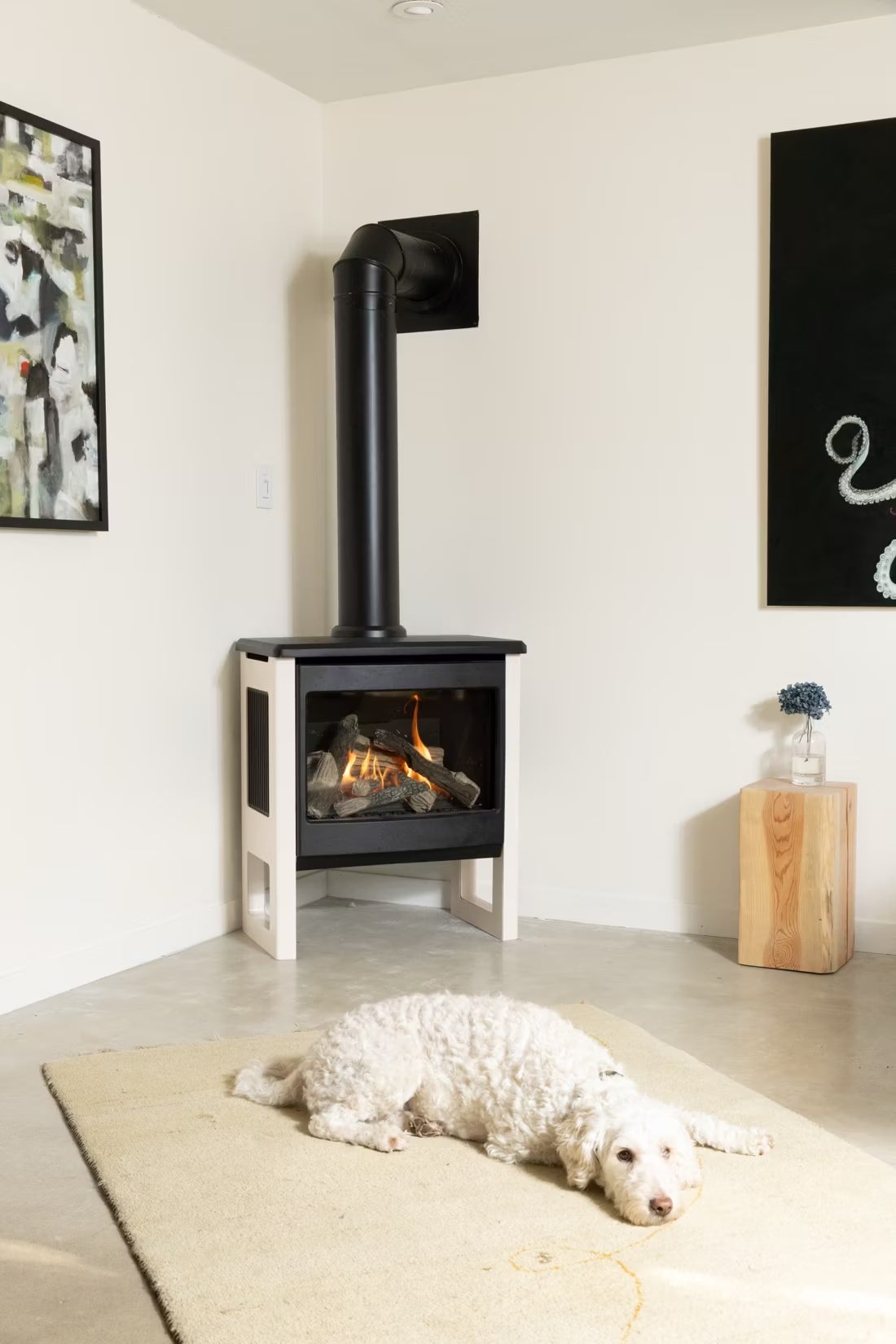
A gas fireplace is a fully built-in unit framed into a wall—the right call for new construction or a remodel without an existing hearth. A gas insert slides into a masonry fireplace you already have, which fits a lot of the older housing stock in Port Allen and Brusly. A gas stove is a freestanding cabinet-style unit that sits on the floor and vents out through a wall or roof, a good option for a sunroom or an addition that never had a fireplace at all. For most West Baton Rouge Parish homeowners upgrading an existing fireplace, an insert is the simplest and most cost-effective path.
Do I need a permit to install a gas fireplace in West Baton Rouge Parish?
Yes. Installations within Port Allen, Brusly, or Addis city limits go through that municipality's permitting process, while unincorporated areas of the parish—including Erwinville—go through the West Baton Rouge Parish permitting office. Every gas fireplace installation also needs a licensed gas-fitter to sign off on the line work. A certified local hearth dealer typically pulls the building and gas permits as part of the install, so you're not stuck coordinating separate trades and inspections yourself.
Vented vs. vent-free gas fireplaces—which makes sense here?
Vented (direct-vent) units draw combustion air from outside and exhaust it back outside through sealed venting, keeping the appliance's byproducts out of the house entirely. Vent-free units burn directly into the room, which is legal in Louisiana within room-sizing and oxygen-sensor rules, but they release water vapor into the living space—a real downside in a Zone 2A parish that already runs hot and humid most of the year. For that reason, most local dealers steer West Baton Rouge Parish homeowners toward direct-vent units; they avoid adding indoor moisture on top of the humidity the region already deals with.
How often should a gas fireplace be serviced?
Once a year is standard, ideally before the first cool front of the season rolls through in late fall. A technician checks the burner, pilot assembly, venting, and gas connections, and cleans the glass and firebox interior. Given how infrequently these units actually run in West Baton Rouge Parish's climate, an annual check is also the best way to catch a pilot or ignition issue before the one week a year you actually need the fireplace to work.
Should I even consider a wood-burning fireplace instead of gas here?
For most homes in the parish, no—wood heat just doesn't fit. With an average winter low around 40°F and a light winter heating load each year, there's rarely a stretch cold enough to justify tending a wood fire, and local oak, pecan, and cypress are put to much better use in a smoker than a firebox. A handful of homeowners keep a wood-burning fireplace for pure ambiance, particularly in the historic homes around Brusly, but it's the exception rather than the norm. Gas gives you the same look and warmth on demand, works during a storm-driven outage, and doesn't ask you to store or season firewood for a season that barely arrives.
Why is a fireplace insert so efficient?
An insert does two things: it seals the chimney completely, so you stop losing air you already paid to heat, and it radiates warmth into the room through the firebox and glass. Most add a heat-exchange fan that pulls cool room air underneath, wraps it around the hot firebox, and pushes it back out warm. Your home is more efficient before you've even lit the first fire.
What's the difference between radiant and convective fireplace heat?
Most fireplaces are a thin metal box—they heat fine, but you rely on the fan to move the warmth into the room. Radiant models use a thick cast-ceramic firebox, about an inch and a quarter thick, that soaks up the fire's heat and radiates roughly 25–30% more warmth into the room with no fan running. If you watch TV in the same room or want heat in a power outage, radiant is worth asking about.
What is an in-home preview and do I need one?
It's a visit where a hearth professional measures your space, confirms the model you picked actually works in your home, and walks the specs—framing, gas line, venting, finish work—before anything is ordered. Some details you just can't know until you see the house. Never make a down payment without one; it's the single most-skipped step that burns buyers.
Does a fireplace add value to my home?
On average, a fireplace adds back to the home about the same amount you spent installing it. Add the monthly savings from heating the rooms you actually use instead of the whole house—often hundreds of dollars a year—and the value case is strong before you even count what a fire does for how your family uses the room.
Stove and Fireplace Dealers in West Baton Rouge County
Find your gas fireplace in West Baton Rouge Parish.
Tell us a bit about your home in Port Allen, Brusly, Addis, or Erwinville, and we'll match you with a trusted local dealer plus a free Project Guide & Parts List—the exact parts, vent kit, and recommended installer for your gas fireplace project. (Fields normalized above.)
Find Your Fireplace →