
Keep Your Family Warm and Safe—No Matter What
With winter lows averaging 41°F and one of the lightest, shortest heating seasons in the country, Mandeville rarely needs wood heat to get through winter. For the homeowners who still want a wood-burning fireplace or stove, here's what's realistic—and how to find a dealer who actually installs them here.
Every Project Starts From One of These Five Situations
A Gulf Coast Climate That Rarely Calls for Wood Heat.
Mandeville sits at just 14 feet of elevation on the north shore of Lake Pontchartrain, in climate zone 2A—hot and humid nearly year-round. The average winter low is 41°F, and the city has a very light, short heating season overall. For comparison, a place like Duluth, MN faces a winter heating load close to six times heavier in a typical year. Central heat pumps and the occasional gas insert handle the small handful of cold nights St. Tammany Parish sees each winter, which is why wood is classified here as not applicable for primary or supplemental heating.
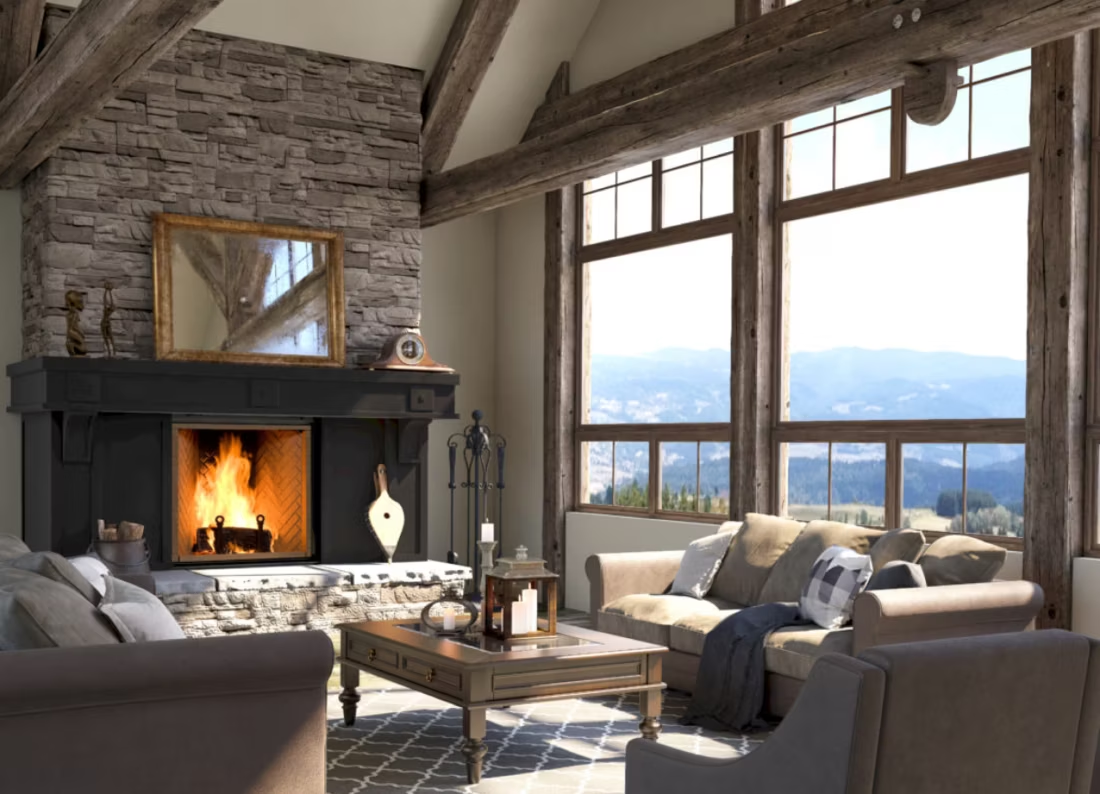
That doesn't mean wood-burning fireplaces don't exist in Mandeville—they do, mostly in the historic homes around Old Mandeville and Girod Street, where a masonry fireplace built decades ago still gets an occasional fire during a rare freeze like the one that hit Louisiana in February 2021, or simply for the ambiance of a real flame on a cool evening. Local firewood, when people do burn it, tends to be oak, pecan, or cypress pulled from the swamps and bottomland around the Tchefuncte River and Bayou Lacombe. If you fall into that smaller group, a local dealer familiar with Gulf Coast humidity and chimney conditions is worth more than a big-box install crew.
Three steps. No salesperson until you're ready.
Tell us about your project
Your zip code, your situation, and the fuel you're leaning toward—or let the answers point you to one.
See what's actually available
The brands dealers within 100 miles genuinely carry—real options, never a catalog mirage.
Get your dealer & Project Guide
A trusted local dealer, plus the free Project Guide & Parts List that names every component of the job.
Frequently Asked Questions
Does a wood stove actually make sense for a home in Mandeville?
For most homes, no—not as a primary or even meaningful supplemental heat source. With an average winter low of 41°F and one of the lightest, shortest heating seasons around, Mandeville has one of the mildest heating climates in the country, and a heat pump or gas system handles the handful of genuinely cold nights without difficulty. Where a wood stove or fireplace does make sense is ambiance: a real fire in a historic Old Mandeville home, a cabin-style feel in a north-shore camp, or backup warmth during the rare hard freeze. If that's the goal, it's a legitimate project—just don't expect it to be your winter heating plan.
What firewood species are actually available around Mandeville?
Oak and pecan are the two hardwoods most commonly available locally, both dense enough to burn hot and clean once properly seasoned. Cypress also turns up from the swamps and bottomlands along the Tchefuncte River and Bayou Lacombe, but it's a softer, resinous wood that burns faster and produces more creosote, so it's better as a supplemental or kindling wood than a primary fuel. Because demand for firewood is low here compared to colder regions, you're more likely to buy from a local tree service or small seasonal seller than a dedicated firewood supplier—plan ahead rather than expecting delivery on short notice.
How much does it cost to install a wood stove or fireplace in Mandeville?
Because wood-burning installs are uncommon on the north shore, there isn't a deep bench of local pricing data the way there is for gas or electric units here. Nationally, a wood stove installation with a new Class A chimney typically runs $4,000 to $9,000, and inserting a wood unit into an existing masonry fireplace tends to run less if the chimney is already sound. Given how few installers in the Mandeville area handle wood-burning work regularly, get an in-home quote from a dealer who explicitly lists wood stoves among their services—that's the surest way to get a number that reflects your actual home and chimney condition.
Is firewood hard to store properly in Mandeville's humidity?
Yes, and this is one of the real practical hurdles to burning wood well here. Louisiana's Gulf Coast humidity slows seasoning dramatically compared to drier climates, and unseasoned or improperly stored wood is prone to mold and rot before it ever dries out enough to burn clean. If you're keeping a wood supply, stack it off the ground, under a roof or tarp that allows airflow, and expect seasoning to take longer than the six-months-to-a-year rule of thumb that works in drier states. Wood that looks dry on the outside can still be damp inside in this climate, which leads to smoky, inefficient fires and heavier creosote buildup.
Are there wood-burning restrictions or air quality bans in Mandeville?
No—Mandeville and St. Tammany Parish don't have the winter inversion or non-attainment issues that trigger burn bans in some parts of the country. There's no red/yellow curtailment system here like you'd find in a smoke-prone valley town. That said, general fire safety and chimney maintenance still matter, especially given how infrequently local chimneys get used and inspected compared to colder climates where annual sweeps are routine.
Do I need a permit to install a wood stove in Mandeville?
Generally yes—any new wood-burning appliance that involves running a chimney or altering a wall or roof penetration falls under St. Tammany Parish's building permit requirements, and a licensed installer will typically pull that permit as part of the job. Because wood installs are relatively rare in this market, it's worth confirming with your dealer that they've handled parish permitting for a wood-burning unit before, not just gas or electric—the inspection points aren't identical.
Wood, gas, or electric—what's the practical choice for Mandeville?
For nearly all Mandeville homes, gas or electric is the more sensible pick. Gas fireplaces give you instant, controllable heat without chimney maintenance or firewood sourcing, and electric units offer flexible zone heating with a simple 120V plug-in install in many cases. Wood makes sense mainly if you specifically want the experience of a real fire—the crackle, the smell of oak or pecan burning, the look of an open hearth—and you're willing to deal with sourcing and storing firewood in a humid climate. Several north-shore homeowners end up with a gas insert in their main living space and keep an existing wood-burning fireplace elsewhere purely for occasional use.
Can I keep or restore the wood-burning fireplace in my older Mandeville home?
Often, yes. Many of the historic homes around Old Mandeville and the lakefront were built with masonry wood-burning fireplaces, and if the flue and firebox are structurally sound, a chimney inspection and cleaning can get them safely back in service. Given the area's humidity, it's worth having a sweep check specifically for moisture damage and mortar deterioration, not just creosote—masonry chimneys here take more of a beating from humidity cycling than they would in a drier climate. Some homeowners choose to line the flue and add a wood insert for better efficiency; others simply restore the open hearth for occasional use.
Would a wood stove help during a hurricane-related power outage?
It can provide some backup warmth, but keep the tradeoff in mind: Mandeville's power outages are almost always hurricane-driven and happen in warm months, when heat isn't the concern—cooling and refrigeration are. A wood stove won't run your AC or keep food cold. Where it can genuinely help is on the rare occasion a winter storm knocks out power during a cold snap, since a wood stove needs no electricity to produce heat. If backup capability during outages is a real priority for you, most homeowners here get more everyday value from a properly sized generator and reserve a wood-burning unit for the ambiance and occasional-use case it's actually suited for.
What's the difference between an insert and a zero-clearance fireplace?
An insert is a fireplace that slides into a pre-existing wood-burning fireplace—if you don't have one, there's nothing to insert it into. A zero-clearance fireplace is built into a framed wall, which makes it the answer for remodels and new construction. Simple test: existing masonry fireplace means insert; blank or framed wall means zero-clearance.
Why is a fireplace insert so efficient?
An insert does two things: it seals the chimney completely, so you stop losing air you already paid to heat, and it radiates warmth into the room through the firebox and glass. Most add a heat-exchange fan that pulls cool room air underneath, wraps it around the hot firebox, and pushes it back out warm. Your home is more efficient before you've even lit the first fire.
Can a fireplace actually lower my heating bill?
Yes—by creating a comfort zone. A furnace heats every square foot of the house just to warm the one room you're in; a gas fireplace on low burns roughly a sixth of the gas a typical furnace does. Set the furnace around 55–60 degrees as a baseline, then heat the rooms your family actually uses. Families who heat this way commonly save $20–$60 a month.
What is an in-home preview and do I need one?
It's a visit where a hearth professional measures your space, confirms the model you picked actually works in your home, and walks the specs—framing, gas line, venting, finish work—before anything is ordered. Some details you just can't know until you see the house. Never make a down payment without one; it's the single most-skipped step that burns buyers.
Nearby Dealers
Hearth shops serving Mandeville and the surrounding area.
Find your wood fireplace in Mandeville.
Tell us about your home and what you're picturing, and we'll match you with a local Mandeville-area dealer who genuinely installs wood-burning units—plus a free Project Guide & Parts List with the exact parts, including the vent kit, for your project.
Find Your Fireplace →