
Fireplace warmth that fits St. Tammany Parish's mild winters.
Fireplace resources for every city and rural community in St. Tammany Parish—from Covington to Slidell to Abita Springs. Find the fuel that fits Louisiana's mild winters and connect with a trusted local hearth retailer.
Every Project Starts From One of These Five Situations
Ambiance heating across St. Tammany Parish, Louisiana.
St. Tammany Parish sits in climate zone 2A, on the north shore of Lake Pontchartrain, where winters are short and mild—the average winter low is 41°F and the parish logs just 1,612 heating degree days a year. Compare that to a place like Duluth, Minnesota, where wood stoves and pellet inserts are essential daily equipment for eight months of the year: St. Tammany homeowners rarely need supplemental heat at all, let alone a primary wood-burning setup. Gas fireplaces are the standard here—a handful of cold nights each winter and a strong appetite for a real flame focal point in the living room. Electric fireplaces are just as common, especially in newer Mandeville and Covington construction, where a hardwired insert adds ambiance and a little supplemental warmth without any venting or gas line at all.
Wood fireplaces still show up in St. Tammany—some homeowners burn oak, pecan, or cypress on the handful of nights each year when temperatures actually drop, and older homes in Covington and Madisonville often keep a traditional masonry fireplace for exactly that reason. But wood is not the primary heating strategy anywhere in the parish, and pellet stoves are rare—the regional pellet brands you'll find locally, like Lignetics and Hamer Pellet Fuel, are more often bought for smokers and grills than for home heating. What you'll find on this hub: hearth retailers, service technicians, and fuel suppliers serving every community in the parish—Covington, Mandeville, Slidell, Abita Springs, Madisonville, and Pearl River. Pick your fuel below to see local dealers, installation costs, and the resources that match your project.
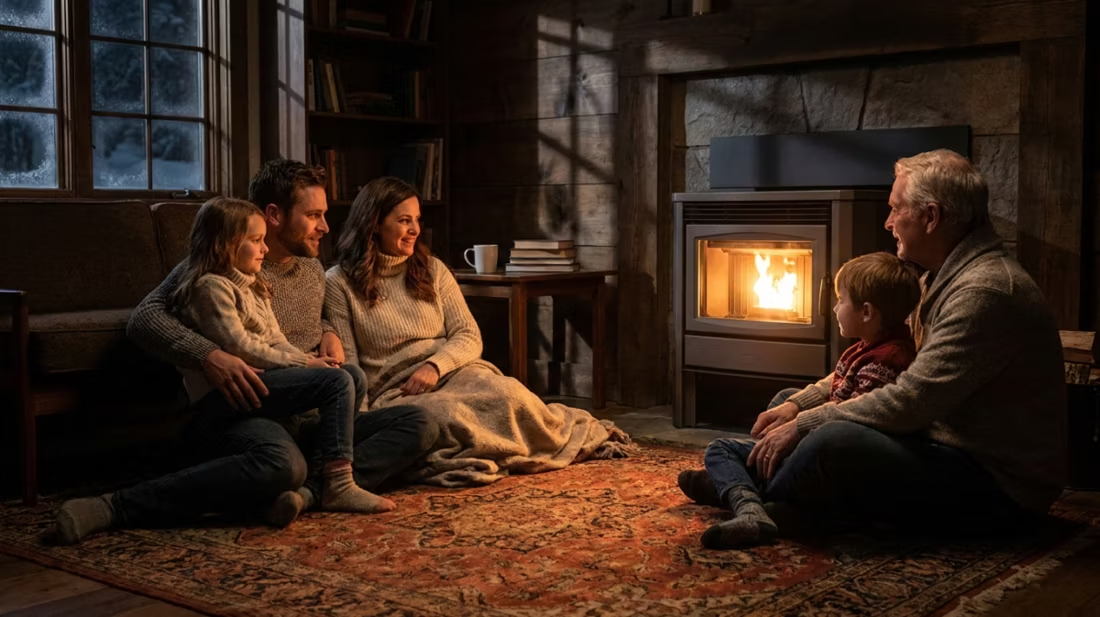
Four fuels. One honest answer for St. Tammany County.
Wood
43 models available near St. Tammany County.
Find your wood stove →Gas
358 models available near St. Tammany County.
Find your gas fireplace →Pellet
See what's available near St. Tammany County.
Find your pellet stove →Electric
11 models available near St. Tammany County.
Find your electric fireplace →Three steps. No salesperson until you're ready.
Tell us about your project
Your zip code, your situation, and the fuel you're leaning toward—or let the answers point you to one.
See what's actually available
The brands dealers within 100 miles genuinely carry—real options, never a catalog mirage.
Get your dealer & Project Guide
A trusted local dealer, plus the free Project Guide & Parts List that names every component of the job.
Frequently Asked Questions
Which fuel works best in St. Tammany Parish?
Gas is the primary choice for most St. Tammany homeowners—with only 1,612 heating degree days a year and a winter low averaging 41°F, a gas fireplace or insert gives you real flame and instant warmth on the handful of genuinely cold nights each winter, without the commitment of a full heating system. Electric fireplaces are just as popular, especially for supplemental warmth in bedrooms or as a no-venting focal point in newer Mandeville and Covington homes. Wood fireplaces still exist—mostly older masonry units in Covington, Madisonville, and Abita Springs burning local oak, pecan, or cypress—but they're used for ambiance and the occasional cold snap, not primary heat. Pellet stoves are rare in the parish; the mild climate doesn't create enough heating demand to justify one, and the pellet brands sold locally (Lignetics, Hamer Pellet Fuel) are bought more often for smokers and grills than home heat.
Do I need a permit to install a fireplace in St. Tammany Parish?
In most cases, yes. Gas fireplace and insert installations require a building permit and a licensed gas-fitter for the gas line connection—whether you're in Covington, Mandeville, Slidell, or unincorporated St. Tammany Parish, permits are issued through the applicable city or the parish permit office. Electric fireplaces typically don't require a permit unless you're doing a built-in installation with new wiring or a dedicated circuit. Wood-burning installations are uncommon enough here that most retailers handle them case-by-case, but any new wood insert or stove still needs a permit and a code-compliant chimney or liner. Most local hearth retailers handle the permitting process as part of the installation, so you're not filing paperwork yourself.
Why don't more people in St. Tammany Parish heat with wood or pellets?
The climate doesn't call for it. St. Tammany Parish sits in climate zone 2A with a winter low averaging 41°F and just 1,612 heating degree days a year—a fraction of what a place like Fargo, North Dakota logs in a single month of real winter. There's no shortage of good local firewood—oak, pecan, and cypress are all common in the parish—but with heating season lasting only a few weeks, the economics and daily labor of running a wood stove don't pencil out for most homeowners. Pellet stoves face the same math, plus the added cost of the appliance itself; the pellet fuel sold locally through Lignetics and Hamer Pellet Fuel dealers is bought mostly for smokers and grills rather than home heating. Wood fireplaces do show up for ambiance in older Covington and Madisonville homes, but as a design choice, not a heating strategy.
Can one local hearth retailer handle both gas and electric fireplaces?
Yes—most St. Tammany Parish hearth retailers carry both gas and electric lines, since those are the two fuels that actually fit the parish's mild winters. Dealers based in Covington, Mandeville, and Slidell typically stock working displays of both, which is useful if you're deciding between a vented gas insert and a plug-in or hardwired electric unit for a Mandeville living room or a Slidell bonus room. If you're specifically looking for a wood-burning masonry fireplace restoration or a rare pellet install, ask directly—not every dealer keeps that inventory on the floor, since demand for those fuels is limited in the parish.
How does fireplace service work in St. Tammany Parish?
Gas fireplace service is the most common call—an annual check of the pilot, gas connections, and venting keeps the unit running safely, and it's worth scheduling before the first cold snap each fall. Electric fireplace service is minimal; most issues are electrical rather than mechanical, and a licensed electrician can handle anything beyond a simple bulb or heater-element swap. Chimney sweeps do still work in the parish, mostly for the older wood-burning masonry fireplaces in Covington, Madisonville, and Abita Springs, but call volume is low compared to a colder-climate market—expect to book a season or two ahead of a planned burn, not same-week.
What's the typical cost range for fireplace installation across fuel types in St. Tammany Parish?
Gas fireplace, insert, or stove: roughly $3,500–$9,000 depending on whether you're running new gas line or converting an existing wood-burning fireplace to gas logs or a gas insert—conversions run toward the lower end. Electric fireplace: $200–$3,000 for the unit itself, plus $400–$1,000 in labor for anything beyond a plug-and-play wall unit, including most built-ins and mantel inserts. Wood fireplace or insert work—restoration of an existing masonry fireplace, a new liner, or a rare new wood insert—tends to run $4,000–$8,000 given the limited number of installers who regularly do that work in the parish. Pellet stove installs are uncommon enough that pricing varies widely by dealer; ask for a specific quote if that's the fuel you want.
How much should I budget for a fireplace?
For an average home—covering the fireplace, the vent pipe, and basic installation—a budget between $3,900 and $5,500 gives you a lot of options across wood, gas, and pellet. By the time you add finish work, gas line, and electrical, the average complete installation lands between $5,000 and $12,000 all-in. In a remodel or new build, a good rule is to put about 2.5% of the total project cost toward the fireplace.
Does a fireplace add value to my home?
On average, a fireplace adds back to the home about the same amount you spent installing it. Add the monthly savings from heating the rooms you actually use instead of the whole house—often hundreds of dollars a year—and the value case is strong before you even count what a fire does for how your family uses the room.
What is an in-home preview and do I need one?
It's a visit where a hearth professional measures your space, confirms the model you picked actually works in your home, and walks the specs—framing, gas line, venting, finish work—before anything is ordered. Some details you just can't know until you see the house. Never make a down payment without one; it's the single most-skipped step that burns buyers.
Should the dealer who sells my fireplace also install it?
Ideally, yes. A fireplace project involves vent pipe, gas line, electrical, and often tile or stone. Hire three or four separate trades and you own the liability and the game of telephone between them. One company selling and installing means one accountable party, start to finish—ask about factory training, on-time completion records, and what happens if an inspection fails.
Stove and Fireplace Dealers in St. Tammany County
Listings include WhyFire partner dealers, dealers we have verified as authorized for the brands we recommend, and established local businesses that carry hearth products. Every listing shows which one it is. The ones marked Preferred run on WhyFire's software, so they can show you real pricing and book your appointment right here. No manufacturer pays for placement. How we verify dealers →
Livio Designs
Outdoor Living Center
Outdoor Home Store
The Woodstove Shop
Find your fireplace in St. Tammany Parish.
Pick your fuel below—gas or electric fit most St. Tammany homes—and I'll match you with a trusted local dealer and send a free Project Guide & Parts List for your project.
Find Your Fireplace →