
Clean-burning heat that fits Lincoln Parish's mild winters.
From Ruston to Simsboro and Dubach, pellet stoves give Lincoln Parish homes efficient, low-maintenance zone heat for a short cold season—no chimney sweeping, no firewood stacking. Find the right unit and connect with a trusted local dealer.
Every Project Starts From One of These Five Situations
A clean, efficient option for a short heating season.
Lincoln Parish sits in IECC climate zone 3A, with an average winter low around 35°F and a heating season that's fairly moderate—a heating season that runs a few months, not half the year. That's a very different math than the Upper Midwest or Rockies, but it doesn't mean heat doesn't matter: north Louisiana still sees hard freezes, ice events, and stretches of damp, chilly weather where a central HVAC system alone leaves rooms feeling cold. A pellet stove or insert gives Ruston-area homeowners a way to zone-heat the rooms they actually live in without running the whole system.
Lincoln Parish has no listed air quality restrictions or winter burn curtailment, which means pellet appliances here run without the seasonal red/yellow-day limits you'll find in some Western states—a straightforward plus for anyone weighing pellet against wood. The parish also sits close to regional pellet supply: brands like Lignetics, Hamer Pellet Fuel, and Greenway Renewable Energy serve this part of Louisiana, drawing on the same timber industry that produces the oak, pecan, and cypress cut locally for firewood. That regional proximity generally means more consistent bag availability and shorter delivery distances than homeowners see in pellet deserts further from milling country.
Three steps. No salesperson until you're ready.
Tell us about your project
Your zip code, your situation, and the fuel you're leaning toward—or let the answers point you to one.
See what's actually available
The brands dealers within 100 miles genuinely carry—real options, never a catalog mirage.
Get your dealer & Project Guide
A trusted local dealer, plus the free Project Guide & Parts List that names every component of the job.
Frequently Asked Questions
How much does a pellet stove installation cost in Lincoln Parish?
Most pellet stove and insert installations in this part of Louisiana run in the $3,000 to $6,500 range, depending on whether it's a freestanding stove venting through an exterior wall or an insert going into an existing masonry fireplace. Because Lincoln Parish's heating season is relatively short, many homeowners here choose a mid-size unit rather than the larger, heavier-duty models sold in colder states—which keeps costs toward the lower end of that range. Venting through an exterior wall is usually simpler and cheaper than a full chimney liner install, so get quotes for both approaches from a local dealer before deciding.
What size pellet stove do I need for my Lincoln Parish home?
With a fairly moderate heating season most winters, most Lincoln Parish homes don't need a pellet stove to carry the whole heating load—it's typically supplemental or zone heat for a living room, den, or open-concept main floor while central HVAC handles the rest of the house. A small-to-medium stove (rated for 1,000–1,800 sq ft) covers most single-room or open-plan applications around Ruston and the surrounding parish. Sizing still matters: an oversized stove in a mild climate like this one will cycle on and off constantly and burn through pellets inefficiently, so a local dealer should size the unit to the specific room, not just the square footage of the whole house.
Where can I find a certified pellet stove dealer near me in Lincoln Parish?
Look for a dealer who handles both the sale and the installation—pellet stoves need correctly sized venting and clearances to hearth-adjacent walls, and that's not a job for a big-box appliance installer. A trusted local dealer serving Ruston and the rest of Lincoln Parish will also know which regional pellet brands, like Lignetics or Hamer Pellet Fuel, are reliably stocked nearby, which matters more here than the stove brand itself once winter arrives and you need a steady bag supply.
What's the difference between a pellet stove and a wood stove in Lincoln Parish?
A wood stove burns cordwood—oak, pecan, and cypress are the common local species—and needs no electricity to run, which is worth noting given how often north Louisiana sees ice storms and hurricane-remnant outages that knock out power for days. A pellet stove burns compressed hardwood pellets, is easier to load and maintain, produces less ash, and burns more consistently—but its auger and blower both require electricity, so it won't run during an outage without a battery backup or generator. For a primary heat source that also functions as emergency backup, wood has the edge here; for daily convenience with no wood handling or ash cleanup, pellet usually wins.
Do I need a permit to install a pellet stove in Lincoln Parish?
Yes—a new pellet stove or insert installation typically requires a building permit through the Lincoln Parish Building Department, since it involves a through-wall vent penetration and, in many cases, new electrical for the appliance. Most local dealers handle the permitting as part of the installation quote. Lincoln Parish has no listed air quality restrictions or curtailment periods, so unlike some Western states, there's no seasonal burn-day limitation to plan around once the stove is installed and running.
What's the best pellet stove for Lincoln Parish's climate?
Given the parish's mild winter low averages around 35°F and a relatively short heating season, most homeowners here don't need the largest hopper capacity or highest BTU output on the market—a mid-size unit from a mainstream brand like Harman or Englander, sized for supplemental room heat rather than whole-home output, is usually the right fit. The bigger local consideration is pellet supply: since Lignetics, Hamer Pellet Fuel, and Greenway Renewable Energy all distribute in this region, ask your dealer which brand's pellets are easiest to source locally before you commit to a stove that's picky about pellet quality.
How much maintenance does a pellet stove need?
Pellet stoves need the ash pan emptied every few days of regular use, the burn pot scraped weekly, and a full professional cleaning and inspection once a year—typically before the heating season starts in late fall. Because Lincoln Parish's heating season is shorter than colder states, most homes here burn through far fewer bags per winter and see less overall wear, but the annual inspection still matters for safety and warranty compliance. Local hearth dealers who sell the stove typically offer this service directly.
Where can I buy pellet fuel in Lincoln Parish?
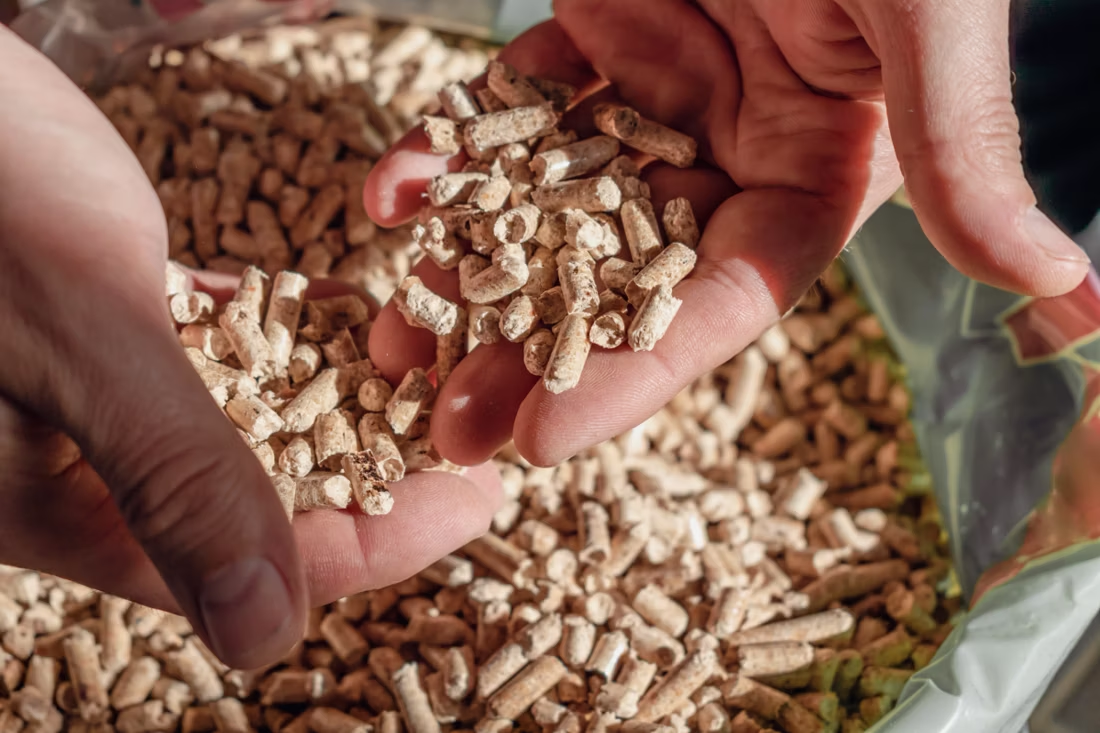
Regional brands including Lignetics, Hamer Pellet Fuel, and Greenway Renewable Energy are distributed through hearth retailers and farm/hardware stores across north Louisiana, and Lincoln Parish's proximity to the timber and milling industry that supplies these brands generally means steadier bag availability than in areas further from pellet production. Pricing runs roughly in line with regional averages—expect somewhere in the $5–$7 range per 40-lb bag depending on the retailer and time of year. Buying a season's supply early, before the first cold snap, avoids the scramble that can hit smaller stores once temperatures drop.
Pellet stove vs. electric fireplace—which is right for my home?
A pellet stove burns actual fuel and produces real, substantial heat output—a good fit if you want a room in your Lincoln Parish home to genuinely warm up on a cold front, not just look cozy. An electric fireplace or insert produces ambiance and modest supplemental heat with none of the venting, hopper-loading, or ash cleanup, and it installs almost anywhere with a standard outlet. Both require electricity to operate, so neither is a true backup heat source during a storm-related outage—if that's a priority given the parish's occasional ice events and hurricane-season power loss, a wood stove is worth comparing alongside either option.
What's the difference between an insert and a zero-clearance fireplace?
An insert is a fireplace that slides into a pre-existing wood-burning fireplace—if you don't have one, there's nothing to insert it into. A zero-clearance fireplace is built into a framed wall, which makes it the answer for remodels and new construction. Simple test: existing masonry fireplace means insert; blank or framed wall means zero-clearance.
How often does a pellet stove need cleaning?
A clean pellet stove is a happy pellet stove. Plan on cleaning the burn pot about once a week when you're burning regularly—ash and clinkers gum up the air holes just like a pellet barbecue. Most pellet stove problems trace back to skipped cleaning that nobody explained up front. Some designs make it easy with a trapdoor burn pot: pull a lever and the gunk drops into the ash pan.
How much should I budget for a fireplace?
For an average home—covering the fireplace, the vent pipe, and basic installation—a budget between $3,900 and $5,500 gives you a lot of options across wood, gas, and pellet. By the time you add finish work, gas line, and electrical, the average complete installation lands between $5,000 and $12,000 all-in. In a remodel or new build, a good rule is to put about 2.5% of the total project cost toward the fireplace.
Does a fireplace add value to my home?
On average, a fireplace adds back to the home about the same amount you spent installing it. Add the monthly savings from heating the rooms you actually use instead of the whole house—often hundreds of dollars a year—and the value case is strong before you even count what a fire does for how your family uses the room.
Stove and Fireplace Dealers in Lincoln County
Pellet Brands Stocked Around Lincoln County
Manufacturers will point you to the nearest stocking dealer.
Find your pellet stove in Lincoln Parish.
Tell us a bit about your home and we'll put together a free Project Guide & Parts List for your pellet project—the right unit, the vent kit it needs, and a trusted local Lincoln Parish dealer to install it.
Find Your Fireplace →