
Find the right hearth for a mild Lincoln Parish winter.
Wood, gas, pellet, and electric fireplace resources for every town in Lincoln Parish—from Ruston to Dubach. Find the right unit and connect with a trusted local hearth retailer.
Every Project Starts From One of These Five Situations
Short, mild winters shape how this parish heats.
Lincoln Parish sits in north-central Louisiana's climate zone 3A, where winter lows average around 35°F and it's a short, mild heating season—a fraction of what a place like Duluth, Minnesota racks up in a single January. That means hearth appliances here are rarely the sole heat source; they're the room you actually want to be in on a cold, damp night, or backup heat when an ice storm knocks out power. Local oak, pecan, and cypress are the woodpile staples, split from felled trees on family land or bought from parish suppliers, and they burn long and hot enough for the occasional 20-degree night without needing anything like the all-season stove setup you'd find further north.
What you'll find on this hub: hearth retailers, service technicians, and fuel suppliers serving every community in the parish—Ruston as the population and retail center, plus Simsboro, Dubach, Choudrant, and Vienna. Pick your fuel below to drill into specifics—local dealers, installation costs, recommended units, and the resources that match your project. Whether you're outfitting a Ruston living room or a farmhouse outside Choudrant, this is the starting point.
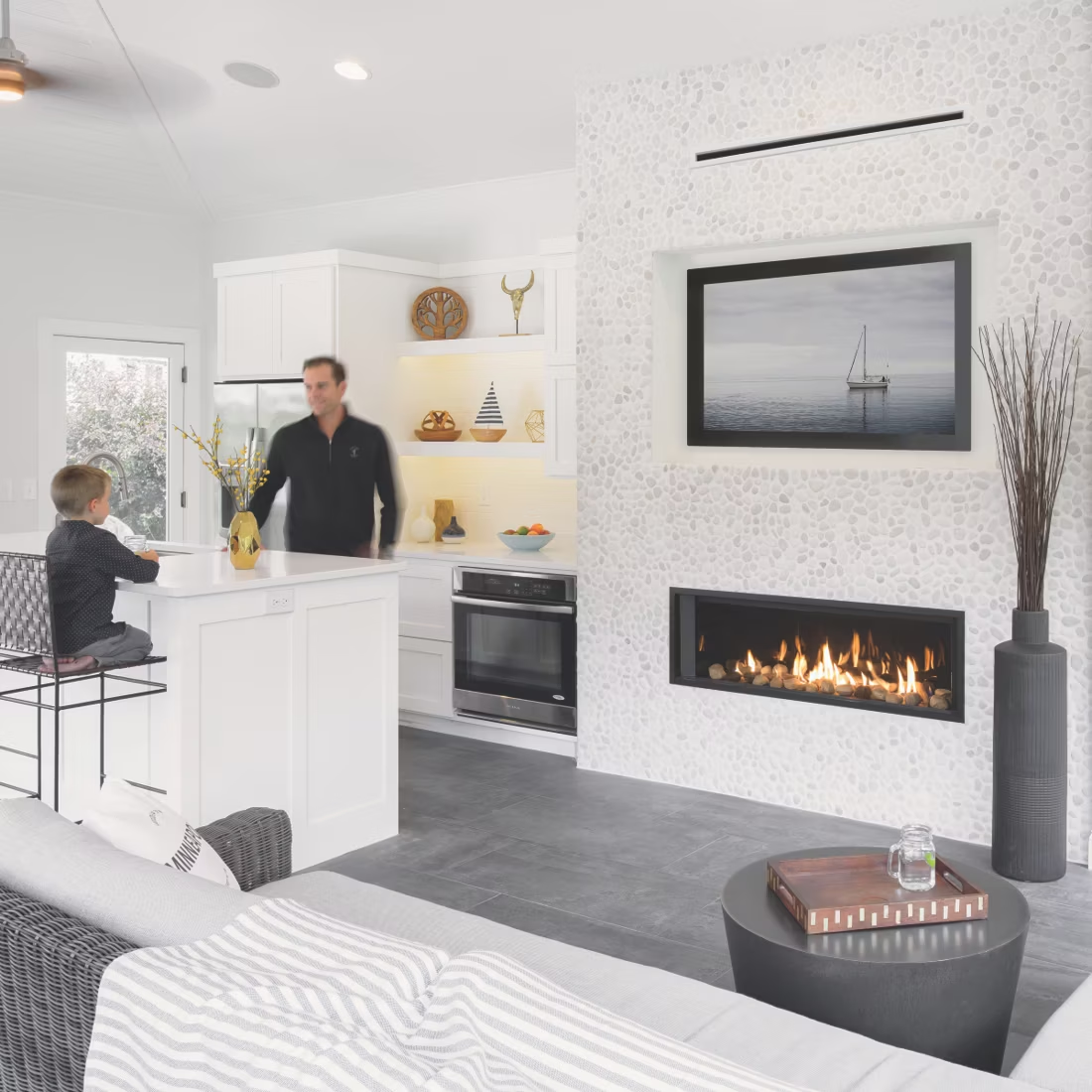
Four fuels. One honest answer for Lincoln County.
Three steps. No salesperson until you're ready.
Tell us about your project
Your zip code, your situation, and the fuel you're leaning toward—or let the answers point you to one.
See what's actually available
The brands dealers within 100 miles genuinely carry—real options, never a catalog mirage.
Get your dealer & Project Guide
A trusted local dealer, plus the free Project Guide & Parts List that names every component of the job.
Frequently Asked Questions
Which fuel works best in Lincoln Parish?
With only a short, mild heating season and winter lows averaging in the mid-30s, no fuel here needs to carry the load a cold-climate stove does in Bismarck, North Dakota. Wood is popular for ambiance and occasional deep-cold nights—oak and pecan are the local go-tos, both dense and slow-burning. Gas is the convenience pick for Ruston homes with natural gas service or propane in the outlying towns—press a button, get heat, no wood to split or stack. Pellet works well if you want wood-like flame without the labor; Lignetics and Hamer Pellet Fuel both supply the region. Electric fireplaces are a strong fit for supplemental heat in bedrooms or as a low-maintenance focal point in newer Ruston construction. Most Lincoln Parish homeowners end up choosing based on aesthetics and lifestyle rather than raw heating necessity—this isn't a parish where the wrong fuel choice leaves you cold.
Do I need a permit to install a fireplace in Lincoln Parish?
Generally yes, for anything beyond a plug-in electric unit. New wood stoves, wood inserts, gas fireplaces, gas inserts, and pellet stoves typically require a building permit, and gas installations need a separate gas line permit completed by a licensed gas-fitter. Within Ruston, permits run through the city's building department; in unincorporated parts of Lincoln Parish, they go through the parish permitting office. Built-in electric units that require new wiring or a dedicated circuit usually need an electrical permit, but freestanding plug-and-play electric fireplaces typically don't. Most local hearth retailers in the parish handle permitting as part of the installation quote, so you're rarely filing paperwork yourself.
Are there air quality restrictions on wood burning in Lincoln Parish?
No—Lincoln Parish has no designated air quality non-attainment status and no winter burn bans or curtailment periods tied to inversion events, unlike some western basin communities. That said, EPA 2020 NSPS emissions standards still apply to new wood stove and insert installations regardless of local air quality status, so any new unit sold by a legitimate dealer will already meet that bar. Good general practice still applies: burn well-seasoned oak or cypress rather than green wood, and keep the chimney swept to reduce smoke and creosote buildup, especially since the short burn season here means chimneys don't always get the natural cleaning that comes from constant winter use.
Can one local hearth retailer handle all four fuel types?
Several Ruston-area retailers carry multiple fuel types under one roof, which is convenient if you're comparing wood against gas or pellet before deciding. A dealer that stocks working display models across wood, gas, and electric lets you see flame style and heat output side by side rather than guessing from a brochure. Pellet tends to be the fuel most likely to require a specialty dealer or special order, since pellet stove volume is lower in this climate than in colder regions—Lignetics and Hamer Pellet Fuel supply product, but not every general hearth retailer stocks pellet units on the showroom floor. If pellet is your priority, it's worth confirming stock and service support before committing.
How does service work in the smaller towns around Lincoln Parish?
Most technicians who service fireplaces and chimneys in Lincoln Parish are based in or near Ruston and travel out to Simsboro, Dubach, Choudrant, and Vienna for appointments. Given the short heating season, it's worth scheduling annual chimney sweeps and gas inspections in late summer or early fall (August–October) rather than waiting until the first cold front—that's when local technicians have more open slots and homeowners aren't competing for emergency service during a rare hard freeze. A small travel fee may apply for calls in the more rural parts of the parish, but distances here are modest compared to sprawling western counties, so response times tend to stay reasonable year-round.
What's the typical cost range for fireplace installation across all fuel types in Lincoln Parish?
Costs track fairly closely with regional norms for the South, since venting and structural requirements don't change much with a milder climate. Wood stove or insert installation: roughly $4,000–$8,000 for a typical retrofit. Gas fireplace, insert, or stove: $4,000–$10,000, with cost driven mainly by whether new gas line work is needed. Pellet stove or insert: $4,000–$7,000 for a standard install. Electric fireplace: $200–$3,000 for the unit itself, plus $400–$1,200 in labor for anything beyond a simple plug-and-play placement. For a real number tied to your home, the parish + fuel pages above break down local retailer pricing in more detail.
Can I install a fireplace myself?
If you're putting a fire in your house on purpose, it's best to work with an expert. Unless you're genuinely experienced in framing, gas line, vent pipe, and the national code on clearances to combustibles, have a professional do it—and ideally the same company that sells you the fireplace, so warranty, service, and liability all live under one roof.
Does a fireplace add value to my home?
On average, a fireplace adds back to the home about the same amount you spent installing it. Add the monthly savings from heating the rooms you actually use instead of the whole house—often hundreds of dollars a year—and the value case is strong before you even count what a fire does for how your family uses the room.
Can a fireplace actually lower my heating bill?
Yes—by creating a comfort zone. A furnace heats every square foot of the house just to warm the one room you're in; a gas fireplace on low burns roughly a sixth of the gas a typical furnace does. Set the furnace around 55–60 degrees as a baseline, then heat the rooms your family actually uses. Families who heat this way commonly save $20–$60 a month.
What is an in-home preview and do I need one?
It's a visit where a hearth professional measures your space, confirms the model you picked actually works in your home, and walks the specs—framing, gas line, venting, finish work—before anything is ordered. Some details you just can't know until you see the house. Never make a down payment without one; it's the single most-skipped step that burns buyers.
Stove and Fireplace Dealers in Lincoln County
Listings include WhyFire partner dealers, dealers we have verified as authorized for the brands we recommend, and established local businesses that carry hearth products. Every listing shows which one it is. The ones marked Preferred run on WhyFire's software, so they can show you real pricing and book your appointment right here. No manufacturer pays for placement. How we verify dealers →
Freeman Lumber Company
O'Neal Gas Inc.
Find your fireplace in Lincoln Parish.
Tell us about your project and we'll match you with a trusted local dealer plus a free Project Guide & Parts List—the exact parts, including the vent kit, for your fuel and your Lincoln Parish home.
Find Your Fireplace →