
Set-it-and-forget-it heat for Webster County's hardwood country.
With winter lows averaging 25°F and 4,280 heating degree days, Webster County sits in a moderate mixed-humid climate where pellet stoves give you thermostat-like convenience without splitting a single log. I match you with a trusted local dealer who knows which stove size fits your home and where to keep you stocked with Lignetics, Hamer Pellet Fuel, or Greenway Renewable Energy pellets all winter.
Every Project Starts From One of These Five Situations
Convenient heat, milled from the region's own oak and hickory.
Webster County is rural western Kentucky farm and former coal country, home to about 7,300 people spread across Dixon, Providence, Sebree, Clay, and Slaughters. Climate zone 4A means a real but moderate heating season—4,280 heating degree days and winter lows averaging 25°F, closer to a typical Ohio Valley winter than anything extreme. The county's oak, hickory, maple, and cherry forests have long supplied local sawmills, and that same hardwood byproduct is what feeds regional pellet producers like Lignetics—giving Webster County households a fuel source that's genuinely regional rather than trucked in from out of state.
Most of the county runs on propane or electric heat outside the small-town cores, with Kenergy Corp serving as the local electric cooperative for much of rural Webster County. A pellet stove or insert slots in well here: it burns cleaner and more efficiently than an open fireplace, doesn't require the chainsaw-and-woodpile routine of a wood stove, and—with no air quality non-attainment issues in this part of Kentucky—there's no curtailment schedule to work around. The one real tradeoff is that pellet stoves need electricity to run the auger and blower, which matters when an ice storm takes down power lines; a local dealer can talk you through battery backup options so a pellet stove doesn't go cold at the worst possible moment.
Three steps. No salesperson until you're ready.
Tell us about your project
Your zip code, your situation, and the fuel you're leaning toward—or let the answers point you to one.
See what's actually available
The brands dealers within 100 miles genuinely carry—real options, never a catalog mirage.
Get your dealer & Project Guide
A trusted local dealer, plus the free Project Guide & Parts List that names every component of the job.
Frequently Asked Questions
How much does a pellet stove installation cost in Webster County?
Most pellet stove and insert installations in Webster County run in the $3,000 to $6,000 range. A freestanding stove venting through an exterior wall lands on the low end, an insert going into an existing masonry fireplace with a liner run up the chimney toward the higher end. Homes in Dixon or Providence with an existing masonry fireplace usually land in the middle of that range; a stove going into a home with no existing chimney or vent path, common in some of the county's older farmhouses, can run a bit higher once wall penetration and venting are added. A local installer will give you a firm number after seeing the space.
Pellet stove or wood stove—which makes more sense in Webster County?
Webster County has real wood heritage—oak, hickory, maple, and cherry are all common locally, and plenty of households still burn wood cut from their own property or a neighbor's woodlot. A pellet stove trades that self-sufficiency for convenience: no splitting, no stacking, and a thermostat-controlled burn that holds steady overnight without tending. Given the county's moderate 4,280-HDD climate, either fuel comfortably heats a typical home here. If you already have a wood supply and don't mind the work, wood is the lower-cost option. If your priority is set-and-forget heat with less mess, pellet is usually the better fit.
Where do Webster County homeowners buy pellets, and what do they cost?
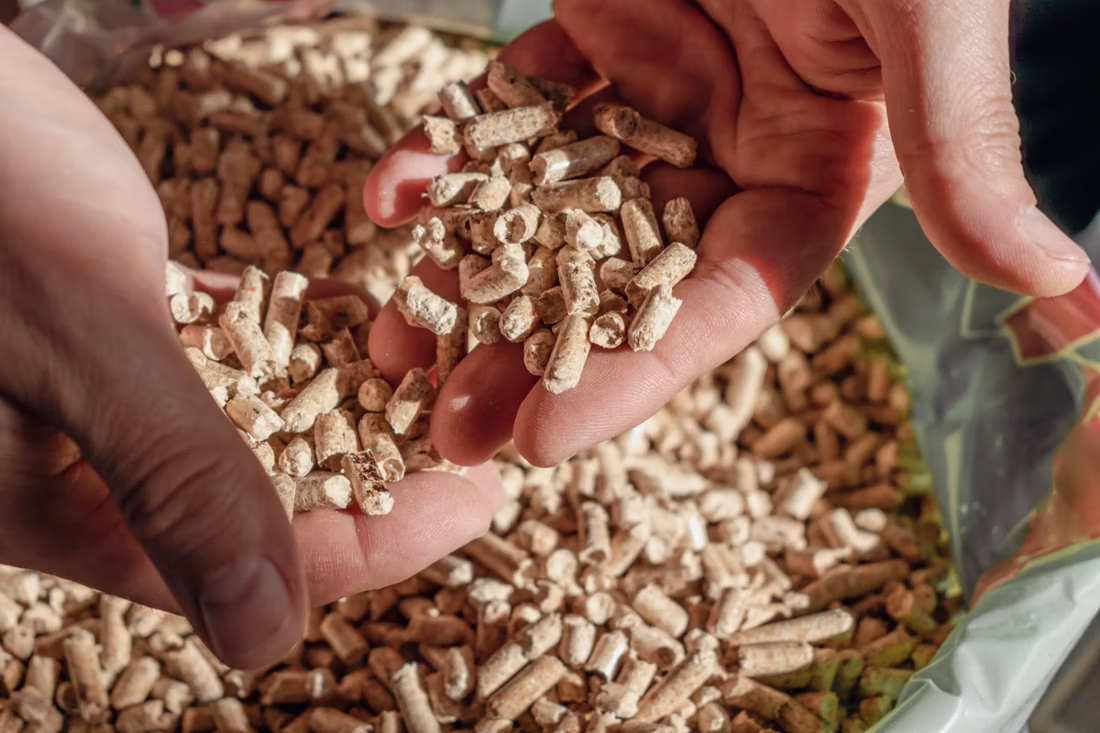
Regional brands like Lignetics, Hamer Pellet Fuel, and Greenway Renewable Energy supply much of western Kentucky, and local hearth dealers or farm supply stores typically stock them by the ton or by the bag. Expect to pay somewhere in the $250 to $300 per ton range in a normal year, though pricing can tighten up in late fall when demand spikes ahead of the first cold snap. Buying your season's supply early, rather than waiting for the first hard freeze, is the standard local advice for avoiding both price bumps and stock shortages.
What happens to my pellet stove during a power outage?
This is the one real limitation to plan around. Pellet stoves rely on an electric auger to feed fuel and a blower to circulate heat, so when Kenergy Corp's lines go down during an ice storm, a standard pellet stove stops running. Some homeowners pair their stove with a small battery backup or a portable generator sized to carry the stove's modest power draw, which is enough to keep the auger and igniter running through most outages. If reliable heat during extended outages is your top priority, a local dealer can talk through whether a battery-backed pellet stove or a wood stove makes more sense for your situation.
Do I need a permit to install a pellet stove in Webster County?
Yes, new pellet stove installations typically require a building permit through Webster County's permit office in Dixon, and if the stove is going into a manufactured or modular home, common throughout the county, the installer should confirm it's rated for that type of construction. Most established hearth dealers handle the permit as part of the installation rather than leaving it to the homeowner, which also means the venting gets inspected and signed off correctly the first time.
What size pellet stove do I need for my home?
With 4,280 heating degree days and winter lows averaging around 25°F, most Webster County homes do well with a small to medium pellet stove rated for 1,000 to 1,800 square feet, which covers the majority of the county's single-family and manufactured homes. A larger farmhouse or a home with an open floor plan may need a bigger unit, or a second heat source for back bedrooms. A local dealer will size the stove to your actual square footage and insulation rather than a rule of thumb, since an undersized stove will run constantly and an oversized one cycles on and off more than it should.
How much maintenance does a pellet stove need?
Pellet stoves need more frequent attention than a gas unit but less than a wood stove. Plan on emptying the ash pan every few days during heavy use, cleaning the burn pot weekly, and running a full deep-clean, including the hopper and exhaust venting, once a season, ideally before the county's first cold stretch. An annual professional inspection is worth scheduling too, since the venting on a pellet stove is smaller-diameter than a wood stove's and can clog with fly ash if it's skipped for more than a season.
Is there a natural gas alternative to pellet heat in Webster County?
Not really, outside of small in-town pockets that may have gas service. Most of rural Webster County runs on propane delivery or electric heat, with Kenergy Corp serving as the primary electric cooperative for the county. That's part of why pellet stoves are a popular supplemental or zone-heating choice here—they let a household cut down on propane or electric heating bills in the rooms used most, without the infrastructure cost of running a gas line that likely isn't available.
Are there any tax credits for installing a pellet stove?
Yes. High-efficiency biomass stoves, including qualifying pellet stoves, are eligible for a 30% federal tax credit under the current residential energy efficiency credit, subject to overall program limits. Ask your local dealer whether the specific model you're considering is rated at 75% efficiency or higher, since that's typically the threshold for qualifying, and keep your paperwork—the manufacturer's certification statement and your installation receipt are what you'll need at tax time.
Why is my open fireplace making my house colder?
Open fireplaces suck—literally. As the fire burns, it consumes air your furnace already paid to heat and pulls it out through the chimney, so the house is actually colder after the fire goes out than before you lit it. An insert fixes this: it seals the chimney, puts fixed glass across the front, and turns that hole in your house into a real heat source.
How often does a pellet stove need cleaning?
A clean pellet stove is a happy pellet stove. Plan on cleaning the burn pot about once a week when you're burning regularly—ash and clinkers gum up the air holes just like a pellet barbecue. Most pellet stove problems trace back to skipped cleaning that nobody explained up front. Some designs make it easy with a trapdoor burn pot: pull a lever and the gunk drops into the ash pan.
How much should I budget for a fireplace?
For an average home—covering the fireplace, the vent pipe, and basic installation—a budget between $3,900 and $5,500 gives you a lot of options across wood, gas, and pellet. By the time you add finish work, gas line, and electrical, the average complete installation lands between $5,000 and $12,000 all-in. In a remodel or new build, a good rule is to put about 2.5% of the total project cost toward the fireplace.
What is an in-home preview and do I need one?
It's a visit where a hearth professional measures your space, confirms the model you picked actually works in your home, and walks the specs—framing, gas line, venting, finish work—before anything is ordered. Some details you just can't know until you see the house. Never make a down payment without one; it's the single most-skipped step that burns buyers.
Pellet Brands Stocked Around Webster County
Manufacturers will point you to the nearest stocking dealer.
Get your free Project Guide & Parts List for a pellet stove in Webster County.
Tell me a little about your home and how you plan to use it, and I'll match you with a trusted local Webster County dealer and send over a free Project Guide & Parts List—the exact stove size, vent kit, and installation plan for your pellet project, plus where to keep buying fuel all winter.
Find Your Fireplace →