
Instant heat, no chimney required, for Webster County homes.
From Dixon to Providence to Clay, electric fireplaces plug into a standard outlet and add real supplemental warmth without a flue, a gas line, or a wood pile. Find the right unit and connect with a trusted local dealer.
Every Project Starts From One of These Five Situations
Zone heat that doesn't touch your chimney, your gas line, or your firewood rack.
Webster County sits in climate zone 4A with a winter heating season that runs roughly from late October through March and an average winter low near 25 degrees—cold enough to want supplemental heat in bedrooms and living rooms for several months, but not the kind of sustained sub-zero stretch that pushes every homeowner toward a wood-burning primary heat source. Oak, hickory, maple, and cherry are the woods people around Dixon, Providence, and Clay traditionally split and burn, but a growing number of households in the county are adding electric units instead—especially in manufactured homes, rentals, and rooms where running a flue or a gas line isn't practical.
Electric service in Webster County runs through Kenergy Corp, the rural electric cooperative that covers most of the county, so power reliability and rate structure matter more here than in a natural-gas market. An electric fireplace insert or wall-mount unit draws on a standard 120-volt circuit for most models, needs no venting, and can be installed in an afternoon by a qualified electrician rather than a multi-day chimney or gas-line project. For a lot of Webster County homes—especially older farmhouses being updated room by room, or newer builds without existing masonry—that simplicity is the whole appeal.
Three steps. No salesperson until you're ready.
Tell us about your project
Your zip code, your situation, and the fuel you're leaning toward—or let the answers point you to one.
See what's actually available
The brands dealers within 100 miles genuinely carry—real options, never a catalog mirage.
Get your dealer & Project Guide
A trusted local dealer, plus the free Project Guide & Parts List that names every component of the job.
Frequently Asked Questions
How much does an electric fireplace cost to install in Webster County?
Most electric fireplace inserts and wall-mount units run $300 to $1,500 for the unit itself, with straightforward installations—plugging into an existing outlet or having an electrician add a dedicated circuit—typically adding a few hundred dollars in labor. Built-in electric fireplaces set into a custom mantel or wall surround cost more once carpentry and trim work are added. Because there's no flue, no gas line, and no masonry work, electric is consistently the least expensive fireplace fuel to install in Webster County homes, whether you're in a house near Dixon or a manufactured home outside Providence.
Do I need a permit to install an electric fireplace in Webster County?
Plug-in electric fireplaces that use an existing outlet generally don't require a permit. If you're having an electrician add a new dedicated circuit or breaker for a larger built-in unit, that electrical work typically needs to meet Kentucky's statewide residential building code, and your installer or electrician can confirm whether a permit is needed through the county. It's a much lighter permitting lift than a wood stove or gas insert, which is part of why electric is a popular choice for quick upgrades in older Webster County homes.
Will an electric fireplace work if the power goes out?
No—and this is the honest tradeoff to weigh before choosing electric as your only heat source in Webster County. Electric fireplaces run entirely on household current, so an outage from an ice storm or downed line means the unit stops working along with everything else on the circuit. Rural stretches of the county served by Kenergy Corp can see longer restoration times after severe winter weather than in-town areas. If backup heat during outages matters to you, many Webster County homeowners pair an electric fireplace for everyday convenience with a wood stove or a battery-backed gas unit for the rare week the power is out.
What size electric fireplace do I need?
Electric fireplaces are rated in BTUs for actual heat output, and most residential units top out around 5,000 to 5,200 BTUs—enough to noticeably warm a single room of 400 to 1,000 square feet depending on insulation and ceiling height. They aren't sized to heat a whole house the way a wood stove or gas fireplace can; think of them as zone heat for a living room, bedroom, or den. For a drafty older farmhouse near Sebree or Slaughters, you may want two smaller units in separate rooms rather than one large unit trying to cover open floor plan space.
What's the difference between an electric insert, a wall-mount, and a mantel package?
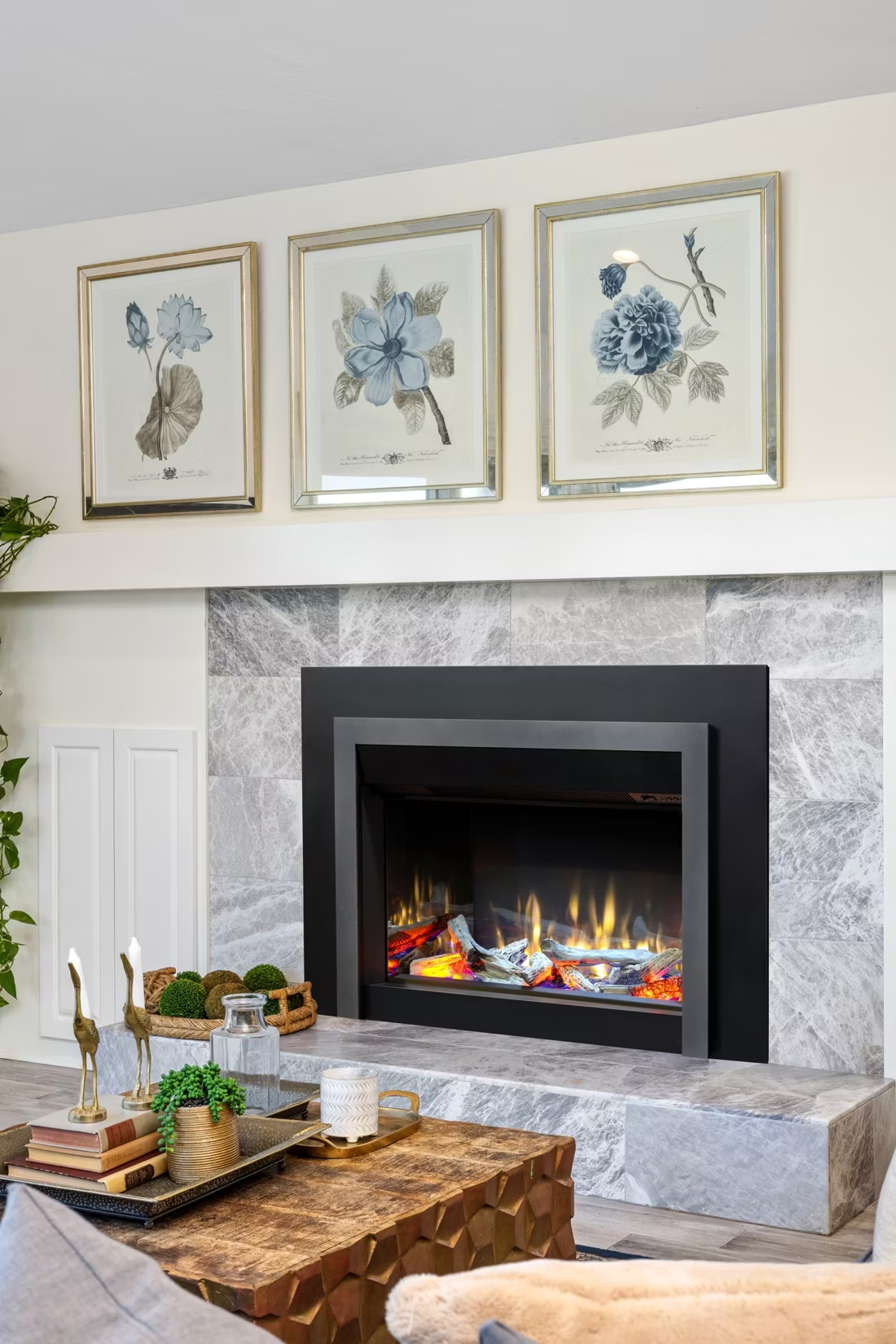
An electric insert is built to slide into an existing masonry fireplace opening, giving an old wood-burning fireplace a clean, no-mess makeover with heat and a flame effect but no venting or ash to deal with. A wall-mount unit hangs flat against a wall like a large television, popular in newer construction or rooms without an existing fireplace. A mantel package pairs an electric insert or firebox with a surrounding cabinet or mantel shelf, giving a built-in look without any structural fireplace work. For Webster County homes with an existing but rarely-used masonry fireplace, an insert is usually the simplest upgrade.
How much does it cost to run an electric fireplace?
Most electric fireplaces draw about 1,500 watts on the heat setting, which works out to roughly 10 to 20 cents an hour depending on your Kenergy Corp rate—a few dollars for an evening of use. That's cheaper per hour than most people assume, though it adds up faster than a wood stove burning free or low-cost split wood. For Webster County households already burning oak or hickory for primary heat, an electric unit in a second room is usually a cost-effective add rather than a replacement for the main heat source.
Electric vs. gas fireplace—which is right for my home?
Gas fireplaces produce more heat, can be sized to help offset a home's furnace load, and in some models keep working during a power outage with battery-backed ignition—but they require either a natural gas line or a propane tank, plus venting work, which raises both cost and installation complexity. Electric fireplaces install faster, cost less upfront, and need no venting or fuel delivery, but they max out around 5,000 BTUs and go dark the moment the power does. For a lot of Webster County homes without natural gas service nearby, electric is the lower-friction option for adding ambiance and zone heat to a specific room; propane or gas is worth considering where higher heat output or existing gas service make it practical.
Are electric fireplaces safe for older homes or manufactured housing?
Yes—electric fireplaces run cool to the touch on the exterior surface compared to a wood stove or gas unit, produce no combustion byproducts, and don't require the clearance-to-combustible rules that govern wood and gas installations. That makes them a common choice in manufactured and mobile homes around Webster County, where structural modifications for a flue or gas line aren't practical or allowed. The main thing to check is that your home's electrical panel and wiring can safely handle the added circuit, which a licensed electrician can confirm during installation.
Do electric fireplaces actually look realistic?
Flame technology has improved substantially in the last several years—LED and mirror-reflection designs used by brands sold through most hearth retailers create a convincing, layered flame effect with adjustable brightness and color, and many units let you run the flame visual without the heater on for year-round ambiance. It's not an open wood fire, and most Webster County homeowners who've grown up with a wood-burning hearth notice the difference, but for a den, bedroom, or rental property where convenience matters more than authenticity, today's electric units hold up well.
Can I put a TV above my fireplace?
Yes—with an asterisk. Fireplaces are hot and TVs don't like heat. Either put a mantel between them to deflect rising warmth, or choose a fireplace with heat-management technology that creates a cool zone on the wall above—the wall stays around 125 degrees, barely warm, while the room still gets full heat. If you like clean lines and don't want a mantel, heat management is the answer.
Does an electric fireplace need a vent or chimney?
No—that's its superpower. An electric fireplace needs a wall and an outlet, period. No vent pipe, no gas line, no clearances to design around, which is why it works in bedrooms, offices, apartments, and walls where venting a gas or wood unit would be impractical or impossible. Installation is typically the simplest and least expensive of any fireplace type.
Can I install a fireplace myself?
If you're putting a fire in your house on purpose, it's best to work with an expert. Unless you're genuinely experienced in framing, gas line, vent pipe, and the national code on clearances to combustibles, have a professional do it—and ideally the same company that sells you the fireplace, so warranty, service, and liability all live under one roof.
Does a fireplace add value to my home?
On average, a fireplace adds back to the home about the same amount you spent installing it. Add the monthly savings from heating the rooms you actually use instead of the whole house—often hundreds of dollars a year—and the value case is strong before you even count what a fire does for how your family uses the room.
Find your electric fireplace in Webster County.
Tell us a bit about your home and we'll put together a free Project Guide & Parts List for your electric fireplace project—the right unit, the exact parts, and a trusted local dealer near Dixon, Providence, or wherever you are in Webster County.
Find Your Fireplace →