
Consistent heat for Rowan County, without the chainsaw.
From Morehead to Clearfield and out toward Cave Run Lake, a pellet stove gives you real wood heat with a thermostat instead of a woodpile. Find the right unit and connect with a trusted local dealer.
Every Project Starts From One of These Five Situations
Set the thermostat and let the hopper do the work.
Rowan County sits in the Appalachian foothills of eastern Kentucky, home to Morehead State University and bordered by the Daniel Boone National Forest and Cave Run Lake. Winters here are moderate by national standards—climate zone 4A, a moderate winter heating load, with average lows around 22°F—but the county still sees real cold snaps and the ice storms that eastern Kentucky is known for. That's exactly the kind of climate where a pellet stove earns its keep: enough heating demand to matter, without the extreme sub-zero stretches that push people toward the biggest catalytic wood units.
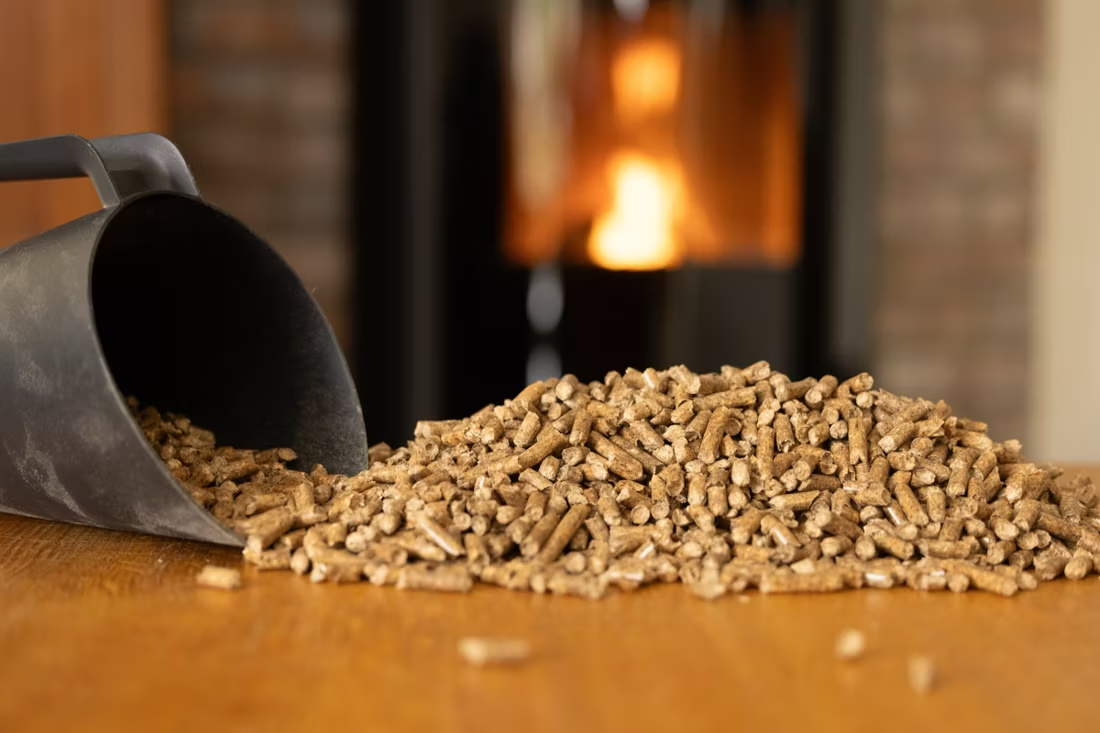
Rowan County's hardwood forests—oak, hickory, maple, cherry—have long fed wood stoves here, and a lot of that tradition carries over to pellets, which are made from the same regional timber. There's no non-attainment air quality designation in Rowan County, so unlike some parts of the country, you won't run into winter burn curtailment periods to plan around. Pellet fuel comes from suppliers like Lignetics, Hamer Pellet Fuel, and Greenway Renewable Energy, and bags are generally easy to find at farm and feed stores around Morehead—no cutting permit, no splitting, no seasoning wood for a year before you can burn it. Compare that to cutting your own firewood through the Daniel Boone National Forest, which requires a permit (about $20 per cord) and is only allowed May through October. A pellet stove trades that seasonal work for a bag you carry in from the garage.
Three steps. No salesperson until you're ready.
Tell us about your project
Your zip code, your situation, and the fuel you're leaning toward—or let the answers point you to one.
See what's actually available
The brands dealers within 100 miles genuinely carry—real options, never a catalog mirage.
Get your dealer & Project Guide
A trusted local dealer, plus the free Project Guide & Parts List that names every component of the job.
Frequently Asked Questions
How much does a pellet stove installation cost in Rowan County?
Most pellet stove installations run in the $3,000 to $6,000 range once you factor in the unit, venting, and electrical work for the auger and blower. A pellet insert going into an existing masonry fireplace typically runs a bit higher, closer to $4,000 to $7,000, since it involves fitting the unit and running a vent liner through the existing chimney. Rowan County's building department requires a permit for the installation, and most local dealers handle that paperwork as part of the job. A local dealer can give you a firm number after seeing your home and existing venting situation.
What size pellet stove do I need for my home in Rowan County?
With Rowan County's moderate winter heating load and average winter lows near 22°F, most homes don't need the largest hopper capacity on the market—that's more of a concern in places like Duluth or Fargo where overnight temperatures regularly sit near zero. A small pellet stove (rated for around 1,000-1,200 sq ft) handles a single living area or a smaller Morehead home well, while a medium unit (1,500-2,000 sq ft) covers most main floors in the county's older farmhouses and newer builds alike. Insulation quality matters more than raw square footage here, so a local dealer walking your home is worth more than any online BTU calculator.
Where can I buy wood pellets in Rowan County?
Regional brands like Lignetics, Hamer Pellet Fuel, and Greenway Renewable Energy supply this part of eastern Kentucky, and bags typically show up at farm and feed stores around Morehead and Clearfield during the fall stocking season. Pellets are sold by the 40-lb bag or by the ton (roughly 50 bags), and buying early in the fall—before the first cold snap sends everyone to the store at once—usually gets you better pricing and selection. Your dealer can also point you toward the closest reliable supplier once you know which stove you're running, since some units are pickier about pellet quality (ash content, hardwood vs. softwood blend) than others.
What's the difference between a pellet stove and a pellet insert?
A pellet stove is a freestanding unit that sits on its own hearth pad and vents out through a wall or existing chimney chase—it can go almost anywhere in a room with the right clearances. A pellet insert is built to slide into an existing masonry fireplace opening, using a vent liner run up through the old chimney. For Rowan County homes with an older fireplace that was originally built for wood, an insert is often the cleaner option since it uses the opening and chimney you already have. Homes without an existing fireplace, or new construction, are usually better suited to a freestanding stove.
Do I need a permit to install a pellet stove in Rowan County?
Yes—a building permit is required for a new pellet stove or insert installation in Rowan County, and most local dealers include pulling that permit as part of the installation. Unlike wood-burning, there's no cutting permit involved with pellets since you're not harvesting timber yourself—that's only a consideration if you're also burning wood cut through the Daniel Boone National Forest (May through October, about $20 per cord). And because Rowan County has no non-attainment air quality designation, there are no winter burn curtailment periods to track, which is a real difference from parts of the West and Pacific Northwest where pellet stoves are specifically exempted from burn bans that apply to wood.
What's the best pellet stove for Rowan County's climate?
Rowan County's moderate 4A climate—average winter lows around 22°F—doesn't demand the biggest hopper capacity on the market, so most homeowners are well served by a standard mid-size pellet stove rather than a heavy-duty cold-climate model. Look for a unit with a reliable auto-ignition system, since that convenience matters more here than raw BTU output—it's the difference between coming home to a cold house and having heat within minutes on a 20-degree morning. A local dealer can match hopper size and burn rate to your actual square footage and how often you're away from the house during the day.
How much maintenance does a pellet stove need?
Pellet stoves need more frequent light maintenance than wood stoves, but far less deep cleaning. Plan on emptying the ash pan every few days during regular use, cleaning the burn pot weekly to keep the auger feeding properly, and a full professional cleaning and inspection once a year—ideally before the first cold stretch hits Rowan County in the fall. The exhaust vent and combustion blower should also get checked annually, since a clogged vent is one of the more common reasons a pellet stove starts underperforming or shutting off mid-fire.
Will my pellet stove work during a power outage?
No—pellet stoves rely on electricity to run the auger, igniter, and combustion blower, so a power outage shuts them down. That's a real consideration in Rowan County, where ice storms are a known winter risk in this part of eastern Kentucky. Some homeowners pair a pellet stove with a small battery backup or generator specifically to keep it running through short outages. If backup heat during extended outages is a priority, a wood stove or fireplace that doesn't depend on electricity is worth discussing with your dealer alongside the pellet option.
Pellet stove vs. wood stove—which is right for my Rowan County home?
Wood stoves run on cordwood you can cut yourself through a Daniel Boone National Forest permit (about $20 per cord, May through October), work with no electricity at all, and burn the same oak, hickory, and cherry that's grown here for generations—a real advantage during an ice storm outage. Pellet stoves trade that self-sufficiency for convenience: no splitting or stacking, more consistent heat output, and a hopper you can load once a day instead of tending a fire by hand. For a Morehead household without the time or space to process firewood, pellets are usually the better fit. For a rural property that wants backup heat guaranteed to work when the power's out, wood still has the edge.
Why is my open fireplace making my house colder?
Open fireplaces suck—literally. As the fire burns, it consumes air your furnace already paid to heat and pulls it out through the chimney, so the house is actually colder after the fire goes out than before you lit it. An insert fixes this: it seals the chimney, puts fixed glass across the front, and turns that hole in your house into a real heat source.
Why is a fireplace insert so efficient?
An insert does two things: it seals the chimney completely, so you stop losing air you already paid to heat, and it radiates warmth into the room through the firebox and glass. Most add a heat-exchange fan that pulls cool room air underneath, wraps it around the hot firebox, and pushes it back out warm. Your home is more efficient before you've even lit the first fire.
Does a fireplace add value to my home?
On average, a fireplace adds back to the home about the same amount you spent installing it. Add the monthly savings from heating the rooms you actually use instead of the whole house—often hundreds of dollars a year—and the value case is strong before you even count what a fire does for how your family uses the room.
How much should I budget for a fireplace?
For an average home—covering the fireplace, the vent pipe, and basic installation—a budget between $3,900 and $5,500 gives you a lot of options across wood, gas, and pellet. By the time you add finish work, gas line, and electrical, the average complete installation lands between $5,000 and $12,000 all-in. In a remodel or new build, a good rule is to put about 2.5% of the total project cost toward the fireplace.
Pellet Brands Stocked Around Rowan County
Manufacturers will point you to the nearest stocking dealer.
Find your pellet stove in Rowan County.
Tell us a bit about your home and we'll match you with the right pellet stove or insert, plus a free Project Guide & Parts List—the exact parts, vent kit, and recommended local Rowan County dealer for your project.
Find Your Fireplace →