
Simple, Safe Heat for Rowan County Homes.
No chimney, no gas line, no venting to plan around—just clean zone heat for Morehead rentals, older farmhouses near Cave Run Lake, and everything in between. Find the right unit and connect with a trusted local dealer.
Every Project Starts From One of These Five Situations
Zone heat that fits Rowan County's mix of homes.
Rowan County sits in the Appalachian foothills of eastern Kentucky, anchored by Morehead and Morehead State University, with the Daniel Boone National Forest and Cave Run Lake framing the rest of the county. Winters here are moderate by cold-climate standards—an average winter low around 22°F and roughly 4,891 heating degree days, well short of what a place like Duluth or Burlington sees, but still cold enough that most homes lean on a furnace or heat pump for months at a stretch. That's the backdrop for why electric fireplaces have caught on here: they don't compete with the primary heat system, they just add warmth exactly where people spend their evenings.
With a county population under 8,000 split between the city of Morehead, MSU's student rental market, and rural stretches toward the national forest, housing stock varies a lot—new construction with heat pumps, older downtown homes with decorative masonry fireplaces no longer safe to burn, and student apartments where landlords want ambiance without liability. Electric units solve for all three: plug into an existing outlet or a new circuit, skip the chimney and gas line entirely, and get real supplemental heat for a bedroom, den, or converted fireplace opening without touching the home's main heating system.
Three steps. No salesperson until you're ready.
Tell us about your project
Your zip code, your situation, and the fuel you're leaning toward—or let the answers point you to one.
See what's actually available
The brands dealers within 100 miles genuinely carry—real options, never a catalog mirage.
Get your dealer & Project Guide
A trusted local dealer, plus the free Project Guide & Parts List that names every component of the job.
Frequently Asked Questions
How much does an electric fireplace installation cost in Rowan County?
A plug-in freestanding unit or a basic insert runs $300 to $1,500 in Rowan County, and most homeowners have it running the same afternoon on a standard 120V outlet—no permit, no electrician required. Built-in wall units or larger inserts that need a dedicated 240V circuit run higher, typically $1,500 to $3,500, once a licensed electrician runs new wiring. That upper range shows up more often in older homes around downtown Morehead with outdated panels, or rural properties toward Cave Run Lake where the nearest circuit isn't close to the install spot.
Do electric fireplaces actually produce heat, or are they just for looks?
They produce real heat—most units put out 5,000 to 10,000 BTU, enough to comfortably warm a 400 to 1,000 square foot room, which covers most bedrooms, dens, or a Morehead rental's main living area. They're built as supplemental zone heat, not a replacement for a furnace or heat pump. In Rowan County's climate, where winter lows average around 22°F, that's usually the right role: let the central system carry the whole house and let the electric fireplace take the edge off the room you're actually sitting in.
Do I need a permit to install an electric fireplace in Rowan County?
For a plug-in unit on an existing outlet, no permit is needed—it's no different than plugging in a space heater. If you're adding a built-in unit that requires a new dedicated circuit, that electrical work should be done by a licensed electrician, and depending on the scope, it may need to be permitted through the county building office. Whether you're inside Morehead city limits or out in the county toward the national forest, your installer will know exactly what paperwork, if any, applies to your specific project.
Electric vs. gas fireplace—which makes more sense in Rowan County?
It depends heavily on what's already run to your home. Piped natural gas isn't widely available across most of rural Rowan County, so a gas fireplace typically means propane—a tank, a delivery contract, and a dedicated gas line. Electric skips all of that: no tank, no line, no venting, just an outlet or a new circuit. For homes already on the grid through Fleming-Mason Energy with no existing gas infrastructure, electric is usually the simpler and cheaper path, especially for a secondary room rather than a whole-home heat source.
Electric vs. wood—which is right for my Rowan County home?
Wood is deeply practical here—Rowan County sits inside the Daniel Boone National Forest's reach, with cutting permits running about $20 per cord during the May-to-October season, and oak, hickory, maple, and cherry all common locally. A wood stove keeps working during an ice storm power outage, which matters in these foothills. Electric fireplaces can't do that—no power, no heat—but they win on convenience: no splitting or hauling wood, no chimney maintenance, no smoke. Many Rowan County households end up with both: wood heat as the outage backup, electric for everyday convenience in a bedroom or den.
What's the best electric fireplace for a heat-pump home in Rowan County?
Most newer construction in and around Morehead runs on a heat pump, and electric fireplaces pair well with that setup because they don't interfere with the heat pump's efficiency the way opening a chimney damper would with a wood or gas unit. Look for a model with a separate heater and flame-effect switch, so you can run the ambiance without the heat in shoulder-season months, and switch the heater on for zone warmth during the coldest stretches when the heat pump is working hardest.
How much does it cost to run an electric fireplace day to day?
Electric fireplaces are close to 100% efficient at the point of use—no heat lost up a flue the way it is with gas or wood—so running costs come down almost entirely to your electric rate through Fleming-Mason Energy. A typical 1,500-watt unit run for a few hours an evening usually adds a modest amount to a monthly bill, generally far less than heating an entire room with a whole-home system. It's one of the reasons they've become popular as supplemental heat in Rowan County rentals and smaller households.
Can I put an electric insert into an old masonry fireplace?
Yes, and it's a common project in Rowan County's older housing stock—plenty of homes around downtown Morehead have a decorative masonry fireplace that hasn't been used for an actual wood fire in years, either because the flue was never relined or because the owner just doesn't want the maintenance. An electric insert slides into that existing opening, restores the look of a working fireplace, and needs nothing more than a nearby outlet or a simple circuit run—no chimney work, no liner, no inspection for combustion safety.
Will my electric fireplace work during a power outage?
No—electric fireplaces need power to run, full stop, so during an outage they go dark along with everything else in the house. That matters in Rowan County, where winter ice storms in the foothills can knock out power for a day or more. If backup heat during an outage is a real concern for your household, a wood stove or a battery-backed gas unit is worth having somewhere in the house—the electric fireplace can still be your everyday, no-mess choice for the room you use most.
Can I put a TV above my fireplace?
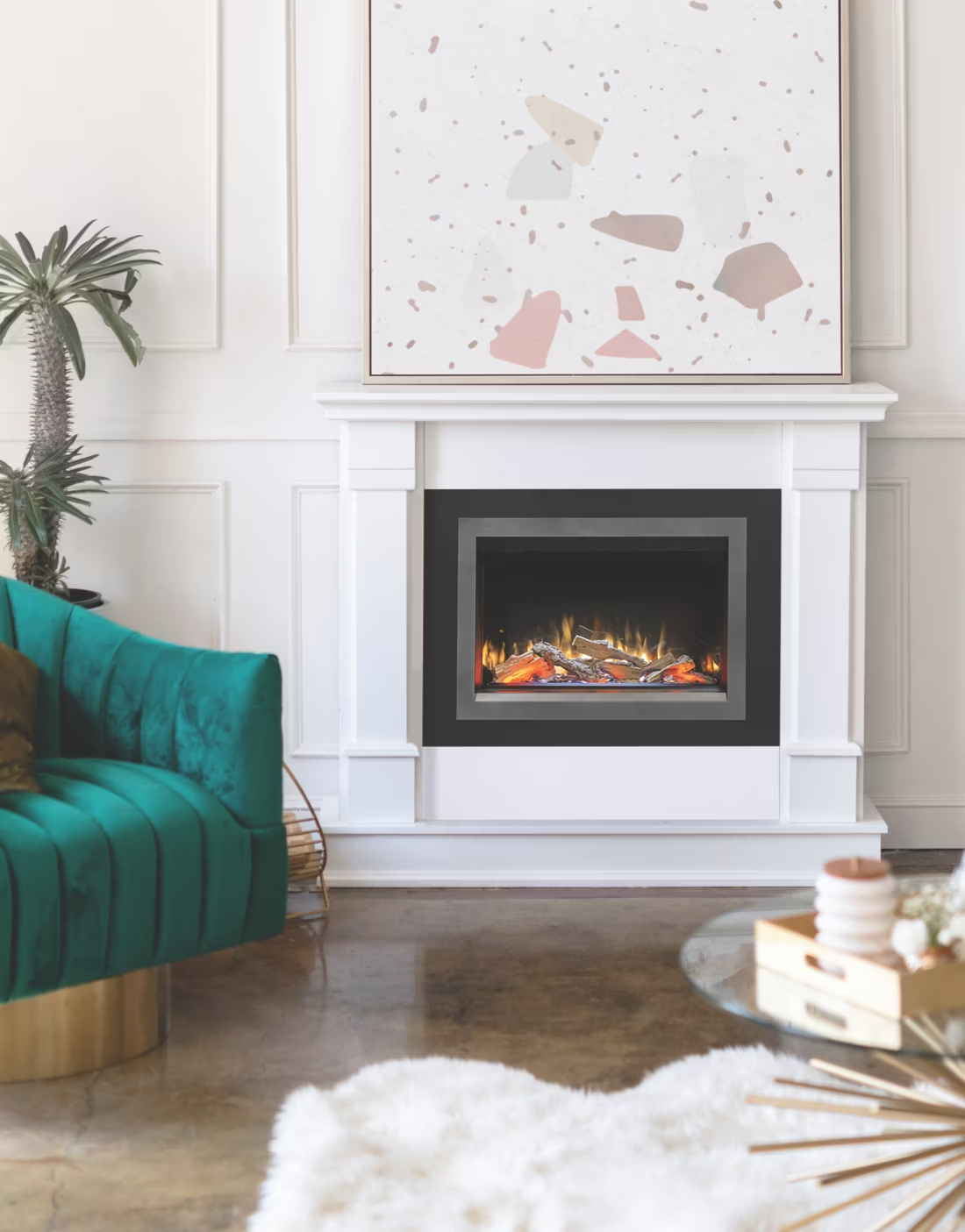
Yes—with an asterisk. Fireplaces are hot and TVs don't like heat. Either put a mantel between them to deflect rising warmth, or choose a fireplace with heat-management technology that creates a cool zone on the wall above—the wall stays around 125 degrees, barely warm, while the room still gets full heat. If you like clean lines and don't want a mantel, heat management is the answer.
Do electric fireplaces actually produce heat?
Yes—most put out around 4,800–5,000 BTUs from a standard outlet, which comfortably warms a bedroom, office, or den as a comfort-zone heater. What they won't do is carry a whole house the way wood, gas, or pellet can. Think of electric as ambiance-first with honest supplemental heat: flames on with no heat in July, flames plus warmth in January.
Can I install a fireplace myself?
If you're putting a fire in your house on purpose, it's best to work with an expert. Unless you're genuinely experienced in framing, gas line, vent pipe, and the national code on clearances to combustibles, have a professional do it—and ideally the same company that sells you the fireplace, so warranty, service, and liability all live under one roof.
Can a fireplace actually lower my heating bill?
Yes—by creating a comfort zone. A furnace heats every square foot of the house just to warm the one room you're in; a gas fireplace on low burns roughly a sixth of the gas a typical furnace does. Set the furnace around 55–60 degrees as a baseline, then heat the rooms your family actually uses. Families who heat this way commonly save $20–$60 a month.
Find your electric fireplace in Rowan County.
Tell us a bit about your home and we'll put together a free Project Guide & Parts List—the right unit, the exact parts, and a trusted local Rowan County dealer to install it.
Find Your Fireplace →