
Steady, automatic heat for Ohio County winters.
From Hartford to Beaver Dam to Rosine, Ohio County households are increasingly pairing hardwood-country living with the convenience of a thermostat-controlled pellet stove. Find the right unit and connect with a trusted local dealer.
Every Project Starts From One of These Five Situations
Consistent warmth without the wood-splitting.
Ohio County sits in Kentucky's climate zone 4A, with roughly 4,330 heating degree days a year and average winter lows near 24 degrees—cold enough for a full heating season running from around Halloween through March, but nowhere near the sub-zero stretches of places like Fargo or Bismarck. Across a county of under 8,000 people spread out from Hartford and Beaver Dam to Fordsville and Rosine—the birthplace of bluegrass pioneer Bill Monroe—homes tend to be older, spread out, and often heated with a mix of central systems and supplemental hearth appliances.
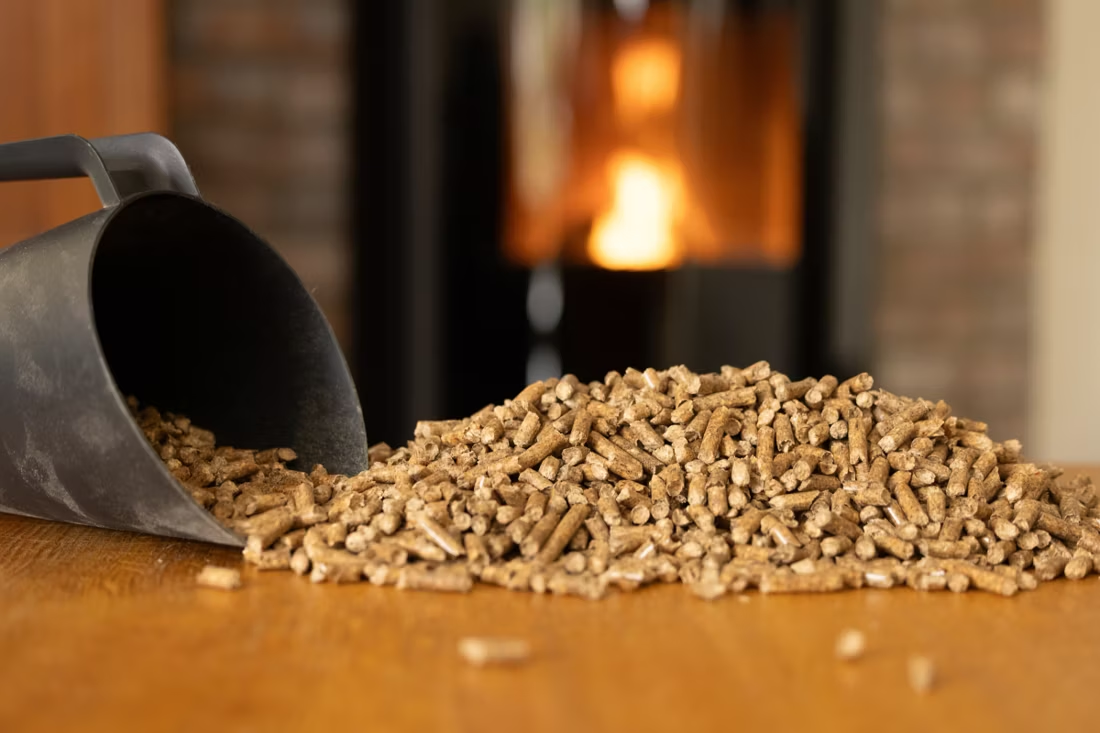
Oak, hickory, maple, and cherry stands cover much of the county, and wood heat has deep roots here. But pellet stoves have earned a real foothold too, especially with households who want the radiant feel of a real fire without daily splitting, hauling, and ash management. Part of that is supply: Kentucky is home to pellet producers like Hamer Pellet Fuel and Greenway Renewable Energy, and Lignetics also serves the region, so hardwood pellets tend to stay in stock locally through the winter rather than getting trucked in from out of state. Ohio County has no current air-quality non-attainment designation, so there's no curtailment pressure pushing households toward pellet over wood—the choice here comes down to convenience, venting options, and how hands-on you want your heat to be.
Three steps. No salesperson until you're ready.
Tell us about your project
Your zip code, your situation, and the fuel you're leaning toward—or let the answers point you to one.
See what's actually available
The brands dealers within 100 miles genuinely carry—real options, never a catalog mirage.
Get your dealer & Project Guide
A trusted local dealer, plus the free Project Guide & Parts List that names every component of the job.
Frequently Asked Questions
How much does a pellet stove installation cost in Ohio County?
Most straightforward pellet stove installations—a freestanding unit with a through-wall vent kit and a dedicated electrical outlet for the auger and blower—run in the neighborhood of $3,000 to $6,000 in Ohio County, depending on the stove model and whether new wiring is needed. Converting an existing masonry fireplace to a pellet insert tends to land in a similar range, since it also uses a smaller-diameter vent than a wood insert. Costs shift upward if your electrical panel needs upgrading to support the stove's power draw, or if the hearth pad needs to be rebuilt to meet clearance requirements. A local dealer can give you a firm number after seeing your home.
What size pellet stove do I need for my Ohio County home?
With winter lows averaging around 24 degrees and roughly 4,330 heating degree days a year, Ohio County's climate calls for a mid-size pellet stove for most main living areas—enough to heat 1,000 to 2,000 square feet comfortably as a primary or near-primary heat source. Smaller units work fine as supplemental heat in a den or family room, which is a common setup in the county's older farmhouses that already run on a central furnace. Homes with open floor plans or high ceilings, common in some of the newer builds around Beaver Dam, may need a larger unit or a stove placed centrally to circulate heat effectively. A local dealer will size the appliance based on your actual square footage and insulation rather than a rule of thumb.
Where can I find a certified pellet stove installer near me?
Look for installers with NFI (National Fireplace Institute) pellet-specialist certification, which covers venting, clearances, and the electrical requirements specific to pellet appliances. Because Ohio County is largely rural, expect installers based in or near Hartford or Beaver Dam to cover the outlying communities—Fordsville, Rosine, Centertown, and Rockport—sometimes with a small travel charge for the more remote addresses. Buying and installing through the same dealer simplifies warranty coverage, since pellet stoves have more moving parts (auger motor, blower, igniter) than a simple wood stove and benefit from a installer who knows the specific model.
What's the difference between a pellet stove and a pellet insert?
A pellet stove is a freestanding appliance that sits on a hearth pad and vents through a wall or existing chimney chase—it can go almost anywhere with the right clearances. A pellet insert is built to slide into an existing masonry fireplace opening, which is common in Ohio County's older homes around Hartford and the surrounding farm communities. Since pellet appliances vent through a smaller pipe than wood units and don't rely on natural draft, an insert can often be installed into a fireplace that wasn't drafting well for wood burning in the first place. If you already have a masonry fireplace you don't use, an insert is usually the more cost-effective path; if you're starting from a bare wall or room, a freestanding stove is typically simpler to install.
Do I need a permit to install a pellet stove in Ohio County?
Yes—new pellet stove and insert installations in Ohio County require a building permit, and the review typically runs through the county's building inspection office rather than a city department, since most of the county outside Hartford and Beaver Dam is unincorporated. Most local dealers handle the permit application and inspection scheduling as part of the installation, so you generally don't have to navigate it yourself. There's no burn-curtailment ordinance to worry about here, since Ohio County isn't in an air-quality non-attainment area—the permit is about safe venting and electrical work, not emissions restrictions.
What's the best pellet stove for Ohio County, and where do I buy pellets?
National brands like Harman, Englander, and Lopi all make solid pellet stoves suited to Ohio County's climate zone, and a local dealer can walk you through hopper capacity and burn-time differences between models. For fuel, the county benefits from being close to Kentucky-based pellet production—Hamer Pellet Fuel and Greenway Renewable Energy both manufacture hardwood pellets in-state, and Lignetics also distributes into the region. That in-state supply chain generally means pellets stay available at local farm and hardware stores through the winter rather than running short when out-of-state trucking gets disrupted by weather. Ask your dealer which brands they stock regularly rather than assuming any bag on the shelf will burn the same—ash content and BTU output vary noticeably between pellet brands.
How much maintenance does a pellet stove need?
Pellet stoves need more routine attention than a wood stove but less than you'd think—daily or every-few-days ash removal from the burn pot, a weekly wipe-down of the glass and hopper, and a full professional cleaning of the venting, exhaust fan, and auger system once a year, ideally before the season starts in the fall. Given Ohio County's roughly five-month heating season, an appliance that runs most days from November through March will benefit from a mid-season check if you're burning it as a primary heat source rather than supplemental. Skipping the annual service is the most common cause of pellet stoves losing efficiency or shutting down mid-winter.
Will my pellet stove work if the power goes out?
No—this is the one real tradeoff worth knowing before you buy. Pellet stoves rely on electricity to run the auger that feeds pellets, the igniter, and the combustion blower, so a power outage shuts the stove down even with a full hopper. In a rural county like Ohio County where outages can follow winter storms and last more than a few hours, that's worth weighing against a wood stove, which needs no electricity at all. Some homeowners address this with a small battery backup or generator sized to the stove's low wattage draw—ask your dealer whether your chosen model is compatible with a battery backup unit.
Pellet stove vs. wood stove—which fits Ohio County better?
Wood is the deeper tradition here, and with oak, hickory, maple, and cherry all common across the county, self-cut or locally purchased firewood is easy to come by and burns hot. Wood stoves also keep working during power outages, which matters in a county this rural. Pellet stoves trade that off for real convenience: load the hopper, set the thermostat, and walk away, with a cleaner burn and far less ash than cordwood. For households in Hartford or Beaver Dam who want hands-off heat in a main living space and have reliable power, pellet is often the better daily-use choice. For households further out who value backup heat independent of the grid, wood still tends to win. Plenty of Ohio County homes end up with both.
Why is my open fireplace making my house colder?
Open fireplaces suck—literally. As the fire burns, it consumes air your furnace already paid to heat and pulls it out through the chimney, so the house is actually colder after the fire goes out than before you lit it. An insert fixes this: it seals the chimney, puts fixed glass across the front, and turns that hole in your house into a real heat source.
What's the difference between an insert and a zero-clearance fireplace?
An insert is a fireplace that slides into a pre-existing wood-burning fireplace—if you don't have one, there's nothing to insert it into. A zero-clearance fireplace is built into a framed wall, which makes it the answer for remodels and new construction. Simple test: existing masonry fireplace means insert; blank or framed wall means zero-clearance.
Does a fireplace add value to my home?
On average, a fireplace adds back to the home about the same amount you spent installing it. Add the monthly savings from heating the rooms you actually use instead of the whole house—often hundreds of dollars a year—and the value case is strong before you even count what a fire does for how your family uses the room.
Can a fireplace actually lower my heating bill?
Yes—by creating a comfort zone. A furnace heats every square foot of the house just to warm the one room you're in; a gas fireplace on low burns roughly a sixth of the gas a typical furnace does. Set the furnace around 55–60 degrees as a baseline, then heat the rooms your family actually uses. Families who heat this way commonly save $20–$60 a month.
Pellet Brands Stocked Around Ohio County
Manufacturers will point you to the nearest stocking dealer.
Find your pellet stove in Ohio County.
Tell us a bit about your home and we'll put together a free Project Guide & Parts List—the exact stove, vent kit, and installation plan for your Ohio County project—and match you with a trusted local dealer who carries it.
Find Your Fireplace →