
Warm up any room in Ohio County—no gas line, no chimney.
From Hartford to Beaver Dam to the farmhouses out toward Rosine, electric fireplaces give Ohio County homes an easy way to add zone heat and real ambiance without breaking into a wall for venting. Find the right unit and connect with a trusted local dealer.
Every Project Starts From One of These Five Situations
Simple heat that plugs in anywhere.
Ohio County sits in western Kentucky's climate zone 4A, with a winter about as cold as you'd expect from roughly a five-month heating season and an average winter low around 24°F—cold enough for a real heating season, but not the kind of brutal cold that demands a wood-fired workhorse in every home. Across the county's roughly 7,900 residents, spread from the county seat in Hartford out through Beaver Dam, Fordsville, and the farmland near Rosine, a lot of housing stock is older farmhouses, manufactured homes, and additions where running a gas line or building a masonry chimney just isn't practical. That's where electric fireplaces do their best work.
Kenergy Corp, the rural electric cooperative that serves most of Ohio County, keeps power flowing to homes spread across a lot of open ground—and an electric fireplace is one of the simplest upgrades available to that grid. A plug-in insert or wall-mount unit needs no venting, no gas permit, and no chimney sweep, just an outlet or, for larger built-in units, a dedicated 240V circuit. For manufactured homes and rentals around the county, that means real supplemental heat and a finished look in a bonus room, primary bedroom, or den without touching the structure. It's not a substitute for wood or gas heat when an ice storm knocks the power out, but for daily zone heating and ambiance, it's hard to beat the simplicity.
Three steps. No salesperson until you're ready.
Tell us about your project
Your zip code, your situation, and the fuel you're leaning toward—or let the answers point you to one.
See what's actually available
The brands dealers within 100 miles genuinely carry—real options, never a catalog mirage.
Get your dealer & Project Guide
A trusted local dealer, plus the free Project Guide & Parts List that names every component of the job.
Frequently Asked Questions
How much does an electric fireplace installation cost in Ohio County?
A basic plug-in electric insert or stove that runs on a standard 120V outlet typically costs $300 to $900 installed, with little to no electrical work required beyond making sure the outlet and circuit can handle the load. Larger built-in or wall-mounted units that need a dedicated 240V circuit run higher—often $1,500 to $3,500 once you factor in a licensed electrician running new wiring, especially in older Ohio County farmhouses where the panel may need a subpanel upgrade to add capacity. Manufactured homes around Fordsville and Beaver Dam sometimes need extra care here since panel capacity varies widely by age of the home.
Will an electric fireplace actually heat my room in Ohio County's winters?
For zone heating, yes. Most electric fireplaces and inserts put out 4,000 to 5,000 BTUs—enough to comfortably heat a single room or open living area when the average winter low sits around 24°F, which is typical for Ohio County. They're not designed to replace a central heat pump or furnace for whole-home heating, but for a bonus room, a converted porch, or a den that runs cold, an electric unit lets you turn up the heat in that one space without cranking the thermostat for the whole house. On the coldest nights of the season, expect it to supplement your existing system rather than carry the load alone.
Do I need a permit to install an electric fireplace in Ohio County?
A simple plug-in unit that uses an existing outlet doesn't require a permit. Built-in or hardwired electric fireplaces that need a new dedicated circuit do fall under the National Electrical Code and typically require an electrical permit through the Ohio County building office, pulled by your licensed electrician. Most local dealers coordinate this as part of the install, so it's rarely something a homeowner has to manage directly—but it's worth confirming before work starts, especially on older wiring common in the county's farmhouses.
What happens to my electric fireplace during a power outage?
It won't run. That's the one real tradeoff of electric heat in a rural county like Ohio, where ice storms and downed lines can mean extended outages while Kenergy Corp crews work through a large service territory. If backup heat during outages matters to your household, many Ohio County homeowners pair an electric fireplace for everyday convenience in a main living space with a wood stove or gas unit elsewhere in the house—local oak and hickory are common, reliable firewood species here—so there's a heat source that doesn't depend on the grid.
Are electric fireplaces a good fit for manufactured and mobile homes?
Yes—it's one of the most common upgrades local dealers install in the manufactured and modular homes scattered across Ohio County. Since there's no venting, no gas line, and no structural chimney to build, an electric insert or wall-mount unit can go into a manufactured home without touching the roof or exterior wall assembly, which matters given how those homes are constructed. The main thing to check is electrical capacity—older manufactured homes sometimes need a panel evaluation before adding a hardwired 240V unit, which a local electrician or your installing dealer can confirm.
What size electric fireplace do I need for my room?
Sizing is driven more by the visual scale of the space and the room's square footage than by BTU output, since most units in a given width class produce similar heat. As a rough guide: a 26–36 inch insert or wall-mount suits a bedroom or small den, a 40–50 inch unit fits a typical living room, and larger linear units (60 inches and up) work for open-concept great rooms common in newer Ohio County construction. For rooms with vaulted ceilings or a lot of glass—not unusual in newer builds around Beaver Dam—you may want to size up or add a second small unit rather than rely on one oversized fireplace.
Where can I find a local dealer to install an electric fireplace near me?
Look for a hearth dealer that actually installs in Ohio County rather than a big-box store that just ships a box. A local installer will confirm your home's electrical capacity, size the unit to the room, and—for hardwired installs—coordinate with a licensed electrician on the permit and circuit work. That matters more than it sounds like: an undersized circuit or a poor mounting job on a farmhouse wall is a common and avoidable mistake. I match homeowners with trusted local dealers rather than ranking whichever brand pays for placement—that neutrality is the whole point.
What's the difference between an electric insert, an electric stove, and a built-in electric fireplace?
An electric insert is sized to slide into an existing masonry or wood-burning fireplace opening, giving an old, unused fireplace real heat output again without touching the chimney. An electric stove is a freestanding unit styled like a traditional wood stove, useful where there's no existing fireplace opening. A built-in electric fireplace is designed to be framed into a wall—common in new construction or remodels around Ohio County—and can be finished with tile, stone, or a mantel surround to look fully custom. For homes with an old, cold masonry fireplace that never gets used, the insert is usually the simplest upgrade.
Electric vs. pellet stove—which makes more sense for my Ohio County home?
A pellet stove, using bagged pellets from suppliers like Lignetics or Hamer Pellet Fuel, delivers more heat output and can serve as genuine backup heat since many models run on a small battery during a power outage—a real consideration given how spread out Kenergy Corp's rural lines are. It does require a pellet hopper to load, ash to clean, and venting to install. An electric fireplace requires none of that upkeep and installs almost anywhere, but it's tied entirely to grid power and better suited to supplemental zone heat than to carrying a home through a multi-day outage. If low-maintenance convenience is the priority, electric wins; if you want a heat source that keeps working when the power doesn't, pellet or wood is the safer bet.
Can I put a TV above my fireplace?
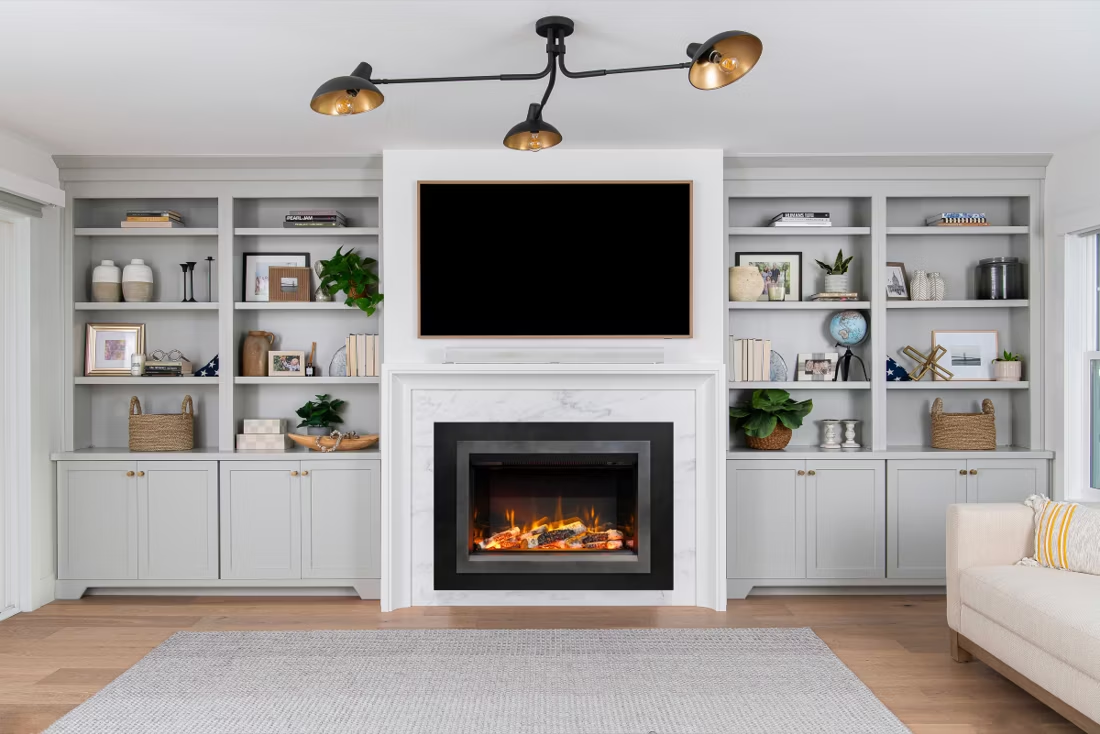
Yes—with an asterisk. Fireplaces are hot and TVs don't like heat. Either put a mantel between them to deflect rising warmth, or choose a fireplace with heat-management technology that creates a cool zone on the wall above—the wall stays around 125 degrees, barely warm, while the room still gets full heat. If you like clean lines and don't want a mantel, heat management is the answer.
How much does an electric fireplace cost to run?
With the heater on, a typical unit draws about 1,500 watts—at average electric rates that's roughly 20 cents an hour. Run the flame effect alone and it costs pennies; the flames are LED-driven and use about as much power as a light bulb. There's no pilot light, no fuel delivery, and essentially no maintenance.
Can a fireplace actually lower my heating bill?
Yes—by creating a comfort zone. A furnace heats every square foot of the house just to warm the one room you're in; a gas fireplace on low burns roughly a sixth of the gas a typical furnace does. Set the furnace around 55–60 degrees as a baseline, then heat the rooms your family actually uses. Families who heat this way commonly save $20–$60 a month.
How much should I budget for a fireplace?
For an average home—covering the fireplace, the vent pipe, and basic installation—a budget between $3,900 and $5,500 gives you a lot of options across wood, gas, and pellet. By the time you add finish work, gas line, and electrical, the average complete installation lands between $5,000 and $12,000 all-in. In a remodel or new build, a good rule is to put about 2.5% of the total project cost toward the fireplace.
Find your electric fireplace in Ohio County.
Tell us a bit about your home and we'll put together a free Project Guide & Parts List—the right unit, the circuit and mounting specs, and a trusted local Ohio County dealer to install it.
Find Your Fireplace →