
Find the right pellet stove for Morgan County's Appalachian winters.
Morgan County's winters bring a six-month heating season and overnight lows near 22°F—enough cold to want steady, low-maintenance heat without splitting oak and hickory by hand. Find the right pellet stove or insert for your home, and get matched with a trusted local dealer who can install it correctly.
Every Project Starts From One of These Five Situations
Consistent heat without the wood-splitting work.
Morgan County sits in the Appalachian foothills of eastern Kentucky, with West Liberty as the county seat and hollows and ridgelines stretching out toward the Daniel Boone National Forest. At climate zone 4A with a six-month heating season, winters here are colder than much of the Bluegrass but nowhere near the brutal totals of places like Fargo, ND or Duluth, MN—this is a six-month heating season with average lows around 22°F, not sub-zero extremes. That's exactly the range where pellet stoves perform well: steady, thermostatically controlled heat without the daily commitment of a wood-burning setup.
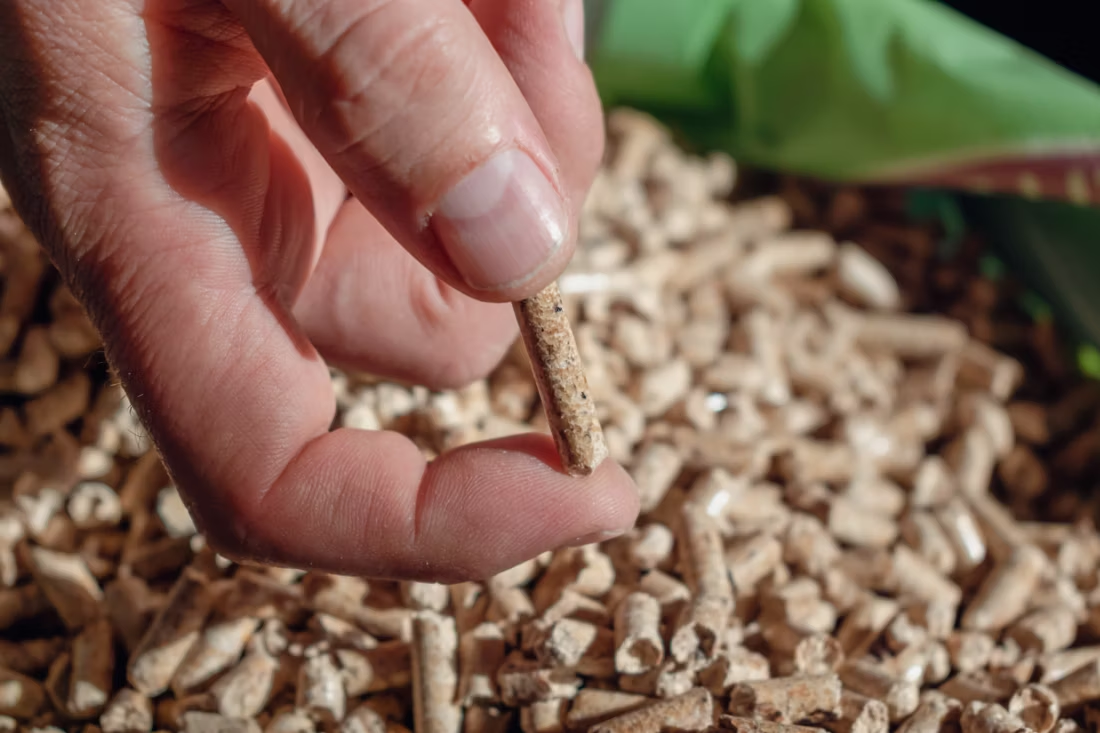
The county's hardwood forests—oak, hickory, maple, and cherry—have long supported wood heat, and many Morgan County homes still burn cordwood cut under Daniel Boone National Forest permits (about $20 per cord, May through October). Pellet stoves offer a different trade: instead of splitting and stacking wood, you're feeding a hopper with bagged fuel from regional producers like Lignetics, Hamer Pellet Fuel, and Greenway Renewable Energy—all of which supply retailers across this part of Kentucky. With no air quality restrictions or burn-ban concerns in Morgan County, pellet stoves here are simply about convenience and efficiency, not regulatory necessity.
Three steps. No salesperson until you're ready.
Tell us about your project
Your zip code, your situation, and the fuel you're leaning toward—or let the answers point you to one.
See what's actually available
The brands dealers within 100 miles genuinely carry—real options, never a catalog mirage.
Get your dealer & Project Guide
A trusted local dealer, plus the free Project Guide & Parts List that names every component of the job.
Frequently Asked Questions
How much does a pellet stove installation cost in Morgan County?
A typical pellet stove or insert installation in Morgan County runs in the $3,000 to $6,500 range, depending on whether you're installing a freestanding stove, converting an existing masonry fireplace with an insert, and how much venting work is involved. Pellet venting is simpler and less expensive than a masonry chimney—most units vent through a small-diameter PL pipe straight out an exterior wall, which keeps labor costs down compared to wood stove installs. A local dealer will give you a firm number after seeing your home.
What size pellet stove do I need for my home?
Sizing depends on square footage and how well-insulated your home is, but Morgan County's six-month heating season and average winter lows near 22°F put most homes in the mid-range category. A stove rated for 1,200 to 2,000 square feet handles most single-family homes here as either primary or serious supplemental heat; smaller units work fine for zone-heating a living room or an older farmhouse with a drafty layout. Older homes tucked into hollows, which tend to hold cold air longer than ridge-top homes, sometimes need a slightly larger unit to keep up. A local dealer can size your space accurately during an in-home visit.
Where can I find a qualified pellet stove dealer near me?
Look for a dealer who carries NFI-certified installers and can service what they sell—pellet stoves have more moving parts (auger, blower, igniter) than a wood stove, so ongoing service access matters as much as the initial install. Morgan County is a small, rural county without a dense concentration of hearth retailers, so many homeowners work with dealers based in nearby larger towns who travel into the county for installs and service calls. Ask specifically about repair response time before you buy—a pellet stove that's down in January is a bigger problem than a wood stove that just needs restacking.
Pellet stove vs. wood stove—which makes more sense in Morgan County?
Wood is deeply practical here—Morgan County sits next to the Daniel Boone National Forest, cutting permits run about $20 per cord from May through October, and the local oak, hickory, maple, and cherry supply is excellent firewood. Wood stoves also keep working with no electricity, which matters during winter outages. Pellet stoves trade that self-sufficiency for convenience: no splitting, no stacking, more consistent heat output, and a thermostat instead of a damper. The catch is pellet stoves need electricity to run the auger and blower, so they won't function as backup heat if the power's out. For a primary living space where you want set-it-and-forget-it heat, pellet wins. For backup heat or off-grid resilience, wood still has the edge.
Where can I buy pellets in Morgan County, and what do they cost?
Regional producers including Lignetics, Hamer Pellet Fuel, and Greenway Renewable Energy supply hearth retailers throughout eastern Kentucky, and most pellet stove dealers either stock bags directly or can point you to a nearby supplier. Pricing typically runs in the $230 to $280 per ton range in this part of the state—a ton generally lasts a season of supplemental use or several weeks of primary heating in cold stretches, depending on your stove's burn rate and settings. Buying pellets in bulk before winter, rather than waiting for a cold snap, is the easiest way to avoid a run on supply.
Do I need a permit to install a pellet stove in Morgan County?
Most pellet stove installations require a building permit through the Morgan County building department, primarily to verify clearances and venting are done to code—the process is generally more straightforward than a wood stove permit since pellet stoves aren't subject to the EPA wood-heater curtailment rules or emissions certification thresholds that apply to cordwood stoves. Morgan County also carries no air quality non-attainment designation, so there are no local burn restrictions to navigate. Most local dealers handle the permit paperwork as part of the installation.
What's the best pellet stove for Morgan County's climate?
With average winter lows around 22°F and a moderate six-month heating season, Morgan County doesn't demand the largest-hopper, longest-burn-time units built for sub-zero climates—but a mid-size stove with a hopper holding at least 40 pounds of pellets will get most homes through an overnight burn without a refill. Look at models from established manufacturers with dealer support in eastern Kentucky, and prioritize units compatible with the regional pellet brands you'll actually be buying—Lignetics, Hamer, and Greenway pellets can vary slightly in density and ash content, so ask your dealer which stoves run cleanest on local supply.
How often does a pellet stove need to be serviced?
Pellet stoves need more regular attention than wood stoves because of their mechanical components. Plan on cleaning the burn pot and ash area weekly during heavy use, a deeper clean of the venting and exhaust fan a few times per season, and a full professional service annually—checking the auger motor, igniter, and gaskets. Because Morgan County has relatively few hearth dealers, ask about service turnaround time and whether loaner parts or stoves are available if yours needs repair mid-winter.
Pellet stove vs. electric heater—which is right for my home?
Pellet stoves put out significantly more heat than a typical electric space heater and can serve as a home's primary heat source in Morgan County's moderate winters, but both share the same limitation: they need electricity to run. A pellet stove's auger and blower motor draw a small amount of power, while an electric fireplace or heater draws considerably more for its heating element—neither will run during an outage without a generator or battery backup. If off-grid resilience during winter storms is a priority, wood is the more dependable backup; if you want efficient, thermostat-controlled heat for daily use with reasonable fuel costs, pellet is generally the better performer of the two.
How often does a pellet stove need cleaning?
A clean pellet stove is a happy pellet stove. Plan on cleaning the burn pot about once a week when you're burning regularly—ash and clinkers gum up the air holes just like a pellet barbecue. Most pellet stove problems trace back to skipped cleaning that nobody explained up front. Some designs make it easy with a trapdoor burn pot: pull a lever and the gunk drops into the ash pan.
Why is my open fireplace making my house colder?
Open fireplaces suck—literally. As the fire burns, it consumes air your furnace already paid to heat and pulls it out through the chimney, so the house is actually colder after the fire goes out than before you lit it. An insert fixes this: it seals the chimney, puts fixed glass across the front, and turns that hole in your house into a real heat source.
Does a fireplace add value to my home?
On average, a fireplace adds back to the home about the same amount you spent installing it. Add the monthly savings from heating the rooms you actually use instead of the whole house—often hundreds of dollars a year—and the value case is strong before you even count what a fire does for how your family uses the room.
How much should I budget for a fireplace?
For an average home—covering the fireplace, the vent pipe, and basic installation—a budget between $3,900 and $5,500 gives you a lot of options across wood, gas, and pellet. By the time you add finish work, gas line, and electrical, the average complete installation lands between $5,000 and $12,000 all-in. In a remodel or new build, a good rule is to put about 2.5% of the total project cost toward the fireplace.
Pellet Brands Stocked Around Morgan County
Manufacturers will point you to the nearest stocking dealer.
Find your pellet stove in Morgan County.
Tell us about your home and we'll match you with the right pellet stove or insert, plus a free Project Guide & Parts List—including the vent kit—from a trusted local dealer serving Morgan County.
Find Your Fireplace →