
Steady, hands-off heat for Metcalfe County winters.
With no municipal natural gas lines running through most of rural Metcalfe County, pellet stoves have become a practical middle ground between hauling cordwood and running a propane tank. Find the right stove or insert, and get matched with a trusted local dealer.
Every Project Starts From One of These Five Situations
A practical answer for a county without natural gas lines.
Metcalfe County sits in the rolling, oak-hickory hill country of south-central Kentucky, not far from Green River Lake and the edge of the Mammoth Cave region. It's a small, rural county—around 2,190 residents by the county-level figures we work from—with winters that are real but not brutal: an average winter low near 25°F and a moderate winter heating load, putting it solidly in climate zone 4A. That's a moderate cold-climate load, well under half the heating burden of a true northern winter like Duluth, Minnesota, but still enough that most homes here run a supplemental heat source for four to five months a year.
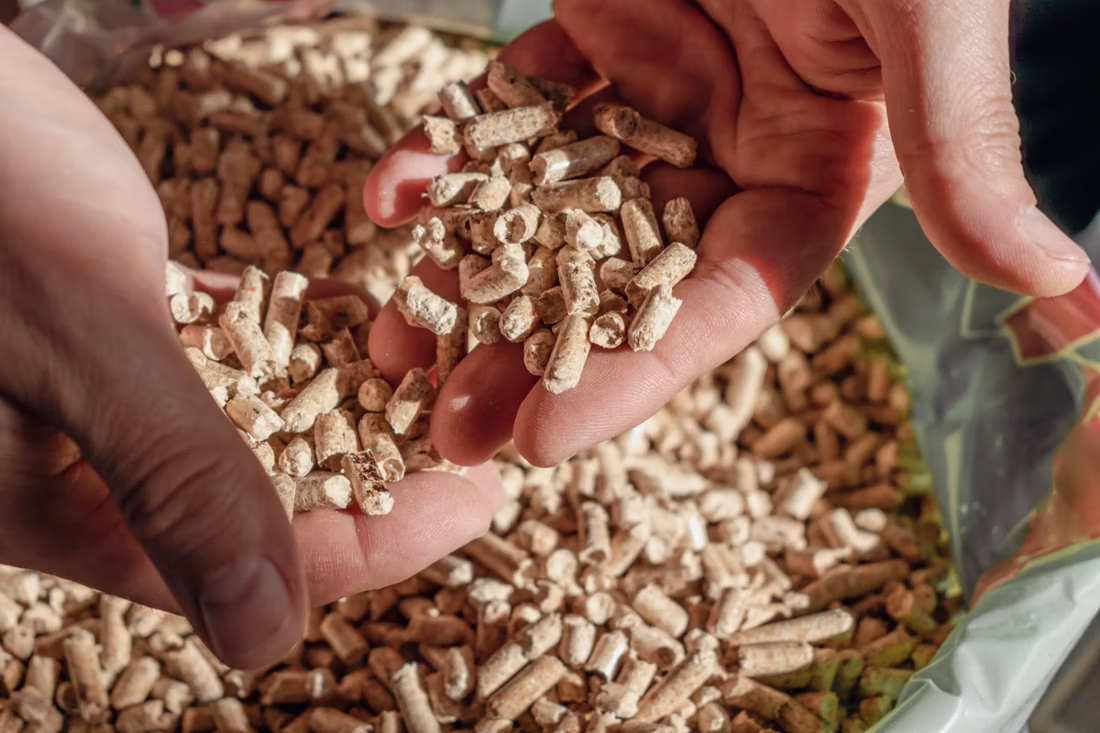
Because natural gas infrastructure doesn't reach most of the county outside of a few pockets, homeowners choosing between fuels are usually weighing wood, propane, and pellets rather than gas. Pellet stoves have carved out a real niche here: they burn cleaner and require less daily tending than cordwood, and regional suppliers like Lignetics, Hamer Pellet Fuel, and Greenway Renewable Energy keep bagged pellets available through farm-supply and co-op outlets across this part of Kentucky. With no air quality restrictions on the books in Metcalfe County, there's no burn-ban or curtailment schedule to plan around—the appliance and the fuel supply are the only variables that matter.
Three steps. No salesperson until you're ready.
Tell us about your project
Your zip code, your situation, and the fuel you're leaning toward—or let the answers point you to one.
See what's actually available
The brands dealers within 100 miles genuinely carry—real options, never a catalog mirage.
Get your dealer & Project Guide
A trusted local dealer, plus the free Project Guide & Parts List that names every component of the job.
Frequently Asked Questions
How much does a pellet stove installation cost in Metcalfe County?
Most pellet stove and insert installations in Metcalfe County land somewhere between $3,000 and $6,500, with the spread driven mainly by whether you're installing a freestanding stove that vents through an exterior wall or an insert that drops into an existing masonry fireplace using the existing flue. Homes outside Edmonton, where a dealer has to travel further for the install, sometimes see a modest trip charge added to the quote. Because pellet venting is simpler than a full masonry chimney, installs here tend to run cheaper and faster than wood stove installations in the same homes.
Pellet stove vs. wood stove—which makes more sense in Metcalfe County?
Wood is abundant here—oak, hickory, maple, and cherry are all common on Metcalfe County land, and a lot of rural households already have a source of cordwood or know someone who does. A wood stove also keeps working with the power out, which matters during ice storms that regularly knock out rural electric co-op service in this part of Kentucky. A pellet stove trades that off-grid independence for convenience: load the hopper, set the thermostat, and get consistent heat without splitting or stacking wood—but the auger and blower need electricity to run, so a battery backup or generator is worth considering if you're leaning pellet as a primary heat source.
Where can I buy pellets in or near Metcalfe County?
Bagged pellets from brands like Lignetics, Hamer Pellet Fuel, and Greenway Renewable Energy are the most common options sold through farm-supply stores and co-ops across south-central Kentucky, and dealers who sell pellet stoves typically know which local outlets keep stock through the season. Because Metcalfe County is rural, it's worth buying your season's supply early—in a small county, a handful of outlets selling out during a cold stretch isn't unusual, unlike a bigger market with multiple big-box options.
What size pellet stove do I need for my home?
Sizing comes down to square footage, insulation, and whether the stove is your primary or supplemental heat source. Small pellet stoves suit a single large room or a well-insulated cabin, mid-size units (rated for roughly 1,200-1,800 sq ft) cover most Metcalfe County farmhouses and ranch homes, and larger units make sense for open floor plans or homes without central heat backing them up. Given the county's moderate winter heating load, most homes here don't need the largest units on the market—a correctly-sized mid-range stove from a local dealer will usually outperform an oversized one that short-cycles.
Do I need a permit to install a pellet stove in Metcalfe County?
Requirements vary depending on whether you're inside Edmonton's town limits or out in unincorporated Metcalfe County. In many rural Kentucky counties, permitting for hearth appliances runs through the county's building inspector or the fiscal court/judge-executive's office rather than a dedicated building department, so it's worth a quick call before work starts. Most dealers who install pellet stoves regularly in the county can tell you exactly what paperwork, if any, applies to your address and will often handle it as part of the install.
Will my pellet stove work during a power outage?
Not without backup power. Pellet stoves rely on an electric auger to feed fuel and a blower to distribute heat, so a standard unit shuts down the moment the power drops—which matters in Metcalfe County, where ice storms and downed lines can knock out rural electric co-op service for a day or more. Homeowners who want heat during outages either pair a pellet stove with a small generator or battery backup sized to the stove's low draw, or they keep a wood stove or fireplace as a true off-grid backup. Ask your local dealer about the wattage draw on any model you're considering.
How does venting work for a pellet stove?
Pellet stoves vent through a smaller-diameter pipe than wood stoves—typically 3 or 4 inches—and can run horizontally through an exterior wall rather than needing a full vertical chimney. That makes them a good fit for manufactured homes and additions common in Metcalfe County that don't have an existing masonry chimney. A local installer will size the vent run based on the stove model and the wall or roof path, and will make sure termination clearances from windows, doors, and grade meet the stove's listing.
How often does a pellet stove need to be cleaned?
Plan on cleaning the burn pot and ash pan every few days to weekly during regular use, and a full cleaning of the venting, hopper, and internal components at least once a season—usually before the stove sees heavy use in December and January. Pellet stoves produce far less ash and creosote than wood stoves, so the maintenance burden is lighter, but skipping the seasonal deep clean can lead to feed jams or reduced heat output right when you need the stove most.
Pellet vs. propane—which is the better fit for a Metcalfe County home?
With no natural gas lines reaching most of the county, propane is the common alternative to pellet heat here. Propane fireplaces and furnaces offer instant on-off heat and don't need a fuel hopper refilled, but you're tied to tank deliveries and propane price swings. Pellet stoves cost less to run per BTU in most years, use a fuel that's stocked locally through co-ops and farm-supply outlets, and give you visible fire—but they need electricity and periodic hopper loading. Homes already running a propane tank for cooking or water heating sometimes add a propane fireplace for convenience and keep a pellet stove in a secondary living space; homes without existing propane infrastructure often find pellet the simpler path.
What's the difference between an insert and a zero-clearance fireplace?
An insert is a fireplace that slides into a pre-existing wood-burning fireplace—if you don't have one, there's nothing to insert it into. A zero-clearance fireplace is built into a framed wall, which makes it the answer for remodels and new construction. Simple test: existing masonry fireplace means insert; blank or framed wall means zero-clearance.
Can a pellet stove heat a whole house?
It genuinely can. I burned a pellet stove as my only heat source for years after a furnace died, and it kept the entire house warm. Pellets feed automatically from a hopper, so you get wood-heat economics with thermostat-style control. Two honest caveats: it needs weekly cleaning during the season, and most models need electricity to run—ask about battery backup if outages are a concern.
Can a fireplace actually lower my heating bill?
Yes—by creating a comfort zone. A furnace heats every square foot of the house just to warm the one room you're in; a gas fireplace on low burns roughly a sixth of the gas a typical furnace does. Set the furnace around 55–60 degrees as a baseline, then heat the rooms your family actually uses. Families who heat this way commonly save $20–$60 a month.
Can I install a fireplace myself?
If you're putting a fire in your house on purpose, it's best to work with an expert. Unless you're genuinely experienced in framing, gas line, vent pipe, and the national code on clearances to combustibles, have a professional do it—and ideally the same company that sells you the fireplace, so warranty, service, and liability all live under one roof.
Pellet Brands Stocked Around Metcalfe County
Manufacturers will point you to the nearest stocking dealer.
Find your pellet stove in Metcalfe County.
Tell us a bit about your home and heating goals, and we'll match you with a trusted local dealer and send over a free Project Guide & Parts List—a plan for your pellet stove or insert project in Metcalfe County, with the exact parts, including the vent kit, and our recommended local installer.
Find Your Fireplace →