
Find the Right Hearth for Your Metcalfe County Home.
Wood, gas, pellet, and electric fireplace resources for Edmonton, Summer Shade, Center, Sulphur Well, and the rest of Metcalfe County. Connect with a trusted local hearth retailer who knows what actually works in this part of south-central Kentucky.
Every Project Starts From One of These Five Situations
Mixed-humid winters and hardwood country—heating in Metcalfe County, Kentucky.
Metcalfe County sits in Climate Zone 4A with a winter heating season comparable to a moderately cold climate and an average winter low around 25°F—nowhere near the deep-freeze territory of a place like Duluth, Minnesota, but cold enough for four to five solid months of supplemental heat. The county's rolling hills and river-bottom hardwood stands produce excellent firewood: oak, hickory, maple, and cherry are all common here, and a well-seasoned load of oak or hickory burns long and hot, which matters when overnight temperatures dip into the 20s. With a population of around 2,190, this is a small, rural county—most homes here have relied on wood heat, propane, or a mix of both for generations, long before 'hearth product' was a category anyone marketed.
What you'll find on this hub: hearth retailers, service technicians, and fuel suppliers who cover Metcalfe County, whether they're based in Edmonton itself or drive in from nearby Glasgow or Bowling Green. Pick your fuel below to see local dealer options, typical installation costs, and what actually fits a home in Summer Shade, Center, Wisdom, Sulphur Well, Beaumont, Hestand, or out toward Barren River Lake. This page is the starting point—the fuel pages underneath it get specific.
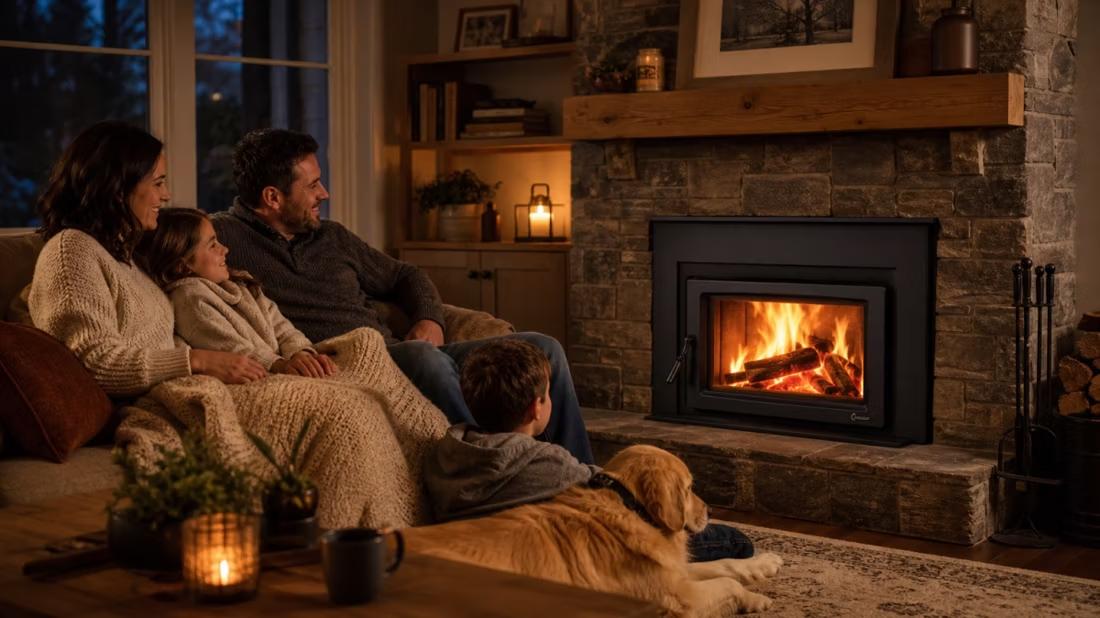
Four fuels. One honest answer for Metcalfe County.
Three steps. No salesperson until you're ready.
Tell us about your project
Your zip code, your situation, and the fuel you're leaning toward—or let the answers point you to one.
See what's actually available
The brands dealers within 100 miles genuinely carry—real options, never a catalog mirage.
Get your dealer & Project Guide
A trusted local dealer, plus the free Project Guide & Parts List that names every component of the job.
Frequently Asked Questions
Which fuel works best in Metcalfe County?
It depends on the home and how you already heat. Wood is the deep local tradition here—oak, hickory, maple, and cherry are all abundant on county land, and a properly seasoned load of oak burns hot and slow enough to carry through a 25°F night without a lot of fuss. Gas in Metcalfe County almost always means propane rather than piped natural gas, since municipal gas mains don't reach most of the county outside a few pockets—propane fireplaces and inserts give you instant heat and no wood-hauling. Pellet stoves are a solid middle ground; Lignetics, Hamer Pellet Fuel, and Greenway Renewable Energy all distribute in this part of Kentucky, so fuel isn't hard to find. Electric fireplaces work well as supplemental heat in bedrooms or additions but aren't sized to carry a whole house through winter here. Most Metcalfe County homes end up running wood or propane as the primary heat source with something smaller filling in secondary rooms.
Do I need a permit to install a fireplace in Metcalfe County?
Metcalfe County doesn't run a full-scale building-permit department the way larger Kentucky counties do, so requirements here are lighter than what you'd find in, say, Warren County (Bowling Green). That said, any new wood stove, insert, or gas appliance should still meet current Kentucky building code and EPA emissions standards, and gas line work needs a licensed gas-fitter regardless of county size. For anything structural—a new chimney chase, hearth extension, or gas line run—it's worth a call to the Metcalfe County Judge-Executive's office to confirm what, if anything, needs to be filed. Most local installers who work this county regularly already know the process and will handle it as part of the job.
Are there air quality restrictions on wood burning in Metcalfe County?
No—Metcalfe County has no flagged air quality concerns and no history of winter burn bans or inversion advisories, unlike basin or valley counties out West that regularly restrict wood burning. That doesn't mean the wood you burn doesn't matter: well-seasoned oak, hickory, or maple burns cleaner and hotter than green or softwood, which keeps creosote buildup down and gets more heat out of every load. There's no local regulatory pressure pushing you toward pellet or gas here—the choice comes down to what fits your home and how much wood-splitting you want to do.
Can one local hearth retailer handle all four fuel types?
Given Metcalfe County's small population, most of the retailers who actually cover this area are multi-fuel dealers based in Glasgow or Bowling Green who carry wood, gas (propane), pellet, and electric under one roof—it's more efficient for a rural dealer to stock a range of options than to specialize in just one. That's good news if you're not sure which fuel fits your home yet: a multi-fuel dealer can walk you through working displays and talk through the trade-offs for your specific situation, whether that's a farmhouse near Summer Shade or a place out toward Barren River Lake.
How does hearth service work in a rural county like Metcalfe?
Because Metcalfe County's population is small and spread across rural roads, most chimney sweeps and gas technicians are based in Glasgow, Tompkinsville, or Bowling Green and schedule route days out to Edmonton, Center, Wisdom, and the surrounding communities. Expect to book a bit further ahead than you would in a city—late summer through early fall (before the wood-burning season starts) is the easiest window to get an appointment, and mid-winter emergency calls take longer to reach rural addresses. If you're heating primarily with wood or propane, scheduling your annual sweep or inspection early is the simplest way to avoid a cold week waiting on a tech.
What's the typical cost range for fireplace installation across all fuel types in Metcalfe County?
Costs run in line with rural Kentucky labor and material rates rather than metro pricing. Wood stove or insert installation: roughly $3,800–$7,500 for a typical setup, more if a new chimney chase is required. Propane fireplace, insert, or stove: roughly $3,800–$8,500 depending on whether an existing propane tank and line are already in place. Pellet stove or insert: roughly $4,000–$6,500 for a standard install. Electric fireplace: $200–$2,500 for the unit itself, plus $300–$900 in labor unless it's a simple plug-and-play unit. Because dealers here often travel from Glasgow or Bowling Green, ask about any trip or travel charge up front—it's usually modest but worth confirming.
Wood, gas, pellet, or electric—how do I choose?
Match the fuel to your life, not the other way around. Wood: lowest fuel cost and total power-outage independence, but you're hauling and stacking. Gas: press a button, set a thermostat, no maintenance to speak of. Pellet: wood economics with automatic feeding, in exchange for weekly cleaning and a need for electricity. Electric: plugs in anywhere with honest supplemental heat. Nobody regrets the fuel that fits how they actually live.
How much should I budget for a fireplace?
For an average home—covering the fireplace, the vent pipe, and basic installation—a budget between $3,900 and $5,500 gives you a lot of options across wood, gas, and pellet. By the time you add finish work, gas line, and electrical, the average complete installation lands between $5,000 and $12,000 all-in. In a remodel or new build, a good rule is to put about 2.5% of the total project cost toward the fireplace.
What are the biggest mistakes people make buying a fireplace?
Five come up constantly: budgeting for the unit but not the full job (vent, gas line, electrical, finish work); drowning in options instead of starting from style and fuel; buying without an in-home preview; handing installation to a handyman instead of a pro; and giving up out of sheer indecision. Every one is avoidable with a clear plan—step one, step two, step three.
Should the dealer who sells my fireplace also install it?
Ideally, yes. A fireplace project involves vent pipe, gas line, electrical, and often tile or stone. Hire three or four separate trades and you own the liability and the game of telephone between them. One company selling and installing means one accountable party, start to finish—ask about factory training, on-time completion records, and what happens if an inspection fails.
Stove and Fireplace Dealers in Metcalfe County
Listings include WhyFire partner dealers, dealers we have verified as authorized for the brands we recommend, and established local businesses that carry hearth products. Every listing shows which one it is. The ones marked Preferred run on WhyFire's software, so they can show you real pricing and book your appointment right here. No manufacturer pays for placement. How we verify dealers →
Farmer's Energy Propane Plus
Allen County Farmer's Service
Webbtown Propane Company
Custom Fireplaces & Woodworking
Find your fireplace project in Metcalfe County.
Tell us about your home and we'll match you with a trusted local dealer and send a free Project Guide & Parts List—the exact parts, including the vent kit, and the dealer we recommend for your project in Metcalfe County.
Find Your Fireplace →