
Reliable gas heat for Menifee County's Appalachian winters.
From Frenchburg out through the hollows and ridges of Menifee County, gas fireplaces deliver instant, consistent heat without the wood-splitting. Find the right unit and get matched with a trusted local dealer.
Every Project Starts From One of These Five Situations
Clean heat for one of Kentucky's smallest, most rural counties.
Menifee County sits in the eastern Kentucky foothills near the Daniel Boone National Forest, with a year-round population small enough that you won't find a natural gas main running past most homes. In a climate zone 4A county—cold, damp winters but nothing like the deep-freeze extremes of the Upper Midwest—propane is the practical stand-in for piped gas across nearly all of the county, with tanks and regulators sized to the home rather than a utility meter on the curb.
Plenty of Menifee County homes already have a masonry fireplace built for burning oak, hickory, maple, or cherry—the hardwoods that fill the surrounding hills. A gas insert dropped into that same chimney turns a drafty, high-maintenance hearth into push-button heat, without giving up the fireplace opening you already have. Because there are no air quality restrictions on burning in the county, the decision to switch from wood to gas here comes down to convenience and daily use, not regulation.
Three steps. No salesperson until you're ready.
Tell us about your project
Your zip code, your situation, and the fuel you're leaning toward—or let the answers point you to one.
See what's actually available
The brands dealers within 100 miles genuinely carry—real options, never a catalog mirage.
Get your dealer & Project Guide
A trusted local dealer, plus the free Project Guide & Parts List that names every component of the job.
Frequently Asked Questions
How much does a gas fireplace installation cost in Menifee County?
Costs vary based on whether you're installing a direct-vent gas insert into an existing masonry fireplace or a new built-in unit with fresh gas line and venting work. A conversion into an existing chimney tends to run on the lower end, while new construction with a propane tank set and a full gas line run from the tank to the unit costs more. Because most of Menifee County runs on propane rather than piped natural gas, plan for the cost of a tank installation or hookup to an existing tank as part of the quote—a local installer will walk you through that during an in-home estimate.
Can I convert my existing wood fireplace to gas?
Yes, and it's a common project for the older masonry fireplaces found throughout Menifee County—many built decades ago for burning the oak and hickory that's abundant in the surrounding hills. A gas insert uses your existing chimney as the vent path, typically with a stainless liner run inside it, and swaps the open hearth for a sealed, efficient gas unit. The fireplace opening stays the same size and look; what changes is that you flip a switch instead of splitting and hauling wood.
Do I need natural gas, or should I use propane?
For nearly every home in Menifee County, propane is the answer—there's no natural gas utility main serving the rural parts of the county, so a propane tank (owned or leased from a regional supplier) supplies the fireplace. Most gas fireplace models sold today are configured for either fuel; your installer sets the correct orifice and regulator for propane at the time of install. If you're near Frenchburg and unsure what's actually available at your address, a local dealer can confirm before you buy.
Will my gas fireplace work during a power outage?
Most modern gas fireplaces are built to keep working when the power goes out, which matters in a rural county like Menifee where outages after ice storms or downed lines can stretch on. Units with intermittent pilot ignition (IPI) run on a small battery backup that kicks in automatically. Some brands, like Valor, skip batteries entirely—their pilot assembly generates its own electricity through a thermocouple, so the fireplace lights on demand with no power and no batteries to remember. Ask your local dealer which ignition system is on the model you're considering.
What's the difference between a gas fireplace, gas insert, and gas stove?
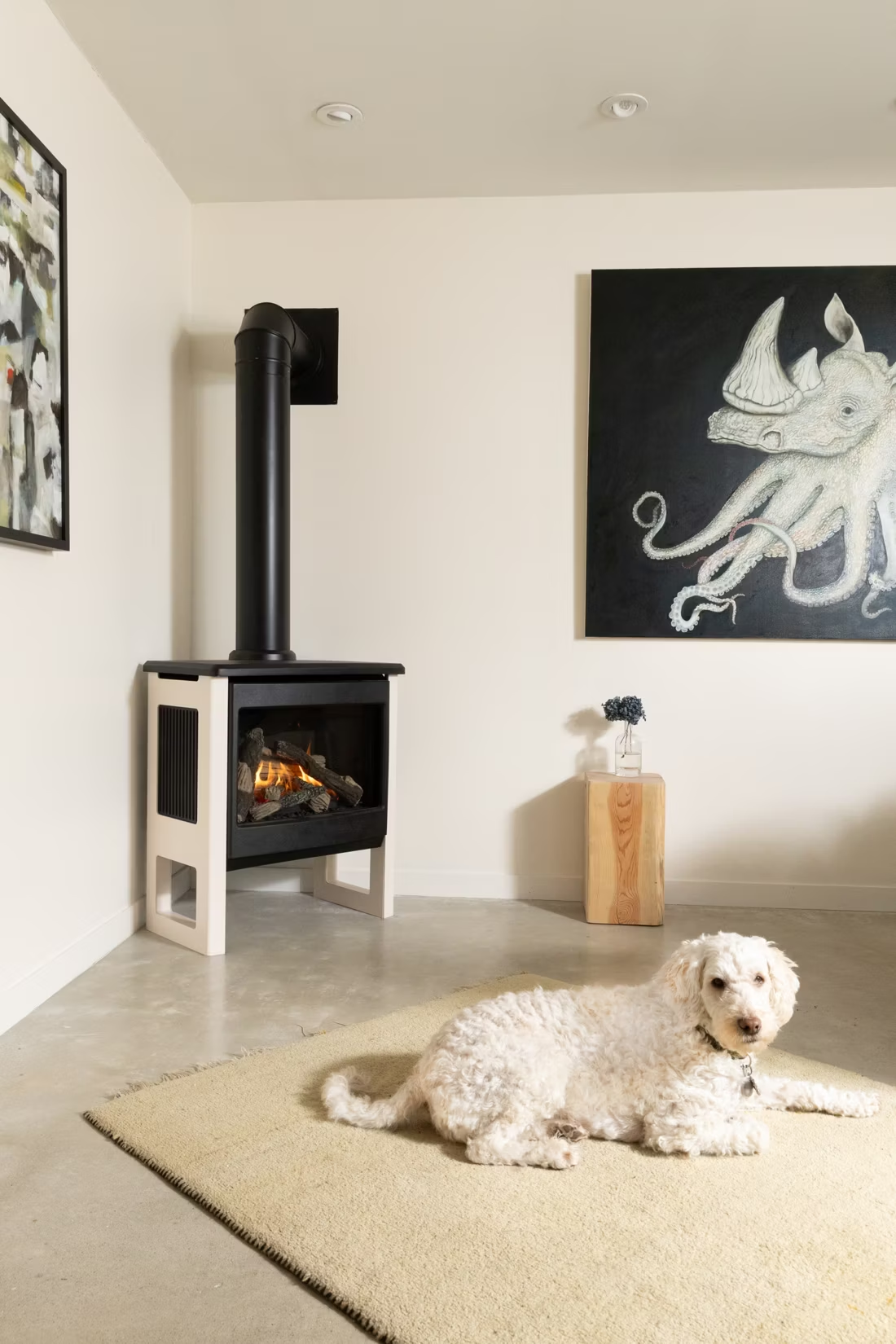
A gas fireplace is a fully built-in unit framed into a wall—the choice for new construction or a remodel without an existing hearth. A gas insert slides into an existing masonry fireplace opening and vents through the chimney you already have, which fits a lot of the older homes scattered through Menifee County. A gas stove is a freestanding cabinet-style unit that sits on the floor, similar in footprint to a wood stove but running on propane. If you've already got a fireplace built for wood, an insert is almost always the simplest and most cost-effective path.
Do I need a permit to install a gas fireplace in Menifee County?
Menifee County is small and largely unincorporated, and it doesn't run a dedicated building permitting office the way larger Kentucky counties do—most permitting questions for rural gas appliance installs go through the Menifee County Judge/Executive's office or, for gas line work specifically, a licensed propane installer who follows state fire marshal and NFPA 54 gas code requirements regardless of local permitting. A reputable local dealer will know exactly what's required for your address and handle the gas-fitting and inspection side of the work.
What's the difference between vented and vent-free gas fireplaces?
Vented (direct-vent) gas fireplaces draw combustion air from outside and exhaust it back outside through sealed venting—they're the standard, code-compliant choice everywhere, including Kentucky. Vent-free units burn fuel directly into the room air without exterior venting; they're legal in Kentucky but come with strict room-size and ventilation rules, plus an oxygen depletion sensor as a built-in safeguard. For a tightly sealed rural home in Menifee County, a direct-vent unit is the safer, more universally recommended option, and it's what most local dealers will steer you toward for a primary heat source.
How often should my gas fireplace be serviced?
Plan on an annual inspection, ideally before the coldest stretch of winter sets in. A technician checks the burner, pilot assembly, gas connections, and venting, and cleans the glass and interior. This matters as much for propane-fed units as it does for natural gas—a poorly maintained regulator or pilot assembly is one of the more common service calls in propane-heavy areas like Menifee County. Most local hearth and propane service companies can bundle this with a tank inspection or delivery visit.
Gas vs. wood—which is right for my Menifee County home?
Wood has deep roots here—oak, hickory, maple, and cherry are all plentiful in the surrounding Daniel Boone National Forest hills, wood heat runs without electricity during outages, and fuel cost is low if you're cutting your own. Gas trades that self-sufficiency for convenience: instant on-off operation, no splitting or hauling, and a consistent flame with no ash to clean up. A lot of Menifee County homes end up with both—gas in the main living space for everyday use, and a wood stove or fireplace elsewhere as backup heat when the power's out or for the ritual of a real fire.
Can I put a TV above my fireplace?
Yes—with an asterisk. Fireplaces are hot and TVs don't like heat. Either put a mantel between them to deflect rising warmth, or choose a fireplace with heat-management technology that creates a cool zone on the wall above—the wall stays around 125 degrees, barely warm, while the room still gets full heat. If you like clean lines and don't want a mantel, heat management is the answer.
What's the difference between an insert and a zero-clearance fireplace?
An insert is a fireplace that slides into a pre-existing wood-burning fireplace—if you don't have one, there's nothing to insert it into. A zero-clearance fireplace is built into a framed wall, which makes it the answer for remodels and new construction. Simple test: existing masonry fireplace means insert; blank or framed wall means zero-clearance.
Can I install a fireplace myself?
If you're putting a fire in your house on purpose, it's best to work with an expert. Unless you're genuinely experienced in framing, gas line, vent pipe, and the national code on clearances to combustibles, have a professional do it—and ideally the same company that sells you the fireplace, so warranty, service, and liability all live under one roof.
Can a fireplace actually lower my heating bill?
Yes—by creating a comfort zone. A furnace heats every square foot of the house just to warm the one room you're in; a gas fireplace on low burns roughly a sixth of the gas a typical furnace does. Set the furnace around 55–60 degrees as a baseline, then heat the rooms your family actually uses. Families who heat this way commonly save $20–$60 a month.
Get matched with a Menifee County gas fireplace dealer.
Tell us a bit about your home and we'll put together a free Project Guide & Parts List—the right unit, the vent kit, and a trusted local dealer to install it.
Find Your Fireplace →