
Electric heat, sized right for Menifee County homes.
No chimney, no gas line, no permit headaches—just a fireplace or insert that plugs in and works, whether you're in an old farmhouse off KY-36 or a cabin rental near the Gorge. I'll match you with a local dealer who installs it right.
Every Project Starts From One of These Five Situations
Reliable heat without the chimney work.
Menifee County is a small, heavily wooded corner of eastern Kentucky's Appalachian Plateau, bordering the Daniel Boone National Forest and the Red River Gorge. It's home to just a few hundred households, most clustered around Frenchburg or scattered along KY-36 and KY-11 through the hollows. Wood heat runs deep here—oak, hickory, maple, and cherry are all cut locally and split for winter—but not every home or every room is set up for a wood stove or an open masonry fireplace, and that's where electric earns its place.
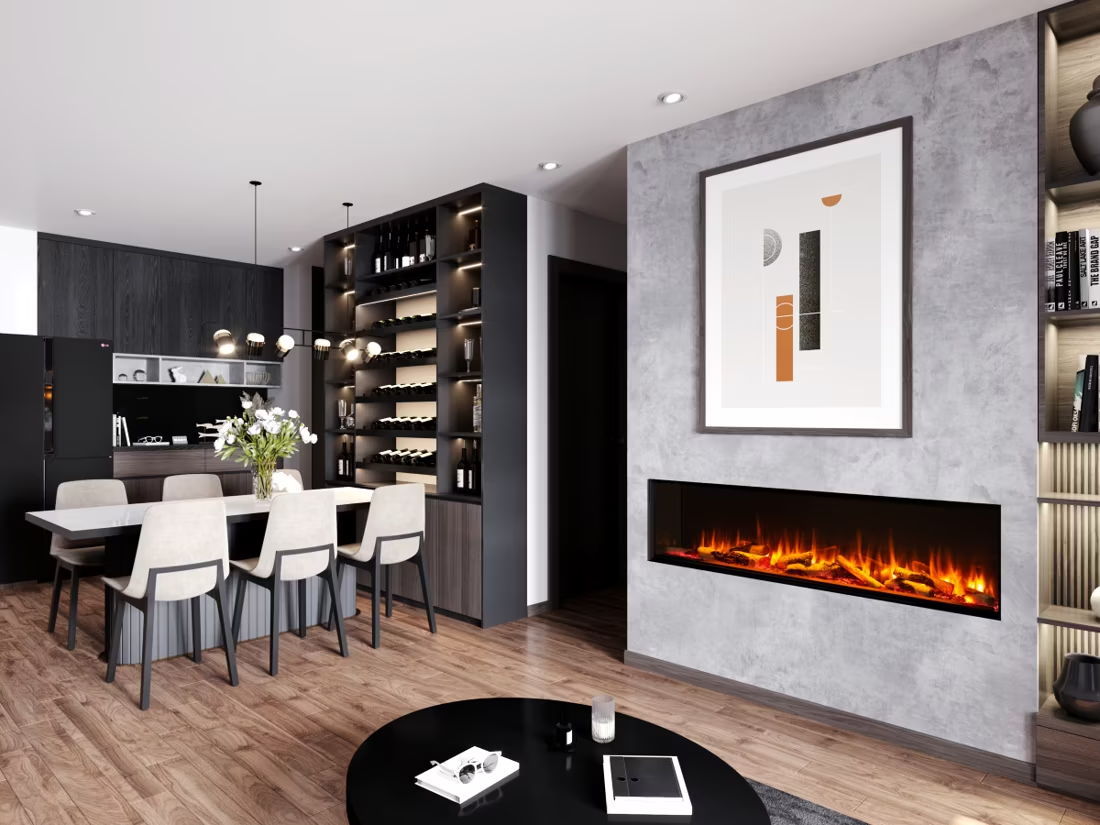
Zone 4A winters here bring real cold, though nothing close to the extended sub-zero stretches of a place like Duluth or Bismarck. For a lot of Menifee County households, an electric fireplace or insert isn't the primary heat source—it's the unit that takes the chill off a back bedroom, a den, or a manufactured home addition without running new gas line or cutting a hole for a chimney. It's also a common choice in the short-term rental cabins that have sprung up near the Gorge, where owners want the look and warmth of a fire for guests without the liability, chimney maintenance, or wood delivery that comes with real wood burning.
Three steps. No salesperson until you're ready.
Tell us about your project
Your zip code, your situation, and the fuel you're leaning toward—or let the answers point you to one.
See what's actually available
The brands dealers within 100 miles genuinely carry—real options, never a catalog mirage.
Get your dealer & Project Guide
A trusted local dealer, plus the free Project Guide & Parts List that names every component of the job.
Frequently Asked Questions
How much does an electric fireplace installation cost in Menifee County?
Plug-in electric fireplaces and inserts are the cheapest hearth option in Menifee County by a wide margin, generally running $300 to $1,200 installed since there's no venting, gas line, or chimney work involved. A simple freestanding or wall-mount unit that plugs into an existing outlet is on the low end. A built-in unit that needs a new dedicated circuit run by a licensed electrician—common in older farmhouses along KY-36 that weren't wired for a second heat source—will run toward the higher end once labor is factored in. Local dealers can tell you quickly which category your home falls into during a walkthrough.
Is an electric fireplace enough to heat a room in Menifee County's winters?
For zone heating, yes. Most electric units are rated between 4,000 and 5,000 BTUs and are built to take the edge off a single room—a den, bedroom, or add-on—rather than replace whole-home heat. In Menifee County's Zone 4A climate, that's usually enough for supplemental warmth on the coldest days, especially in a home that already has baseboard, a wood stove, or a furnace doing the heavy lifting elsewhere. If you're trying to heat an entire manufactured home or an uninsulated addition as the sole heat source, talk to a local dealer about a larger insert or a different fuel—electric zone heat has real limits once outside temperatures drop into the teens for days at a time.
Do I need a permit to install an electric fireplace in Menifee County?
Usually not for a plug-in unit—there's no venting or combustion involved, so most jurisdictions, including Menifee County, don't require a building permit for a freestanding or insert model that plugs into an existing outlet. If you're adding a hardwired built-in that requires a new dedicated circuit, that electrical work should go through a licensed electrician, and depending on scope may call for an electrical permit. Either way, it's far less red tape than a wood stove installation, which requires a building permit and EPA-certified equipment, or a gas unit, which requires a gas-fitter and line permit.
Can an electric insert go into my existing masonry fireplace?
Yes, and it's one of the more common projects for older Menifee County homes with an existing but rarely-used masonry fireplace. An electric insert slides into the firebox opening and plugs into a nearby outlet (or a new outlet installed inside the firebox by an electrician), giving you flame-effect ambiance and supplemental heat without opening the chimney flue or dealing with creosote and sweeps. It's a popular option for owners who inherited a fireplace they don't want to burn wood in but still want the look of a fire—including some of the vacation cabins near the Red River Gorge.
What will an electric fireplace cost to run on my electric bill?
Most electric fireplace inserts draw around 1,500 watts on the heater setting, which works out to roughly 12 to 20 cents per hour of heating use, depending on your rate through Fleming-Mason Energy Cooperative or whichever provider serves your part of the county. Run a few hours an evening through the coldest months and you're typically looking at $15 to $40 a month in added electric cost—far less than running a whole-home HVAC system harder, and with the flexibility to turn it off the moment you leave the room. The flame effect alone, with the heater off, uses only a few watts.
What's the difference between an electric fireplace, insert, and wall-mount unit?
A freestanding electric fireplace looks like a stove or mantel unit and can sit almost anywhere with an outlet nearby—no existing firebox needed. An electric insert is built to slide into an existing masonry fireplace opening, which is common in Menifee County's older homes around Frenchburg. A wall-mount unit hangs like a flat-screen TV and works well in smaller rooms, cabins, or additions where floor space is tight. All three plug into standard household power (some larger built-ins need a dedicated circuit), and none require venting of any kind.
Will my electric fireplace work if the power goes out?
No—this is the honest tradeoff. Electric fireplaces run entirely on household power, so a power outage means no flame effect and no heat, unlike a wood stove that keeps working regardless of the grid. For rural Menifee County homes where outages can stretch longer than in town, a lot of households keep a wood stove or gas unit as their real winter backup and use electric strictly for convenience, ambiance, or zone heating in rooms the primary system doesn't reach well.
Electric vs. wood—which makes more sense for my Menifee County home?
Wood is the deeper local tradition here—oak, hickory, maple, and cherry are all cut and split locally, and a wood stove keeps working through the power outages that hit rural stretches of the county harder than they hit Frenchburg proper. Wood also puts out more real heat per dollar once you're cutting your own or buying cheap from a neighbor. Electric wins on convenience: no ash, no chimney sweep, no permit for a plug-in unit, and instant on-off operation that fits a spare bedroom or a Gorge-area rental cabin better than a firebox. Plenty of Menifee County homes run both—wood as the workhorse, electric where a chimney or venting run just isn't practical.
Are electric fireplaces a good fit for cabins and rental properties near the Red River Gorge?
Yes—it's one of the more common uses in this part of Menifee County. Absentee owners running short-term rental cabins near the Gorge like electric units because there's no chimney to maintain, no wood to stock between guest turnovers, and no fire risk from an unattended flame—the heater and flame effect run on a simple remote or wall switch. A wall-mount or insert model gives guests the ambiance they're looking for on a cool evening without the liability or upkeep of a real wood-burning unit, which matters for owners who aren't on-site to manage it.
Do electric fireplaces actually produce heat?
Yes—most put out around 4,800–5,000 BTUs from a standard outlet, which comfortably warms a bedroom, office, or den as a comfort-zone heater. What they won't do is carry a whole house the way wood, gas, or pellet can. Think of electric as ambiance-first with honest supplemental heat: flames on with no heat in July, flames plus warmth in January.
Can I put a TV above my fireplace?
Yes—with an asterisk. Fireplaces are hot and TVs don't like heat. Either put a mantel between them to deflect rising warmth, or choose a fireplace with heat-management technology that creates a cool zone on the wall above—the wall stays around 125 degrees, barely warm, while the room still gets full heat. If you like clean lines and don't want a mantel, heat management is the answer.
Can a fireplace actually lower my heating bill?
Yes—by creating a comfort zone. A furnace heats every square foot of the house just to warm the one room you're in; a gas fireplace on low burns roughly a sixth of the gas a typical furnace does. Set the furnace around 55–60 degrees as a baseline, then heat the rooms your family actually uses. Families who heat this way commonly save $20–$60 a month.
Can I install a fireplace myself?
If you're putting a fire in your house on purpose, it's best to work with an expert. Unless you're genuinely experienced in framing, gas line, vent pipe, and the national code on clearances to combustibles, have a professional do it—and ideally the same company that sells you the fireplace, so warranty, service, and liability all live under one roof.
Find your electric fireplace in Menifee County.
Tell us a bit about your home—or your cabin near the Gorge—and I'll put together a free Project Guide & Parts List with the right unit and a trusted local dealer to install it.
Find Your Fireplace →