
Reliable Heat for Every Home in Menifee County.
Wood, gas, pellet, and electric fireplace resources for Frenchburg and the rural hollows and hillsides that make up Menifee County—including the cabins and vacation rentals near the Red River Gorge. Find the right unit and connect with a trusted local hearth retailer.
Every Project Starts From One of These Five Situations
Hardwood heat in the hill country around the Red River Gorge.
Menifee County sits in the eastern Kentucky knobs, with the Red River Gorge and Natural Bridge State Resort Park cutting through its northern edge. The county seat, Frenchburg, anchors a landscape of steep hollows and second-growth hardwoods—oak, hickory, maple, and cherry are the dominant species, and most rural homes here have a woodlot within walking distance. Climate zone 4A means a real but moderate heating season—colder and longer than the Gulf South, but nowhere near the extended sub-zero stretches of a place like Burlington, Vermont. Winters bring enough cold to make a working fireplace or stove a practical necessity for much of the county, not just an amenity.
With a population under a thousand, Menifee County doesn't have a hearth retailer on every corner—most residents drive toward Mount Sterling, Morehead, or Winchester for showroom visits, then have work done locally or have installers travel in. This hub rounds up retailers, service technicians, and fuel suppliers who serve Menifee County, whether they're based here, in Frenchburg, or in a neighboring town. Pick your fuel below for local dealers, typical installation costs, and unit recommendations—whether you're heating a farmhouse off KY-36 or outfitting a cabin near the Gorge with a gas fireplace for weekend guests.
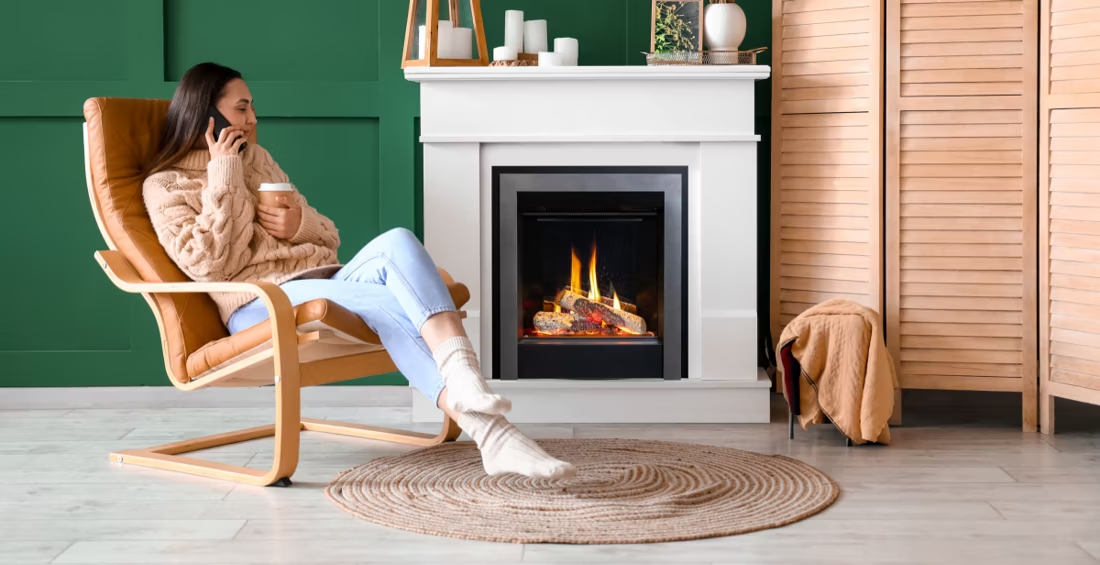
Four fuels. One honest answer for Menifee County.
Three steps. No salesperson until you're ready.
Tell us about your project
Your zip code, your situation, and the fuel you're leaning toward—or let the answers point you to one.
See what's actually available
The brands dealers within 100 miles genuinely carry—real options, never a catalog mirage.
Get your dealer & Project Guide
A trusted local dealer, plus the free Project Guide & Parts List that names every component of the job.
Frequently Asked Questions
Which fuel works best in Menifee County?
It depends on the property, but wood is the practical default for a lot of Menifee County homes. Oak, hickory, maple, and cherry are all abundant locally, and many rural households have a woodlot on their own land or a neighbor who does—that keeps fuel costs low for a modern EPA-certified wood stove or insert. Propane is the common convenience fuel here since municipal natural gas service is limited outside the larger towns; a propane fireplace or insert gives instant heat without splitting and stacking wood. Pellet stoves are a solid middle option—less labor than wood, and regional brands like Lignetics, Hamer Pellet Fuel, and Greenway Renewable Energy keep supply reasonably close. Electric fireplaces show up most often in cabins and vacation rentals near the Red River Gorge, where owners want ambiance without a chimney or gas line. Most full-time residents end up with wood or propane as the primary heat source and something smaller—pellet or electric—in a secondary room.
Do I need a permit to install a fireplace in Menifee County?
In most cases, yes, for anything involving new venting, a chimney, or gas line work—that typically means going through the county building department in Frenchburg before installation. Wood stoves and inserts should meet current EPA emissions standards, and a licensed installer can confirm your unit qualifies. Propane installations need a certified gas-fitter for the tank hookup and line work even if the fireplace itself doesn't require a separate structural permit. Electric fireplaces are usually the simplest path—plug-in units generally don't need a permit, though a built-in electric fireplace with new wiring might. Given how rural much of the county is, many installers here are used to coordinating permitting themselves rather than leaving it to the homeowner, so ask upfront when you get a quote.
Are there air quality restrictions on wood burning in Menifee County?
No—Menifee County has no listed air quality non-attainment issues or winter inversion problems the way some western basin counties do. That's one advantage of the terrain here: the hills and hollows don't trap smoke the way a valley floor can. That said, it's still worth installing an EPA-certified stove rather than an old uncertified unit—you'll burn less wood for the same heat, and creosote buildup (a real concern with local hardwoods like oak and hickory if not seasoned properly) stays more manageable. If you're burning brush or yard debris separately from your stove, check with the county on any local burn-day rules, since those are usually handled separately from stove installation.
Can one local hearth retailer handle all four fuel types?
Given Menifee County's small population, there isn't a large multi-fuel showroom sitting in Frenchburg—most dealers that carry wood, gas, pellet, and electric side by side are based in nearby towns like Mount Sterling, Morehead, or Winchester and service Menifee County as part of their regular territory. A handful of smaller local suppliers focus on one or two fuels, most often firewood and propane. If you want to compare fuel types side by side with a working display, the regional retailers are usually the better stop; if you already know you want wood or propane and just need installation, a closer local installer may be quicker to schedule.
How does fireplace service work in a small, rural county like this?
Most technicians who service Menifee County are based in a neighboring town and drive in on a route basis rather than keeping a local storefront—that's true for chimney sweeps, propane service techs, and pellet stove specialists alike. Expect to schedule a bit further ahead than you would in a larger town, especially during the pre-winter rush in September and October, and factor in a modest travel charge for the more remote hollows off the main routes. Because wood heat is so common here, annual chimney sweeping matters—creosote from oak and hickory can build up faster than with softer woods if a stove runs cool or the wood isn't fully seasoned.
What's the typical cost range for fireplace installation across all fuel types in Menifee County?
Costs run a bit lower here than in metro markets, partly because labor and travel are the main variables rather than gas line infrastructure. Wood stove or insert installation: roughly $3,800–$7,500 for a typical single-flue install, more if new chimney chase construction is involved. Propane fireplace, insert, or stove: $4,000–$9,500, with tank setup and line run adding to the lower end of that range if there's no existing propane service. Pellet stove or insert: $4,000–$6,800 for most installs. Electric fireplace: $200–$2,800 for the unit itself, plus $300–$1,000 in labor for anything beyond a simple plug-in—common for cabin and rental installs near the Red River Gorge. Get a local quote before budgeting, since travel distance can shift the number more here than in a denser county.
What is an in-home preview and do I need one?
It's a visit where a hearth professional measures your space, confirms the model you picked actually works in your home, and walks the specs—framing, gas line, venting, finish work—before anything is ordered. Some details you just can't know until you see the house. Never make a down payment without one; it's the single most-skipped step that burns buyers.
Can a fireplace actually lower my heating bill?
Yes—by creating a comfort zone. A furnace heats every square foot of the house just to warm the one room you're in; a gas fireplace on low burns roughly a sixth of the gas a typical furnace does. Set the furnace around 55–60 degrees as a baseline, then heat the rooms your family actually uses. Families who heat this way commonly save $20–$60 a month.
Should the dealer who sells my fireplace also install it?
Ideally, yes. A fireplace project involves vent pipe, gas line, electrical, and often tile or stone. Hire three or four separate trades and you own the liability and the game of telephone between them. One company selling and installing means one accountable party, start to finish—ask about factory training, on-time completion records, and what happens if an inspection fails.
How much should I budget for a fireplace?
For an average home—covering the fireplace, the vent pipe, and basic installation—a budget between $3,900 and $5,500 gives you a lot of options across wood, gas, and pellet. By the time you add finish work, gas line, and electrical, the average complete installation lands between $5,000 and $12,000 all-in. In a remodel or new build, a good rule is to put about 2.5% of the total project cost toward the fireplace.
Stove and Fireplace Dealers in Menifee County
Listings include WhyFire partner dealers, dealers we have verified as authorized for the brands we recommend, and established local businesses that carry hearth products. Every listing shows which one it is. The ones marked Preferred run on WhyFire's software, so they can show you real pricing and book your appointment right here. No manufacturer pays for placement. How we verify dealers →
Jackson Propane-Beattyville
D & J True Value Hardware
Hardy Gas Company Inc.
Clark Propane Plus
Find your fireplace in Menifee County.
Tell us about your home and we'll match you with a trusted local dealer and send a free Project Guide & Parts List—the exact parts, vent kit included, and the right local installer for your Menifee County project.
Find Your Fireplace →