
Consistent pellet heat for Meade County's changing winters.
From Brandenburg to the Ohio River bottoms, Meade County winters run cold enough to matter but short enough that hauling and stacking cordwood isn't for everyone. A pellet stove gives you thermostat-style control without the wood pile. We'll match you with a trusted local dealer who can size the right unit and get it installed correctly.
Every Project Starts From One of These Five Situations
Set-it-and-forget-it heat for a county still built on oak and hickory.
Meade County sits in climate zone 4A along the Ohio River in north-central Kentucky, with an average winter low around 23°F and a winter heating season on the moderate-to-hefty side. That's a real heating season—nowhere near the extremes of a Duluth, MN or International Falls, MN, but enough that most homes here run a supplemental or primary heat source from November through March, sometimes longer when an Ohio Valley ice storm settles in. Wood heat has deep roots in this part of Kentucky, thanks to abundant oak, hickory, maple, and cherry across the county's timberland, and plenty of households still burn cordwood. But not everyone wants to fell, split, stack, and feed a wood stove every few hours.
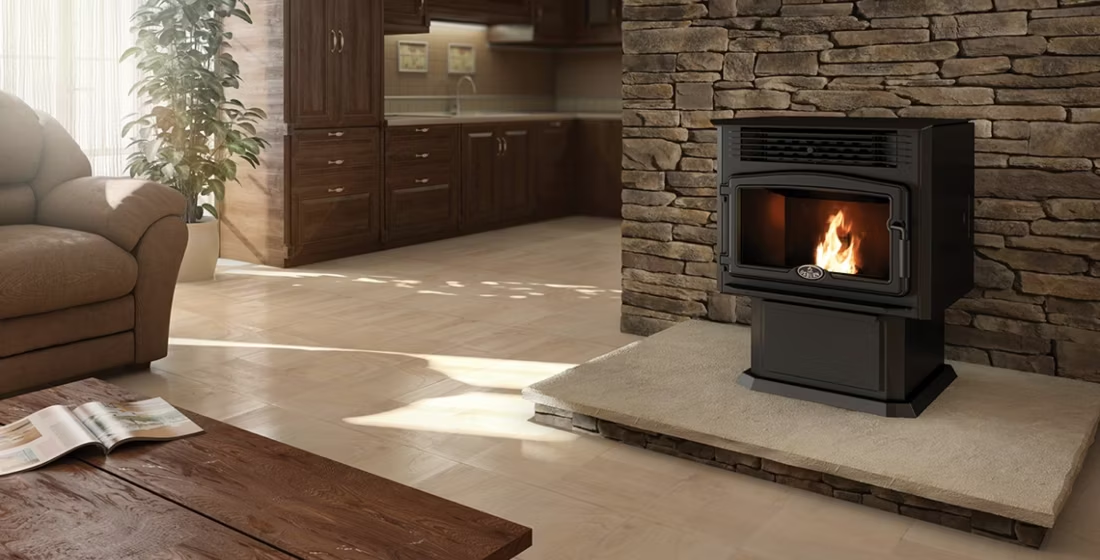
That's where pellet appliances fit in. A pellet stove or insert loads from a hopper, ignites automatically, and holds a steady temperature for a day or more between refills—a meaningful difference for anyone working, traveling, or just tired of tending a fire. Bagged pellets from regional producers like Lignetics, Hamer Pellet Fuel, and Greenway Renewable Energy are sold through farm stores and hearth dealers throughout this part of Kentucky, so fuel supply isn't a constraint here the way it can be in more remote counties. With no air quality restrictions on wood or pellet burning in Meade County, the choice really comes down to how hands-on you want your heat to be—and a local dealer can walk you through both options.
Three steps. No salesperson until you're ready.
Tell us about your project
Your zip code, your situation, and the fuel you're leaning toward—or let the answers point you to one.
See what's actually available
The brands dealers within 100 miles genuinely carry—real options, never a catalog mirage.
Get your dealer & Project Guide
A trusted local dealer, plus the free Project Guide & Parts List that names every component of the job.
Frequently Asked Questions
How much does a pellet stove installation cost in Meade County?
A freestanding pellet stove installation in Meade County typically runs $2,500 to $5,500, including the unit, the small-diameter PL vent kit through an exterior wall, and labor. A pellet insert going into an existing masonry fireplace usually costs more—often $3,500 to $7,000—since the installer has to adapt the liner and hearth to the insert's dimensions. Costs on either end depend on the stove's hopper capacity, whether electrical work is needed for the auger and blower, and how much wall or masonry modification the install requires. A local dealer can give you a firm number after seeing your home.
What size pellet stove do I need for a Meade County home?
With an average winter low around 23°F and a winter heating season on the moderate-to-hefty side, Meade County's winters are real but moderate compared to a place like Fargo, ND or Duluth, MN. Most homes in the 1,200 to 2,000 square foot range do well with a mid-size pellet stove rated for supplemental or primary heat in that footprint. Larger, more open floor plans or homes along the Ohio River bottoms that catch more wind may need a bigger hopper and higher BTU output to keep up on the coldest nights. A local dealer will factor in your insulation, ceiling height, and layout before recommending a specific model.
Where can I buy wood pellets in Meade County?
Pellets are widely available through farm supply stores and hearth dealers in this part of Kentucky, with regional brands like Lignetics, Hamer Pellet Fuel, and Greenway Renewable Energy commonly stocked. Prices vary by season and supplier, but bagged pellets in this region generally run in the neighborhood of $220 to $280 per ton when bought by the pallet—buying early in the fall, before cold weather drives up demand, usually gets you the better price. Hamer Pellet Fuel is manufactured in Kentucky from hardwood sawdust, which some Meade County burners prefer for consistency and lower ash content.
Pellet stove vs. wood stove—which makes more sense in Meade County?
Meade County has no shortage of good burning wood—oak, hickory, maple, and cherry are all common locally, and plenty of households still cut, split, and season their own firewood. A wood stove is the better fit if you have access to that wood, don't mind the physical work, and want a heat source that runs without electricity during an ice storm outage. A pellet stove is the better fit if you'd rather load a hopper once a day, set a thermostat, and skip the splitting maul entirely—at the cost of needing power to run the auger and blower. Both are genuinely practical choices here; it comes down to how much manual work you want in your heating routine.
Do I need a permit to install a pellet stove in Meade County?
Most pellet stove and insert installations require a building permit through the local building or code enforcement office serving Meade County, largely to confirm the venting clearances and any electrical work meet code. Because pellet stoves vent through a small-diameter PL pipe rather than a full masonry chimney, the permitting and inspection process is usually quicker and simpler than a wood stove install. Most established hearth dealers handle the permit paperwork as part of the installation, so you typically don't have to navigate it yourself.
What are the best pellet stove brands available near Meade County?
Dealers serving this part of Kentucky commonly carry brands like Harman, Englander, and US Stove—all of which offer models with auto-ignition, thermostat control, and hopper capacities suited to Meade County's moderate winters. Harman units tend to run at the higher end with more programmable features and larger hoppers for multi-day burns; Englander and US Stove offer more budget-friendly options that still perform well in a 4A climate. The right pick depends on your square footage and how much automation you want—a local dealer can walk you through the lineup in person.
Will my pellet stove work if the power goes out?
No—pellet stoves rely on an electric auger to feed fuel and a blower to distribute heat, so they stop running the moment power is lost. That matters in Meade County, where winter ice storms along the Ohio Valley can knock out power for hours or, in bad years, days. Some homeowners pair their pellet stove with a small battery backup or portable generator sized to run the auger and blower during an outage. If reliable heat during power loss is a priority, a wood stove or a battery-backed gas unit may be worth considering alongside pellet as a backup plan.
How is a pellet stove vented, and is it easier than a wood stove chimney?
Pellet stoves vent through a small 3- or 4-inch PL (pellet vent) pipe that typically runs horizontally through an exterior wall, rather than requiring a full Class A chimney straight up through the roof. This makes pellet installs generally faster and less invasive than wood stove installs, especially in homes without an existing chimney—a common situation in Meade County's newer construction. Pellet inserts going into an existing masonry fireplace use a liner sized down to fit the smaller vent diameter. Either way, proper clearances and termination point placement still matter, which is why a certified installer should handle the work rather than a general handyman.
Pellet stove vs. propane heat—which is more cost-effective in Meade County?
Natural gas service is limited outside the more built-up parts of Meade County, so many rural homes here rely on propane for backup or supplemental heat. Propane prices fluctuate with the market and can spike during cold snaps, while pellet fuel from regional suppliers like Lignetics and Hamer Pellet Fuel tends to hold a more stable price through the winter. Pellet stoves also give you the visual warmth of a real flame, which propane furnaces don't. For homes already plumbed for propane with a working furnace, pellet often makes more sense as a supplemental, cost-cutting zone-heat option in the main living space rather than a full replacement.
What's the difference between an insert and a zero-clearance fireplace?
An insert is a fireplace that slides into a pre-existing wood-burning fireplace—if you don't have one, there's nothing to insert it into. A zero-clearance fireplace is built into a framed wall, which makes it the answer for remodels and new construction. Simple test: existing masonry fireplace means insert; blank or framed wall means zero-clearance.
Are pellet stoves loud?
They make some noise—there are two fans running plus an auger motor that turns as it feeds pellets. But there's a real range: premium models are engineered quiet, and the best offer a whisper-quiet mode you can comfortably watch TV next to. If noise matters in your room, ask to hear a stove running before you buy—it's a five-minute test that saves years of annoyance.
What is an in-home preview and do I need one?
It's a visit where a hearth professional measures your space, confirms the model you picked actually works in your home, and walks the specs—framing, gas line, venting, finish work—before anything is ordered. Some details you just can't know until you see the house. Never make a down payment without one; it's the single most-skipped step that burns buyers.
Does a fireplace add value to my home?
On average, a fireplace adds back to the home about the same amount you spent installing it. Add the monthly savings from heating the rooms you actually use instead of the whole house—often hundreds of dollars a year—and the value case is strong before you even count what a fire does for how your family uses the room.
Pellet Brands Stocked Around Meade County
Manufacturers will point you to the nearest stocking dealer.
Find your pellet stove in Meade County.
Tell us a bit about your home and heating goals, and we'll match you with a trusted local dealer serving Meade County—plus a free Project Guide & Parts List with the exact parts, vent kit, and recommended dealer for your pellet project.wait
Find Your Fireplace →