
Electric heat that fits any room in Meade County.
From Brandenburg along the Ohio River to Doe Valley and the Fort Knox border communities, electric fireplaces give Meade County homes real zone warmth with no chimney, no venting, and no permit headaches. Find the right unit and connect with a trusted local dealer.
Every Project Starts From One of These Five Situations
Zone heat that just plugs in.
Meade County sits in climate zone 4A with an average winter low around 23°F and a real but moderate heating season—nowhere near the punishing cold of a Madison, Wisconsin winter. That matters for how homeowners here actually use supplemental heat. Between Brandenburg's older river-view homes, the manufactured and mobile housing common throughout rural Meade County, and the steady turnover of Fort Knox-area rentals in Guston and Ekron, a lot of households need a heat source that doesn't require a chimney, a gas line, or a big renovation.
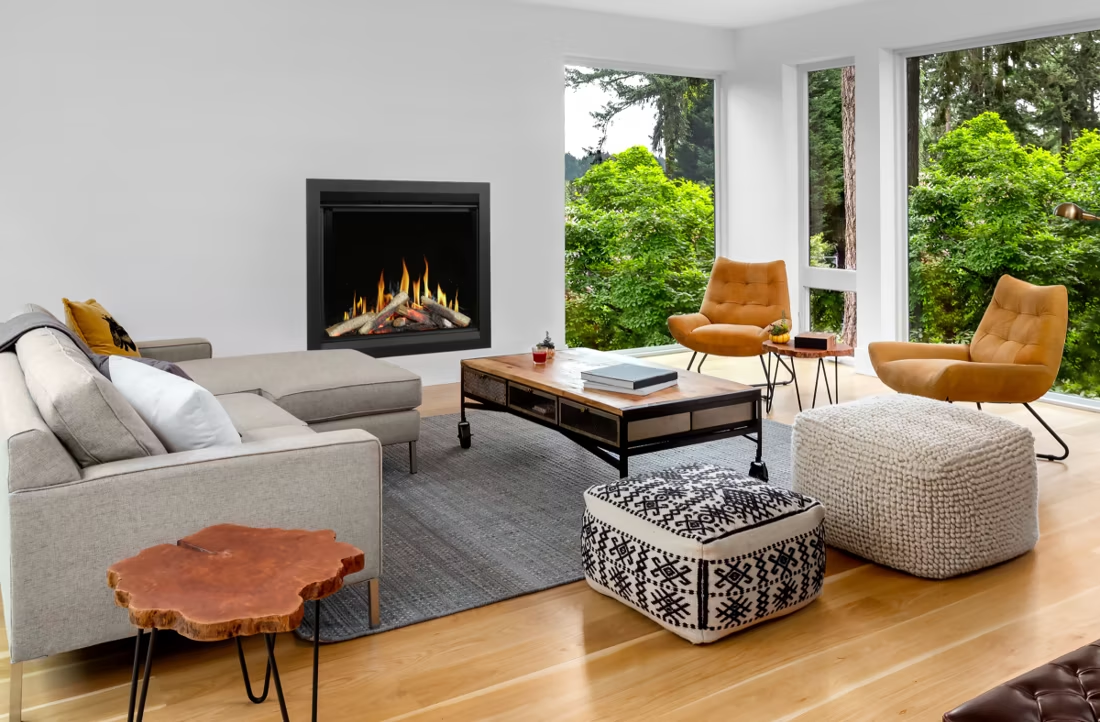
Electric fireplaces solve that directly. A plug-in insert or freestanding unit can go into an existing masonry firebox in a Brandenburg farmhouse, into a bonus room in Payneville, or into a Doe Valley lake cabin without any venting work—and most units run on a standard 120V outlet, though larger built-ins sometimes call for a dedicated circuit from an electrician. Meade County RECC serves most of the county's electric load, and running an electric fireplace for zone heat in one or two rooms is typically far cheaper than heating a whole house through a central system on the coldest nights. No combustion also means no chimney fire risk, no wood smoke, and no CO concerns—a real advantage in older homes with kids, pets, or aging masonry chimneys nobody wants to reline.
Three steps. No salesperson until you're ready.
Tell us about your project
Your zip code, your situation, and the fuel you're leaning toward—or let the answers point you to one.
See what's actually available
The brands dealers within 100 miles genuinely carry—real options, never a catalog mirage.
Get your dealer & Project Guide
A trusted local dealer, plus the free Project Guide & Parts List that names every component of the job.
Frequently Asked Questions
How much does an electric fireplace installation cost in Meade County?
A plug-in electric insert or freestanding electric stove is the cheapest option—many units simply plug into an existing outlet and can be installed by the homeowner or a handyman in under an hour. Built-in electric fireplaces or units that call for a dedicated 20-amp circuit run higher once an electrician is involved, especially in older Brandenburg or Guston homes with dated wiring that needs an upgrade first. Because there's no venting, no gas line, and usually no masonry work, electric installs in Meade County are consistently the lowest-cost hearth option compared to wood or gas—local dealers can quote a firm number once they know your unit and your home's electrical panel.
Will an electric fireplace actually keep a room warm in a Meade County winter?
Yes, for the room it's in. With average winter lows around 23°F and a heating season well short of what places like Duluth or Minneapolis see, most Meade County homes don't need a full-house electric heating strategy—they need reliable supplemental heat for a living room, sunroom, or bonus space. A typical electric insert puts out 4,000–5,000 BTUs on the heat setting, enough to comfortably warm a single room or open living area while the rest of the house runs on central heat. It won't replace a furnace on a hard freeze night, but paired with zone heating habits, it noticeably cuts what the central system has to do.
Can I install an electric fireplace in a mobile or manufactured home?
Electric is generally the easiest and safest fireplace option for manufactured housing, which is common throughout rural Meade County—Battletown, Ekron, and the areas outside Brandenburg all have a good number of manufactured homes. Because there's no combustion, no chimney, and no venting penetration through the roof or wall, electric units avoid the structural and clearance issues that come with wood or gas in a manufactured home. The main thing to check is your panel capacity if you're going with a hardwired built-in rather than a plug-in insert—a local dealer or electrician can confirm that in a few minutes.
Can I put an electric insert into my existing wood-burning fireplace?
Yes, and it's one of the most common electric projects in older Meade County homes, particularly Brandenburg's river-facing houses with original masonry fireplaces. An electric insert slides into the existing firebox opening, uses the existing mantel and surround, and typically just needs a nearby outlet—no chimney liner, no sweep, no annual inspection. It's a practical option for homeowners who want the look of a working fireplace without maintaining an old chimney that may not be in great shape after decades of use.
Do I need a permit to install an electric fireplace in Meade County?
In most cases, no. A plug-in electric fireplace or insert doesn't typically require a permit through the Meade County Fiscal Court since there's no gas line, venting, or structural chimney work involved. If your installation requires new electrical circuitry—a dedicated line for a larger built-in unit, for example—that work should be pulled by a licensed electrician and may require an electrical permit. Local dealers who handle electric fireplace installs can tell you upfront whether your specific unit and home wiring will need one.
Electric vs. wood—which makes more sense for my Meade County home?
Wood heat has deep roots in this part of Kentucky, with oak, hickory, maple, and cherry all common firewood species cut locally. A wood stove or insert delivers real BTU output and works during a power outage, which matters for rural parts of the county served by longer utility lines. Electric can't run without power and puts out less raw heat, but it wins on convenience—no wood splitting, hauling, or ash cleanup, no chimney to sweep, and instant on-off operation with a remote or wall switch. For a primary heat source in an older farmhouse, wood often makes sense; for a den, bedroom, or Fort Knox-area rental where low-maintenance ambiance matters more than raw heat output, electric is usually the better fit.
Electric vs. pellet stove—which is right for my home?
Pellet stoves burn compressed wood pellets from brands like Lignetics, Hamer Pellet Fuel, or Greenway Renewable Energy, and they put out more consistent, higher-volume heat than an electric unit—useful if you're trying to meaningfully offset a heating bill rather than just add ambiance. But pellet stoves need a hopper refilled regularly, a pellet supply on hand, and still require some venting. Electric fireplaces need none of that—no fuel storage, no venting, no ash—but they also can't match a pellet stove's heat output for whole-room or whole-floor heating. If you're weighing the two, think about whether you want a real secondary heat source (pellet) or a low-fuss, low-maintenance accent that also takes the edge off a cool room (electric).
How much does it cost to run an electric fireplace in Meade County?
Running cost depends on your Meade County RECC rate and how many hours a day you use the heat setting rather than just the flame effect (which draws very little power on its own). Most electric inserts use somewhere between 1,200 and 1,500 watts on the heat setting—comparable to a space heater—so running one for a few hours each evening in a single room adds a modest amount to a monthly bill, generally far less than heating the same square footage with central electric resistance heat. Because Meade County's winter heating season is moderate, most households use electric fireplaces for zone heat in the evenings rather than as an all-day heat source, which keeps operating costs manageable.
What's the best electric fireplace for supplemental heat in Meade County?
For most Meade County homes, a mid-size insert or built-in with a true 4,000–5,000 BTU heater element—rather than a decorative-only unit—gives you real supplemental warmth in a living room, sunroom, or bonus space. Models with a thermostat and remote let you set a target temperature rather than just an on/off heat setting, which is useful for rooms that get direct afternoon sun along the Ohio River side of the county and can otherwise overheat. A local dealer can walk you through options sized for your specific room and show you the difference between a basic insert and a higher-end unit with a more realistic flame effect and better heat regulation.
Can I put a TV above my fireplace?
Yes—with an asterisk. Fireplaces are hot and TVs don't like heat. Either put a mantel between them to deflect rising warmth, or choose a fireplace with heat-management technology that creates a cool zone on the wall above—the wall stays around 125 degrees, barely warm, while the room still gets full heat. If you like clean lines and don't want a mantel, heat management is the answer.
Do electric fireplaces actually produce heat?
Yes—most put out around 4,800–5,000 BTUs from a standard outlet, which comfortably warms a bedroom, office, or den as a comfort-zone heater. What they won't do is carry a whole house the way wood, gas, or pellet can. Think of electric as ambiance-first with honest supplemental heat: flames on with no heat in July, flames plus warmth in January.
What is an in-home preview and do I need one?
It's a visit where a hearth professional measures your space, confirms the model you picked actually works in your home, and walks the specs—framing, gas line, venting, finish work—before anything is ordered. Some details you just can't know until you see the house. Never make a down payment without one; it's the single most-skipped step that burns buyers.
Does a fireplace add value to my home?
On average, a fireplace adds back to the home about the same amount you spent installing it. Add the monthly savings from heating the rooms you actually use instead of the whole house—often hundreds of dollars a year—and the value case is strong before you even count what a fire does for how your family uses the room.
Find your electric fireplace in Meade County.
Tell us a bit about your home—Brandenburg, Guston, Doe Valley, or anywhere else in the county—and we'll put together a free Project Guide & Parts List with the right electric fireplace or insert, the exact parts needed, and a trusted local dealer to install it.
Find Your Fireplace →