
Pellet heat is uncommon in McCracken County—but real options exist.
With mild winters and natural gas widely available across the Paducah area, most McCracken County homes never look at a pellet stove. For the homeowners who still want one—for a cabin, a workshop, or backup heat—we'll connect you with a local dealer who actually carries and installs them.
Every Project Starts From One of These Five Situations
A mild climate means most homes just don't need it.
McCracken County sits in climate zone 4A along the Ohio River, with an average winter low around 25°F and roughly 4,267 heating degree days a year. That's a fraction of what a pellet-heavy market like Duluth, MN or Fargo, ND sees in a single winter—places where 9,000 to 10,000 HDD makes a hopper-fed stove a genuine cost-saver. In McCracken County, natural gas and electric heat are the standard choices, and there's simply less financial or comfort incentive to add a pellet appliance to the mix.
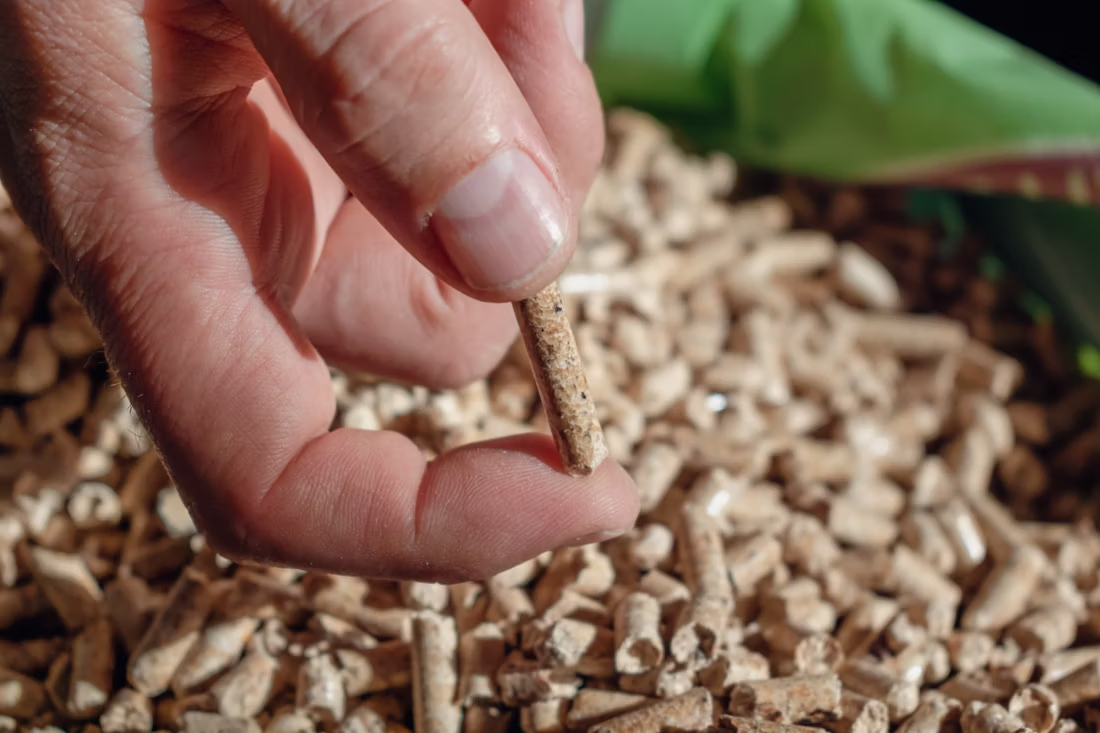
That said, pellet stoves haven't disappeared entirely. A handful of county homeowners install them in detached workshops, hunting camps, converted outbuildings, or as a secondary heat source for a den or sunroom where running new gas line isn't practical. Regional pellet brands—Lignetics, Hamer Pellet Fuel, and Greenway Renewable Energy—are all distributed through farm and hardware suppliers in western Kentucky, so fuel supply isn't the obstacle. Availability of a dealer who actually stocks and installs pellet equipment is the real constraint, which is exactly where a trusted local match matters more than a big-box aisle.
Three steps. No salesperson until you're ready.
Tell us about your project
Your zip code, your situation, and the fuel you're leaning toward—or let the answers point you to one.
See what's actually available
The brands dealers within 100 miles genuinely carry—real options, never a catalog mirage.
Get your dealer & Project Guide
A trusted local dealer, plus the free Project Guide & Parts List that names every component of the job.
Frequently Asked Questions
Are pellet stoves common in McCracken County?
No—and it's worth saying plainly. McCracken County's climate (zone 4A, about 4,267 heating degree days, winter lows averaging 25°F) is mild enough that natural gas and electric heat cover almost every household's needs without a supplemental solid-fuel appliance. Pellet stoves show up occasionally in outbuildings, cabins, or as a hedge against winter ice storms, but they're a niche purchase here, not a mainstream one. If you're set on one, a local dealer can still source and install it—there just aren't as many showrooms carrying pellet equipment as you'd find in a colder market.
How much does a pellet stove installation cost in McCracken County?
Because pellet stoves are a low-volume install locally, dealers typically price them project-by-project rather than off a published rate card. Expect the bulk of the cost to be the unit itself, plus a hearth pad if your floor isn't already rated for it, a dedicated electrical outlet for the auger and blower, and pellet-rated venting through an exterior wall. If you're converting an existing fireplace opening, that adds venting complexity. A local dealer will walk your specific space and give you a firm number—worth doing before you commit, since freight-in units from out-of-area retailers rarely include install support.
Where can I buy pellet fuel in McCracken County?
Pellet fuel itself isn't hard to find even though the stoves are uncommon. Brands like Lignetics, Hamer Pellet Fuel, and Greenway Renewable Energy are distributed through farm supply and hardware retailers across western Kentucky, and most stock up heavier in fall as demand ticks up. If you already own a pellet stove or are considering one, ask your installing dealer which brand burns cleanest in your specific unit—ash content varies by brand and affects how often you're emptying the pan.
Do pellet stoves work without electricity?
No—this is one of the biggest tradeoffs to understand before buying. Pellet stoves rely on an electric auger to feed fuel and a blower to distribute heat, so they shut down the moment power drops. McCracken County sees occasional winter ice storms that knock out electricity for hours or days, which is exactly when a wood stove or a battery-backed gas fireplace has the advantage. If backup heat during an outage is your main goal, a pellet stove isn't the right tool—a local dealer can point you toward a better-suited option.
Is a pellet stove or a gas fireplace better for a McCracken County home?
For most homes in the county, gas wins on practicality. Natural gas service reaches much of the Paducah area, and a direct-vent gas fireplace or insert delivers instant heat at the flip of a switch with none of the fuel storage, hopper-filling, or ash removal a pellet stove requires. Pellet still has a place if you want the visual of a real flame with hopper-fed convenience and don't have gas access—a rural outbuilding or an addition without a gas line, for example. If both are technically possible in your home, most local dealers will steer you toward gas simply because it fits the climate and infrastructure here better.
Do I need a permit to install a pellet stove in McCracken County?
Yes—a building permit is standard for any new solid-fuel or pellet-burning appliance, covering the unit's clearances, the hearth pad, and the through-wall venting termination point. Because pellet installs are infrequent here, it's worth confirming with your local building department before work starts rather than assuming your installer will automatically know the current requirements—a step that's more routine in counties where pellet stoves are installed every week.
What size pellet stove do I need for my home?
Given McCracken County's relatively mild winters, most homeowners looking at pellet heat are supplementing an existing gas or electric system rather than replacing it—so a smaller unit rated for 1,000 to 1,500 square feet often does the job for a single room, sunroom, or workshop. If you're heating an entire detached cabin or outbuilding with no other heat source, size up and have a dealer confirm based on insulation and ceiling height. Oversizing wastes pellets and creates uneven, overly hot rooms; a local dealer's in-person sizing beats guessing from an online chart.
How much maintenance does a pellet stove need?
More than gas, less than wood. Plan on emptying the ash pan every few days during regular use, wiping down the glass weekly, and cleaning the burn pot and exhaust vent periodically through the season. Most manufacturers recommend a full professional cleaning and inspection once a year, ideally before the first cold stretch. Because service techs for pellet units are less common in McCracken County than gas techs, ask your installing dealer whether they offer ongoing service before you buy—it can be the deciding factor between two similar units.
Wood, pellet, or gas—what's actually the best fit in McCracken County?
Honestly, gas is the default here, and it's the default for good reason: McCracken County's mild winters and available natural gas infrastructure make instant, low-maintenance heat the practical choice for most homes. Wood is workable if you have access to the oak, hickory, or cherry that's common in western Kentucky woodlots and want a genuine backup heat source during ice-storm outages. Pellet sits in between—cleaner and easier than wood, but electricity-dependent and less common locally, which means fewer dealers stock it. If your priority is reliable heat that matches how the rest of the county heats its homes, start with gas and let a local dealer talk you through the exceptions.
What's the difference between an insert and a zero-clearance fireplace?
An insert is a fireplace that slides into a pre-existing wood-burning fireplace—if you don't have one, there's nothing to insert it into. A zero-clearance fireplace is built into a framed wall, which makes it the answer for remodels and new construction. Simple test: existing masonry fireplace means insert; blank or framed wall means zero-clearance.
Why is a fireplace insert so efficient?
An insert does two things: it seals the chimney completely, so you stop losing air you already paid to heat, and it radiates warmth into the room through the firebox and glass. Most add a heat-exchange fan that pulls cool room air underneath, wraps it around the hot firebox, and pushes it back out warm. Your home is more efficient before you've even lit the first fire.
Can I install a fireplace myself?
If you're putting a fire in your house on purpose, it's best to work with an expert. Unless you're genuinely experienced in framing, gas line, vent pipe, and the national code on clearances to combustibles, have a professional do it—and ideally the same company that sells you the fireplace, so warranty, service, and liability all live under one roof.
How much should I budget for a fireplace?
For an average home—covering the fireplace, the vent pipe, and basic installation—a budget between $3,900 and $5,500 gives you a lot of options across wood, gas, and pellet. By the time you add finish work, gas line, and electrical, the average complete installation lands between $5,000 and $12,000 all-in. In a remodel or new build, a good rule is to put about 2.5% of the total project cost toward the fireplace.
Stove and Fireplace Dealers in McCracken County
Pellet Brands Stocked Around McCracken County
Manufacturers will point you to the nearest stocking dealer.
Find your pellet stove in McCracken County.
Pellet heat is a niche pick here, but we still know which local dealers carry and install it. Tell us about your project and we'll send a free Project Guide & Parts List—the exact parts, including the vent kit, and our recommended local dealer for your McCracken County home.
Find Your Fireplace →