
Find your pellet stove in Lewis County.
Clean-burning, thermostat-controlled heat for the hills and hollows along the Ohio River—from Vanceburg to the county's rural back roads. Get matched with a local dealer who can size and install it right.
Every Project Starts From One of These Five Situations
Efficient heat, without the woodpile, for Lewis County homes.
Lewis County sits in the hardwood hill country of northeastern Kentucky, tucked along a wide bend of the Ohio River around the county seat of Vanceburg. It's a small, rural county—around 2,200 residents spread across ridges and river bottoms shaded by oak, hickory, maple, and cherry. Climate zone 4A here means real winter cold without the brutal extremes of the upper Midwest, but plenty of homes still need dependable, steady heat from November through March. Many families in the county already split and burn their own hardwood, and that same culture of practical, close-to-home heating is exactly why pellet stoves have found a foothold here—same warmth, less labor.
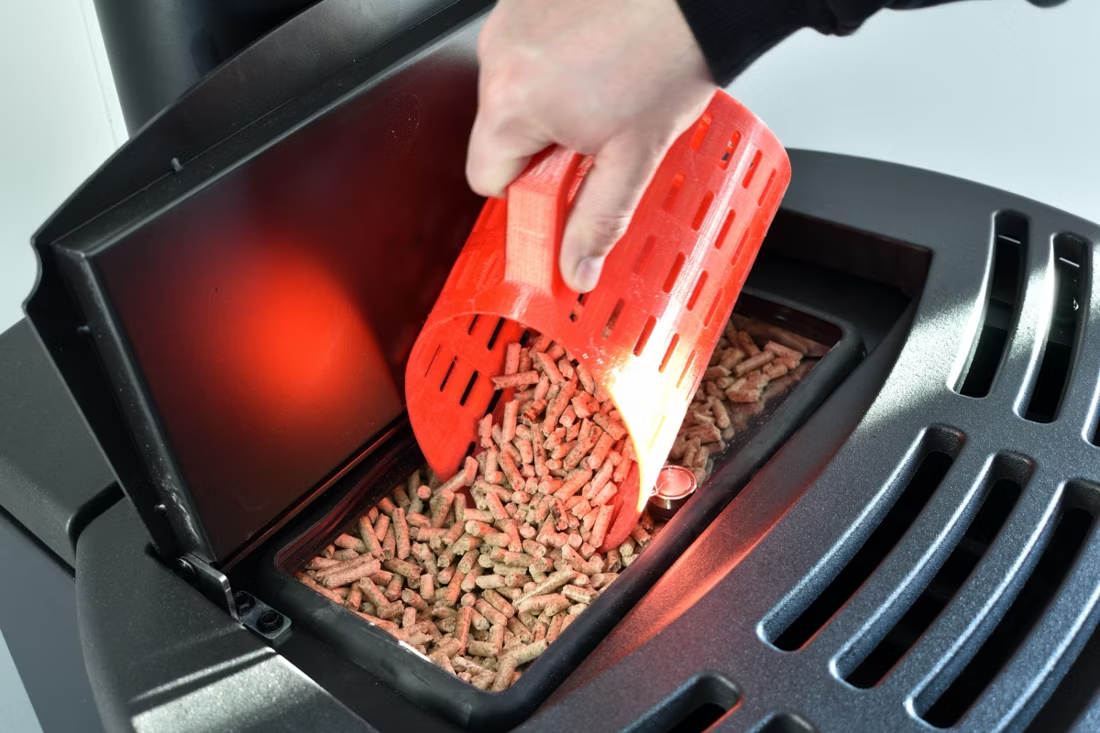
A pellet stove gives Lewis County homeowners thermostat-set, even heat from a hopper you fill every day or two, instead of splitting, stacking, and hauling cordwood from the hardwood stands that cover most of the county. Regional hardwood pellet brands like Lignetics, Hamer Pellet Fuel, and Greenway Renewable Energy are common on shelves throughout this part of Kentucky, so fuel isn't hard to find. Lewis County has no air quality nonattainment designation and no local burning restrictions, so pellet stoves here are chosen for convenience and efficiency rather than regulatory pressure—a straightforward upgrade for anyone tired of managing a woodpile through a Kentucky winter.
Three steps. No salesperson until you're ready.
Tell us about your project
Your zip code, your situation, and the fuel you're leaning toward—or let the answers point you to one.
See what's actually available
The brands dealers within 100 miles genuinely carry—real options, never a catalog mirage.
Get your dealer & Project Guide
A trusted local dealer, plus the free Project Guide & Parts List that names every component of the job.
Frequently Asked Questions
How much does a pellet stove installation cost in Lewis County?
Most pellet stove installations in rural Kentucky counties like Lewis run somewhere between $3,000 and $5,500, depending on the stove size, whether it's a freestanding unit or an insert into an existing fireplace, and how far the wall or roof venting has to run. A pellet insert going into an existing masonry fireplace on the low end, a freestanding stove with new venting through an exterior wall in the middle, and any electrical work for a dedicated outlet pushing toward the higher end. A local dealer will give you a firm number after seeing your home, but that range is a realistic starting point for the county.
Will a pellet stove work if the power goes out?
This is the one honest tradeoff to know before buying. Pellet stoves rely on an electric auger to feed fuel and a blower to distribute heat, so they shut down without power—unlike a wood stove, which keeps burning through an outage. Along the Ohio River bottoms and hillier parts of Lewis County, winter ice storms can knock out power for a day or more, so some homeowners either pair a pellet stove with a small battery backup or keep a wood-burning appliance as a fallback. It's worth discussing with your local dealer if reliable off-grid heat during storms is a priority for your household.
What size pellet stove do I need for my home?
Sizing depends on square footage, ceiling height, and how well-insulated the home is—older farmhouses and log homes common in Lewis County's rural areas tend to need more heating capacity than a newer, tightly built home of the same size. As a rough guide for climate zone 4A: smaller pellet stoves (under 1,200 sq ft) suit a single large room or a small home, mid-size units (1,200–2,000 sq ft) cover most main living areas, and larger stoves handle bigger or draftier homes. A local dealer will walk your home and size it properly—oversizing wastes pellets and undersizing means you're still running a backup heat source on the coldest nights.
Where can I find pellet stove installers near me in Lewis County?
Look for a dealer whose technicians are trained on venting clearances and hopper/auger setup specific to pellet appliances—installation differs from a standard wood stove or gas insert in a few important ways, particularly around the power supply and horizontal wall venting most pellet units use. Given how rural Lewis County is, expect installers based out of nearby larger towns to cover the county, sometimes with a modest travel charge for homes farther out toward the county line. Buying and installing through the same dealer keeps warranty coverage simple and ensures the vent run was sized correctly the first time.
Do I need a permit to install a pellet stove in Lewis County?
Most Kentucky counties, including Lewis County, require a building permit for new solid-fuel appliance installations, and the stove itself needs to meet current EPA emissions standards. In practice, most local dealers handle the permitting paperwork as part of the installation, so it's rarely something the homeowner has to manage directly. It's worth confirming with your dealer before work begins, especially if you're installing in an older home where the existing wiring or wall construction may need to be brought up to code for the vent run.
What pellets are available for pellet stoves in Lewis County?
Hardwood pellet brands like Lignetics, Hamer Pellet Fuel, and Greenway Renewable Energy are widely stocked across this part of Kentucky and are a good match for the oak, hickory, and maple that already fuel a lot of local wood heat. Bagged pellets typically run in the ballpank of $5 to $6.50 per 40-pound bag regionally, or roughly $250 to $320 per ton if you buy by the pallet, which is usually the better deal for anyone burning a pellet stove as a primary heat source through a full Kentucky winter. Buying a season's supply in the fall, before demand and prices tick up with the first cold snap, is common practice among local pellet stove owners.
How often does a pellet stove need cleaning and maintenance?
Pellet stoves need more frequent attention than a wood stove, but each task is smaller. Plan on emptying the ash pan every few days during heavy use, cleaning the burn pot weekly, and having the exhaust venting, auger, and blower professionally serviced once a year—ideally before the start of the burning season each fall. Because Lewis County is rural, having a dealer nearby who stocks common replacement parts (igniters, gaskets, auger motors) can save you a heating-season headache if something needs a quick fix.
Pellet stove vs. wood stove—which is right for my Lewis County home?
Wood stoves keep burning without electricity, pair naturally with the oak and hickory a lot of Lewis County families already cut and split themselves, and typically cost less per BTU if you're sourcing your own firewood. Pellet stoves trade that self-sufficiency for convenience: load the hopper, set a thermostat, and get even heat without splitting or stacking a woodpile—but they go dark in a power outage unless you've got backup power. For homes where labor and mess are the bigger concern, pellet wins. For homes where storm-season reliability matters most, wood still has the edge. Some households in the county run both, using a pellet stove for daily convenience and a wood stove as the storm backup.
Can a pellet stove replace my existing fireplace?
In many cases, yes. A pellet insert is built to slide into an existing masonry fireplace opening, using a liner run through the chimney or, in some models, a smaller direct-vent kit through the wall behind the unit. This is a popular option in Lewis County's older homes that already have a fireplace but want more heat output and less mess than an open hearth provides. A dealer can look at your existing fireplace dimensions and chimney condition to confirm whether an insert is a straightforward fit or whether a freestanding stove with new venting makes more sense.
Are pellet stoves loud?
They make some noise—there are two fans running plus an auger motor that turns as it feeds pellets. But there's a real range: premium models are engineered quiet, and the best offer a whisper-quiet mode you can comfortably watch TV next to. If noise matters in your room, ask to hear a stove running before you buy—it's a five-minute test that saves years of annoyance.
Why is my open fireplace making my house colder?
Open fireplaces suck—literally. As the fire burns, it consumes air your furnace already paid to heat and pulls it out through the chimney, so the house is actually colder after the fire goes out than before you lit it. An insert fixes this: it seals the chimney, puts fixed glass across the front, and turns that hole in your house into a real heat source.
Can a fireplace actually lower my heating bill?
Yes—by creating a comfort zone. A furnace heats every square foot of the house just to warm the one room you're in; a gas fireplace on low burns roughly a sixth of the gas a typical furnace does. Set the furnace around 55–60 degrees as a baseline, then heat the rooms your family actually uses. Families who heat this way commonly save $20–$60 a month.
Does a fireplace add value to my home?
On average, a fireplace adds back to the home about the same amount you spent installing it. Add the monthly savings from heating the rooms you actually use instead of the whole house—often hundreds of dollars a year—and the value case is strong before you even count what a fire does for how your family uses the room.
Pellet Brands Stocked Around Lewis County
Manufacturers will point you to the nearest stocking dealer.
Find your pellet stove in Lewis County.
Tell us a bit about your home and we'll match you with a trusted local dealer and send over a free Project Guide & Parts List—the exact stove, vent kit, and parts your Lewis County installation needs.
Find Your Fireplace →