
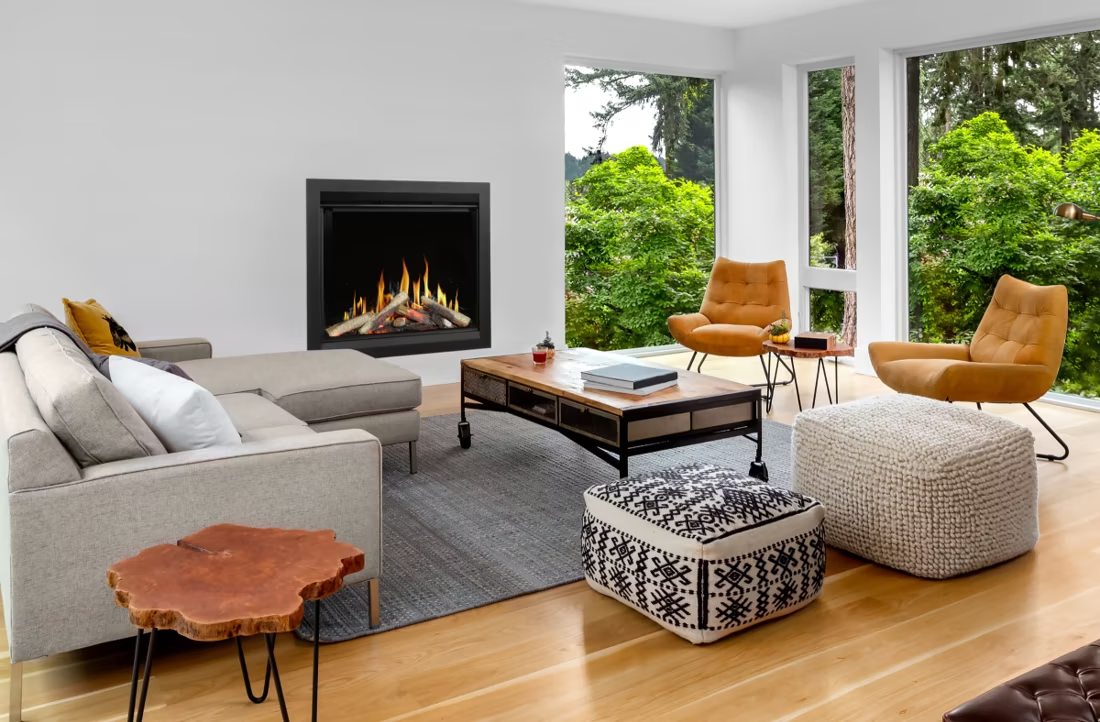
Warm up your Lewis County home without a chimney.
From river cottages along the Ohio in Vanceburg to farmhouses and manufactured homes out toward Tollesboro and Garrison, electric fireplaces bring zone heat and real flame ambiance anywhere there's an outlet—no flue, no gas line, no permit hassle. Find the right unit and connect with a trusted local dealer.
Every Project Starts From One of These Five Situations
Supplemental warmth with no venting required.
Lewis County sits along the Ohio River in Kentucky's Zone 4A climate—four distinct seasons with genuinely cold winter stretches, but nothing like the sustained sub-zero cold of the upper Midwest. With a small, rural population of just over 2,200 spread across Vanceburg, Tollesboro, Garrison, and Quincy, a lot of the housing stock here is older farmhouses, doublewides, and river cottages, plus a fair number of rental units and additions where running a chimney flue or a gas line simply isn't practical. Wood heat still runs deep in this county—oak, hickory, maple, and cherry are burned as primary or supplemental heat in plenty of local households, and with no local air quality restrictions on burning, that tradition isn't going anywhere. But electric fireplaces have carved out a real niche alongside it, particularly in bedrooms, finished basements, and manufactured homes where wood or gas venting isn't an option.
An electric fireplace or insert plugs into a standard outlet (smaller freestanding and wall-mounted units) or runs on a dedicated circuit for larger built-ins, and most installs are done in an afternoon with no chimney, no flue, and no combustion byproducts to vent. Fleming-Mason Energy, the rural electric cooperative that serves most of Lewis County, keeps power reliable for day-to-day use, though the Ohio Valley does see ice storms that knock out grid power for stretches most winters—a good reason to treat an electric unit as supplemental warmth or ambiance rather than your only heat source. For homes already tied into the grid without a masonry chimney, electric remains the simplest, lowest-maintenance way to add real heat and the look of a fire to a room.
Three steps. No salesperson until you're ready.
Tell us about your project
Your zip code, your situation, and the fuel you're leaning toward—or let the answers point you to one.
See what's actually available
The brands dealers within 100 miles genuinely carry—real options, never a catalog mirage.
Get your dealer & Project Guide
A trusted local dealer, plus the free Project Guide & Parts List that names every component of the job.
Frequently Asked Questions
How much does an electric fireplace installation cost in Lewis County?
A basic plug-in electric fireplace or wall-mounted unit typically runs $400 to $1,200 installed, since most just need mounting hardware and an existing outlet. A built-in electric insert or a unit that requires a new dedicated 240V circuit—common for larger units meant to actually heat a room rather than just look nice—runs higher, often $1,200 to $2,500 once an electrician's time is factored in. Costs in rural Lewis County can run slightly higher than in bigger Kentucky markets simply because certified installers based in Maysville or across the river in South Shore and Portsmouth, Ohio, may add a small travel charge for jobs out toward Tollesboro or Garrison.
What size electric fireplace do I need for my room?
Most electric fireplaces are rated around 1,500 watts, which works out to roughly 5,000 BTU—enough to noticeably warm a single room of 300 to 400 square feet, especially in the older, less-insulated farmhouses common throughout Lewis County. For a larger open living area or an addition, look at units with a higher-wattage heater or plan on electric as ambiance-plus-supplemental heat rather than the room's sole heat source. A local dealer can walk through your room's square footage, insulation, and existing HVAC setup to recommend the right wattage and unit size.
Do I need an electrician to install an electric fireplace?
A basic plug-in unit that fits into an existing standard outlet doesn't require an electrician—it's a DIY-friendly install. But if you're adding a built-in insert or a larger unit that calls for a dedicated 240V circuit, you'll need a licensed electrician to run that circuit safely and to code. Several electrical contractors serve Lewis County out of Vanceburg and the surrounding area, and most hearth dealers can either handle that wiring themselves or coordinate with a local electrician as part of the install.
What's the difference between a plug-in electric fireplace and a built-in electric insert?
A plug-in electric fireplace is a freestanding, wall-mounted, or media-console unit that runs off a standard household outlet—it's portable, requires no wiring changes, and can be moved between rooms. A built-in electric insert is designed to be recessed into a wall, existing masonry fireplace opening, or custom surround, often wired to a dedicated circuit for more consistent heat output. For Lewis County homes with an old, unused masonry fireplace—common in older farmhouses in and around Vanceburg—an insert is often the cleanest upgrade, since it fills the existing opening without the mess of a wood or gas retrofit.
Do I need a permit to install an electric fireplace in Lewis County?
A plug-in unit that uses an existing outlet doesn't require a permit. If your installation involves adding a new dedicated circuit or any new wiring—typical for larger built-in inserts—that electrical work generally needs a permit through the Lewis County building office, and it should be pulled and inspected by a licensed electrician. There's no combustion venting to worry about with electric, which is one of the reasons homeowners in older homes without a working chimney gravitate toward it.
Will my electric fireplace work during a power outage?
No—electric fireplaces need grid power to run, so they'll go out along with the rest of your electrical system during an outage. That's worth planning around in Lewis County, where ice storms along the Ohio Valley knock out Fleming-Mason Energy service for a day or more in a typical winter. If backup heat during outages matters to you, many local households pair an electric fireplace for everyday ambiance and convenience with a wood stove or fireplace burning local oak or hickory as the fallback—a combination that's common throughout the county.
How much does it cost to run an electric fireplace in Lewis County?
A typical 1,500-watt electric fireplace running on the heat setting costs roughly 15 to 25 cents per hour to operate at current Fleming-Mason Energy rates, depending on your specific rate plan. Run a few hours a night through a cold stretch and you're looking at maybe $10 to $20 a month in added electric cost—considerably less than most people expect, and one reason electric units are popular as everyday supplemental heat rather than an occasional-use fireplace.
Can an electric fireplace be my primary heat source?
For most Lewis County homes, no—a standard electric fireplace is built for zone heating a single room, not for carrying a whole house through a Zone 4A winter. It works well as supplemental heat alongside your existing furnace or heat pump, or as the sole heat source for a small addition, bonus room, or converted porch that isn't on the main HVAC system. If you're trying to heat a larger, older farmhouse where central heat struggles to keep up, wood heat from a stove using local oak, hickory, or maple typically does more work per dollar than electric.
Electric vs. wood—which is right for my Lewis County home?
Wood offers the most heat for the money in this county, works without power during the ice storms that periodically hit the Ohio Valley, and taps into a strong local tradition of burning oak, hickory, maple, and cherry—with no air quality restrictions here to worry about. Electric offers instant on-off convenience, zero mess, no chimney or venting required, and the ability to add real heat and flame ambiance to rooms where a wood or gas retrofit just isn't practical, like a finished basement or a manufactured home. Plenty of Lewis County households end up with both: wood as the serious backup and everyday heater, electric in a bedroom or den where convenience matters more than raw BTUs.
Does an electric fireplace need a vent or chimney?
No—that's its superpower. An electric fireplace needs a wall and an outlet, period. No vent pipe, no gas line, no clearances to design around, which is why it works in bedrooms, offices, apartments, and walls where venting a gas or wood unit would be impractical or impossible. Installation is typically the simplest and least expensive of any fireplace type.
Can I put a TV above my fireplace?
Yes—with an asterisk. Fireplaces are hot and TVs don't like heat. Either put a mantel between them to deflect rising warmth, or choose a fireplace with heat-management technology that creates a cool zone on the wall above—the wall stays around 125 degrees, barely warm, while the room still gets full heat. If you like clean lines and don't want a mantel, heat management is the answer.
How much should I budget for a fireplace?
For an average home—covering the fireplace, the vent pipe, and basic installation—a budget between $3,900 and $5,500 gives you a lot of options across wood, gas, and pellet. By the time you add finish work, gas line, and electrical, the average complete installation lands between $5,000 and $12,000 all-in. In a remodel or new build, a good rule is to put about 2.5% of the total project cost toward the fireplace.
What is an in-home preview and do I need one?
It's a visit where a hearth professional measures your space, confirms the model you picked actually works in your home, and walks the specs—framing, gas line, venting, finish work—before anything is ordered. Some details you just can't know until you see the house. Never make a down payment without one; it's the single most-skipped step that burns buyers.
Find your electric fireplace in Lewis County.
Tell us a bit about your home and we'll match you with the right electric fireplace or insert for your space—plus a free Project Guide & Parts List with the exact unit specs and your recommended local Lewis County dealer.
Find Your Fireplace →