
Steady, thermostat-set heat for Leslie County's mountain hollows.
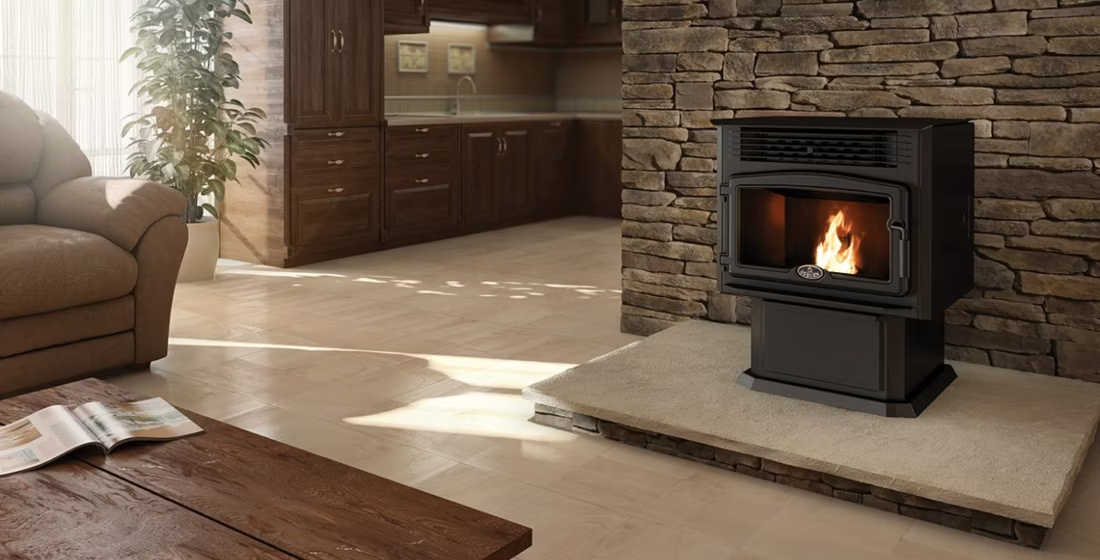
Hopper-fed warmth for Hyden and the narrow hollows carved into the Cumberland Plateau—less splitting and stacking than cordwood, with fuel sourced from the same oak and hickory ridges surrounding the county. Find the right unit and connect with a trusted local dealer.
Every Project Starts From One of These Five Situations
Consistent warmth without the wood-splitting work.
Leslie County sits deep in the Cumberland Plateau of southeastern Kentucky, with a county seat (Hyden) and a population of just 547 spread across steep ridges and narrow hollows. In climate zone 4A, cold air pools in those hollows overnight the way it does in northern towns like Burlington, VT—often colder than the elevation alone would suggest. Oak, hickory, maple, and cherry blanket the surrounding ridgelines, and wood heat has long been the default here out of necessity as much as tradition. Pellet stoves have carved out a real niche as an alternative: same radiant warmth, but a hopper you fill every day or two instead of a woodpile you split and stack all summer.
Regional pellet brands like Lignetics, Hamer Pellet Fuel, and Greenway Renewable Energy—the last one milling hardwood pellets not far up the road in London, Kentucky—keep fuel sourcing local rather than shipped in from out of state. There are no air quality attainment concerns in Leslie County, so burning restrictions aren't a factor the way they are in Western states with winter inversions. The one real caveat: pellet stoves need electricity to run the auger and blower, and ice storms do knock out power in these hollows, so a stove alone isn't guaranteed backup heat during the exact weather it's most needed for.
Three steps. No salesperson until you're ready.
Tell us about your project
Your zip code, your situation, and the fuel you're leaning toward—or let the answers point you to one.
See what's actually available
The brands dealers within 100 miles genuinely carry—real options, never a catalog mirage.
Get your dealer & Project Guide
A trusted local dealer, plus the free Project Guide & Parts List that names every component of the job.
Frequently Asked Questions
How much does a pellet stove installation cost in Leslie County?
Pellet stove and insert installations in this part of Kentucky typically run in the $3,000 to $6,500 range, depending on whether you're installing a freestanding stove with new hearth pad and venting, or a pellet insert going into an existing masonry fireplace. Homes without an existing chimney or fireplace opening will run toward the higher end once venting and a dedicated electrical circuit for the unit are factored in. Given how few installers cover rural Leslie County directly, expect a modest travel charge added to quotes for jobs out toward the more remote hollows.
What size pellet stove do I need for my home?
Most homes in Leslie County are smaller, older mountain houses or newer single-story builds tucked into narrow lots along the creeks—a small to medium pellet stove (rated for 1,000 to 1,800 square feet) covers the majority of them, especially when the stove is being used as supplemental heat alongside a furnace or existing wood stove. If you're relying on pellet heat as your primary source through a full Cumberland Plateau winter, size up and look for a larger hopper capacity so you're not refilling multiple times a day during a cold stretch. A local dealer can size the unit correctly during an in-home visit rather than guessing off square footage alone.
Where can I find pellet stove dealers near Leslie County?
Because Leslie County's population is small and spread thin, dedicated hearth retailers are limited within the county itself—most homeowners work with dealers based in Hazard, London, or other nearby Perry and Laurel County hubs who also cover Leslie, Clay, and Bell counties as part of their regular service area. Ask any installer whether they carry parts and service for the pellet stove brands they sell, since a unit without local parts support becomes a headache the first time the auger motor fails mid-winter.
What's the difference between a pellet stove and a pellet insert?
A pellet stove is a freestanding unit that sits on a hearth pad and vents out through a wall or existing chimney—it can go almost anywhere in the home with the right clearances. A pellet insert is built to slide into an existing masonry fireplace opening, turning a drafty open hearth into a sealed, thermostat-controlled heat source. For older Leslie County homes with an existing fireplace, an insert usually makes more sense since it reuses the opening you already have. Homes without a fireplace, or newer builds, are better suited to a freestanding stove.
Do I need a permit to install a pellet stove in Leslie County?
Leslie County doesn't maintain a dedicated building permit office for hearth appliance installations the way larger counties do. Most homeowners here work directly with their installer, who will make sure the venting and electrical work (pellet stoves need a standard outlet for the auger and blower) meet manufacturer specifications and any applicable state electrical code. If you're financing the project or it's tied to a larger remodel, check with the Leslie County Fiscal Court on any local requirements before starting work.
What's the best pellet stove for Leslie County's climate and power situation?
Look for a pellet stove with a large hopper capacity—40 pounds or more—so a single fill can carry you through an overnight cold stretch without a 2 a.m. refill. Because ice storms and downed lines aren't unusual in these hollows, ask your dealer about battery backup options for the control board and blower; a small UPS or battery kit can keep the stove running through a brief outage, though it won't carry you through a multi-day one the way a wood stove would. For homes already burning oak and hickory as primary heat, a pellet stove often makes more sense as a second, easier-to-run unit for daily use rather than a full replacement.
Where does pellet fuel come from for Leslie County homes?
Regional producers like Greenway Renewable Energy, based in London, Kentucky, mill hardwood pellets from the same oak, hickory, and maple species that cover Leslie County's ridgelines, while Lignetics and Hamer Pellet Fuel round out the brands typically stocked at farm supply and hardware stores across southeastern Kentucky. Hardwood pellets generally burn hotter and leave less ash than softwood blends, which matters if you're running the stove daily through a full winter rather than just for occasional warmth.
Will my pellet stove work during a power outage?
Not on its own—pellet stoves rely on electricity to run the auger that feeds fuel and the blower that distributes heat, so a standard power outage shuts the stove down along with everything else. This matters in Leslie County, where ice storms and downed lines through Jackson Energy Cooperative's service territory aren't rare in a typical winter. Some homeowners pair a pellet stove with a small battery backup or generator for exactly this reason, while others keep a wood stove or fireplace as the true outage backup and use the pellet stove for easier day-to-day heat.
Pellet vs. wood—which is right for my Leslie County home?
Wood—split from the oak, hickory, and maple that surround most Leslie County properties—costs less if you're cutting your own, works with zero electricity, and is the fuel most homes here have relied on for generations. Pellet stoves trade some of that self-sufficiency for convenience: no splitting, no stacking, just a bag poured into a hopper and a thermostat set. For households already committed to burning wood as primary heat, a pellet stove often works best as a second, easier unit for daily living space use, saving the wood stove for the coldest stretches or for outages when the power's out and the pellet hopper is sitting idle.
Why is a fireplace insert so efficient?
An insert does two things: it seals the chimney completely, so you stop losing air you already paid to heat, and it radiates warmth into the room through the firebox and glass. Most add a heat-exchange fan that pulls cool room air underneath, wraps it around the hot firebox, and pushes it back out warm. Your home is more efficient before you've even lit the first fire.
Why is my open fireplace making my house colder?
Open fireplaces suck—literally. As the fire burns, it consumes air your furnace already paid to heat and pulls it out through the chimney, so the house is actually colder after the fire goes out than before you lit it. An insert fixes this: it seals the chimney, puts fixed glass across the front, and turns that hole in your house into a real heat source.
Can I install a fireplace myself?
If you're putting a fire in your house on purpose, it's best to work with an expert. Unless you're genuinely experienced in framing, gas line, vent pipe, and the national code on clearances to combustibles, have a professional do it—and ideally the same company that sells you the fireplace, so warranty, service, and liability all live under one roof.
How much should I budget for a fireplace?
For an average home—covering the fireplace, the vent pipe, and basic installation—a budget between $3,900 and $5,500 gives you a lot of options across wood, gas, and pellet. By the time you add finish work, gas line, and electrical, the average complete installation lands between $5,000 and $12,000 all-in. In a remodel or new build, a good rule is to put about 2.5% of the total project cost toward the fireplace.
Pellet Brands Stocked Around Leslie County
Manufacturers will point you to the nearest stocking dealer.
Find your pellet stove in Leslie County.
Tell us a bit about your home and we'll put together a free Project Guide & Parts List—the exact parts, including the vent kit, and a recommended local dealer for your pellet project in Leslie County.
Find Your Fireplace →