
Warm up any room in Leslie County—no chimney, no gas line, no fuss.
For the creek-bottom homes and ridgetop cabins of Leslie County, an electric fireplace adds real zone heat and ambiance without new venting or a masonry chimney. Find the right unit and connect with a trusted local dealer.
Every Project Starts From One of These Five Situations
Simple heat for the hollows and hilltops of Leslie County.
Leslie County sits deep in the Cumberland Plateau along Pine Mountain in southeastern Kentucky, with roughly 547 residents spread thin across narrow creek hollows and small communities like Hyden, Wooton, Cutshin, and Hoskinston. In this Zone 4A climate, winters are moderate on paper but can turn sharp at higher elevations, and the terrain itself shapes how people heat their homes—a lot of houses here are manufactured or modular units set on narrow lots, without the masonry chimney that an older farmhouse might have.
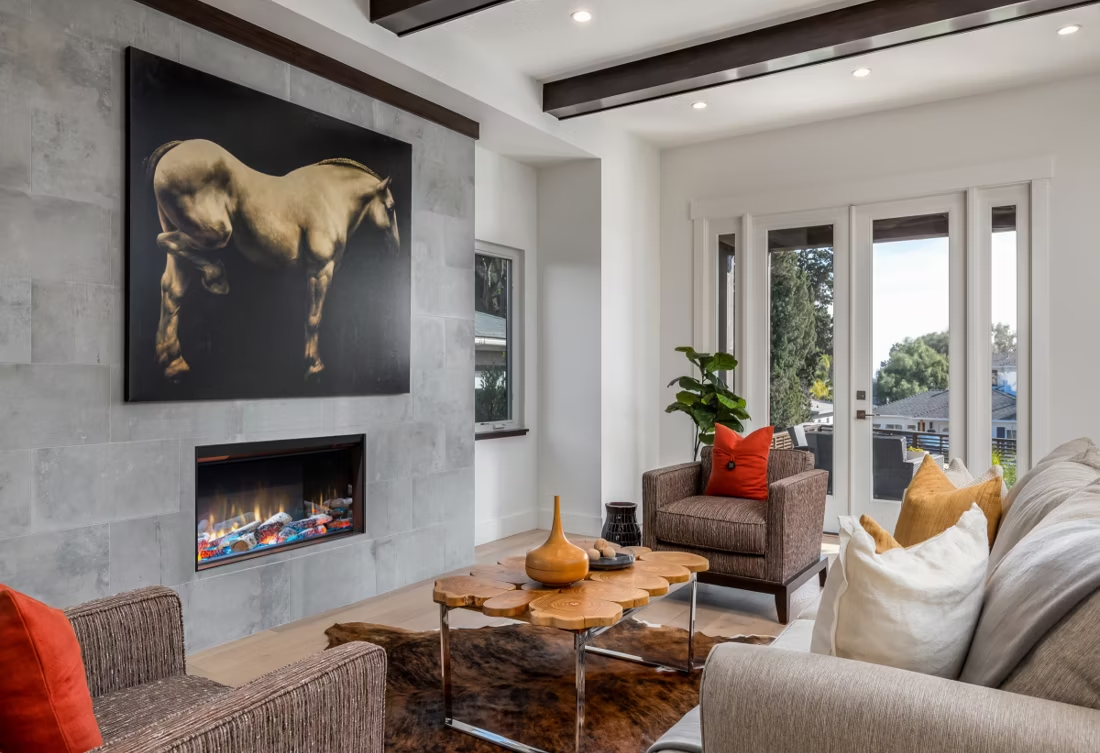
Wood—oak, hickory, maple, cherry, all abundant on the surrounding ridges—remains the backbone of heating in Leslie County, and propane fills in where wood isn't practical. Electric fireplaces have found a real, if narrower, role alongside them: a plug-in unit or a hardwired insert gives a bedroom, sunroom, or rental property supplemental heat and a fire's glow without touching the roofline or running new gas piping. It's also the easiest option for a modular home where cutting a flue penetration isn't realistic. The tradeoff worth knowing up front: Jackson Energy Cooperative's lines run overhead through a lot of steep, wooded hollow terrain, and ice storms can take down power for days at a time—so an electric fireplace should be planned as comfort heat, not as your only fallback if the grid goes out.
Three steps. No salesperson until you're ready.
Tell us about your project
Your zip code, your situation, and the fuel you're leaning toward—or let the answers point you to one.
See what's actually available
The brands dealers within 100 miles genuinely carry—real options, never a catalog mirage.
Get your dealer & Project Guide
A trusted local dealer, plus the free Project Guide & Parts List that names every component of the job.
Frequently Asked Questions
How much does an electric fireplace installation cost in Leslie County?
A plug-in electric fireplace or insert that runs on a standard 120V outlet typically costs $300 to $1,500 installed, since there's often no wiring work involved beyond setting the unit in place. A hardwired built-in electric fireplace, or a larger unit that needs its own dedicated 240V circuit, usually runs $800 to $2,500 once you factor in a licensed electrician running new wire from the panel—which is common in older Leslie County homes that weren't built with a spare circuit for this kind of load. Units that replace an old wood-burning insert in an existing masonry fireplace opening tend to land in the middle of that range.
Do I need a permit for an electric fireplace in Leslie County?
In most cases, a plug-in electric fireplace doesn't require a permit since no wiring changes are involved—it's treated like any other appliance. If you're having a new 240V circuit run for a hardwired unit, that electrical work should follow the Kentucky Residential Code and be performed by a licensed electrician, who will typically pull any required permit and arrange inspection. Given Leslie County's small population and rural layout, most electrical work here is handled by independent local electricians rather than a large building department, so ask your installer directly whether your specific project needs a permit.
Will my electric fireplace still work if the power goes out?
No—and this is the most important thing to understand before choosing electric as your primary heat source in Leslie County. Jackson Energy Cooperative's distribution lines run through a lot of narrow, wooded hollows here, and ice storms and downed limbs can knock out power for extended stretches in winter. An electric fireplace with no power is just a dark box. If you want heat that keeps working through an outage, pair it with a generator, or keep a wood stove burning oak or hickory as backup—a common setup in this part of the county, where many homes already run wood as primary heat anyway.
Electric vs. wood heat—which makes more sense for my home in Leslie County?
Wood—burned as oak, hickory, maple, or cherry cut from the surrounding ridges—remains the dominant heat source in Leslie County because it works without power, costs little if you can cut your own, and throws serious heat through a long cold stretch. Electric fireplaces don't compete with that as a primary heat source; they're better suited to supplemental zone heat in a specific room, ambiance in a living room, or heat for a modular or rental home where installing a wood stove or chimney isn't practical. Plenty of households here run both—wood for the bulk of the season, electric for convenience in a room that doesn't need constant tending.
What size room can an electric fireplace actually heat?
Most electric fireplaces top out around 4,000 to 5,000 BTU of heat output, which is enough to comfortably warm a single room in the 300 to 400 square foot range—a living room, den, or bedroom. They're not designed to heat a whole house, especially in older mountain homes here with limited insulation and drafty original windows. If you're trying to offset a big chunk of your heating bill across a whole home, a wood stove or a larger propane unit will get you further; electric is best matched to the room you actually spend time in.
What's the difference between an electric insert, built-in, and freestanding unit?
An electric insert is built to slide into an existing masonry fireplace opening—a good option if you have an old wood-burning fireplace in a Leslie County farmhouse that you want to simplify without giving up the look of a fire. A built-in electric fireplace is designed into a wall or custom surround, common in new construction or remodels. A freestanding electric stove or mantel unit needs no installation beyond finding an outlet, which makes it the easiest option for a manufactured or rented home. For most homes with an existing fireplace opening in this county, the insert is the natural fit.
Can I put an electric fireplace in a manufactured or modular home?
Yes, and it's one of the more common uses for electric fireplaces in Leslie County, where manufactured and modular homes make up a large share of the housing stock in the hollows and along the ridgeline roads. A plug-in or wall-mounted electric unit doesn't require cutting into the roof for a flue or altering the home's structure the way a wood or gas installation might, which matters for homes on leased land or with limited structural flexibility. Just confirm the unit's amperage draw against your home's electrical panel capacity before buying, since older manufactured homes sometimes have limited spare circuits.
How much does it cost to run an electric fireplace day to day?
Running cost depends on your rate from Jackson Energy Cooperative and how many hours a day you use the unit, but as a rule of thumb, a typical 1,500-watt electric fireplace costs somewhere around 15 to 25 cents per hour to run on heat mode, or roughly $2 to $4 for a full evening of use. That's noticeably cheaper than running central electric resistance heat to warm a whole house, which is part of why electric fireplaces work well as zone heat—you heat the room you're in instead of the whole home.
Electric vs. pellet stove—which is the better fit?
Pellet stoves, running on bagged fuel from suppliers like Lignetics, Hamer Pellet Fuel, or Greenway Renewable Energy, put out significantly more heat than an electric fireplace and can serve as genuine supplemental or primary heat for a whole room or small home—but they need venting through an exterior wall or roof, a hopper to refill, and regular cleaning. An electric fireplace needs none of that; it plugs in (or wires in) and runs instantly with zero maintenance, but it's strictly a comfort-and-ambiance heater, not a serious BTU source. If you want a genuine heating appliance with local fuel availability, pellet is the stronger choice; if you want simple, low-effort warmth for one room, electric wins.
Can I put a TV above my fireplace?
Yes—with an asterisk. Fireplaces are hot and TVs don't like heat. Either put a mantel between them to deflect rising warmth, or choose a fireplace with heat-management technology that creates a cool zone on the wall above—the wall stays around 125 degrees, barely warm, while the room still gets full heat. If you like clean lines and don't want a mantel, heat management is the answer.
Does an electric fireplace need a vent or chimney?
No—that's its superpower. An electric fireplace needs a wall and an outlet, period. No vent pipe, no gas line, no clearances to design around, which is why it works in bedrooms, offices, apartments, and walls where venting a gas or wood unit would be impractical or impossible. Installation is typically the simplest and least expensive of any fireplace type.
How much should I budget for a fireplace?
For an average home—covering the fireplace, the vent pipe, and basic installation—a budget between $3,900 and $5,500 gives you a lot of options across wood, gas, and pellet. By the time you add finish work, gas line, and electrical, the average complete installation lands between $5,000 and $12,000 all-in. In a remodel or new build, a good rule is to put about 2.5% of the total project cost toward the fireplace.
Can a fireplace actually lower my heating bill?
Yes—by creating a comfort zone. A furnace heats every square foot of the house just to warm the one room you're in; a gas fireplace on low burns roughly a sixth of the gas a typical furnace does. Set the furnace around 55–60 degrees as a baseline, then heat the rooms your family actually uses. Families who heat this way commonly save $20–$60 a month.
Find your electric fireplace in Leslie County.
Tell us a bit about your home and we'll match you with the right electric fireplace or insert, plus a free Project Guide & Parts List—the exact parts and a trusted local Leslie County dealer to install them.
Find Your Fireplace →