
Keep Your Family Warm and Safe—No Matter What
From Hodgenville and the rolling farmland around the Lincoln Birthplace to the county's back roads, Larue County has heated homes with oak and hickory for generations. Find the right wood stove or insert, and connect with a trusted local dealer.
Every Project Starts From One of These Five Situations
Hardwood country still heats with hardwood.
Larue County sits in the Knobs region of central Kentucky, home to about 4,500 people and the town where Abraham Lincoln was born. Winters here are milder than the northern Plains—climate zone 4A, a moderate winter heating season, and winter lows that average around 25°F—but the region gets its share of ice storms that can knock rural electric co-op lines down for days at a stretch. For farm families and homeowners on the county's back roads, a wood stove has always doubled as the heat source you can count on when the grid goes quiet.
The county's woodlots and hillside forests are full of oak, hickory, maple, and cherry—dense hardwoods that split well and burn hot, with oak and hickory in particular prized for long, steady coal beds on cold nights. There's no non-attainment designation or winter burn-ban history in Larue County, so burning latitude here is straightforward compared to counties out West dealing with inversion advisories. Most firewood comes off private land—a wood lot cleared for pasture, a storm-damaged tree, a neighbor's timber sale—rather than public land permits, which keeps supply local and often inexpensive.
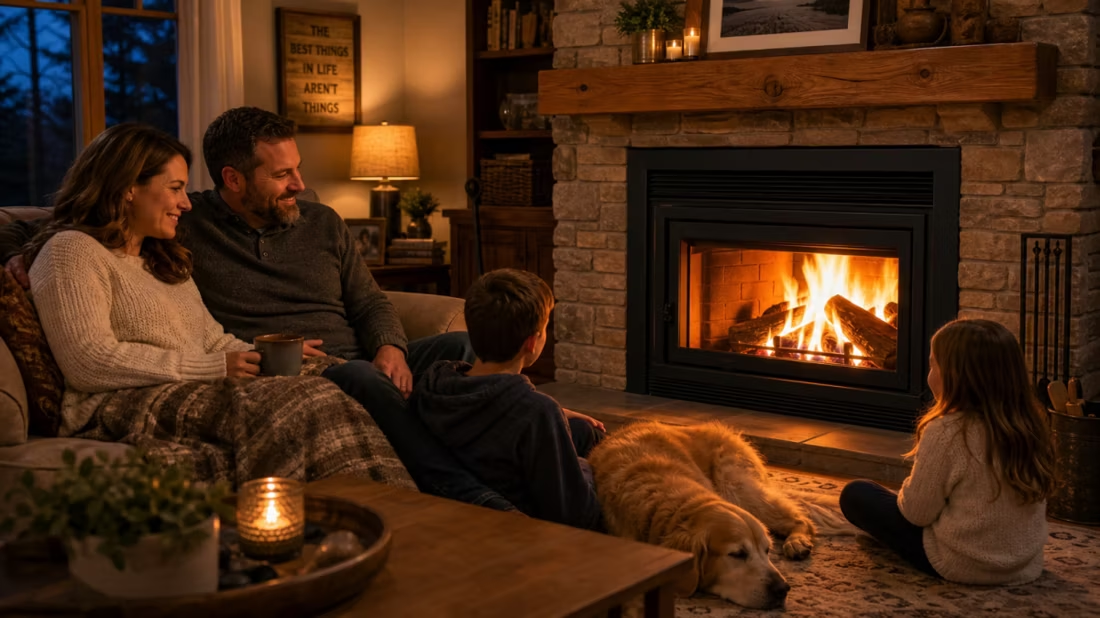
Three steps. No salesperson until you're ready.
Tell us about your project
Your zip code, your situation, and the fuel you're leaning toward—or let the answers point you to one.
See what's actually available
The brands dealers within 100 miles genuinely carry—real options, never a catalog mirage.
Get your dealer & Project Guide
A trusted local dealer, plus the free Project Guide & Parts List that names every component of the job.
Frequently Asked Questions
How much does a wood stove installation cost in Larue County?
A typical wood stove installation in Larue County runs roughly $3,500 to $8,500, depending on the stove itself, whether you're installing into an existing masonry chimney or starting from scratch, and any hearth pad work needed for clearance. Older farmhouses around the county—many built long before modern hearth codes existed—often need a hearth pad upgrade or new Class A chimney pipe, which pushes the estimate toward the higher end. A straightforward insert into a chimney that's already in good shape is usually the more affordable option. Local dealers will give you a firm number after seeing your home.
What size wood stove do I need for my home?
Sizing depends on square footage, ceiling height, insulation, and whether the stove is your primary heat or a backup for power outages. Because Larue County's winters are milder than places like Fargo or Duluth—winter lows average around 25°F rather than well below zero—most homes here do fine with a small to medium stove (up to roughly 1,800 square feet of coverage) rather than the largest catalytic units built for extreme cold. The exception is older, leaky farmhouses common throughout the county, which often need a size bump to compensate for drafts. A local dealer will size your specific home for free during an in-home visit—oversizing leads to smoldering, creosote-heavy fires, while undersizing leaves you cold on the coldest nights of the year.
Where can I find certified wood stove installers near me?
Look for NFI (National Fireplace Institute) certification or CSIA (Chimney Safety Institute of America) credentials—both indicate real training in wood-burning appliance installation, not just general contracting experience. Given Larue County's small population, dealers serving Hodgenville and the surrounding area typically also cover neighboring counties, so don't be surprised if your installer's shop is technically located a short drive away. Most sell the stove and handle the install as one job, which keeps warranty coverage and code compliance simple. Skip handyman or general-contractor installs for wood-burning units specifically—improper clearances and venting are the leading causes of chimney fires.
What's the difference between a wood stove and a wood insert?
A wood stove is a freestanding unit on a hearth pad, vented through a chimney, and can go almost anywhere with the right clearances. A wood insert slides into an existing masonry fireplace, turning a drafty open hearth into a sealed, high-efficiency heater. Given how many homes in and around Hodgenville and the rest of Larue County have older masonry fireplaces built decades ago, an insert is often the natural upgrade—it uses the chimney you already have and dramatically improves the heat you actually get out of it. New construction or additions without an existing fireplace usually call for a freestanding stove instead.
Do I need a permit to install a wood stove in Larue County?
Permit requirements vary by county in Kentucky, and Larue County's building permit process runs through the Larue County Fiscal Court. Whether or not your specific project requires a formal permit, code minimums for clearance to combustibles, hearth pad sizing, and Class A chimney pipe under NFPA 211 still apply—and most homeowners insurance carriers will ask for proof of a certified installation before covering a claim. Confirm current requirements with the Fiscal Court office in Hodgenville before you install, and choose an NFI-certified installer who already knows what local inspectors look for.
What's the best wood stove for Larue County's climate?
Larue County's moderate winter heating season and winter lows around 25°F put it well below the extreme cold-climate category—you're not fighting the kind of sub-zero stretches you'd see in Bismarck or International Falls. That means a well-built non-catalytic stove from a brand like Lopi or Pacific Energy handles most homes here comfortably, without needing the 20-hour catalytic burn times built for the northern Plains. For farmhouses that lose heat fast, or households that want a stove doubling as primary backup heat during ice-storm outages, a mid-size catalytic model still makes sense—a local dealer can walk you through the tradeoff for your specific house.
How often should my chimney be inspected and cleaned?
The CSIA recommends an annual inspection for any wood-burning appliance, and that holds true in Larue County whether you're burning as backup heat during winter storms or running the stove daily through the season. Plan on a sweep and inspection each late summer, before the first cold snap. Because oak and hickory—the two most common local firewood species—burn hot and clean when properly seasoned, well-seasoned wood keeps creosote buildup manageable between cleanings. Green or unseasoned wood, on the other hand, is the fastest way to build up creosote and shorten the interval between sweeps.
Where can I get firewood in Larue County?
Because there's no large tract of national forest land in Larue County, most firewood here comes from private sources—local tree services clearing storm damage, farm woodlots being thinned, or small firewood dealers who sell by the cord. Seasoned oak and hickory, the two most common local hardwoods, typically run somewhere in the $150 to $225 per cord range in this part of Kentucky, among the more affordable firewood markets in the country given how much hardwood grows on local farmland. If you're cutting your own, ask around at local sawmills or farm supply stores—informal arrangements for downed or cleared timber are common in a county this size.
Wood stove vs. pellet stove—which is right for me?
Wood stoves burn cordwood, work with zero electricity—a real advantage in Larue County when ice storms take down rural co-op power lines for days—and pair naturally with the oak and hickory already common on local land. Pellet stoves burn compressed pellets from brands like Lignetics, Hamer Pellet Fuel, or Greenway Renewable Energy, all sold regionally, and offer easier day-to-day operation with less mess. The tradeoff is that pellet stoves need electricity to run the auger and blower, so they go dark in the same outages where a wood stove keeps working. For households that value wood heat as storm-outage insurance, wood usually wins; for those prioritizing convenience and consistent electric service, pellet is a solid option too.
Why won't my new wood stove get going like my old one?
New wood stoves are 70%+ efficient, so far less heat goes up the flue—which also means less draft to get a fire established. The rule: build a genuinely hot fire for about 45 minutes before you choke it down. Skip that and you get smoke in the room, creosote in the chimney, and a fire that never takes off. Most performance complaints trace straight back to this.
Why is my open fireplace making my house colder?
Open fireplaces suck—literally. As the fire burns, it consumes air your furnace already paid to heat and pulls it out through the chimney, so the house is actually colder after the fire goes out than before you lit it. An insert fixes this: it seals the chimney, puts fixed glass across the front, and turns that hole in your house into a real heat source.
What is an in-home preview and do I need one?
It's a visit where a hearth professional measures your space, confirms the model you picked actually works in your home, and walks the specs—framing, gas line, venting, finish work—before anything is ordered. Some details you just can't know until you see the house. Never make a down payment without one; it's the single most-skipped step that burns buyers.
Can a fireplace actually lower my heating bill?
Yes—by creating a comfort zone. A furnace heats every square foot of the house just to warm the one room you're in; a gas fireplace on low burns roughly a sixth of the gas a typical furnace does. Set the furnace around 55–60 degrees as a baseline, then heat the rooms your family actually uses. Families who heat this way commonly save $20–$60 a month.
Find your wood stove in Larue County.
Tell us about your home and heating goals, and we'll match you with a trusted local dealer plus a free Project Guide & Parts List—the exact stove, insert, and vent kit recommended for your Larue County home.
Find Your Fireplace →