
Find the right electric fireplace for your LaRue County home.
No gas line, no chimney, no permit headaches—just plug-in heat and ambiance for homes from Hodgenville to the county's back roads. Get matched with a trusted local dealer.
Every Project Starts From One of These Five Situations
Simple heat for a mild-winter county.
LaRue County sits in climate zone 4A with a moderate heating season and an average winter low near 25°F—noticeably milder than the deep-freeze winters of places like Madison, WI or Duluth, MN. That moderate cold means a lot of LaRue County homes don't need a whole-house heating overhaul just to add warmth and ambiance to a living room, bedroom, or finished basement. An electric fireplace or insert fits that need well: it supplements the existing furnace on the coldest nights around Hodgenville and Buffalo without any new venting or fuel line.
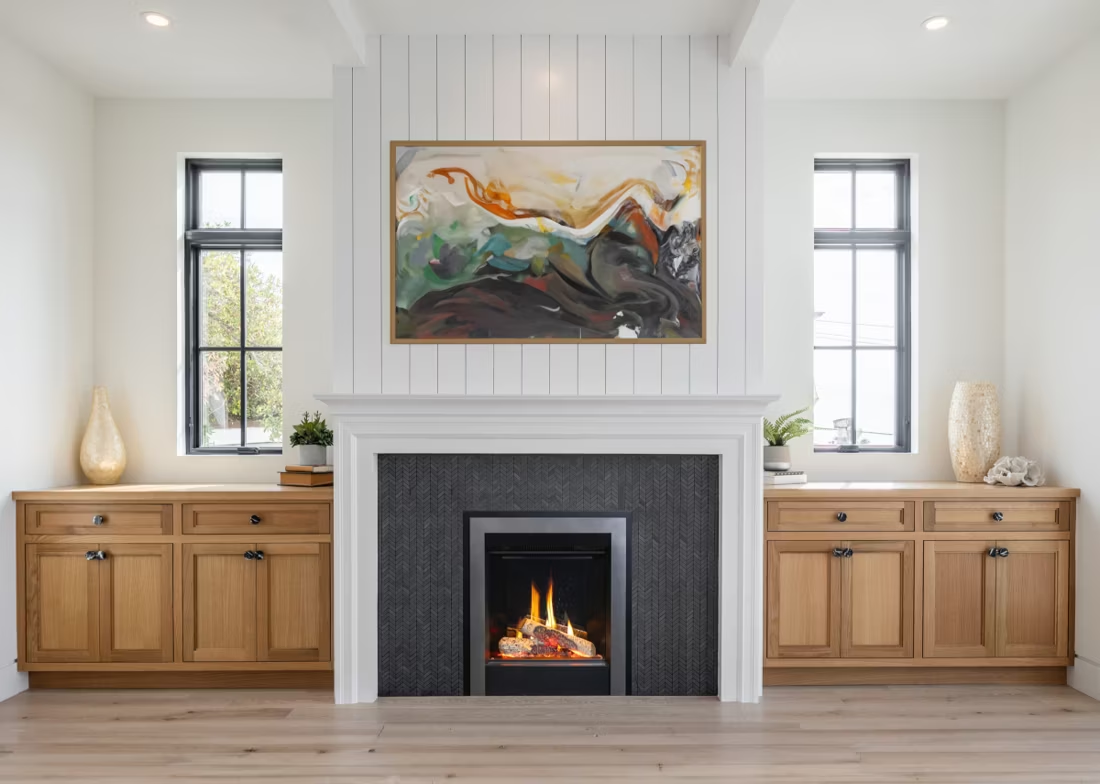
With a population under 5,000 and a lot of rural acreage outside Hodgenville, many LaRue County homes are older farmhouses or newer builds without existing masonry fireplaces—both are good candidates for an electric insert or wall-mounted unit, since there's no chimney requirement and no combustion byproducts to vent. Compared to a wood stove that needs a cutting permit and seasoned oak or hickory, or a gas unit that needs a line run, electric is the lowest-friction way to add real heat and the look of a fire to a room, and it plugs into a standard outlet in most cases.
Three steps. No salesperson until you're ready.
Tell us about your project
Your zip code, your situation, and the fuel you're leaning toward—or let the answers point you to one.
See what's actually available
The brands dealers within 100 miles genuinely carry—real options, never a catalog mirage.
Get your dealer & Project Guide
A trusted local dealer, plus the free Project Guide & Parts List that names every component of the job.
Frequently Asked Questions
How much does an electric fireplace installation cost in LaRue County?
Most electric fireplace and insert installations in LaRue County run between $400 and $1,200. On the low end, a plug-in insert or wall-mounted unit that uses an existing standard 120V outlet is mostly just the unit cost plus placement. On the higher end, built-in units that require a dedicated 240V circuit or in-wall electrical work push the price up, since that means an electrician runs new wiring. Homes outside Hodgenville on rural electric co-op service may see a modest travel charge from installers, but the fuel-related cost drivers that affect wood or gas—chimney work, gas line runs—simply don't apply here.
Do I need a permit to install an electric fireplace in LaRue County?
In most cases, a plug-in electric fireplace or insert doesn't require a building permit, since there's no venting, no gas line, and no structural chimney work involved. If your installation requires a new dedicated electrical circuit—common for larger built-in units—an electrical permit may be required depending on the scope of the work, and a licensed electrician should pull it. Unlike wood stove installations in LaRue County, which fall under EPA and local building code review, electric units are largely exempt from that oversight because there's no combustion involved.
What size electric fireplace do I need for my room?
Electric fireplaces are sized more by room dimensions and viewing distance than by BTU output alone, since most units are supplemental rather than whole-home heat sources. For a typical LaRue County living room or bedroom, a 30- to 40-inch insert or wall unit comfortably heats and visually anchors the space. Larger open-concept rooms, common in newer builds around Hodgenville, may call for a 50-inch or larger unit, or two smaller units in different zones. Because LaRue County's winter lows average around 25°F rather than the sub-zero swings you'd see in a place like Bismarck, ND, most homeowners here are supplementing an existing furnace rather than replacing it, which keeps sizing needs modest.
Will an electric fireplace actually heat my room, or is it just for looks?
A properly sized electric fireplace or insert does produce real, usable heat—most units put out around 4,000 to 5,000 BTU, enough to noticeably warm a single room of 400 square feet or so, which covers most bedrooms and many living rooms in LaRue County homes. It won't replace a furnace on a hard freeze night, but for the mild-to-moderate cold typical of a 4A climate zone winter, it's often enough to let homeowners turn the thermostat down a few degrees in the room they're actually using. The visual flame effect is a bonus, not the whole point—look for a unit with an adjustable heater rather than a decorative-only model if heat output matters to you.
Can I put an electric fireplace anywhere in my house?
Largely yes, which is the main advantage over wood or gas. Since there's no venting requirement and no combustion, an electric insert or wall-mounted unit can go into an interior wall, a converted closet, a basement, or even a mobile home in a way that a wood stove or gas fireplace can't. The main constraint is electrical: built-in models often need a dedicated circuit, so a bedroom or basement without existing capacity may need an electrician to run new wiring before installation. For older LaRue County farmhouses with dated electrical panels, it's worth having a local dealer or electrician check panel capacity before choosing a larger unit.
How does an electric fireplace compare to a wood stove for LaRue County homes?
Wood stoves in LaRue County typically run $4,500 to $9,000 installed and burn local oak, hickory, or cherry—genuine primary heat that works during a power outage, which matters given the county's stretches of rural overhead line. Electric fireplaces run a fraction of that cost, install almost anywhere, and require zero fuel handling, but they go dark the moment the power does, so they're not a storm backup option. For most LaRue County homes with reliable furnace heat already in place, electric fills the ambiance-plus-supplemental-warmth role well; households wanting a genuine off-grid heat source during winter outages should look at wood instead.
How does an electric fireplace compare to a gas fireplace here?
Gas fireplaces in LaRue County (running roughly $4,500-$11,000 installed) deliver more heat output and, with a battery-backup ignition system, can keep running during a power outage—a real advantage in a county with a fair amount of rural overhead electric service. Electric units cost far less upfront, need no gas line or venting, and can be installed in almost any room, but they're purely dependent on grid power. If your household already has propane or natural gas service and wants a heat source that survives an outage, gas is worth a look. If you want low-cost ambiance and modest supplemental heat with the simplest possible install, electric is the more practical choice.
Do electric fireplaces work well in older LaRue County farmhouses without existing fireplaces?
Yes—this is actually one of the better use cases for electric units. A lot of LaRue County's older farmhouses and rural properties were never built with a masonry fireplace, and retrofitting one for wood or gas means significant construction and venting work. An electric insert can go into a built-out mantel surround, a converted alcove, or simply mount on a wall, giving the look of a fireplace without touching the structure of the house. The main thing to check first is the home's electrical panel capacity, especially in farmhouses with older wiring, since a larger built-in unit may call for a dedicated circuit.
What's the difference between an electric insert and a standalone electric fireplace unit?
An electric insert is built to slot into an existing fireplace opening or a custom-built mantel surround, giving a built-in look. A standalone or wall-mounted electric fireplace is a self-contained unit that hangs on or sits against a wall without needing an existing opening. For LaRue County homes with an old, unused masonry fireplace—common in older Hodgenville-area houses—an insert is often the simplest upgrade, since it fits the existing opening and can eliminate drafts from an open flue. For homes without any existing fireplace, a wall-mounted or freestanding unit is the more flexible option, since it can go on almost any interior wall with an available outlet or circuit.
Can I put a TV above my fireplace?
Yes—with an asterisk. Fireplaces are hot and TVs don't like heat. Either put a mantel between them to deflect rising warmth, or choose a fireplace with heat-management technology that creates a cool zone on the wall above—the wall stays around 125 degrees, barely warm, while the room still gets full heat. If you like clean lines and don't want a mantel, heat management is the answer.
Does an electric fireplace need a vent or chimney?
No—that's its superpower. An electric fireplace needs a wall and an outlet, period. No vent pipe, no gas line, no clearances to design around, which is why it works in bedrooms, offices, apartments, and walls where venting a gas or wood unit would be impractical or impossible. Installation is typically the simplest and least expensive of any fireplace type.
Can a fireplace actually lower my heating bill?
Yes—by creating a comfort zone. A furnace heats every square foot of the house just to warm the one room you're in; a gas fireplace on low burns roughly a sixth of the gas a typical furnace does. Set the furnace around 55–60 degrees as a baseline, then heat the rooms your family actually uses. Families who heat this way commonly save $20–$60 a month.
Does a fireplace add value to my home?
On average, a fireplace adds back to the home about the same amount you spent installing it. Add the monthly savings from heating the rooms you actually use instead of the whole house—often hundreds of dollars a year—and the value case is strong before you even count what a fire does for how your family uses the room.
Get your LaRue County electric fireplace Project Guide.
Tell us a bit about your home and we'll match you with a trusted local dealer, plus a free Project Guide & Parts List for your electric fireplace project—sized right and ready to install.
Find Your Fireplace →