
Find your pellet stove in Knott County.
Thermostat-controlled heat for the hollows around Hindman and Leburn—without cutting, splitting, or hauling wood off a steep mountainside. Find the right unit and connect with a trusted local dealer.
Every Project Starts From One of These Five Situations
Clean, convenient heat for the hollows of eastern Kentucky.
Knott County sits deep in the mountains of eastern Kentucky's coal country, a place of steep hollows, narrow creek roads, and a population—around 1,190 in the immediate area—spread thin across small communities like Hindman, Leburn, and Pippa Passes. The oak, hickory, maple, and cherry that cover the surrounding ridges make cordwood cheap and plentiful for those with land or a chainsaw and the terrain to work it. But not every household wants to cut, split, and haul wood up a hollow driveway every winter, and that's where pellet stoves have found a steady following here.
Kentucky is home to two of the pellet brands most commonly stocked in this region—Hamer Pellet Fuel and Greenway Renewable Energy—both manufactured within the state, which keeps freight costs down compared to counties that have to truck pellets in from out of state. Lignetics rounds out the regional lineup. Knott County has no air quality non-attainment designation and no wood-burning curtailment periods, so the appeal of pellet heat here isn't regulatory—it's the auto-feed hopper, the even heat output, and not needing to manage a woodpile on a hillside lot. Because the county's population is small, most hearth dealers and certified installers are based a short drive over in Hazard (Perry County) or Whitesburg (Letcher County) rather than in Knott County itself.
Three steps. No salesperson until you're ready.
Tell us about your project
Your zip code, your situation, and the fuel you're leaning toward—or let the answers point you to one.
See what's actually available
The brands dealers within 100 miles genuinely carry—real options, never a catalog mirage.
Get your dealer & Project Guide
A trusted local dealer, plus the free Project Guide & Parts List that names every component of the job.
Frequently Asked Questions
How much does a pellet stove installation cost in Knott County?
Pellet stove installations in this part of eastern Kentucky typically run in the $3,500 to $6,500 range, on the lower end of hearth appliance costs because pellet stoves vent through a simple wall pipe rather than requiring a masonry chimney. A freestanding pellet stove replacing an old wood stove is usually the least expensive option; a pellet insert going into an existing fireplace opening runs a bit more because of the liner and surround work. Homes on the more remote hollow roads around Leburn or Pippa Passes may see a modest travel charge added by dealers based out of Hazard or Whitesburg, since Knott County itself has limited local installer coverage.
What size pellet stove do I need for my home?
Most homes in Knott County are single-family houses or manufactured homes tucked into narrow hollow lots, and sizing comes down to square footage and how well the home is insulated against the mixed-humid, four-season climate of this part of the Cumberland Plateau. A small pellet stove (up to about 1,000 square feet) suits a manufactured home or a single-level ranch; a medium unit (1,000–2,000 square feet) covers most main living areas in a two-story house. Older homes with less insulation, common throughout the county's older housing stock, often need to size up one step from the manufacturer's stated coverage area. A dealer sizing your space in person, factoring in ceiling height and how open or closed off your floor plan is, will get you closer than any online calculator.
Where can I find pellet stove dealers near Knott County?
Because Knott County's population is small and spread across rural hollows, most certified hearth dealers who serve the area are based in nearby regional hubs—Hazard in Perry County or Whitesburg in Letcher County are the closest towns with established hearth retailers, and both are a manageable drive from Hindman. Farm supply stores and home centers in those towns also frequently stock bagged pellets from Hamer Pellet Fuel and Greenway Renewable Energy. Ask any dealer whether they cover installs in Knott County directly—many do, with a small travel charge for the more remote roads around Pippa Passes or up toward the Letcher County line.
What's the difference between a pellet stove and a pellet insert?
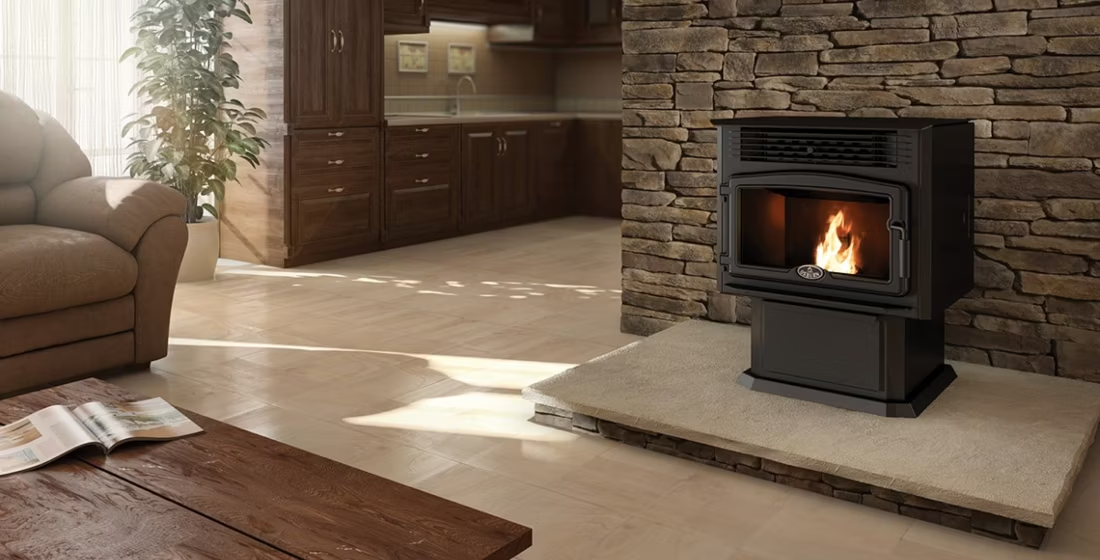
A pellet stove is a freestanding unit that sits on its own hearth pad and vents out through an exterior wall—it can go almost anywhere in a house, including manufactured homes, without needing an existing fireplace. A pellet insert is built to slide into an existing masonry fireplace opening, using a vent liner run up through the old chimney. For Knott County homes with an old open wood fireplace that no one uses anymore, an insert is usually the better fit because it reuses the existing masonry. For homes without a fireplace already in place, a freestanding stove is simpler and generally less expensive to install.
Do I need a permit to install a pellet stove in Knott County?
Knott County doesn't maintain the kind of centralized building permit office you'd find in a larger county, so permit requirements can vary depending on whether you're inside Hindman city limits or out in the unincorporated hollows. Check with the Knott County Judge-Executive's office or your local city hall before installing, and ask your dealer directly—most hearth retailers who install regularly in the county already know what's required and can point you in the right direction. Pellet stove installs are generally straightforward compared to wood-burning units since there's no masonry chimney work involved.
What's the best pellet stove for a Knott County home?
Look for a pellet stove with a battery backup or a model that can run briefly on a small inverter, since ice storms and downed lines in the mountains can knock out power for hours or longer—a real consideration since pellet stoves depend on electricity to run the auger and combustion blower, unlike a wood stove. Beyond that, match the stove to your fuel source: since Hamer Pellet Fuel and Greenway Renewable Energy are both produced right here in Kentucky, choosing a stove that burns standard hardwood pellets well (rather than requiring a premium low-ash pellet) will keep your fuel costs down and your supply local. A dealer in Hazard or Whitesburg can walk you through which models handle regional pellet quality best.
How often does a pellet stove need to be cleaned and serviced?
Pellet stoves need more frequent attention than people expect—the ash pan and burn pot should be cleaned every few days to weekly during regular use, and the hopper, auger, and exhaust venting should get a full inspection and cleaning at least once a year, ideally before the start of winter. Because pellet stoves burn cleaner than cordwood, they don't build creosote the way a wood chimney does, but ash buildup in the burn pot will choke off combustion air if ignored. Dealers serving Knott County out of Hazard and Whitesburg typically offer annual service visits, and it's worth scheduling one before the coldest months set in.
Where can I buy pellets near Knott County?
Hamer Pellet Fuel and Greenway Renewable Energy are both Kentucky-based producers, and their bags show up regularly at farm supply stores and home centers in Hazard and Whitesburg—the closest regional retail hubs to Knott County. Lignetics, a larger national brand, is also commonly stocked in the area. Buying by the pallet (roughly a ton, sold as 40-to-50-pound bags) rather than by the single bag usually saves money and cuts down on how often you need to make the drive out of the hollow for more fuel.
Pellet stove or wood stove—which makes more sense in Knott County?
With oak, hickory, maple, and cherry covering the ridges around Knott County, self-cut firewood is genuinely cheap here if you have land or family land to cut from, and a wood stove keeps working through a power outage—a real advantage on the mountain roads where ice storms can cut power for days. A pellet stove trades that off for convenience: no splitting, no stacking, no creosote buildup, and even heat from a thermostat-controlled hopper, at the cost of needing electricity to run. For households without easy access to a woodlot, or for anyone who wants set-it-and-forget-it heat without the physical work of processing cordwood, pellet is often the better fit. Plenty of homes in the county keep a wood stove for backup and a pellet stove for everyday convenience.
How often does a pellet stove need cleaning?
A clean pellet stove is a happy pellet stove. Plan on cleaning the burn pot about once a week when you're burning regularly—ash and clinkers gum up the air holes just like a pellet barbecue. Most pellet stove problems trace back to skipped cleaning that nobody explained up front. Some designs make it easy with a trapdoor burn pot: pull a lever and the gunk drops into the ash pan.
Why is my open fireplace making my house colder?
Open fireplaces suck—literally. As the fire burns, it consumes air your furnace already paid to heat and pulls it out through the chimney, so the house is actually colder after the fire goes out than before you lit it. An insert fixes this: it seals the chimney, puts fixed glass across the front, and turns that hole in your house into a real heat source.
Does a fireplace add value to my home?
On average, a fireplace adds back to the home about the same amount you spent installing it. Add the monthly savings from heating the rooms you actually use instead of the whole house—often hundreds of dollars a year—and the value case is strong before you even count what a fire does for how your family uses the room.
Can a fireplace actually lower my heating bill?
Yes—by creating a comfort zone. A furnace heats every square foot of the house just to warm the one room you're in; a gas fireplace on low burns roughly a sixth of the gas a typical furnace does. Set the furnace around 55–60 degrees as a baseline, then heat the rooms your family actually uses. Families who heat this way commonly save $20–$60 a month.
Pellet Brands Stocked Around Knott County
Manufacturers will point you to the nearest stocking dealer.
Find your pellet stove in Knott County.
Tell us a bit about your home and we'll match you with a trusted local dealer and send over a free Project Guide & Parts List—the exact pellet stove or insert, vent kit, and parts recommended for your Knott County home.
Find Your Fireplace →