
Warmth That Plugs Into Every Hollow of Knott County.
No chimney, no gas line, no venting through a steep mountainside roof—just plug-in or hardwired warmth for homes tucked into the hollows around Hindman. Find the right unit and connect with a trusted local installer.
Every Project Starts From One of These Five Situations
The easiest fireplace to add to a home in the hills.
Knott County sits deep in the Cumberland Plateau, a landscape of steep ridges and narrow hollows radiating out from Hindman. The terrain that makes the county beautiful also makes construction work harder—running a masonry chimney or a long gas line up a hillside lot isn't always practical, and a lot of the housing stock here is single-wide and double-wide manufactured homes set into narrow hollow bottoms where space and structural options are limited. Winters in this zone 4A mixed-humid climate are real but not extreme—cold nights in the 20s, occasional ice, nothing close to what a place like Duluth or Fargo deals with—which means a supplemental heat source doesn't need to be a serious combustion appliance to make a difference.
That's exactly where electric fireplaces earn their place in Knott County. There's no venting to route through a hillside roofline, no combustion byproducts to worry about in a tightly built manufactured home, and no chimney to maintain on a house that may not have masonry to begin with. Most units run on a standard household circuit or a single dedicated 240V line an electrician can add in an afternoon. For homes served by Kentucky Power or Jackson Energy Cooperative—the two utilities most common across the county's rural service territory—an electric fireplace adds zone heat to a cold room or a hard-to-heat addition without touching the home's existing heating system at all.
Three steps. No salesperson until you're ready.
Tell us about your project
Your zip code, your situation, and the fuel you're leaning toward—or let the answers point you to one.
See what's actually available
The brands dealers within 100 miles genuinely carry—real options, never a catalog mirage.
Get your dealer & Project Guide
A trusted local dealer, plus the free Project Guide & Parts List that names every component of the job.
Frequently Asked Questions
How much does an electric fireplace installation cost in Knott County?
Most electric fireplace projects in Knott County run $400 to $1,500. A plug-in insert or mantel package that drops into an existing opening or a simple wall unit sits at the low end—often a same-day install with no electrical work beyond an existing outlet. A built-in unit that requires a dedicated 240V circuit, in-wall wiring, or custom framing (common when converting an old wood-burning fireplace opening or building into a mobile home wall) runs toward the higher end once a local electrician is involved. Because so much of the county's housing is manufactured or modular, framing considerations for wall thickness and stud spacing often matter more here than in stick-built homes.
Do I need a permit to install an electric fireplace in Knott County?
In most cases, no—a plug-in electric fireplace that uses an existing standard outlet doesn't trigger a building permit. If you're adding a dedicated 240V circuit for a built-in unit, that electrical work should be done by a licensed electrician and may require an electrical permit and inspection, particularly for manufactured or modular homes where panel capacity is often already tight. Unlike wood or gas installs, there's no venting or chimney work to inspect, which keeps the process considerably simpler.
Will an electric fireplace work during a power outage?
No—and this matters more in Knott County than in a lot of places, because ice storms and downed lines through the hollows can knock out power for hours or days at a time. An electric fireplace won't provide any heat when the grid is down. If backup heat during outages is a priority, a wood stove or wood-burning fireplace using local oak, hickory, or cherry firewood—species that are common and easy to source in this part of eastern Kentucky—is a better standalone option. Many homeowners here run electric for everyday zone heat and keep wood or propane as the outage backup.
What size electric fireplace do I need for my room?
Electric fireplace heaters are typically rated for 400 to 1,500 square feet depending on the model, but in practice most units are used for supplemental zone heat rather than whole-home heating—which fits how a lot of Knott County homes are laid out, with additions, converted porches, or single rooms in a hollow-bottom home that run colder than the rest of the house. A 1,500-watt unit comfortably takes the chill off a 300 to 400 square foot room. For a larger open living area, look at wall-mounted linear units with higher BTU output, or plan on more than one unit rather than oversizing a single fireplace.
What's the difference between an electric insert, a built-in, and a mantel package?
An electric insert is designed to drop into an existing fireplace opening—a common retrofit for older Knott County homes that have an unused wood-burning firebox they'd rather not maintain. A built-in unit is designed to be framed into a wall, which works well in new construction or during a remodel but requires more electrical planning in manufactured homes with limited wall cavity depth. A mantel package pairs a freestanding or wall-mount electric firebox with a surround and shelf, requiring no structural modification at all—often the fastest and least invasive option for renters or homes where major changes aren't practical.
How much does it cost to run an electric fireplace in Knott County?
Running costs depend on your electric rate and how many hours a day you use the unit. A typical 1,500-watt electric fireplace run for supplemental heat, on either Kentucky Power or Jackson Energy Cooperative service, generally adds a modest amount to a monthly bill compared to running electric baseboard or resistance heat for the whole home—because you're only heating one room, not the whole house. Many homeowners here use it on the coldest evenings and mornings rather than continuously, which keeps the operating cost down further.
What brands of electric fireplaces are available through local dealers?
Local hearth dealers serving Knott County typically carry mainstream electric fireplace brands like Dimplex, Napoleon, and Touchstone, which cover everything from basic plug-in inserts to higher-end linear wall units with realistic flame effects. Find My Fireplace doesn't sell or stock any of these—we're a neutral matchmaking service that connects you with a trusted local dealer who can show you what's actually in stock and installable in your home, rather than steering you toward whatever a manufacturer is paying to promote.
Is an electric fireplace a good fit for a manufactured or modular home?
Yes—it's one of the most common reasons homeowners in Knott County choose electric over wood or gas. A large share of the county's housing stock is single-wide and double-wide manufactured homes, and electric fireplaces avoid the structural and venting challenges that wood-burning or gas units can pose in that construction type. A plug-in or low-amperage built-in unit adds real, controllable heat and ambiance without cutting into exterior walls for venting or adding weight the home wasn't built to carry.
Electric vs. wood—which makes sense for my home?
Wood is the deeper heating tradition in Knott County, and with oak, hickory, maple, and cherry all common in the surrounding hollows and ridges, firewood is easy to source locally—and it keeps working when the power goes out during an ice storm. Electric, on the other hand, is the simpler and cheaper option to install, produces no ash or smoke, and needs no chimney maintenance, but it's fully dependent on grid power. A lot of homes in the county end up with both: wood or a wood stove as the serious cold-weather and outage backup, and an electric unit for everyday convenience heat in a bedroom, den, or hard-to-heat addition.
Can I put a TV above my fireplace?
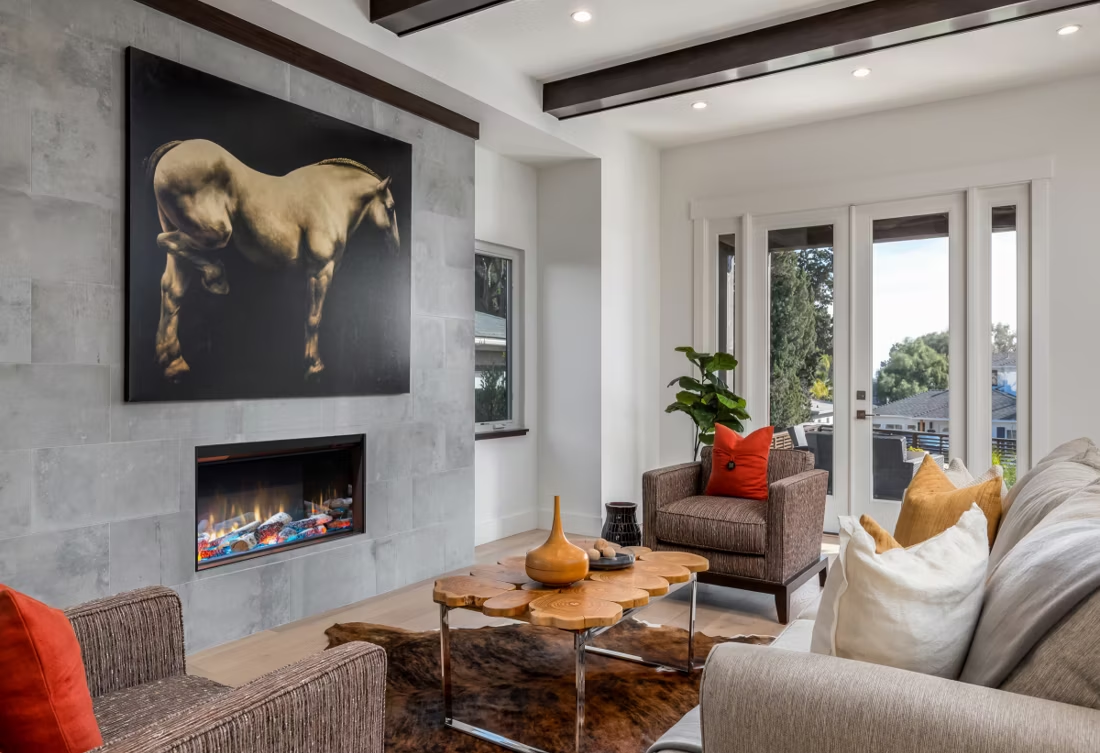
Yes—with an asterisk. Fireplaces are hot and TVs don't like heat. Either put a mantel between them to deflect rising warmth, or choose a fireplace with heat-management technology that creates a cool zone on the wall above—the wall stays around 125 degrees, barely warm, while the room still gets full heat. If you like clean lines and don't want a mantel, heat management is the answer.
Do electric fireplaces actually produce heat?
Yes—most put out around 4,800–5,000 BTUs from a standard outlet, which comfortably warms a bedroom, office, or den as a comfort-zone heater. What they won't do is carry a whole house the way wood, gas, or pellet can. Think of electric as ambiance-first with honest supplemental heat: flames on with no heat in July, flames plus warmth in January.
Can I install a fireplace myself?
If you're putting a fire in your house on purpose, it's best to work with an expert. Unless you're genuinely experienced in framing, gas line, vent pipe, and the national code on clearances to combustibles, have a professional do it—and ideally the same company that sells you the fireplace, so warranty, service, and liability all live under one roof.
Does a fireplace add value to my home?
On average, a fireplace adds back to the home about the same amount you spent installing it. Add the monthly savings from heating the rooms you actually use instead of the whole house—often hundreds of dollars a year—and the value case is strong before you even count what a fire does for how your family uses the room.
Find your electric fireplace in Knott County.
Tell us a bit about your home and we'll put together a free Project Guide & Parts List for your electric fireplace project—then match you with a trusted local dealer who can install it right.
Find Your Fireplace →