
Steady Heat for Johnson County's Appalachian Winters.
For the hollows and ridgetops around Paintsville, Van Lear, and Flat Gap, a pellet stove means consistent heat without splitting and hauling wood on steep terrain. Find the right unit and connect with a trusted local dealer.
Every Project Starts From One of These Five Situations
Reliable warmth without the wood pile.
Johnson County sits in the eastern Kentucky coalfields along the Big Sandy River, with about 5,930 residents spread across Paintsville and small communities like Van Lear, Hagerhill, Redbush, and Oil Springs, many tucked into narrow hollows off the main routes. Winters here average a low around 23°F with a solid but not extreme heating season—nowhere near the deep freezes of a place like International Falls, MN, but cold enough that a serious secondary or primary heat source matters for months at a stretch, especially when winter storms knock out power along the ridgetop lines.
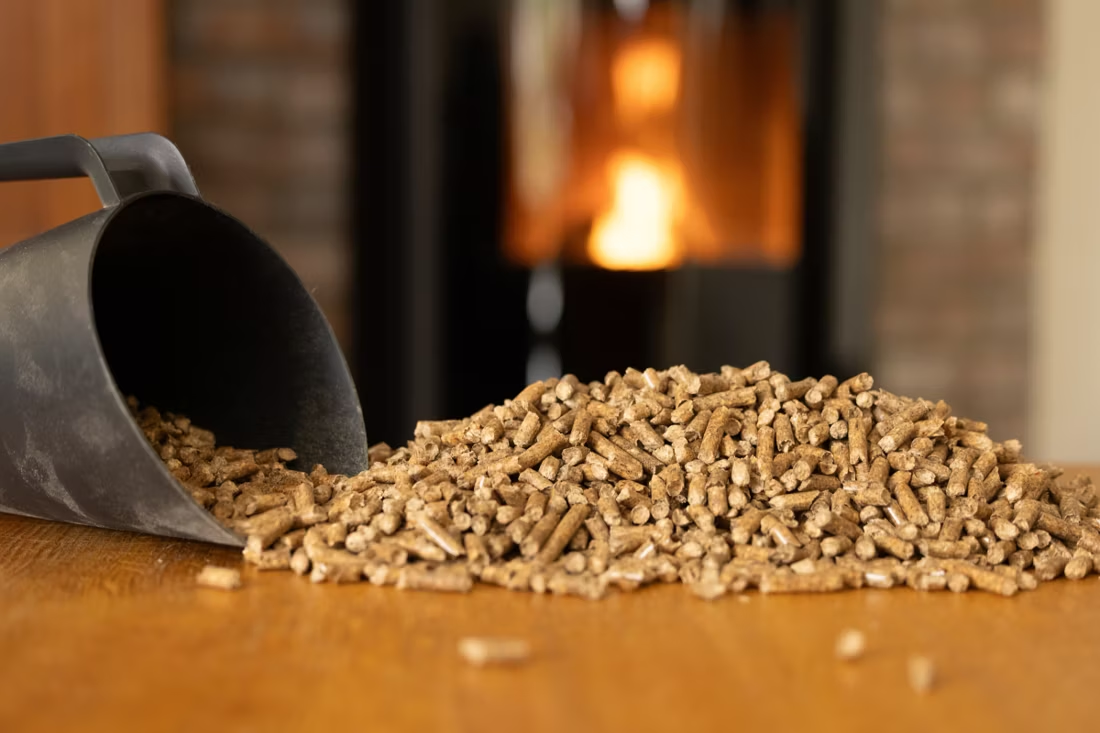
Oak, hickory, maple, and cherry are the dominant hardwoods in the surrounding forests, and a good share of that timber ends up as feedstock for pellet mills in the region—Hamer Pellet Fuel and Greenway Renewable Energy both draw on regional hardwood byproduct, alongside softwood-based Lignetics bags that show up in most local hardware and farm supply stores. With no air quality non-attainment issues or wood-smoke restrictions in Johnson County, pellet stoves install and operate without the curtailment-period paperwork some counties require. For households in steep, hard-to-access hollows where cutting and hauling cordwood is a real chore, the hopper-and-thermostat convenience of a pellet stove is often the deciding factor over a traditional wood stove.
Three steps. No salesperson until you're ready.
Tell us about your project
Your zip code, your situation, and the fuel you're leaning toward—or let the answers point you to one.
See what's actually available
The brands dealers within 100 miles genuinely carry—real options, never a catalog mirage.
Get your dealer & Project Guide
A trusted local dealer, plus the free Project Guide & Parts List that names every component of the job.
Frequently Asked Questions
How much does a pellet stove installation cost in Johnson County?
A typical pellet stove or insert installation in Johnson County runs roughly $3,800 to $6,800, depending on whether it's a freestanding stove venting through an exterior wall or an insert going into an existing masonry fireplace. Inserts tend to land on the lower-to-middle end since they reuse the existing chimney chase with a liner; freestanding units in a home without a prior fireplace cost more once wall penetration, venting, and a hearth pad are factored in. Homes out toward Meally, Offutt, or the far reaches of the Big Sandy valley may see a modest travel charge added for install crews coming from Paintsville-based dealers.
What size pellet stove do I need for my home?
Most homes in Johnson County fall into the small-to-medium range for pellet stove sizing—older frame houses in the hollows tend to be drafty and benefit from a stove rated for 1,200 to 1,800 square feet even if the home itself is smaller, while newer or better-insulated homes near Paintsville can often get by with a smaller unit. Hopper capacity matters as much as BTU output here: a 40-to-60 pound hopper gives you roughly 24 to 40 hours of burn time on a moderate setting, which matters if you're not home to refill it every evening. A local dealer will size the unit to your square footage and insulation during an in-home visit.
Where can I find a certified pellet stove installer near me?
Look for a dealer with NFI (National Fireplace Institute) pellet certification—it signals training specific to auger, hopper, and venting systems, which differ meaningfully from wood stove installs. Dealers based around Paintsville typically cover the whole county, including outlying communities like Hagerhill, Redbush, Flat Gap, and Van Lear, though expect a small travel fee for installs further out toward Volga or Sitka. Because pellet stoves need a dedicated electrical outlet in addition to venting, it's worth confirming your installer handles both the mechanical and electrical side rather than subcontracting the outlet work separately.
What's the difference between a pellet stove and a pellet insert?
A pellet stove is a freestanding unit that sits on a hearth pad and vents through an exterior wall or existing chimney chase—it can go almost anywhere in the house with the right clearances. A pellet insert is built to slide into an existing masonry fireplace opening, using a vent liner run up the old chimney, and is the more common upgrade for Johnson County homes with an older wood-burning fireplace that's rarely used. If your home doesn't already have a fireplace, a freestanding stove is generally the simpler and more affordable route.
Do I need a permit to install a pellet stove in Johnson County?
Requirements vary depending on where you are in the county. Inside Paintsville city limits, a building permit is typically required for new venting and any electrical work tied to the install, and the local building office can confirm specifics. In unincorporated parts of Johnson County, formal permitting is less consistently enforced, but manufacturer installation instructions and clearance-to-combustible specs still apply for insurance and warranty purposes—most homeowner's insurance policies will ask about proper installation if a claim ever arises. A reputable local dealer will install to code regardless of whether a jurisdiction is actively checking.
What's the best pellet stove for Johnson County's climate?
With winters that dip into the low 20s regularly but rarely hold at extreme cold for long stretches, most Johnson County homes do well with a mid-size pellet stove from a brand like Harman, Englander, or Lopi—all commonly stocked or ordered by dealers in the region. Given that winter ice storms occasionally knock out power along rural ridge lines here, it's worth asking your dealer about battery backup options, since standard pellet stoves rely on electricity to run the auger and combustion blower and will shut down during an outage without one.
Where do I buy pellets and how much do they cost in Johnson County?
Pellets are typically sold by the ton (fifty 40-pound bags) and run in the neighborhood of $230 to $310 per ton in this part of Kentucky, though prices shift with hardwood versus softwood blends and how far a supplier has to truck bags in. Lignetics bags are widely available through farm supply and hardware stores serving Paintsville, while Hamer Pellet Fuel and Greenway Renewable Energy, both drawing on regional hardwood sawmill byproduct, are common through local hearth dealers. Buying a season's supply in late summer, before demand and prices climb in November, is standard practice for households relying on pellets as a primary heat source.
How much maintenance does a pellet stove need?
Pellet stoves need more frequent light maintenance than wood stoves but less heavy chimney work. Plan on emptying the ash pan every few days during regular use, cleaning the burn pot weekly to keep the auger feeding properly, and running a full glass and interior cleaning monthly. An annual professional service—checking the auger motor, combustion blower, gaskets, and venting—is recommended before burning season starts each fall. Skipping the burn pot cleaning is the most common cause of poor ignition and error codes on most units.
Pellet stove vs. wood stove—which makes more sense in Johnson County?
Wood is deeply practical here given the abundance of oak, hickory, maple, and cherry in the surrounding hills, and a wood stove keeps working through a power outage—a real consideration when ice storms take down rural lines. Pellet stoves trade that off-grid resilience for convenience: no splitting or stacking, a steady automated burn, and cleaner glass with less creosote buildup, but they need electricity for the auger and blower, so a battery backup or generator plan matters if you're leaning on one as primary heat. Many households in the county end up with both—wood for backup and ambiance, pellet for the day-to-day set-it-and-forget-it warmth in the main living space.
How often does a pellet stove need cleaning?
A clean pellet stove is a happy pellet stove. Plan on cleaning the burn pot about once a week when you're burning regularly—ash and clinkers gum up the air holes just like a pellet barbecue. Most pellet stove problems trace back to skipped cleaning that nobody explained up front. Some designs make it easy with a trapdoor burn pot: pull a lever and the gunk drops into the ash pan.
Why is my open fireplace making my house colder?
Open fireplaces suck—literally. As the fire burns, it consumes air your furnace already paid to heat and pulls it out through the chimney, so the house is actually colder after the fire goes out than before you lit it. An insert fixes this: it seals the chimney, puts fixed glass across the front, and turns that hole in your house into a real heat source.
What is an in-home preview and do I need one?
It's a visit where a hearth professional measures your space, confirms the model you picked actually works in your home, and walks the specs—framing, gas line, venting, finish work—before anything is ordered. Some details you just can't know until you see the house. Never make a down payment without one; it's the single most-skipped step that burns buyers.
Does a fireplace add value to my home?
On average, a fireplace adds back to the home about the same amount you spent installing it. Add the monthly savings from heating the rooms you actually use instead of the whole house—often hundreds of dollars a year—and the value case is strong before you even count what a fire does for how your family uses the room.
Stove and Fireplace Dealers in Johnson County
Pellet Brands Stocked Around Johnson County
Manufacturers will point you to the nearest stocking dealer.
Find your pellet stove in Johnson County.
Tell us a bit about your home and we'll match you with the right pellet stove or insert, plus a free Project Guide & Parts List with the exact parts—including the vent kit—and our recommended local dealer.
Find Your Fireplace →