
Instant warmth for Johnson County homes—no chimney required.
From Paintsville out along the Big Sandy to the hollows off US-23, electric fireplaces give Johnson County homes clean, plug-in warmth without venting, chimney work, or a woodpile. Find the right unit and connect with a trusted local dealer.
Every Project Starts From One of These Five Situations
Zone heat that fits any room, any budget.
Johnson County sits in the eastern Kentucky coalfields along the Big Sandy River, with Paintsville as the county seat and a lot of the housing stock spread up hollows and along narrow creek roads outside town. Winters here are moderate by national standards—average lows around 23°F and roughly 4,604 heating degree days, well short of the deep-freeze winters of places like Duluth or Fargo—but a lot of the older frame homes and manufactured homes common through the valley run drafty, and central heat often needs help in the rooms furthest from the furnace. Wood has deep roots in this part of Kentucky—oak, hickory, maple, and cherry are all cut locally—but that tradition doesn't mean every room in the house needs a woodstove, and it doesn't mean every homeowner wants to split and haul wood every winter.
That's where electric fireplaces have carved out a real role in Johnson County: as supplemental zone heat for a living room, a finished basement, a rental unit, or a bedroom that never quite gets warm. Kentucky Power (AEP) serves most of the county with reliable grid electricity, and a plug-in or built-in electric unit gives you real, adjustable heat with no combustion, no venting, and none of the code hurdles that come with wood or gas. It won't replace a woodstove during an ice-storm outage, and I'll say that plainly rather than oversell it—but for day-to-day comfort and ambiance in an already-heated home, it's often the simplest project on this list.
Three steps. No salesperson until you're ready.
Tell us about your project
Your zip code, your situation, and the fuel you're leaning toward—or let the answers point you to one.
See what's actually available
The brands dealers within 100 miles genuinely carry—real options, never a catalog mirage.
Get your dealer & Project Guide
A trusted local dealer, plus the free Project Guide & Parts List that names every component of the job.
Frequently Asked Questions
How much does an electric fireplace installation cost in Johnson County?
Cost depends almost entirely on the type of unit. A freestanding plug-in electric fireplace or stove that runs on a standard household outlet is the least expensive option and often needs no electrical work at all—just a nearby outlet. A built-in wall unit or mantel-mounted insert, which looks more like a real fireplace, usually needs a dedicated outlet placed behind the unit and sometimes a new 120V circuit run by a licensed electrician, especially in older Johnson County homes and manufactured homes where the existing wiring wasn't built with a fireplace in mind. A local dealer can tell you within a few minutes of seeing your wall and breaker panel whether you're looking at a simple plug-and-play job or an electrician visit.
What size electric fireplace do I need for my home?
Most electric fireplaces are built around a standard 1,500-watt heater, good for roughly 400 to 1,000 square feet depending on ceiling height, insulation, and how open the floor plan is. In Johnson County's older homes—a lot of which have low ceilings, add-on rooms, or the kind of leaky windows common in houses built up the hollows decades ago—expect the real-world heated area to land on the smaller end of that range. Think of it as heating the room you're sitting in, not the whole house; if you're trying to knock the chill off a whole-home heating gap, that's a conversation for a wood or gas unit, not electric.
What's the difference between an electric fireplace, insert, and stove?
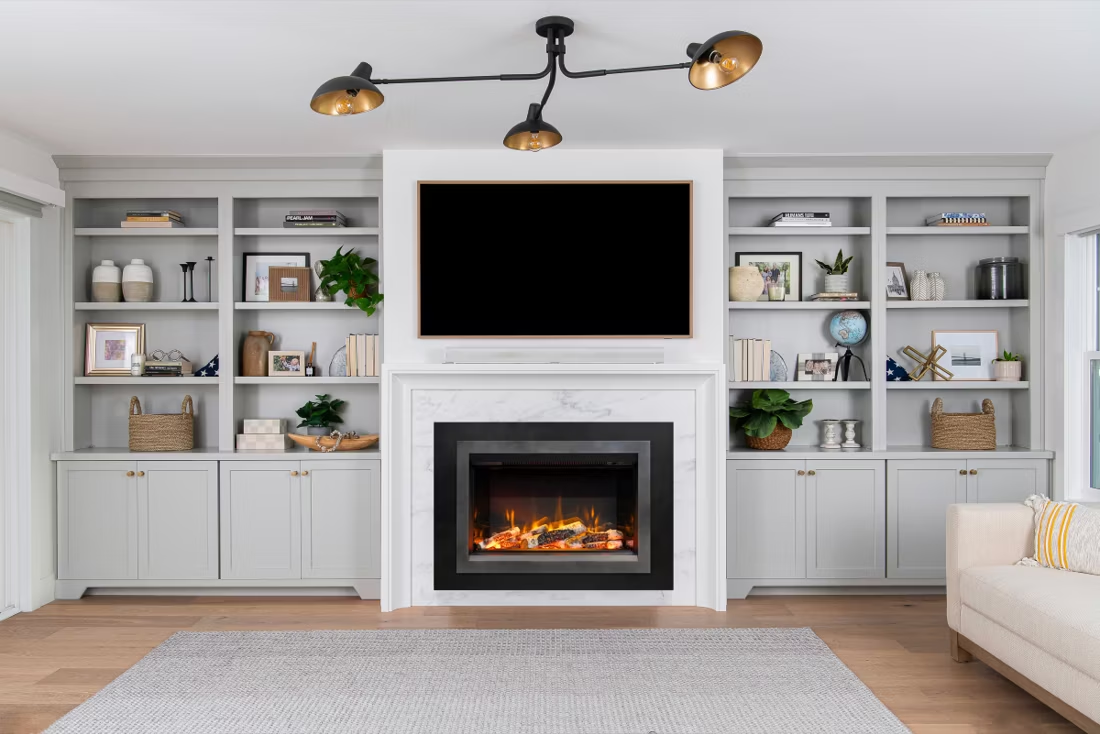
An electric fireplace is typically a wall-mounted or built-in unit designed to look like a framed hearth, often set into a mantel surround. An electric insert is sized to slide into an existing masonry fireplace opening—a common upgrade for Johnson County homes with an old wood-burning fireplace that's no longer used, since it fills the opening without any venting work. An electric stove is a freestanding cabinet-style unit that mimics a wood stove's look and can sit almost anywhere near an outlet. For homes here with a disused masonry fireplace up along Route 23 or in older Paintsville neighborhoods, an insert is usually the cleanest retrofit.
Do I need a permit to install an electric fireplace in Johnson County?
A plug-in electric fireplace or stove generally doesn't require a permit since there's no venting, gas line, or structural change involved. If you're adding a built-in unit that requires a new dedicated circuit, that electrical work should be done by a licensed electrician to National Electrical Code standards, and any new circuit work typically needs to be pulled through the county for inspection. A local dealer who regularly installs these units in Johnson County can tell you exactly what your specific project requires before work starts.
Is an electric fireplace enough heat for a Johnson County winter?
On its own, no—and I want to be straight about that. With average winter lows around 23°F and roughly 4,600 heating degree days, Johnson County winters are cold enough that a single 1,500-watt electric unit is best treated as zone heat for one room, not a replacement for your furnace or a wood stove. Where electric fireplaces earn their keep is in rooms that run cold even with central heat running—a converted garage, a finished basement, an addition off the back of an older farmhouse—or as a low-maintenance ambiance piece in a living room that already stays warm.
Will my electric fireplace work if the power goes out?
No—electric fireplaces need grid power to run, full stop. Johnson County's terrain along the Big Sandy and up the hollows means ice storms and downed lines can knock out Kentucky Power service for stretches during a hard winter, and an electric unit goes dark right along with everything else in the house. If backup heat during outages is a real concern for your household, that's a strong argument for pairing an electric fireplace for daily comfort with a wood stove or vented gas unit somewhere in the house for the nights the power actually goes out.
Electric vs. gas fireplace—which is right for my Johnson County home?
Gas fireplaces put out real heat and can often run on battery backup during an outage, but they require either natural gas service (limited in much of rural Johnson County) or a propane tank, plus venting and gas line work—a bigger project with a bigger price tag. Electric fireplaces skip all of that: no fuel line, no venting, no combustion byproducts, and a much simpler install in a manufactured home or a room where running gas line isn't practical. For a lot of homes out along the county's rural roads without natural gas access, electric is simply the lower-friction option for a room that wants supplemental warmth and ambiance.
Electric vs. wood—which is right for my Johnson County home?
Wood heat runs deep here—oak, hickory, maple, and cherry are all cut locally, and a wood stove keeps running with no power at all, which matters when an ice storm takes down lines along the Big Sandy. But wood means splitting, stacking, hauling ash, and an annual chimney sweep. Electric fireplaces skip all of that maintenance and install almost anywhere with an outlet, but they go dark in an outage and won't heat a whole home on their own. Plenty of Johnson County households end up running both: a wood stove or insert for real backup heat, and an electric unit in a bedroom or den where convenience and looks matter more than raw BTUs.
Where can I find a dealer who installs electric fireplaces near me in Johnson County?
A local hearth dealer who regularly works in Johnson County will know which units hold up in the specific housing stock common here—older frame homes in and around Paintsville, manufactured homes up the hollows, newer construction along the Route 23 corridor—and can tell you fast whether your project is a simple plug-in swap or one that needs an electrician for a dedicated circuit. That's the value of going through a trusted local pro instead of ordering blind from a big-box shelf: someone actually looks at your wall, your panel, and your room before you buy anything.
Can I put a TV above my fireplace?
Yes—with an asterisk. Fireplaces are hot and TVs don't like heat. Either put a mantel between them to deflect rising warmth, or choose a fireplace with heat-management technology that creates a cool zone on the wall above—the wall stays around 125 degrees, barely warm, while the room still gets full heat. If you like clean lines and don't want a mantel, heat management is the answer.
Does an electric fireplace need a vent or chimney?
No—that's its superpower. An electric fireplace needs a wall and an outlet, period. No vent pipe, no gas line, no clearances to design around, which is why it works in bedrooms, offices, apartments, and walls where venting a gas or wood unit would be impractical or impossible. Installation is typically the simplest and least expensive of any fireplace type.
How much should I budget for a fireplace?
For an average home—covering the fireplace, the vent pipe, and basic installation—a budget between $3,900 and $5,500 gives you a lot of options across wood, gas, and pellet. By the time you add finish work, gas line, and electrical, the average complete installation lands between $5,000 and $12,000 all-in. In a remodel or new build, a good rule is to put about 2.5% of the total project cost toward the fireplace.
Can I install a fireplace myself?
If you're putting a fire in your house on purpose, it's best to work with an expert. Unless you're genuinely experienced in framing, gas line, vent pipe, and the national code on clearances to combustibles, have a professional do it—and ideally the same company that sells you the fireplace, so warranty, service, and liability all live under one roof.
Stove and Fireplace Dealers in Johnson County
Find your electric fireplace in Johnson County.
Tell us a bit about your home and we'll put together a free Project Guide & Parts List—the right electric fireplace or insert for your room, what it takes to install it, and a trusted local dealer near Johnson County to do the work.
Find Your Fireplace →